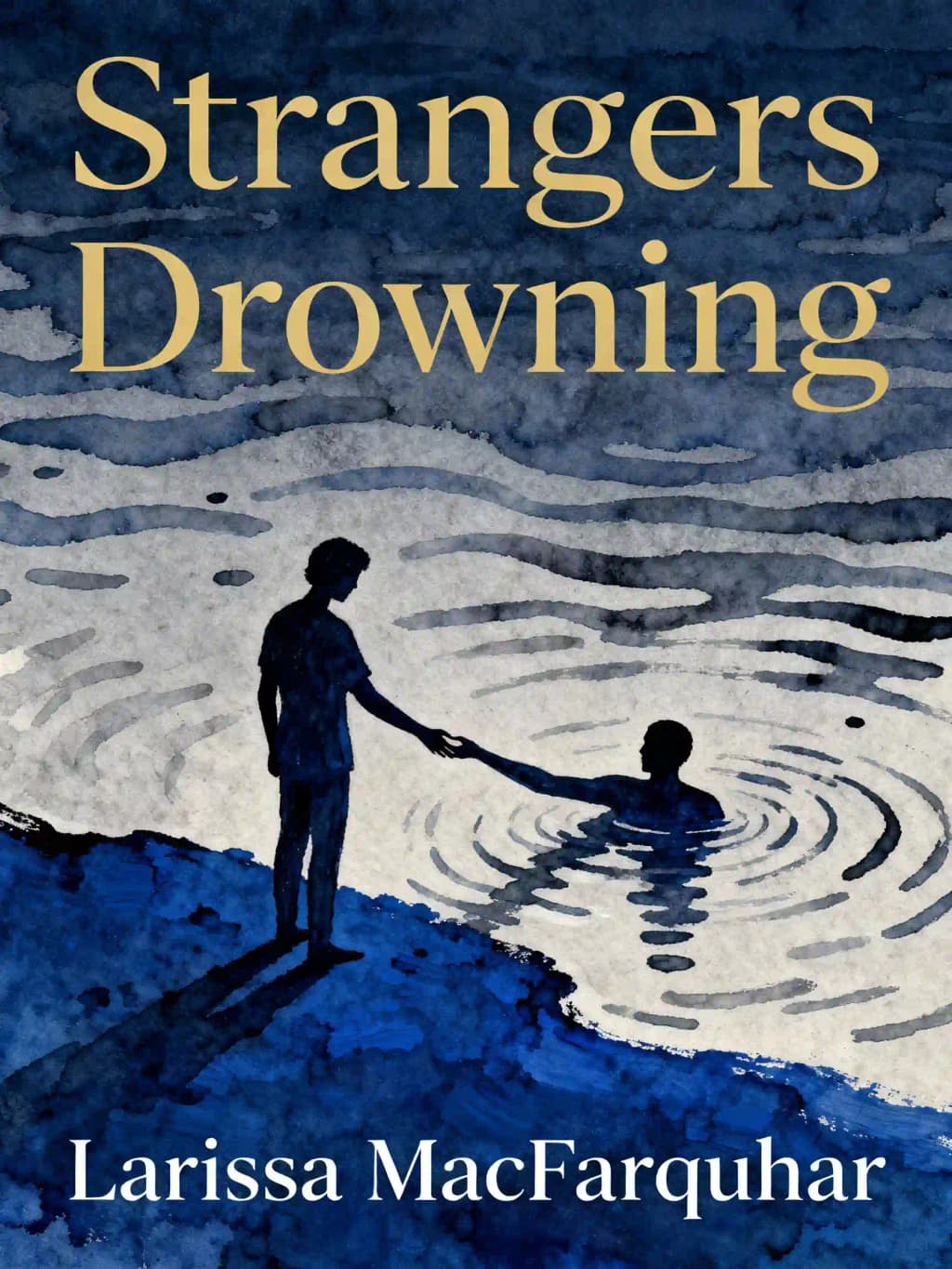
In "Strangers Drowning," New Yorker writer Larissa MacFarquhar profiles extreme altruists who adopt 22 children or donate kidneys to strangers. What drives people to sacrifice everything for others? A provocative exploration that challenges our comfortable assumptions about goodness and moral obligation.
Larissa MacFarquhar, acclaimed staff writer at The New Yorker and author of the nonfiction book Strangers Drowning: Grappling with Impossible Idealism, Drastic Choices, and the Overpowering Urge to Help, is celebrated for her incisive explorations of ethical extremes and human motivation.
Born in London in 1968 and raised in the U.S., MacFarquhar has crafted profiles of figures like Barack Obama, Derek Parfit, and Aaron Swartz during her decades-long tenure at The New Yorker, establishing her reputation for deep psychological insight and narrative rigor.
Her work on Strangers Drowning—a study of individuals who dedicate their lives to radical altruism—reflects her fascination with moral philosophy and societal norms, themes echoed in her journalism. A two-time Front Page Award winner, her writing has been anthologized in The Best American Political Writing and The Best American Food Writing.
The book, a finalist for the Helen Bernstein Book Award for Excellence in Journalism, has been praised for blending empathetic storytelling with rigorous ethical inquiry, solidifying MacFarquhar’s status as a leading voice in contemporary nonfiction.
Strangers Drowning explores extreme altruism through real-life stories of individuals who dedicate their lives to helping others, often making drastic personal sacrifices. The book examines ethical dilemmas, moral philosophy, and societal skepticism toward "do-gooders," blending psychological insights with philosophical debates about selflessness versus human nature.
This book is ideal for readers interested in ethics, moral philosophy, psychology, or social behavior. It appeals to those curious about effective altruism, the psychology of self-sacrifice, and the tension between personal relationships and universal empathy.
Yes—it’s a critically acclaimed work praised for its deep storytelling and thought-provoking analysis. The New Yorker’s immersive profiles and MacFarquhar’s exploration of moral extremes make it essential for understanding ethical idealism and its complexities.
Key themes include moral duty vs. emotional bonds, societal distrust of extreme altruists, and the psychological roots of self-sacrifice. The book critiques utilitarian ethics while questioning whether radical goodness is sustainable or inherently flawed.
While not explicitly focused on the modern effective altruism movement, the book profiles individuals whose lives align with its principles—prioritizing measurable impact and rational sacrifice over emotional motives. It highlights tensions between logic and compassion in ethical action.
MacFarquhar examines societal suspicions that extreme altruists are self-righteous or emotionally detached. She also explores psychological critiques, such as Anna Freud’s theory that do-gooders may subconsciously seek fulfillment through others’ needs.
MacFarquhar uses immersive, fable-like narratives developed through months of research. Her profiles delve into subjects’ motivations, blending journalism with philosophical inquiry to humanize their drastic choices.
Yes—examples include a couple adopting 22 children, activists protesting factory farming in animal costumes, and donors giving away most of their income. These stories illustrate the burdens and moral contradictions of radical selflessness.
The book analyzes ethical thought experiments (e.g., saving strangers vs. family) and references thinkers like Nietzsche, who critiqued altruism as a “morality for the insignificant.” It also explores childhood traumas that may drive compulsive helping.
The title references a moral dilemma: choosing between saving a loved one or multiple strangers. It symbolizes the conflict between emotional ties and utilitarian logic—a central tension in the book.
Unlike prescriptive works like The Life You Can Save, MacFarquhar’s narrative-driven approach avoids endorsing specific frameworks. Instead, she highlights the messy, often paradoxical realities of living ethically.
The book encourages reflection on balancing empathy with self-care and understanding the motives behind altruism. It challenges readers to consider how far they’d go to help others—and what such choices reveal about human nature.
저자의 목소리로 책을 느껴보세요
지식을 흥미롭고 예시가 풍부한 인사이트로 전환
핵심 아이디어를 빠르게 캡처하여 신속하게 학습
재미있고 매력적인 방식으로 책을 즐기세요
This book doesn't just make you think; it makes you question the very foundations of how you live.
Is a saintly life good, or does it lack crucial human qualities?
For do-gooders, it is always wartime.
Healthcare could be a means of reconciliation.
They love their families but don't believe they inherently deserve better than others'.
Strangers Drowning의 핵심 아이디어를 이해하기 쉬운 포인트로 분해하여 혁신적인 팀이 어떻게 창조하고, 협력하고, 성장하는지 이해합니다.
Strangers Drowning을 빠른 기억 단서로 압축하여 솔직함, 팀워크, 창의적 회복력의 핵심 원칙을 강조합니다.

생생한 스토리텔링을 통해 Strangers Drowning을 경험하고, 혁신 교훈을 기억에 남고 적용할 수 있는 순간으로 바꿉니다.
무엇이든 물어보고, 목소리를 선택하고, 진정으로 공감되는 인사이트를 함께 만들어보세요.

샌프란시스코에서 컬럼비아 대학교 동문들이 만들었습니다
"Instead of endless scrolling, I just hit play on BeFreed. It saves me so much time."
"I never knew where to start with nonfiction—BeFreed’s book lists turned into podcasts gave me a clear path."
"Perfect balance between learning and entertainment. Finished ‘Thinking, Fast and Slow’ on my commute this week."
"Crazy how much I learned while walking the dog. BeFreed = small habits → big gains."
"Reading used to feel like a chore. Now it’s just part of my lifestyle."
"Feels effortless compared to reading. I’ve finished 6 books this month already."
"BeFreed turned my guilty doomscrolling into something that feels productive and inspiring."
"BeFreed turned my commute into learning time. 20-min podcasts are perfect for finishing books I never had time for."
"BeFreed replaced my podcast queue. Imagine Spotify for books — that’s it. 🙌"
"It is great for me to learn something from the book without reading it."
"The themed book list podcasts help me connect ideas across authors—like a guided audio journey."
"Makes me feel smarter every time before going to work"
샌프란시스코에서 컬럼비아 대학교 동문들이 만들었습니다

Strangers Drowning 요약을 무료 PDF 또는 EPUB으로 받으세요. 인쇄하거나 오프라인에서 언제든 읽을 수 있습니다.
Have you ever felt guilty walking past a homeless person, then justified it by thinking about the bills you need to pay? Now imagine someone who never makes that justification-who reorganizes their entire life around the suffering of strangers. These people exist. They adopt twenty children. They donate half their income to strangers overseas. They dedicate their careers to chickens in factory farms. They make us profoundly uncomfortable, and that discomfort reveals something crucial about how we all navigate morality. These aren't your typical volunteers or occasional charity donors. These are people who've taken moral logic to its extreme conclusion and refuse to look away. They live with an overwhelming sense of duty that reshapes every decision-what they eat, where they live, whether to have children. The term "do-gooder" itself carries a sting of judgment, suggesting meddling or self-righteousness. Benjamin Franklin abandoned his quest for moral perfection partly because he worried it would make him "ridiculous" or "envied and hated." Our discomfort isn't just defensive guilt-it's genuine uncertainty about whether such a life is admirable or alien, whether it represents human excellence or a troubling absence of ordinary pleasures and loves.