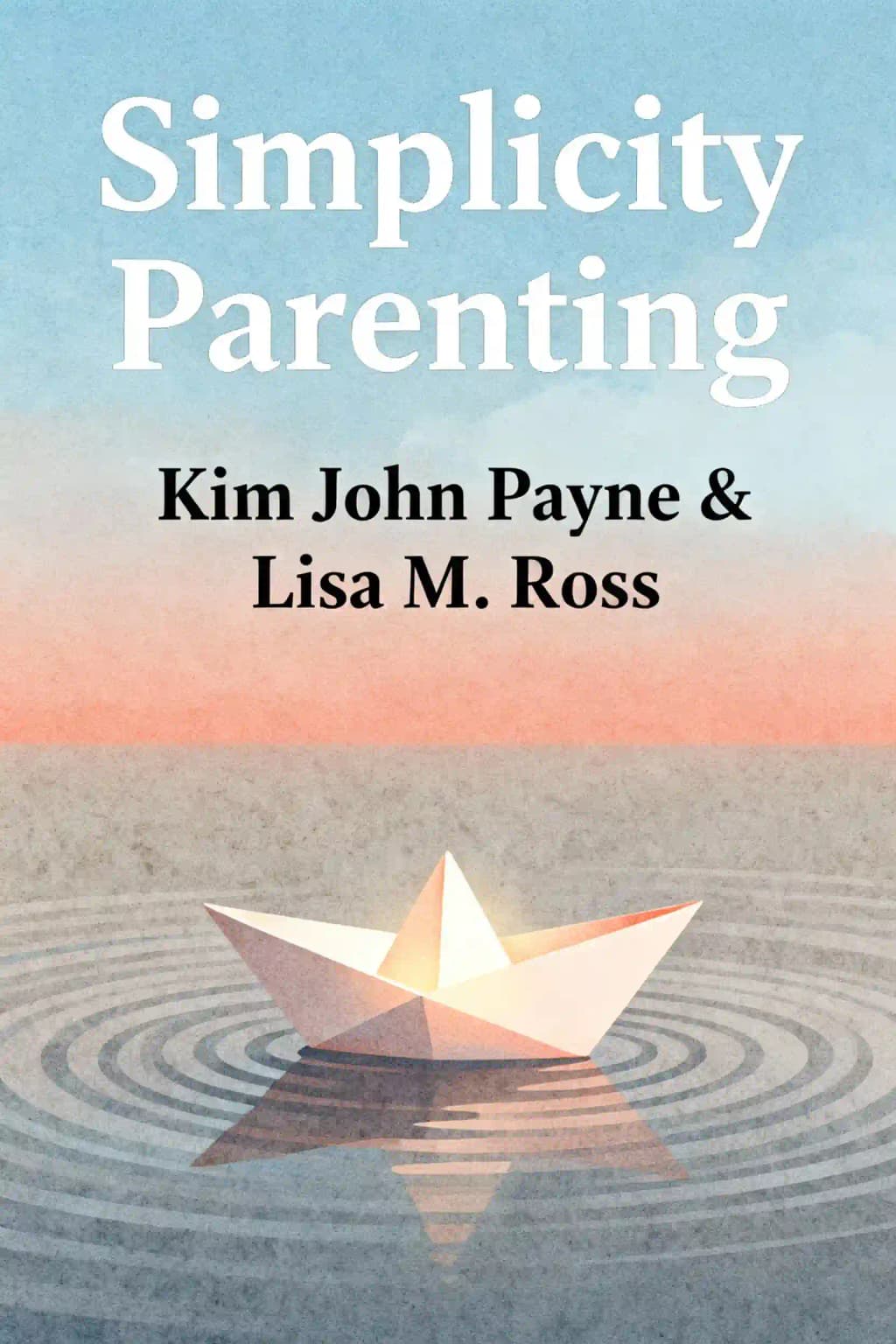
In "Simplicity Parenting," Kim John Payne reveals how decluttering your child's world creates calmer, happier kids. Endorsed by parenting expert Sarah Moore, this 2009 game-changer asks: What if your child's behavioral issues stem from too much stuff and overscheduled lives?
Kim John Payne, M.Ed., co-author of Simplicity Parenting: Using the Extraordinary Power of Less to Raise Calmer, Happier, and More Secure Kids, is a renowned family consultant and educator with over two decades of experience in child development and family counseling.
A leading voice in holistic parenting, Payne has served as a school counselor, private family therapist, and director of the Waldorf Collaborative Counseling Program at Antioch University New England. His work on attention disorders and sensory simplification has influenced educational frameworks globally, including partnerships with the Alliance for Childhood.
Lisa M. Ross, a seasoned writer and former literary agent, brings her expertise in family dynamics and communication to the book’s accessible, actionable guidance. Together, they address modern challenges like screen time and hyperparenting, advocating for rhythmic routines and clutter-free environments to foster emotional resilience.
The revised edition of their seminal work, updated to address social media and boundary-setting, remains a trusted resource for parents worldwide, endorsed by educators and professionals for its transformative approach to nurturing childhood.
Simplicity Parenting offers a blueprint to reduce childhood overwhelm by simplifying environments, routines, and parental pressures. Kim John Payne advocates decluttering toys, establishing predictable rhythms, limiting adult-world stressors, and fostering imaginative play to nurture calmer, happier kids. The book’s four pillars—environment, rhythm, schedules, and filtering adult concerns—aim to create sanctuary-like homes.
Parents feeling overwhelmed by modern parenting’s demands, caregivers of anxious or overstimulated children, and families seeking calmer home dynamics. It’s ideal for those drawn to minimalist lifestyles or wanting to prioritize meaningful connections over material excess.
Yes—readers praise its actionable advice for reducing family stress. Reviewers note improved child behavior post-decluttering and calmer routines. Critics argue it may feel restrictive, but Payne emphasizes flexibility, urging families to adapt principles to their needs.
Payne advises keeping toys that inspire open-ended play (e.g., blocks, art supplies) and removing “fixed” toys with limited uses (e.g., single-purpose gadgets). He argues fewer choices deepen focus and creativity, letting children “pour their imagination” into play.
Ask: “Does this item let my child’s imagination flow, or does it dictate how they play?” Toys that only require button-pushing or have overly detailed designs are prioritized for removal, while open-ended tools are retained.
While not anti-technology, Payne urges strict limits on screens to prevent sensory overload. He links excessive screen exposure to reduced attention spans and recommends replacing digital entertainment with hands-on play and family interaction.
This involves creating serene spaces with natural light, muted colors, and minimal synthetic scents. Reducing visual/auditory chaos helps children focus, self-regulate, and engage deeply with activities.
Yes—principles adapt to any age. For teens, Payne suggests collaborative decluttering, co-designing routines, and discussing media boundaries. The focus shifts to fostering autonomy within simplified frameworks.
Some argue its emphasis on reduction overlooks socioeconomic diversity (e.g., limited budgets for toy rotations). Others note it requires significant parental effort to maintain rhythms. Supporters counter that small, incremental changes yield impactful results.
Both prioritize intentionality, but Payne focuses on childhood development rather than spatial aesthetics. While Kondō asks “Does this spark joy?”, Payne asks “Does this spark imagination?”—targeting kids’ creative needs over adult preferences.
As digital saturation grows, families increasingly seek ways to combat attention fragmentation. Payne’s strategies for tech moderation, mental space creation, and connection align with contemporary minimalist and mindfulness movements.
저자의 목소리로 책을 느껴보세요
지식을 흥미롭고 예시가 풍부한 인사이트로 전환
핵심 아이디어를 빠르게 캡처하여 신속하게 학습
재미있고 매력적인 방식으로 책을 즐기세요
Our children are drowning in stuff, choices, information, and speed.
These typical children were exhibiting what Payne calls Cumulative Stress Reaction.
These children were suffering from what he terms 'the undeclared war on childhood'.
Parents might notice phases: first, the buildup of tension, then the peak of emotional distress.
The threshold to a child's room often reveals an otherworldly space.
Simplicity Parenting의 핵심 아이디어를 이해하기 쉬운 포인트로 분해하여 혁신적인 팀이 어떻게 창조하고, 협력하고, 성장하는지 이해합니다.
Simplicity Parenting을 빠른 기억 단서로 압축하여 솔직함, 팀워크, 창의적 회복력의 핵심 원칙을 강조합니다.

생생한 스토리텔링을 통해 Simplicity Parenting을 경험하고, 혁신 교훈을 기억에 남고 적용할 수 있는 순간으로 바꿉니다.
무엇이든 물어보고, 목소리를 선택하고, 진정으로 공감되는 인사이트를 함께 만들어보세요.

샌프란시스코에서 컬럼비아 대학교 동문들이 만들었습니다
"Instead of endless scrolling, I just hit play on BeFreed. It saves me so much time."
"I never knew where to start with nonfiction—BeFreed’s book lists turned into podcasts gave me a clear path."
"Perfect balance between learning and entertainment. Finished ‘Thinking, Fast and Slow’ on my commute this week."
"Crazy how much I learned while walking the dog. BeFreed = small habits → big gains."
"Reading used to feel like a chore. Now it’s just part of my lifestyle."
"Feels effortless compared to reading. I’ve finished 6 books this month already."
"BeFreed turned my guilty doomscrolling into something that feels productive and inspiring."
"BeFreed turned my commute into learning time. 20-min podcasts are perfect for finishing books I never had time for."
"BeFreed replaced my podcast queue. Imagine Spotify for books — that’s it. 🙌"
"It is great for me to learn something from the book without reading it."
"The themed book list podcasts help me connect ideas across authors—like a guided audio journey."
"Makes me feel smarter every time before going to work"
샌프란시스코에서 컬럼비아 대학교 동문들이 만들었습니다

Simplicity Parenting 요약을 무료 PDF 또는 EPUB으로 받으세요. 인쇄하거나 오프라인에서 언제든 읽을 수 있습니다.
What if the anxiety, sleeplessness, and explosive behavior we see in our children aren't signs of deficiency-but of overload? A family therapist working in refugee camps noticed something unsettling: children from comfortable suburban homes were showing the same symptoms as war-traumatized refugees. Same treatment plans. Same behavioral patterns. Same stress markers. These weren't kids fleeing violence or famine. They had loving parents, safe homes, full pantries. Yet they were exhibiting what clinicians call Cumulative Stress Reaction-a condition eerily similar to PTSD, but caused not by a single trauma, but by the relentless accumulation of small, unrelenting pressures. The culprit? Four pillars of "too much" quietly dismantling childhood: too much stuff, too many choices, too much information, and too fast a pace. When families began systematically reducing these elements-cutting toys, screen time, activities, and adult information by half-something remarkable happened. Within four months, 68% of clinically struggling children returned to normal functioning. No medication. Just space to breathe. Their academic performance jumped nearly 37%. This wasn't about adding enrichment or therapeutic intervention. It was about subtraction-clearing away the noise so childhood could unfold as it's meant to.