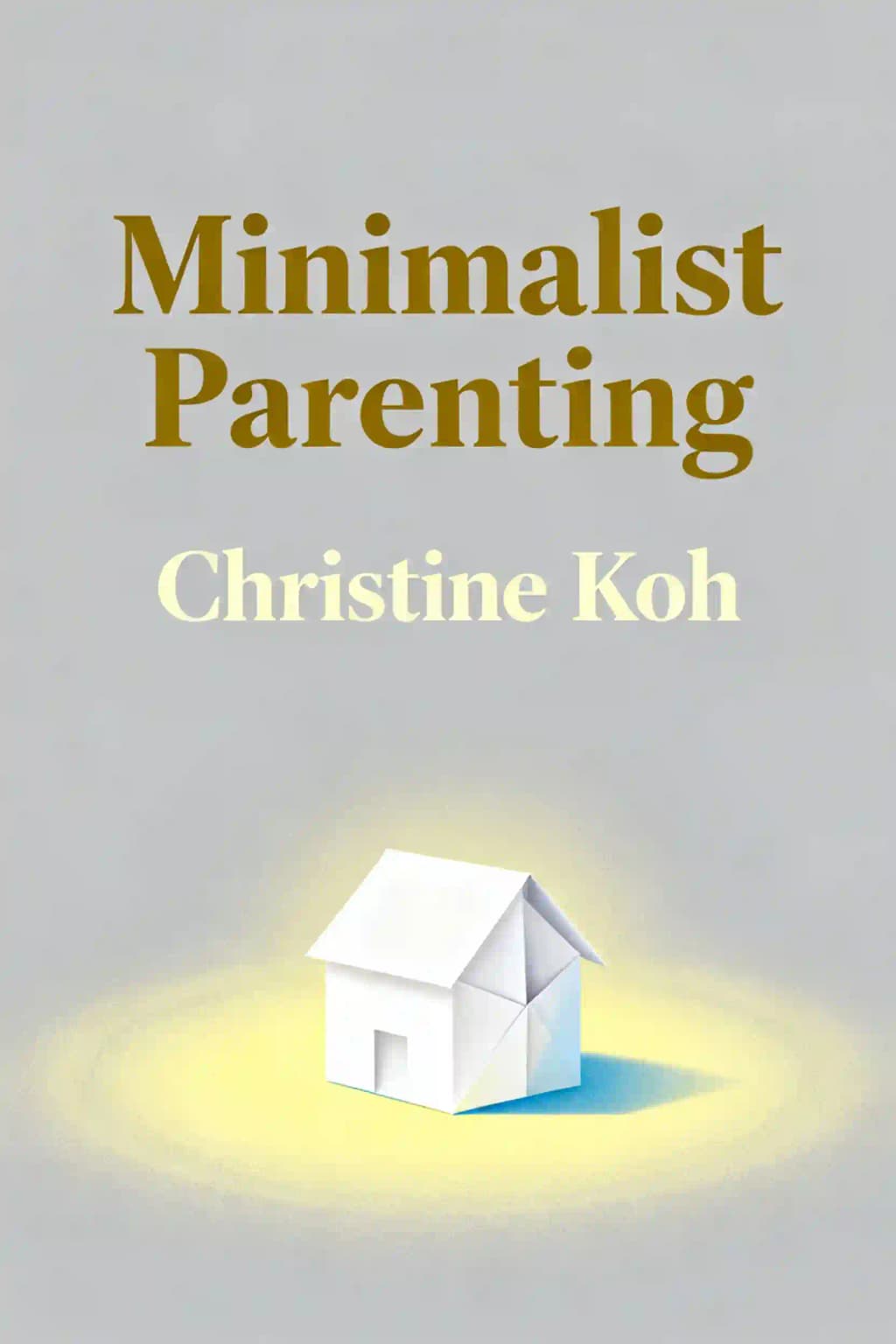
"Minimalist Parenting" liberates overwhelmed parents by teaching the art of doing less. Endorsed by NY Times bestselling author Andrea Buchanan, this counterintuitive guide sparked a parenting revolution. Could the secret to happier families be found in what you don't do?
Christine Koh is the co-author of Minimalist Parenting and a leading voice in helping families simplify modern life through intentional choices. A former music and brain scientist with a joint postdoctoral fellowship at Harvard Medical School, MIT, and Massachusetts General Hospital, she pivoted to parenting advocacy after reevaluating her priorities during her father’s illness and the birth of her first child. Her academic rigor informs her practical, research-backed approach to decluttering family routines.
Koh founded the pioneering hyperlocal blog Boston Mamas and co-hosts the Edit Your Life Show podcast, offering actionable strategies for work-life balance. Her insights have been featured in The Washington Post, CNN, and The Boston Globe, with her #1 most-read article cementing her authority in the parenting space. She also shares reflective essays on her Substack, There’s Always A Story.
Minimalist Parenting—praised in The New York Times and NPR—grew from Koh’s mission to combat societal pressure on families. The book’s principles were later highlighted in the Netflix documentary Minimalism, broadening its reach to global audiences seeking calmer, more meaningful lifestyles.
Minimalist Parenting teaches parents to declutter family life by focusing on what truly matters—values, relationships, and intentional choices. Key strategies include simplifying meal planning, managing time effectively, and reducing overcommitment to create space for joy. The book emphasizes trusting parental instincts over external pressures.
Overwhelmed parents facing decision fatigue, overscheduling, or household clutter will benefit most. It’s ideal for those seeking to reduce stress, strengthen family bonds, and reject "perfect parenting" myths. The advice applies to families with children of all ages.
Yes—readers praise its actionable framework for simplifying modern parenting. It provides step-by-step guidance for decluttering physical spaces, meal-planning efficiently, and prioritizing self-care. Over 90% of reviewers call it "transformative" for reducing family stress.
The book advocates batch cooking, embracing "good enough" nutrition, and involving kids in meal prep. Strategies include 30-minute recipes, pantry streamlining, and minimizing mealtime battles by focusing on connection over perfection.
This metaphor encourages parents to trust their instincts rather than external advice. The authors argue that constant research fuels anxiety, and prioritizing personal values leads to confident decisions.
It recommends auditing extracurriculars based on family values and joy—not fear of "missing out." The RAD framework (Remove, Automate, Delegate) helps eliminate unnecessary activities.
Yes—it frames technology as a tool rather than a villain. The book suggests creating screen agreements focused on content quality and family interaction, not just time limits.
Some reviewers note its strategies require upfront effort to implement, and the approach works best for middle-class families with scheduling flexibility. Minimal guidance is provided for neurodivergent children’s needs.
It positions parental well-being as essential, not selfish. Tactics include micro-self-care (5-minute mindfulness), delegating tasks, and aligning downtime with personal energy cycles.
Unlike generic parenting guides, it combines home organization, time management, and emotional resilience in one system. Real-life examples from diverse families increase relatability.
As a neuroscientist-turned-parenting expert, Koh blends research on decision fatigue with hands-on strategies. Her experience raising two daughters grounds the advice in practicality.
저자의 목소리로 책을 느껴보세요
지식을 흥미롭고 예시가 풍부한 인사이트로 전환
핵심 아이디어를 빠르게 캡처하여 신속하게 학습
재미있고 매력적인 방식으로 책을 즐기세요
Perfection isn't just unnecessary; it's counterproductive.
Imagine having decisions guided by values rather than fear.
Less really is more.
The obstacle isn't something you're doing wrong-it's that you're wrestling with abundance.
Minimalist parenting의 핵심 아이디어를 이해하기 쉬운 포인트로 분해하여 혁신적인 팀이 어떻게 창조하고, 협력하고, 성장하는지 이해합니다.
Minimalist parenting을 빠른 기억 단서로 압축하여 솔직함, 팀워크, 창의적 회복력의 핵심 원칙을 강조합니다.

생생한 스토리텔링을 통해 Minimalist parenting을 경험하고, 혁신 교훈을 기억에 남고 적용할 수 있는 순간으로 바꿉니다.
무엇이든 물어보고, 목소리를 선택하고, 진정으로 공감되는 인사이트를 함께 만들어보세요.

샌프란시스코에서 컬럼비아 대학교 동문들이 만들었습니다
"Instead of endless scrolling, I just hit play on BeFreed. It saves me so much time."
"I never knew where to start with nonfiction—BeFreed’s book lists turned into podcasts gave me a clear path."
"Perfect balance between learning and entertainment. Finished ‘Thinking, Fast and Slow’ on my commute this week."
"Crazy how much I learned while walking the dog. BeFreed = small habits → big gains."
"Reading used to feel like a chore. Now it’s just part of my lifestyle."
"Feels effortless compared to reading. I’ve finished 6 books this month already."
"BeFreed turned my guilty doomscrolling into something that feels productive and inspiring."
"BeFreed turned my commute into learning time. 20-min podcasts are perfect for finishing books I never had time for."
"BeFreed replaced my podcast queue. Imagine Spotify for books — that’s it. 🙌"
"It is great for me to learn something from the book without reading it."
"The themed book list podcasts help me connect ideas across authors—like a guided audio journey."
"Makes me feel smarter every time before going to work"
샌프란시스코에서 컬럼비아 대학교 동문들이 만들었습니다

Minimalist parenting 요약을 무료 PDF 또는 EPUB으로 받으세요. 인쇄하거나 오프라인에서 언제든 읽을 수 있습니다.
In a world where parenting advice screams "more is better," Minimalist Parenting offers a refreshing counternarrative that's captivated overwhelmed parents everywhere. Unlike traditional parenting guides that add to your to-do list, this approach helps you edit it down to what truly matters. The revolutionary premise is deceptively simple: you already have everything you need to create the family life you want. The obstacle isn't something you're doing wrong - it's that you're wrestling with abundance: excessive choices, obligations, possessions, and guilt about trying to do it all. Modern parents face unprecedented decisions about everything from educational philosophies to extracurricular activities to screen time limits. This abundance often leads to decision fatigue and anxiety. What if, instead, your decisions were guided by values rather than fear? What if your schedule had room for both obligations and spontaneity? What if your home became a base for creativity rather than endless obligations?