1장
Transforming the Parent-Child Relationship: A Revolutionary Roadmap
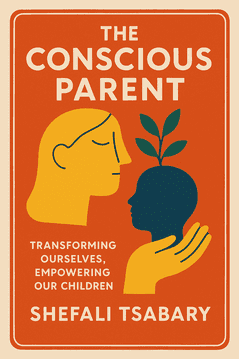
When Oprah Winfrey featured Dr. Shefali Tsabary's work on conscious parenting, calling it "revolutionary" and "life-changing," millions of parents worldwide took notice. But what makes this approach so transformative? Unlike traditional parenting guides that focus on controlling children's behavior, "The Parenting Map" offers something far more radical: a journey of parental self-discovery that heals both parent and child simultaneously. This isn't just another parenting book-it's a spiritual awakening disguised as family advice, endorsed by celebrities like Alicia Keys and Pink who credit Dr. Shefali's methods with transforming their family dynamics. As mental health issues among youth reach alarming levels, this approach offers a timely alternative to the achievement-obsessed, control-based parenting that dominates modern culture. Through this roadmap, Dr. Shefali guides parents from frustration to clarity, from dysfunctional patterns to conscious choice, and ultimately from conflict to genuine connection.
2장
The Fundamental Parenting Dilemma
Parenting creates an unparalleled emotional investment-a bond so profound that it generates both euphoric joy when things go well and devastating anxiety when they don't. Parents experience intense highs watching their child's first steps or hearing their first words, but can plummet into despair over health scares or behavioral challenges. Unlike other relationships where we can maintain emotional distance or choose to disengage, parenting demands total commitment. We must either consciously embrace this difficult journey or risk falling into patterns of disconnection that harm both parent and child.
Adding to this challenge is the fact that children aren't simply "smaller versions of us"-they operate with entirely different rules, different brains, and require a completely different language. A toddler's tantrum in the grocery store isn't manipulation but an immature nervous system overwhelmed by stimuli. A teenager's door-slamming isn't personal attack but an awkward bid for independence. Most adults aren't equipped with "KidSpeak" or "KidPsychology" skills, creating the fundamental parental dilemma: knowing our children are our responsibility while lacking the skills to understand and connect with them successfully.
The truth about parenting is that mistakes are unavoidable. This happens because our children need us during their formative years when we ourselves are still evolving and emotionally immature. A sleep-deprived parent struggling with postpartum anxiety can't always respond perfectly to a colicky baby. A parent wrestling with work stress might overreact to a child's homework resistance. The goal isn't perfection but awareness-understanding why we react the way we do when a baby's sleeplessness brings us to tears or a teenager's snarky comment triggers our own tantrum. We must understand the why before we can address the how.
Our cultural delusion that we should intuitively know how to parent leads to suffering in silence when we struggle. Parents often feel shame asking for help or admitting uncertainty, believing they should naturally know how to handle every situation. In reality, no one is supposed to instinctively know how to raise children-it's a skill that must be learned, like any other complex endeavor. Just as we wouldn't expect someone to inherently know how to perform surgery or build a house, we shouldn't expect intuitive mastery of parenting. The transformation requires patience, courage, and often professional guidance, but the rewards are profound: fewer conflicts, greater ease in relationships, and children who step into their authentic selves, breaking generational patterns of dysfunction. This journey of learning and growth becomes not just about raising children, but about healing and evolving ourselves as parents.
3장
Shifting the Focus: It's Not About Your Child
The most fundamental error in parenting is believing our responses depend on our children's behavior. In reality, our reactions are often disconnected from the present moment and stem from unresolved past wounds. When your child has a meltdown, what thoughts and feelings arise in you? Do you take it personally? Do you fight, flee, or freeze? These reactions reveal more about our internal landscape than our child's behavior.
Our emotional triggers often manifest in subtle ways: tensing up when our child doesn't listen, feeling rage when they talk back, or experiencing anxiety when they struggle socially. These responses typically connect to our own childhood experiences and unmet needs. For instance, a parent who was criticized growing up might overreact to their child's minor mistakes, while someone who felt controlled may become rigid about giving their child independence.
Consider Ellie, who blamed her "nightmare" teenage daughter Becca for their deteriorating relationship. Through self-reflection, Ellie realized her reactions stemmed from her own childhood wounds-feelings of unworthiness from her absent mother. Her harsh responses to Becca weren't about her daughter's behavior at all, but about Ellie's unhealed pain being triggered. When Becca withdrew or acted rebelliously, it activated Ellie's deep-seated fears of abandonment and rejection, causing her to respond with criticism and control - the very behaviors that pushed Becca away.
Conscious parenting is a transformational process where children serve as "awakeners" by mirroring our inner selves and revealing what needs healing. Every conflict with your child reflects your own consciousness and healing journey. When your child procrastinates and it fills you with anxiety, ask yourself what past experiences make this behavior so triggering. When their defiance sparks anger, explore what boundaries were violated in your own childhood.
The more authentic you become through inner healing, the deeper your connection with your children grows. This creates a spiritual partnership where, in many ways, children raise parents more than parents raise children. They challenge our assumptions, push our boundaries, and force us to confront parts of ourselves we've long ignored.
The path begins with self-reflective questions: "Why am I feeling this way around my kid?" "How is this moment reminding me of something from my past?" "What need of mine isn't being met?" By strengthening this self-reflection muscle, we can replace blame with awareness of how our emotional state affects our judgments about our child's behavior. This shift in focus-from fixing our children to healing ourselves-is the foundation of conscious parenting.
Regular practices like journaling, meditation, or therapy can help identify patterns in our triggers and responses. When we catch ourselves in reactive moments, we can pause and ask: "Is this about my child's behavior, or my own unresolved issues?" This awareness creates space between trigger and response, allowing us to choose more conscious reactions that serve both our children's growth and our own healing journey.
4장
Releasing the Fantasy Child
We are natural "moviemakers" who create elaborate fantasies about our children before they're even born. We script their lives, casting them as geniuses destined for greatness. Our ideal fantasy is a Disneyland-like setting where children are perpetually happy, compliant, and successful without struggle.
Even after our pre-birth fantasies are destroyed by reality, we continue making movies in our heads. We justify pushing our children into activities at the slightest sign of interest-a child bangs on tables and we buy them drums and enroll them in music lessons. Children forced into parents' movies feel misplaced, misunderstood, and claustrophobic, developing a gnawing sense of inauthenticity that follows them into adulthood.
Take David and Marcia, parents struggling to accept their gymnast daughter Sonia's decision to quit the team. They had been so attached to Sonia's identity as a star gymnast that they couldn't see her authentic needs. They feared that without gymnastics, Sonia would have fewer college options and they would lose their identity as parents of a star athlete. Only when they recognized how their conditional love was hurting Sonia could they release control and connect with compassion.
Our desire for the perfect child stems from our own inner unworthiness. The less worthy we feel inside, the more we seek control and perfection outside-targeting our children as the most controllable people in our lives. When we become aware of these mental movies, we free our children from the clutches of our fantasies and allow them to pursue their authentic paths. Once free from her parents' expectations, Sonia discovered new interests like drawing and developed friendships. Though she didn't win trophies, she experienced more joy and contentment as a "regular" kid.
The key is recognizing the schism between our expectations and reality-the greater this gap, the greater our conflicts and disappointments. By releasing conditional approaches, we discover our children at a deeper, soul level rather than trying to control them to suit our plans.
5장
Understanding Your Ego Masks
We all wear ego masks to protect our vulnerable inner selves. These masks developed in childhood when our authentic expression wasn't validated, creating a fearful inner child who believes they're unworthy. To protect this wounded child, we create impostor egos-collections of masks we wear to artificially gain validation and manage our fears.
Dr. Shefali identifies five major categories of ego masks: Fighters, Fixers, Feigners, Freezers, and Fleers. Fighters manage fears through anger and control, believing they gain worth through dominance. They include subtypes like The Enforcer (the mini-tyrant who values rules over feelings), The Exploder (who uses rage to control others), and The Critic (who gains significance through negativity).
Fixers are overdoers who manage fear by rescuing and solving problems. Unlike Fighters who seek control through force, Fixers control through pleasing and being "good." The Enabler weakens children's abilities by doing everything for them, creating dependency. The Superhero takes control of everything and positions themselves as the ultimate authority. The Nervous Nelly catastrophizes everything, constantly imagining worst-case scenarios.
Feigners are attention-seekers who parasitically thrive on others' praise. Everything revolves around them as they curate the perfect external life. The Stager meticulously arranges their life for public display, constantly seeking validation through social media. The Transactor establishes relationships based on "if-then" arrangements, treating family dynamics like business transactions.
Freezers are "nonparent parents"-physically present but emotionally absent. They erect walls around their hearts, often due to childhood trauma. The Half-Assed parent participates reluctantly in family life, as if doing everyone a favor with their presence. The Deadbeat is emotionally absent dead weight-physically present but completely checked out.
Fleers manage fears by completely abandoning responsibilities-they discard, bail, bolt, and run. The Yo-Yo parent appears and disappears unpredictably, terrified by commitment. The Abandoner completely disappears from their children's lives for years on end.
Recognizing these patterns doesn't make you bad; it makes you human. Awareness is key to breaking old patterns. When beginning to dismantle these masks, be prepared for possible ego regression-when the ego senses its stronghold weakening, it often intensifies through self-sabotage, pulling you back into familiar dysfunctional patterns that feel safer than new, healthier ones.
6장
Breaking Dysfunctional Communication Loops
Most parents get stuck in negative communication loops with their children that cause ongoing stress and conflict. These patterns persist because we fail to recognize our own egos in action, instead blaming our children. The responsibility for breaking these cycles falls on us as parents, not on our children who are merely reacting to patterns we've established.
Each ego mask creates its own unique dysfunctional loop. When a child says something triggering like "I hate you," Fighter parents interpret it as a personal attack and respond with anger and control, making the child feel invalidated. Fixer parents, fearing loss of their child's love, respond with enabling behaviors to regain approval. Feigner parents care only about their public image, glossing over problems while disregarding their children's feelings. Freezer parents hide behind emotional walls, causing their children to feel isolated and unworthy. Fleer parents disconnect completely, making their children feel invisible and abandoned.
These loops are toxic because they all disregard the child's feelings while focusing solely on the parent's needs. The more wounded we are within, the greater our outward reactions, leaving our children as helpless hostages to our moods. Breaking these patterns requires recognizing our body's alarm signals-the "five A's" of emotional styles: anger (Fighter), anxiety (Fixer), attention-seeking (Feigner), avoidance (Freezer), and abandonment (Fleer).
To heal these patterns, we must activate our "Third I"-our insightful self. This is the nurturing inner parent we never had. When our inner child feels validated by this insightful self, our ego no longer needs to protect us through reactive behaviors. The Third I provides the soothing, loving voice that can calm our fears and insecurities without judgment. For each ego type, the Third I offers specific reassurances that address the core fears of the inner child.
By pausing to identify these reactions in our bodies before they trigger our ego masks, we can access our true feelings and break the cycle of dysfunction. This creates an inner state of calm equanimity, allowing us to put aside egoic reactions and truly attune to our child's needs.
7장
Understanding Your Child's Authentic Nature
True connection begins when we accept our children for their unique essence rather than trying to mold them into our ideals. The author shares her personal journey with her daughter Maia, whose strong-willed personality challenged her ego's desire for a compliant child. Initially trying to mold Maia into her own image, she witnessed a heartbreaking moment when her daughter's spirit visibly deflated under her criticism.
Understanding our children's temperament is crucial. Dr. Shefali introduces a spectrum based on anxiety levels rather than "good-to-bad" judgments. The Anxious Exploder needs grounded, calm parents who can help transform their sensitivities into strengths. The Hyperactive Explorer needs freedom and acceptance of their unconventional nature-these constantly-moving, adventurous children are often labeled "bad" when they're simply different. The Overdoer/Overgiver/Overpleaser is soft, compliant, and eager to please-these empathic children risk becoming codependent adults if parents exploit their docility. The Dreamer-Recluse is introverted, imaginative, and often forgetful about practical matters-these quiet children may struggle socially and face pressure to be more extroverted.
For practical attunement, Dr. Shefali suggests the WARM approach:
Witnessing involves observing our children's verbal and nonverbal cues without probing or questioning. By paying attention to patterns-how they get off the school bus, interact with pets, or whether they sing in the shower-we gather valuable information about their emotional state without invasive questioning.
Allowance means letting our children flow naturally rather than constantly managing or controlling them. Creating a safe space for children to express all emotions, even difficult ones, is crucial. This doesn't mean permitting bad behavior without consequences, but rather allowing authentic expression in a safe container.
Reciprocity means treating the parent-child relationship as two-way rather than top-down. We must respect our children's feelings, preferences, and opinions as we would want ours respected. When children feel this reciprocity-that they matter in a two-way relationship-they develop a sense of worth.
Mirroring means attuning to our children's current emotional state rather than imposing our expectations. Instead of barking orders when finding a child relaxing instead of doing homework, we might acknowledge their relaxation first before gently guiding them toward responsibilities. By modulating our tone and approach to match where our children are emotionally, we join them rather than trying to control them.
8장
From Punishment to Connection
The traditional approach to discipline is toxic, unconscious, and potentially harmful to child development. Dr. Shefali fundamentally challenges punishment-based discipline, demonstrating how it relies on fear, control, and manipulation to force compliance. Traditional disciplinary methods like yelling, shaming, spanking, time-outs, and grounding are exposed as ego-centered bullying tactics that inadvertently teach children that domination and power dynamics are acceptable ways to handle conflict. These approaches often create temporary behavioral changes but leave lasting emotional scars and damage the parent-child relationship.
The conscious parenting alternative emphasizes connection before correction, implementing the comprehensive NBC approach: negotiation, boundaries, and consequences. Negotiation with children allows them to feel empowered and validated in their emotions and choices, even though it requires significantly more patience and effort than simply commanding them. By engaging in meaningful dialogue rather than dictating orders, parents demonstrate respect for their children's perspectives and nurture their developing sense of inner authority. This might mean discussing bedtime routines collaboratively, exploring why certain behaviors are problematic, or finding creative solutions to daily challenges together.
True boundaries differ fundamentally from walls built out of fear or control. Authentic boundaries aren't reactive restrictions or knee-jerk responses but emerge organically from growth, awareness, self-love and self-worth. In conscious parenting, we must create healthy, flexible boundaries without walling children off through fear or excessive control. Instead of creating reactive boundaries targeting specific behaviors (like "no video games because you talked back"), we should establish universal life principles that apply to everyone in the family, such as mutual respect, honesty, and consideration for others.
Children ultimately must experience and bear their own life consequences to develop resilience and wisdom. When parents step out of the way, life becomes the most effective teacher. This is powerfully demonstrated through Melissa's story, a 22-year-old who switched from engineering to culinary school against her parents' wishes. Their initial overcontrol and resistance to her choices led to serious psychological issues, including an eating disorder. However, when her parents finally learned to release control and trust her judgment, Melissa flourished, pursuing her passion and eventually becoming a successful chef in a prestigious restaurant.
Modern parents, particularly in affluent circumstances, tend toward overparenting and excessive protection. By adolescence, parents should begin gradually cutting the cord; by college, they should have almost completely released control over their children's decisions. Children need to experience age-appropriate challenges, including pain, heartbreak, and disappointments, to develop emotional resilience and problem-solving skills. When we abandon traditional punitive disciplinary techniques, we enter a new paradigm of mutual respect and understanding where children feel genuinely empowered and view their parents as trusted allies rather than authoritarian dictators. This shift creates stronger family bonds and helps children develop into confident, emotionally intelligent adults.
9장
Healing Through Heart-Centered Communication
To truly connect with our children, we must drop from our reactive minds to our compassionate hearts. Dr. Shefali offers the VENT approach for conscious connection during emotional moments:
Validation means meeting children exactly where they are and respecting their experience of reality, regardless of whether it matches our own. When a child is upset, validation sounds like: "You seem really upset. It really hurt your feelings. I see you. I hear you. Tell me more." This honors their right to their feelings. Common invalidating responses include "Stop overthinking this," "Don't be sad," or "You're overreacting," which make children feel misunderstood and unheard.
Empathy takes validation further by joining their emotional experience. The DREAM acronym helps build empathy: Detach and depersonalize (don't take things personally); Recognize and respect their feelings; Extinguish your ego; Apologize and be accountable; and Mend and make new. True empathy requires us to set aside our ego, even when children blame us for their problems-responding with understanding rather than defensiveness.
Normalize and Neutralize helps children feel their emotional experiences are valid. We can help by saying things like "I totally get why you're acting this way" or "It's okay to feel this way." Beyond normalizing, we can neutralize situations by not adding our own emotional energy. This approach helps children understand that what they fear is actually neutral in nature.
Transformation differs from change-changing means altering something from outside, while transformation involves growing from within. After validating, empathizing, and normalizing a child's emotional state, we help them transform their experience into growth by highlighting their strengths and progress. This compassionate approach builds self-worth and reduces anxiety, unlike the "change" approach which creates pressure and shame.
By implementing the VENT approach in daily interactions, we create profound shifts in our relationships with our children, helping them develop inner security and resilience while transforming our own responses to challenging situations.
10장
Embracing the Journey of Conscious Parenting
Conscious parenting is not a destination but a journey-one that requires courage, self-reflection, and a willingness to grow. As we shed our ego masks and embrace our authentic selves, we may experience periods of feeling adrift, seeing everything with different eyes. This awakening can be lonely as those around us, raised in traditional paradigms of control and fear, may resist our new approach.
Remember that conscious parenting requires only one parent to create transformation. When it comes to raising children, their well-being must come before marital harmony. The false belief that parents need a "united front" often means perpetuating unconsciousness. Your ego will try manipulating you to stop growing, but recognize these thoughts as coming from ego and lovingly release them.
Children naturally approach life with a resounding "YES"-seeing the world through wonder and abundance while adults tend to live in anxiety, lack and unworthiness. Finding the YES doesn't mean indulging children's every whim, but rather aligning with their desires so they feel understood. We can offer conceptual validation ("Yes, I understand your desire") or practical acknowledgment ("Yes, I want you to have that, so let's make a plan") without necessarily giving in to demands.
Our preoccupation with guilt keeps us stuck in a cycle of stagnation. When we stop making ourselves feel guilty about past behaviors with our children, we can accept our shadow energy and hold ourselves accountable in the present. Our children don't need our guilt or regret, they need us as we are: ordinary, fallible, and authentic humans willing to heal what's broken within ourselves.
The journey ahead will involve unfamiliar steps, new language, stumbles, and even lost relationships. Eventually, you'll reach the cliff's edge where you can look back at how far you've come before stepping off into the unknown. Your children will witness this liberation and rejoice, knowing it becomes part of their destiny too. By releasing children to their own experiences, you become guardians of their essence-fulfilling your most sacred obligation as a parent.