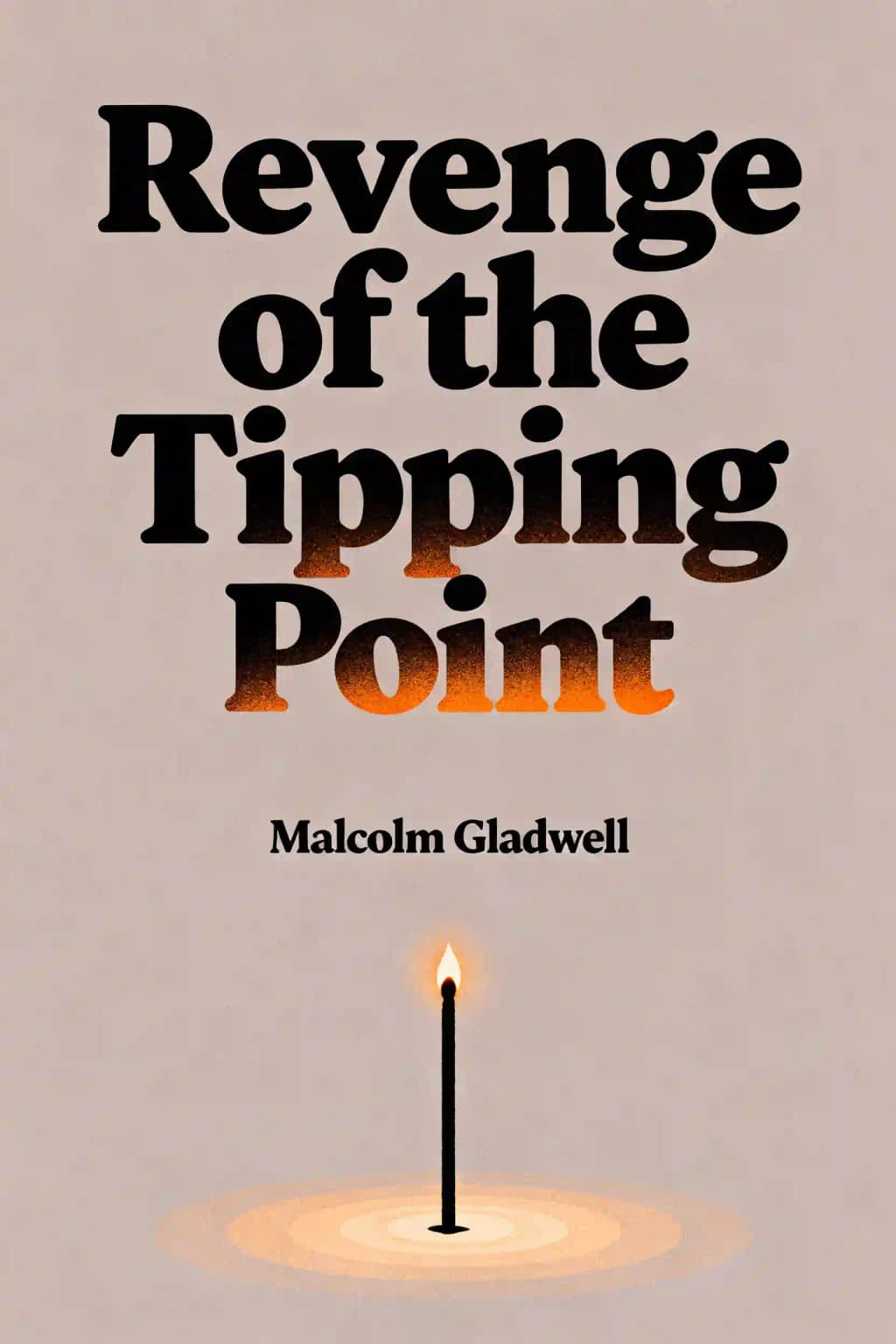
In "Revenge of the Tipping Point," Gladwell revisits his viral theory through modern crises like COVID-19. What if the mechanisms behind social epidemics have evolved? Praised by The Guardian as "addictive and provocative," this 2024 follow-up redefines how ideas - and consequences - spread.
Malcolm Timothy Gladwell, bestselling author of Revenge of the Tipping Point and renowned cultural analyst, has reshaped modern discourse on societal change through his exploration of psychology and social dynamics. A staff writer for The New Yorker since 1996, Gladwell’s work bridges academic research and pop culture, dissecting how subtle forces drive transformative trends—a theme central to this book’s examination of unintended consequences in human behavior. His expertise stems from decades of investigative journalism and bestselling titles like Blink: The Power of Thinking Without Thinking and Outliers: The Story of Success, which have collectively sold millions of copies worldwide.
Gladwell hosts the acclaimed podcast Revisionist History and co-founded Pushkin Industries, further solidifying his role as a leading voice in narrative-driven analysis.
A recipient of the Order of Canada and named among Time’s 100 Most Influential People, his ideas are taught in universities and applied by organizations ranging from tech startups to professional sports teams. Revenge of the Tipping Point builds on his legacy of reframing conventional wisdom, a practice that has translated his works into over 40 languages and sustained their relevance across global audiences.
Revenge of the Tipping Point examines how social epidemics—ideas, trends, and behaviors—spread and are manipulated, building on Gladwell’s earlier work. The book explores both successful and destructive applications of these principles, such as viral misinformation campaigns or public health interventions, while reevaluating concepts from his 2000 bestseller The Tipping Point.
Marketers, sociologists, policymakers, and fans of Gladwell’s earlier works like The Tipping Point or Outliers will find value. It’s ideal for readers interested in social dynamics, behavioral psychology, or strategies for influencing large-scale change.
Yes—Gladwell combines rigorous research with narrative flair to dissect modern social phenomena. The book offers fresh perspectives on leveraging (or resisting) “tipping point” strategies in an era of viral misinformation and algorithmic amplification.
While the 2000 book focused on harnessing social epidemics positively, Revenge analyzes their weaponization, such as misinformation campaigns or exploitative marketing. Gladwell also addresses critiques of oversimplification from his earlier work.
Case studies include viral conspiracy theories, public health failures during pandemics, and corporate campaigns that backfired. Gladwell revisits historical examples like crime reduction strategies, contrasting past successes with modern challenges.
Gladwell acknowledges critiques of his earlier “tipping point” framework, such as oversimplifying complex social systems. He addresses these by examining scenarios where simple interventions fail and emphasizing contextual adaptability.
His career as a New Yorker writer and podcast host (Revisionist History) informs the book’s blend of academic research and storytelling. His focus on counterintuitive insights reflects his trademark style.
Yes—the book offers frameworks for identifying social leverage points, managing organizational change, and avoiding viral backlash. It’s particularly relevant for roles in marketing, PR, or leadership.
These emphasize dual-use ethics in social influence.
It analyzes 2020s challenges like polarized online ecosystems, AI-driven content algorithms, and trust erosion in institutions—making it a timely read for understanding modern disinformation cycles.
Gladwell’s podcast Revisionist History explores overlapping themes, and the audiobook version features his narration. These formats highlight his emphasis on oral storytelling to convey complex ideas.
저자의 목소리로 책을 느껴보세요
지식을 흥미롭고 예시가 풍부한 인사이트로 전환
핵심 아이디어를 빠르게 캡처하여 신속하게 학습
재미있고 매력적인 방식으로 책을 즐기세요
Communities have their own "overstories" that powerfully shape behavior.
"gives you a little bit of a superhero complex."
Normal rules didn't apply.
The Waldorf environment gradually changed parents' perspectives.
The takeover method spread like wildfire.
Revenge of the Tipping Point의 핵심 아이디어를 이해하기 쉬운 포인트로 분해하여 혁신적인 팀이 어떻게 창조하고, 협력하고, 성장하는지 이해합니다.
Revenge of the Tipping Point을 빠른 기억 단서로 압축하여 솔직함, 팀워크, 창의적 회복력의 핵심 원칙을 강조합니다.

생생한 스토리텔링을 통해 Revenge of the Tipping Point을 경험하고, 혁신 교훈을 기억에 남고 적용할 수 있는 순간으로 바꿉니다.
무엇이든 물어보고, 목소리를 선택하고, 진정으로 공감되는 인사이트를 함께 만들어보세요.

샌프란시스코에서 컬럼비아 대학교 동문들이 만들었습니다
"Instead of endless scrolling, I just hit play on BeFreed. It saves me so much time."
"I never knew where to start with nonfiction—BeFreed’s book lists turned into podcasts gave me a clear path."
"Perfect balance between learning and entertainment. Finished ‘Thinking, Fast and Slow’ on my commute this week."
"Crazy how much I learned while walking the dog. BeFreed = small habits → big gains."
"Reading used to feel like a chore. Now it’s just part of my lifestyle."
"Feels effortless compared to reading. I’ve finished 6 books this month already."
"BeFreed turned my guilty doomscrolling into something that feels productive and inspiring."
"BeFreed turned my commute into learning time. 20-min podcasts are perfect for finishing books I never had time for."
"BeFreed replaced my podcast queue. Imagine Spotify for books — that’s it. 🙌"
"It is great for me to learn something from the book without reading it."
"The themed book list podcasts help me connect ideas across authors—like a guided audio journey."
"Makes me feel smarter every time before going to work"
샌프란시스코에서 컬럼비아 대학교 동문들이 만들었습니다

Revenge of the Tipping Point 요약을 무료 PDF 또는 EPUB으로 받으세요. 인쇄하거나 오프라인에서 언제든 읽을 수 있습니다.
Social change isn't gradual-it's explosive. Malcolm Gladwell's "The Tipping Point" revolutionized our understanding of how trends, behaviors, and ideas spread like viruses through society. Small actions, when perfectly timed and placed, can trigger massive shifts in behavior and belief. This phenomenon is visible in everything from crime waves to cultural shifts, where isolated incidents suddenly transform into widespread movements. Los Angeles' bank robbery epidemic of the 1990s perfectly illustrates this pattern. At its peak in 1992, the city saw 2,641 bank heists, triggered by "superspreaders" like the mastermind known as Casper. This reveals what Gladwell calls "small-area variation"-the puzzling phenomenon where adjacent communities develop radically different patterns despite similar conditions.