1장
The Culinary Maestro Behind the Restaurant Empire
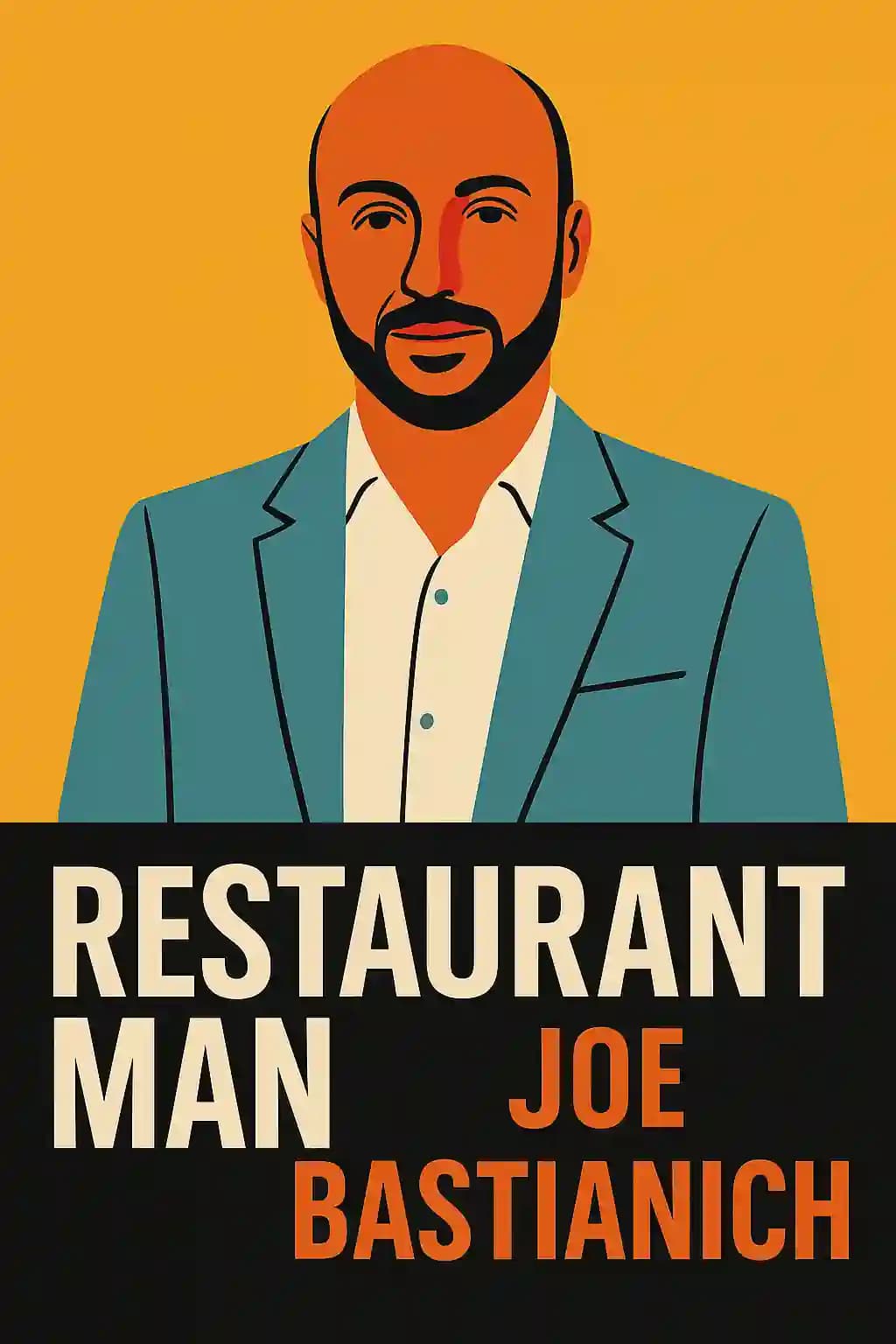
Joe Bastianich isn't just another celebrity restaurateur. His memoir "Restaurant Man" offers a raw, unfiltered glimpse into the soul of the modern restaurant industry through the eyes of a second-generation Italian-American who transformed his immigrant parents' humble beginnings into a global culinary empire. The book has become required reading for aspiring restaurateurs and food industry professionals, with Anthony Bourdain calling it "the best, most brutally honest, most revealing restaurant memoir ever written." Bastianich's no-nonsense approach resonates deeply in an era obsessed with food culture, offering a sobering counterpoint to the glamorized version of restaurant life portrayed on television. As judge on MasterChef and partner in over 30 restaurants worldwide, Bastianich's influence extends far beyond the plate, shaping how an entire generation thinks about Italian cuisine in America.
2장
From Queens Boulevard to Restaurant Royalty
Growing up in the restaurant business wasn't glamorous. My parents opened Buonavia on Queens Boulevard in 1970 as a typical red-sauce joint with velvet wallpaper and fake paintings. My father Felice, the original Restaurant Man, handled everything from making deals to hiring and firing, while my mother Lidia worked as cashier before eventually becoming a famous chef.
The restaurant immediately attracted long lines of Jewish customers who appreciated good food from hardworking immigrants. While we served Italian-American standards like veal parmigiana, Lidia occasionally introduced authentic dishes from our native Trieste-tripe, gnocchi, polenta, risotto-that resonated with the Eastern European Jewish clientele.
I had my first job washing dishes at eleven, did homework on tomato boxes in the dry-storage room, and hung out with the cooks-bad-ass motherfuckers with great cars. As Buonavia's popularity grew, we expanded from 30 to 120 seats by taking over neighboring businesses.
Queens was defined by ethnicity-Jews worked in banks, Italians in restaurants, Irish as cops. I learned the business from the ground up, accompanying my father to Hunts Point meat market and Fulton Fish Market at dawn, seeing the complete process from hoof to plate. These were rough places-prostitutes, mob connections, hard negotiations. Dad taught me it was mano a mano: "They were out to fuck you, and you were out to fuck them."
In 1980, my parents sold their Queens restaurants to open Felidia in Manhattan, where Lidia became a celebrity. But in the early days, being a Restaurant Man was blue-collar work-owners wouldn't even eat in their own restaurants when customers were present. It wasn't glamorous like today's chef-as-rockstar culture, just hard work with burned, bleeding hands. I was even embarrassed to tell friends my family was in the restaurant business.
3장
Formative Travels Through Italy's Culinary Landscape
Every summer since I was eight, we'd fly to Italy for extended trips. After selling their Queens restaurants in 1980 to prepare for opening Felidia in Manhattan, these trips became intense culinary research expeditions. We'd drive across Italy, stopping at restaurants and wineries, eventually reaching Trieste and sometimes crossing into Communist Yugoslavia where some family still lived.
These trips were grueling for a kid-multiple enormous meals daily, taking notes, meeting owners, then sleeping in a hot car without air conditioning before the next dining experience. Despite the torture of endless restaurant visits, we experienced incredible places-Sicily, Amalfi, Sardinia-and met influential people in Italy's upper echelon of restaurants during the era when nouvelle cuisine was taking root.
The winemakers made the strongest impression-we met legends like Angelo Gaja, Bruno Giacosa, and Carlo Mastroberardino. Visiting these powerful men in their beautiful homes made me think, "I want to be them." I first saw white truffles at wine baron Giacomo Bologna's house, an experience that stayed with me.
In Yugoslavia, we'd visit my parents' hometowns in Istria. My father's grandfather was 100 years old in 1976, and we'd sleep on the outhouse roof under incredible stars. My mother's grandmother Rosa lived in a tiny house with a corn husk mattress and no plumbing. The food experiences were indelible-real grilled calamari with perfect char, crab risotto where you could taste each rice kernel, precious red mullet from Albona. These flavors remain vivid decades later.
Back in Queens, I was embarrassed by my ethnicity and tried to break away. At Fordham Prep, I discovered intellectual freedom through cool Jesuit teachers like Mr. Beck who showed me there was more to life than cause and effect. All these experiences were paying off for my parents. When Felidia opened in 1981, it marked the birth of modern Italian restaurants in America-introducing risotto, puntarelle, and buffalo mozzarella to New Yorkers who previously only knew spaghetti and meatballs.
4장
Finding My Path Between Wall Street and Wine Country
At Boston College, I tried escaping my restaurant destiny. I embraced the Deadhead culture with its drugs, music and community, finding temporary liberation from my Queens upbringing. Though surrounded by trust-fund hippies whose rebellion was cushioned by generational wealth, I absorbed valuable lessons about organic food, natural consumption, and environmental consciousness that would later influence my restaurants.
By sophomore year, I began transitioning away from hippie culture, trading tie-dye for Brooks Brothers shirts and khakis. I ran for student body president (and lost), became a philosophy major, and was deeply influenced by Jesuit professors like James Bernauer who introduced me to philosophical questions about freedom, authority and states of nature.
Despite my attempts to escape my culinary heritage, my cooking skills made me popular in college, where I was shocked by my peers' poor food culture. They "ate to live" while my family "lived to eat." Still, I remained determined to pursue Wall Street rather than restaurants.
Fresh out of college in 1989, I applied for a job at Merrill Lynch, padding my resume with the fabricated position of "wine buyer for Felidia." Despite being caught in my exaggeration, I impressed a corporate bond trader with genuine wine knowledge about Aldo Conterno Barolo vintages. This led to entry into an investment banking program alongside sixty MBA graduates.
Suddenly, I found myself living in Battery Park City, wearing custom English suits and Hermes ties, partying hard with fellow traders. I leveraged my restaurant connections to gain status among Wall Street's elite, getting tables at exclusive spots when others couldn't. But I found the culture empty and soulless-"skimmers" who created nothing of value while living on percentages of others' transactions.
The breaking point came when I realized my boss was "a fucking asshole" who walked around with a golf club all day. On my twenty-first birthday, surrounded by coked-up colleagues at Odeon, I recognized I had nothing in common with these people obsessed with money and status. As soon as my six-figure bonus cleared, I bought a one-way ticket to Italy, beginning my journey in Trieste with a friend named Bruno who helped me buy a gray VW Rabbit. I then set out to explore Italian wine country.
5장
The Wine Epiphany That Changed Everything
In Montalcino, I stayed with the Cinelli Colombini family who made Brunello at Fattoria dei Barbi. They embraced me completely, improving my Italian and showing me their world. I experienced an epiphany during a vertical tasting of Brunello vintages going back twenty years. The current vintage screamed of bloody raw meat and violets, while the '71 had evolved into blackberry brandy and dry autumn leaves.
Throughout my travels, I learned the profound connection between regional wines and local foods-how Tuscan bread without salt, bistecca alla fiorentina, and simple tomatoes with olive oil created perfect harmony with the local wines. I realized Italy is about small places, each with specific smells and flavors that speak directly of their origin.
My mother's connections gave me access to aristocratic families like the Stucchi Prinetti in Chianti, descendants of the Medici. The weight of Italy's history humbled me-sitting in a 500-year-old building in a 3,000-year-old city listening to the Three Tenors at the Baths of Caracalla made me feel the insignificance of my New York existence.
When I returned to New York in early 1992 during a recession, I was determined to open my own restaurant. I would take the passionate, pure ideas I'd absorbed in Italy and transform them into a sellable product that could survive the economic downturn yet thrive when times improved.
No bottle of wine costs more than five dollars to make. This is the fundamental truth that cuts through wine industry bullshit. Wine is a commodity driven purely by supply and demand, mystique, marketing and ratings-not inherent value. The wine industry thrives on consumer insecurity. People don't trust their instincts when judging wine, so they rely on publications like Wine Spectator or Parker scores.
I possess a savant-like ability to remember wines-tasting them blind and identifying them from memory. My mind contains a vast reference library of sensations, with mental index cards for each wine organized by topology. When I smell wine, it speaks to me emotionally, taking me to specific places rather than just noting flavors.
Wine makes no fiscal sense. I'll never earn a dime producing it in my lifetime, but it's about passion. Having your name on a bottle is a heavy responsibility-like a piece of music or a book that can be enjoyed anywhere in the world. Wine transcends our humanity. Through it, I'm propagating a war-torn family legacy, bringing my kids back to their ancestral lands.
6장
Building the Babbo Empire
The menu is Restaurant Man's constitution-if there are misspellings or grease stains, "get the fuck out." It should entertain and engage like a Playbill at the theater, revealing the personality behind the restaurant while clearly stating the customer's financial commitment. At Babbo, we initially used plastic insert menus but upgraded to leather-bound Coach-branded menus (which people steal constantly-a $300 souvenir if we catch you). Our menu is comprehensive-twenty different pastas across four pages-because I hate lazy, limited menus.
We abandoned the restaurant industry's "friends and family" tradition (which should be called "enemies and detractors") where people eat free and offer unwanted opinions. These non-paying guests order inappropriately, behave like animals, and rarely give honest feedback to your face. I now prefer rehearsing with paying customers who are actually invested in the experience.
When Babbo opened, we merged our different styles-my Theater District sensibility and Mario's West Village aesthetic-creating the perfect uptown/downtown intersection where Upper East Side bluehairs dining at 6:30 could share space with Lower East Side artists arriving at 10:30. Our one-two punch partnership balanced my front-of-house expertise with Mario's kitchen mastery.
Critics initially balked at our menu lacking Italian staples and our loud rock music, but we stayed true to our vision. About 70% of our original menu remains-distinctive dishes like pig's feet, two-minute Calamari Sicilian Lifeguard Style, and mind-blowing pappardelle bolognese-while 30% changes continually. Our wine list grew from a humble hundred bottles to a multimillion-dollar inventory as we reinvested profits, building a cellar as if the restaurant would be open fifty years.
Despite early financial challenges (doing the "Curly Shuffle" to determine who got paid first), we had strong support from food critics and culinary luminaries from the beginning. We prioritized paying employees and sales tax first, then utilities, with food vendors often paid last-using them essentially as banks. The defining moment was earning three stars from Ruth Reichl at the New York Times, though we broke tradition by not comping critics' meals. Babbo became the standard for Italian restaurants, with no real competitors-we created our own category.
7장
The Art of Restaurant Management
In our restaurants, waiters are curators who custom-fit fantastic experiences for each guest. They navigate the eternal battle between front-of-house and kitchen-the former dealing in shades of gray, the latter in black and white absolutes. We create positive work environments where waiters can earn good money with benefits while pursuing other passions. What we seek most are people who genuinely enjoy giving others pleasure.
Our bartenders function almost as management, controlling cash, booze, and often embodying the restaurant's spirit-attractiveness matters here, though it's taboo to admit. Hostesses are typically college students in functional roles, while service directors ensure everyone plays nice. Managers paradoxically earn less than waiters despite being their bosses. Wine directors must genuinely understand wine beyond "medium-body, fruit-forward bullshit"-they represent our brand and my personal wines.
Selling wine requires sizing up customers based on everything from their shoes to their dates. General managers take on enormous responsibility without ownership-a thankless position. Maitre d's control the financial spigot through seating but contribute little else despite high earnings. They're "the biggest prostitutes in the business," accepting palm-greasing while balancing customer needs against the boss's interests.
Despite occasional tensions, Mario and I maintain low staff turnover by offering health insurance, fairness, and partnership opportunities. When firing becomes necessary, I view it as protecting the livelihoods of everyone else-each restaurant supports about 240 people through its economic ecosystem.
Drew always said, "When you have the demand of New York, you become the gatekeeper. Then you decide how you decorate the room." At Babbo, we achieved this rare status-we're both elitist (tough to get in) and populist (not prohibitively expensive). Fifteen years after opening, we remain one of the toughest tables in town alongside Nobu.
We're hands-on about seating arrangements, blocking prime-time tables and rewarding people who appreciate the restaurant. We're not snobby-we're creating the right mix that benefits everyone. Successful people want to be surrounded by other successful people. Once seated, everyone receives equal treatment regardless of celebrity status. We want customers who engage with the experience, not just voyeurs.
8장
Expanding the Italian Culinary Landscape
After Babbo was up and running, Mario and I had more time to enjoy our success, so we naturally pointed back to the motherland. We'd tell our wives we needed to go to Italy for "R&D trips"-which wasn't far from the truth-then eat and drink everything in sight. We took on Rome like gladiators-full-contact eating and drinking.
One of my favorite dinners was at Checchino, a restaurant built into a grotto in the walls of Testaccio. We had rigatoni con la pajata-intestines of suckling veal still containing their mothers' milk, which curdles into ricotta when braised in tomato sauce. I understand some people are skeeved by this idea, but it's the food of gods.
In Italy, there's a clear hierarchy of dining establishments. The simplest is a frasca, then the osteria offering prosciutto, soup, and pasta with casual service. The trattoria is more proper with antipasti, primi, secondi, while the ristorante represents formal dining with white tablecloths and all courses. And contrary to popular belief, there is no such thing as an "Italian bistro"-a concept that deeply upsets me despite its popularity in the West Village.
This distinction crystallized during our trip: Babbo was a ristorante, but what New York needed was a real Roman trattoria-one degree closer to street level, with authentic pastas you'd actually eat in Rome. We partnered with Jason Denton to create Lupa-named for the she-wolf who nursed Romulus and Remus. We built it on Thompson Street, a no-man's-land between SoHo and Greenwich Village.
People celebrated Lupa for its simplicity and purity-it was cheap and really good. Pastas were nine to fourteen bucks with no lunch over twenty. Unlike Babbo's intellectual interpretation of Italian food, Lupa was a literal translation of a Roman trattoria-chickpeas and tripe, bavette, cacio e pepe, coda alla vaccinara. We focused every detail on authenticity-the wine list featured only central Italian wines, and we pioneered amari in New York-digestive bitters that are medicinal in nature and traditionally offered after meals in Rome.
Dave Pasternack knew fishermen with actual metal hooks for hands who would sell you scallops hanging off their arm-you couldn't argue with that authenticity. He was a tough, blue-collar Jewish fisherman from Long Island's South Shore. Mario thought he was talented and "one of us," so we decided to open an Italian seafood restaurant together.
We took Dave on a research trip through the Italian coastline. To our surprise, we discovered fishermen were eating everything raw-combining the best local fish with regional olive oils and perfect sea salt. This concept of crudo was counterintuitive since no one thought raw fish had anything to do with Italy. When we returned and opened Esca, some critics like Gael Greene thought we were making it up, calling it "Italian sushi," while others like Ruth Reichl championed it from the beginning.
9장
The Ultimate Italian Food Experience: Eataly
Eataly is the game changer-a fifty-thousand-square-foot emporium combining restaurants and grocery stores that makes food accessible and attractive. It's become New York's first piazza for food and wine, bringing together diverse demographics from hipsters to bluehairs, all united by their passion for Italian cuisine. The concept transcends economic and social boundaries, creating a magical environment where all New Yorkers come together.
The Eataly project came through my wine world connections with Oscar Farinetti, a successful Italian businessman who had made his fortune selling consumer electronics. After selling his company, Oscar invested in his true passions-wineries, cheese producers, and water companies-before opening the first Eataly in an old Fiat factory in Torino. The concept was revolutionary: a giant grocery store where every department has its own themed restaurant.
After two years of searching, we found the perfect location at the old Toy Building on Fifth Avenue, signing the lease during the 2008 banking crisis. The project presented countless challenges-retrofitting a landmark building's lobby, navigating complex leases and building codes, and managing union construction that the Italians didn't understand. Despite these obstacles, Eataly opened in 2010, just eighteen months after we began, combining Italian retail expertise with our restaurant operations knowledge.
Eataly defies categorization-it can be a two-dollar espresso or a hundred-fifty-dollar meal at Manzo with steak and Barolo. This democratic approach threatened many in the Italian food world who feared losing business. But Eataly celebrates producers rather than creating private labels, establishing a transparent connection between customers and makers. In its first year, Eataly generated $40 million in food and beverage sales plus $40 million in groceries.
Not every venture succeeded. Frico Bar was ahead of its time-essentially becoming Otto years later, now a $12 million business. Bistro du Vent, our French bistro attempt, was "a complete fucking failure." Despite good food and a two-star Bruni review, customers rejected us making French cuisine. The experience cost me a year of my life and a million dollars, teaching that authenticity matters-customers can smell when something is contrived.
10장
The Restaurant Man's Legacy
My greatest worry is my privileged children won't understand the Restaurant Man ethos that shaped me. They'll never experience the hardships or risks I faced. I try sharing my experiences while ensuring they don't become part of the "culture of skimmers." My mother Lidia remains my greatest influence-supporting me while letting me succeed or fail on my own merits. She taught me authenticity, honesty to heritage, and long-term thinking: "Never make decisions on your best day, and never make your decisions on your worst day. Make all your decisions on medium days."
My parents' relationship mirrored the restaurant world's evolution-from blue-collar immigrant business to culinary artistry. My father embodied the original Restaurant Man mentality: buy it, fix it, sell it, watch margins like a hawk. When my mother became a celebrated chef-artist, resentment grew. His old-world mentality-drinking at the Istria Club with fellow immigrants while my ambitious mother sought something more-created tension. Though our relationship was strained, Restaurant Man "forged me in iron" with his hard-edged practicality, balancing my mother's creative influence.
The great tragedy of being Restaurant Man is that I can't enjoy myself in restaurants anymore. I'm too wound up, too professional, always doing the math. I know exactly what food costs and the markup in my head. When restaurants are fancy, they become a burden; when light, they're unsatisfactory. Even when perfect, it's just like breathing-not special.
I'm obsessive about restaurant details. I choose restaurants based on stemware and avoid places with polyester napkins that don't absorb anything. I prefer clean wooden tables to abrasive polyester tablecloths. At Del Posto, we have padded, plush tables-"like a Sealy Posturepedic"-and silver silverware with handmade Ginori china costing $150 per plate and Slovenian wineglasses at $30 a stem.
I refuse to put salt and pepper on tables-why let customers alter the chef's flavors? No cheese on fish either-"that's for gavones." I despise the Olive Garden-taught habit of bread dipping in cheap olive oil and fake balsamic vinegar. We use different grades of olive oil-table oils, finishing oils, cooking oils-because quality ingredients make the difference between good restaurants and great ones.
Restaurants fail when owners stop paying attention. While trends come and go, consistent quality keeps establishments viable. When a restaurant becomes hot, discipline is crucial-don't get caught in the "whirlwind of your own success." Even when you're the toughest reservation in town, you must overdeliver on expectations to survive after the spotlight fades.
Closing time in a restaurant brings the greatest potential for debauchery, thievery and destructive behavior. After a night of service, staff want to blow off steam-drinking stashed wine, horsing around, while dishwashers get antsy to leave. The final three tables deserve special attention-managers must personally attend to these late diners, who represent the most valuable customers. Someone eating at 10:30 will return at that hour, precisely when the restaurant needs business most.
This business thrives on excess-every night is someone's celebration. The Restaurant Man's demon is separating hosting from participating in the party. I've finally learned I don't need to be the last one there every night or open the final wine bottle. Restaurant Man is in the entertainment business, putting on a nightly show where the meal is just the visible part. Behind it lies conception, execution, maintenance, staff management, vendor relationships, and financial concerns. Every night, we blow thousands of minds across a dozen restaurants, leaving them eager to return. And then I wake up and do it all again.