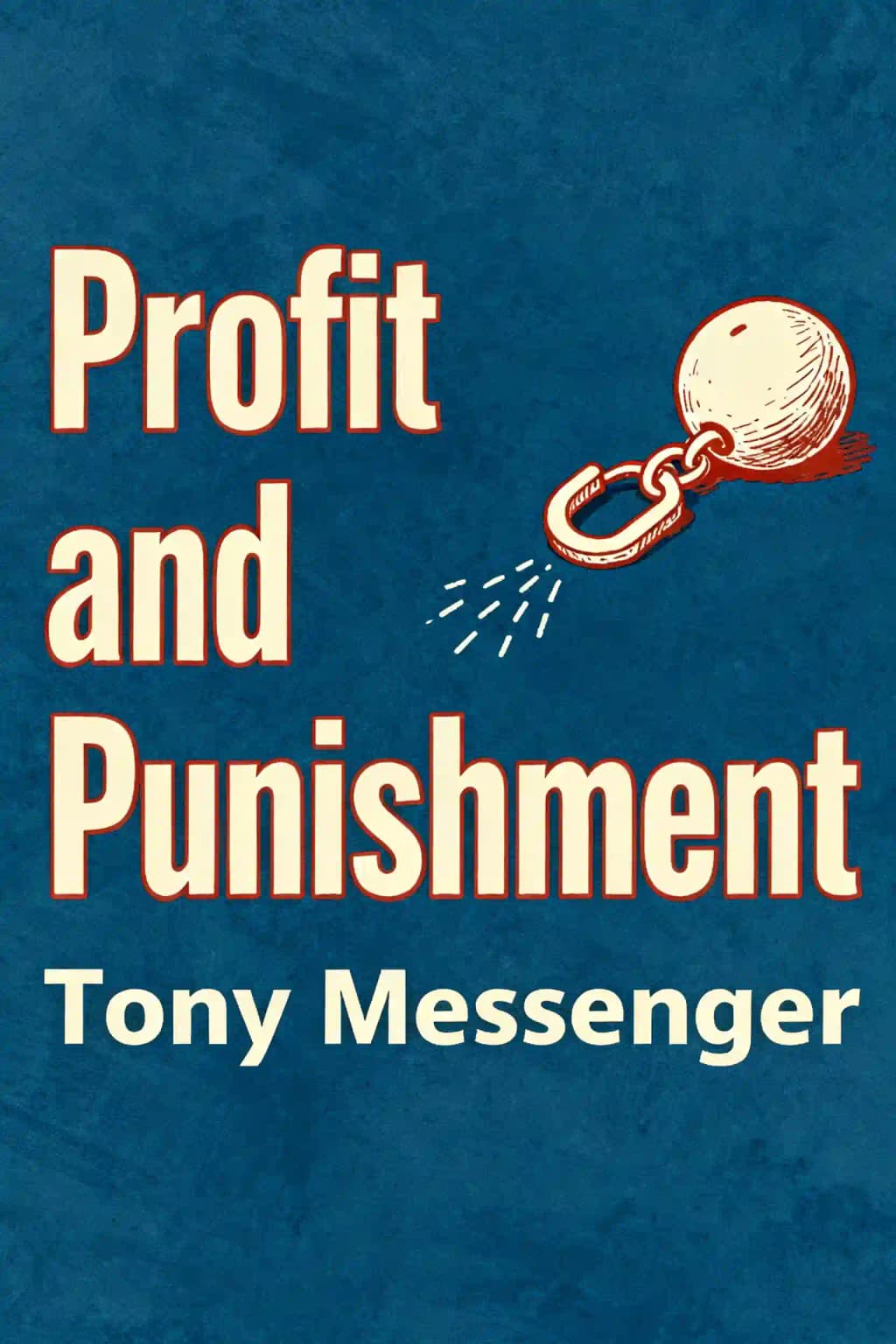
Pulitzer Prize-winner Tony Messenger exposes America's modern debtors' prisons, where minor offenses trap the poor in cycles of debt and jail time. What's the cost of justice? Former Senator Claire McCaskill calls it "the most comprehensive look at poverty criminalization" driving bipartisan reform.
Tony Messenger, Pulitzer Prize-winning journalist and author of Profit and Punishment: How America Criminalizes the Poor in the Name of Justice, is a leading voice on systemic inequities in the U.S. criminal justice system.
As the metro columnist for the St. Louis Post-Dispatch, Messenger has spent decades investigating how court fines and fees disproportionately punish low-income communities, work that earned him the 2019 Pulitzer Prize for Commentary. His book expands on this groundbreaking reporting, blending investigative rigor with human stories to expose modern debtors’ prisons and their devastating societal impacts.
A Missouri Honor Medal recipient and finalist for the 2015 Pulitzer, Messenger’s columns on Ferguson’s racial justice struggles and rural judicial abuses have driven policy reforms. A frequent speaker at criminal justice conferences and universities, his findings are cited in national debates about poverty and legal reform.
Profit and Punishment builds on his Pulitzer-winning columns, which sparked legislative changes in Missouri and renewed scrutiny of predatory court practices nationwide.
Profit and Punishment by Tony Messenger exposes how America’s justice system criminalizes poverty through excessive fines, fees, and court costs, trapping low-income individuals in cycles of debt and incarceration. The Pulitzer Prize-winning book combines personal narratives, legal analysis, and data to reveal systemic exploitation, such as $50 billion in unpaid court debts and modern-day debtors' prisons.
This book is essential for policymakers, criminal justice reformers, social activists, and anyone seeking to understand systemic inequities. It offers critical insights for legal professionals, journalists, and educators addressing poverty-driven incarceration.
Yes. Messenger’s Pulitzer-winning investigative rigor and gripping storytelling make it a vital read. It’s praised for exposing lesser-known injustices, such as “taxation by citation,” where municipalities fund budgets through predatory fines.
The book shares stories like Bergen and Killman, whose minor offenses led to insurmountable debts, job loss, and jail time. Messenger contextualizes these accounts with data, such as $50 billion in outstanding court debts, showing how fees perpetuate poverty.
Key reforms include mandatory ability-to-pay hearings, abolishing “pay-to-stay” jail fees, and legislative action to end profit-driven fines. Messenger highlights successful cases, like ACLU lawsuits, that challenge unconstitutional debtors' prisons.
Modern debtors' prisons jail individuals for unpaid court fines, violating constitutional rights. These facilities, as described in Missouri and other states, deepen poverty by forcing inmates into further debt for their incarceration.
Messenger combines firsthand accounts of affected individuals, legal precedents (e.g., 1983’s Bearden v. Georgia), and systemic data. His Pulitzer-winning journalism provides credibility to critiques of exploitative court practices.
Some may argue the book focuses heavily on extreme cases, though Messenger counters by contextualizing these examples within national trends. Others note limited coverage of grassroots reform efforts already underway.
While not the central theme, the book underscores how fines disproportionately harm marginalized communities, exacerbating racial disparities in incarceration and poverty cycles.
Unlike broader criminal justice critiques, Messenger’s work zooms in on legal financial obligations (LFOs), offering a niche focus on economic exploitation within courts. It complements works like The New Jim Crow by highlighting fiscal injustice.
These lines encapsulate the book’s critique of profit-driven justice.
저자의 목소리로 책을 느껴보세요
지식을 흥미롭고 예시가 풍부한 인사이트로 전환
핵심 아이디어를 빠르게 캡처하여 신속하게 학습
재미있고 매력적인 방식으로 책을 즐기세요
Profit and Punishment...has become required reading in law schools.
How ridiculous is it that we're going to take away a person's ability to work because they haven't made enough money to pay a fine or fee?
Profit and Punishment의 핵심 아이디어를 이해하기 쉬운 포인트로 분해하여 혁신적인 팀이 어떻게 창조하고, 협력하고, 성장하는지 이해합니다.
Profit and Punishment을 빠른 기억 단서로 압축하여 솔직함, 팀워크, 창의적 회복력의 핵심 원칙을 강조합니다.

생생한 스토리텔링을 통해 Profit and Punishment을 경험하고, 혁신 교훈을 기억에 남고 적용할 수 있는 순간으로 바꿉니다.
무엇이든 물어보고, 목소리를 선택하고, 진정으로 공감되는 인사이트를 함께 만들어보세요.

샌프란시스코에서 컬럼비아 대학교 동문들이 만들었습니다
"Instead of endless scrolling, I just hit play on BeFreed. It saves me so much time."
"I never knew where to start with nonfiction—BeFreed’s book lists turned into podcasts gave me a clear path."
"Perfect balance between learning and entertainment. Finished ‘Thinking, Fast and Slow’ on my commute this week."
"Crazy how much I learned while walking the dog. BeFreed = small habits → big gains."
"Reading used to feel like a chore. Now it’s just part of my lifestyle."
"Feels effortless compared to reading. I’ve finished 6 books this month already."
"BeFreed turned my guilty doomscrolling into something that feels productive and inspiring."
"BeFreed turned my commute into learning time. 20-min podcasts are perfect for finishing books I never had time for."
"BeFreed replaced my podcast queue. Imagine Spotify for books — that’s it. 🙌"
"It is great for me to learn something from the book without reading it."
"The themed book list podcasts help me connect ideas across authors—like a guided audio journey."
"Makes me feel smarter every time before going to work"
샌프란시스코에서 컬럼비아 대학교 동문들이 만들었습니다

Profit and Punishment 요약을 무료 PDF 또는 EPUB으로 받으세요. 인쇄하거나 오프라인에서 언제든 읽을 수 있습니다.
A woman steals an $8 tube of mascara while mourning her infant daughter's death. Her punishment? A year in jail and a $15,900 debt that will haunt her for years. This isn't Victorian England-it's modern America, where Brooke Bergen's story reveals a justice system that has quietly transformed into something our founders would barely recognize. Courts have become collection agencies, jails have become profit centers, and poverty has become a crime punishable by imprisonment. What's remarkable isn't just that this is happening-it's that it took a Pulitzer Prize-winning investigation to make us notice. Across America, 34 million people live one traffic ticket away from financial ruin, trapped in a system that extracts $50 billion in fines and fees while pretending it's about public safety. The scales of justice don't balance anymore-they're tipped by the weight of your wallet.