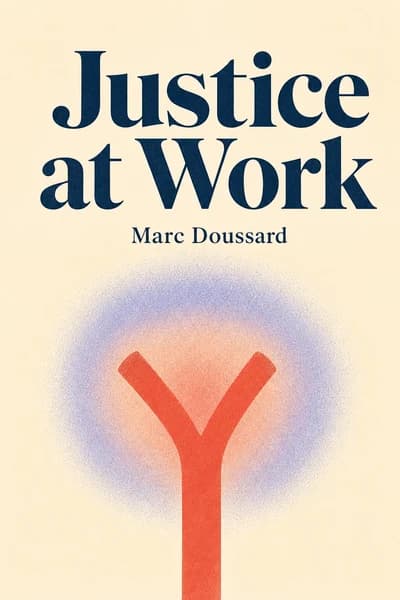
"Justice at Work" reveals how urban coalitions are winning $15 minimum wages and fair scheduling laws across America. Ruth Milkman praises this groundbreaking study showing how city-level activism is transforming economic policy through a powerful fusion of racial and class justice movements.
저자의 목소리로 책을 느껴보세요
지식을 흥미롭고 예시가 풍부한 인사이트로 전환
핵심 아이디어를 빠르게 캡처하여 신속하게 학습
재미있고 매력적인 방식으로 책을 즐기세요
In the early 2010s, something remarkable was happening in American cities. Despite decades of warnings that businesses would flee at the first sign of regulation, more than fifty cities had enacted minimum wage laws by the late 2010s - many at $15 per hour, double what activists had initially proposed just a decade earlier. This transformation wasn't happening through traditional politics but through a new kind of activism that explicitly linked economic and racial justice. When COVID-19 hit in 2020, followed by widespread protests against police violence and massive job losses, these seemingly separate crises revealed themselves as deeply interconnected parts of the same system of inequality. The urban renaissance had created not just prosperity but also unprecedented leverage for justice movements to transform American cities into laboratories for economic democracy. Cities present a striking contradiction in today's economy. While inequality has worsened dramatically, urban areas have become unexpected winners in the global marketplace. This challenges the conventional wisdom that cities lack power to address inequality for fear of scaring away investment. Three economic shifts have transformed urban dynamics: "post-Fordism" replacing mass production with specialized industries; deindustrialization shifting jobs from manufacturing to polarized service sectors; and financialization intensifying inequality through both employment and housing markets. These changes have made central cities essential coordination hubs for global production networks. Today's businesses depend on dense urban centers to provide specialized labor and innovation ecosystems. They can't credibly threaten to relocate when faced with regulations improving wages or working conditions. This economic transformation enables a fundamental shift in how we approach development - rather than focusing solely on attracting businesses and hoping benefits trickle down, cities can directly regulate service industries that cannot easily relocate.
Justice at Work의 핵심 아이디어를 이해하기 쉬운 포인트로 분해하여 혁신적인 팀이 어떻게 창조하고, 협력하고, 성장하는지 이해합니다.
Justice at Work을 빠른 기억 단서로 압축하여 솔직함, 팀워크, 창의적 회복력의 핵심 원칙을 강조합니다.
생생한 스토리텔링을 통해 Justice at Work을 경험하고, 혁신 교훈을 기억에 남고 적용할 수 있는 순간으로 바꿉니다.
무엇이든 물어보고, 목소리를 선택하고, 진정으로 공감되는 인사이트를 함께 만들어보세요.

샌프란시스코에서 컬럼비아 대학교 동문들이 만들었습니다
"Instead of endless scrolling, I just hit play on BeFreed. It saves me so much time."
"I never knew where to start with nonfiction—BeFreed’s book lists turned into podcasts gave me a clear path."
"Perfect balance between learning and entertainment. Finished ‘Thinking, Fast and Slow’ on my commute this week."
"Crazy how much I learned while walking the dog. BeFreed = small habits → big gains."
"Reading used to feel like a chore. Now it’s just part of my lifestyle."
"Feels effortless compared to reading. I’ve finished 6 books this month already."
"BeFreed turned my guilty doomscrolling into something that feels productive and inspiring."
"BeFreed turned my commute into learning time. 20-min podcasts are perfect for finishing books I never had time for."
"BeFreed replaced my podcast queue. Imagine Spotify for books — that’s it. 🙌"
"It is great for me to learn something from the book without reading it."
"The themed book list podcasts help me connect ideas across authors—like a guided audio journey."
"Makes me feel smarter every time before going to work"
샌프란시스코에서 컬럼비아 대학교 동문들이 만들었습니다

Justice at Work 요약을 무료 PDF 또는 EPUB으로 받으세요. 인쇄하거나 오프라인에서 언제든 읽을 수 있습니다.