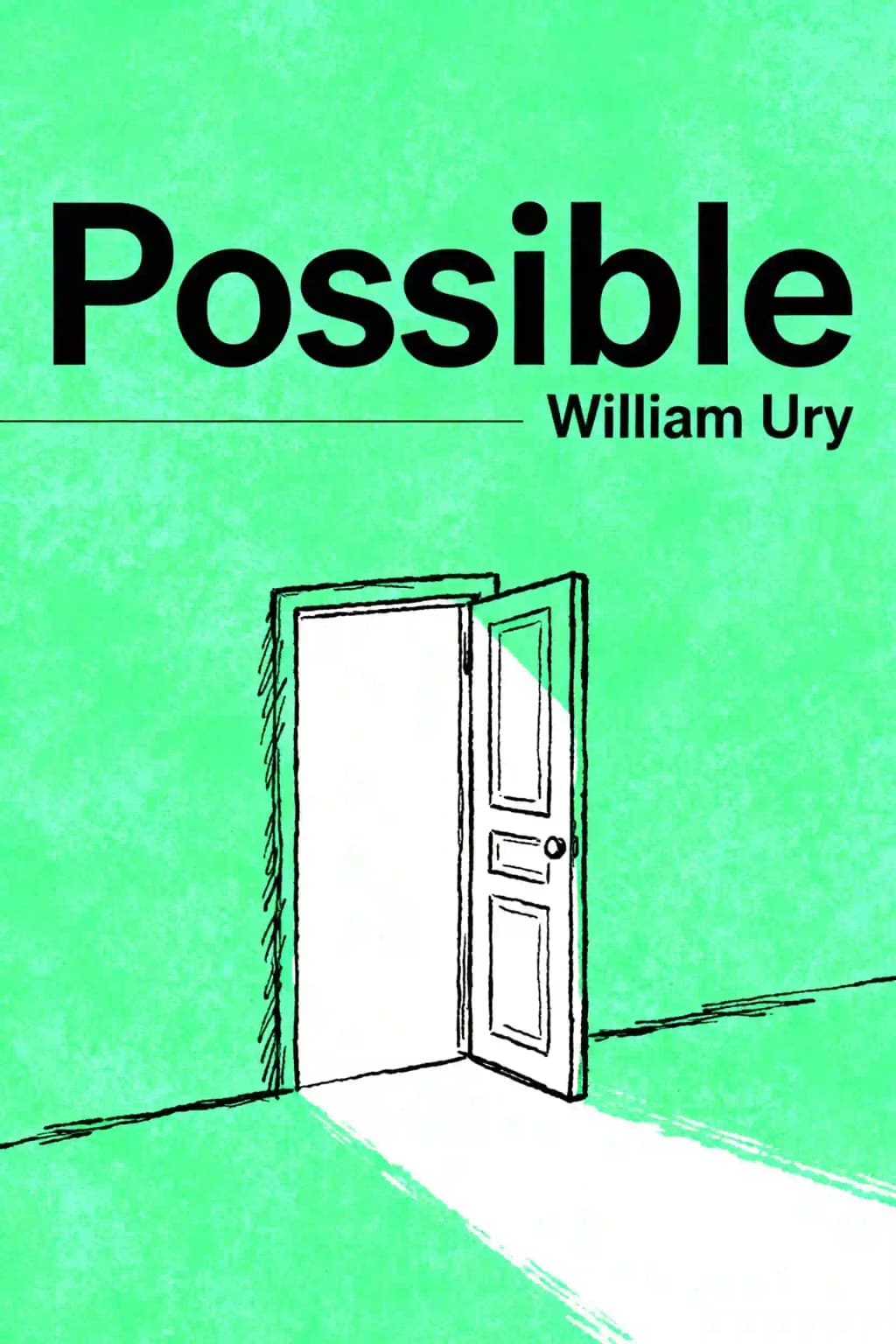
In "Possible," negotiation legend William Ury unveils transformative conflict resolution strategies tested at Harvard. Co-author of 15-million-copy bestseller "Getting to Yes," Ury's methods have prevented nuclear disaster and earned praise from "Good to Great" author Jim Collins. What's your impossible conflict?
William Ury, co-author of the international bestseller Getting to Yes and author of Possible: How We Survive (and Thrive) in an Age of Conflict, is a globally recognized negotiation expert and conflict resolution pioneer. A co-founder of Harvard’s Program on Negotiation, Ury combines anthropological insights with decades of experience mediating high-stakes disputes, from Cold War nuclear crises to Colombia’s 50-year civil war. His work explores transforming adversarial conflicts into collaborative solutions across business, government, and communities.
Ury’s influential frameworks appear in other acclaimed books like Getting Past No and The Power of a Positive No, which address navigating difficult negotiations. A sought-after speaker, he has delivered TED Talks and appeared on podcasts like The Tim Ferriss Show, sharing strategies tested with Fortune 500 executives, world leaders, and grassroots peacebuilders.
Getting to Yes has sold over 15 million copies worldwide and remains essential reading in business and law schools, cementing Ury’s legacy as a visionary in conflict resolution.
Possible by William Ury explores transforming conflict into opportunities for growth through a three-step framework: "Go to the Balcony" (gain perspective), "Build a Golden Bridge" (collaborate on solutions), and "Engage the Third Side" (leverage community support). Drawing on Ury’s 45+ years mediating high-stakes conflicts—from Cold War crises to corporate disputes—the book argues that conflict, when managed constructively, drives innovation and progress.
Leaders, negotiators, policymakers, and anyone navigating personal or professional conflicts will benefit. Ury’s actionable methods apply to workplace disputes, family tensions, and global diplomacy, making it ideal for CEOs, mediators, activists, and individuals seeking strategies to turn adversarial situations into collaborative solutions.
Yes, particularly for its tested, real-world frameworks. Ury’s approach, validated in Harvard’s Program on Negotiation and conflict zones like Colombia and Ukraine, offers practical tools to reframe disagreements. The blend of memoir, case studies, and tactical advice makes it a standout guide for modern conflict resolution.
This process helps de-escalate tensions and fosters lasting outcomes.
Ury advises stepping back (“balcony”) to avoid reactive decisions, then collaboratively designing mutually beneficial solutions (“golden bridge”). Involving neutral stakeholders (“third side”)—like HR or mentors—can prevent escalation. These tactics are drawn from Ury’s corporate mediation experience, including resolving boardroom standoffs.
The “Third Side” refers to engaging impartial third parties—communities, leaders, or institutions—to reinforce resolutions. By creating accountability and support networks, this approach prevents relapse into conflict, as seen in Ury’s work ending Colombia’s 50-year civil war.
Ury’s methods have shaped peace processes in Ukraine, Colombia, and Cold War nuclear negotiations. For example, his “third side” strategy mobilized global allies to support Colombia’s peace deal, demonstrating how external stakeholders can stabilize fragile agreements.
While Getting to Yes focuses on negotiation tactics for mutual gain, Possible addresses broader conflict transformation. It emphasizes mindset shifts (balcony), systemic collaboration (bridge), and community-powered sustainability (third side), reflecting Ury’s evolution from deal-making to holistic resolution.
Yes. Ury shares examples of resolving family feuds by applying the same principles used in global disputes: pausing to gain perspective, identifying shared goals, and involving trusted mediators. These steps reduce emotional reactivity and foster reconciliation.
Key examples include mediating the US-USSR nuclear crisis, Colombia’s civil war, Ukraine’s conflict, and corporate labor strikes. Ury also details personal stories, like defusing a tense encounter with Venezuela’s Hugo Chávez.
Ury argues polarization stems from unmanaged conflict, not conflict itself. His framework offers tools to reframe debates—like political divides—as collaborative problem-solving opportunities, urging societies to embrace conflict as a catalyst for innovation.
These principles empower individuals and nations to thrive amid discord.
저자의 목소리로 책을 느껴보세요
지식을 흥미롭고 예시가 풍부한 인사이트로 전환
핵심 아이디어를 빠르게 캡처하여 신속하게 학습
재미있고 매력적인 방식으로 책을 즐기세요
Like navigating rapids, the only way out is through.
The problem isn't conflict itself but how destructively we handle it.
Even the most significant transformations begin with something small and quiet-a pause.
Positions are what we say we want; interests are why we want what we want.
Possible의 핵심 아이디어를 이해하기 쉬운 포인트로 분해하여 혁신적인 팀이 어떻게 창조하고, 협력하고, 성장하는지 이해합니다.
Possible을 빠른 기억 단서로 압축하여 솔직함, 팀워크, 창의적 회복력의 핵심 원칙을 강조합니다.

생생한 스토리텔링을 통해 Possible을 경험하고, 혁신 교훈을 기억에 남고 적용할 수 있는 순간으로 바꿉니다.
무엇이든 물어보고, 목소리를 선택하고, 진정으로 공감되는 인사이트를 함께 만들어보세요.

샌프란시스코에서 컬럼비아 대학교 동문들이 만들었습니다
"Instead of endless scrolling, I just hit play on BeFreed. It saves me so much time."
"I never knew where to start with nonfiction—BeFreed’s book lists turned into podcasts gave me a clear path."
"Perfect balance between learning and entertainment. Finished ‘Thinking, Fast and Slow’ on my commute this week."
"Crazy how much I learned while walking the dog. BeFreed = small habits → big gains."
"Reading used to feel like a chore. Now it’s just part of my lifestyle."
"Feels effortless compared to reading. I’ve finished 6 books this month already."
"BeFreed turned my guilty doomscrolling into something that feels productive and inspiring."
"BeFreed turned my commute into learning time. 20-min podcasts are perfect for finishing books I never had time for."
"BeFreed replaced my podcast queue. Imagine Spotify for books — that’s it. 🙌"
"It is great for me to learn something from the book without reading it."
"The themed book list podcasts help me connect ideas across authors—like a guided audio journey."
"Makes me feel smarter every time before going to work"
샌프란시스코에서 컬럼비아 대학교 동문들이 만들었습니다

Possible 요약을 무료 PDF 또는 EPUB으로 받으세요. 인쇄하거나 오프라인에서 언제든 읽을 수 있습니다.
In a world increasingly fractured by conflict, William Ury's insights arrive like a beacon of hope. Drawing on fifty years mediating some of history's most challenging disputes - from Cold War nuclear tensions to Colombia's decades-long civil war - Ury presents a revolutionary framework for transforming seemingly impossible situations. The central question driving his life's work emerged in post-war Europe: How can we deal with our deepest differences without destroying what we hold dear? Today, with unprecedented polarization and many Americans fearing civil war, this question has never been more urgent. The problem isn't conflict itself - we need constructive conflict that challenges injustice and stimulates growth. Rather, it's how destructively we handle our differences. Like navigating rapids, the only way out is through - transforming conflicts from destructive fighting into productive negotiation. The path to possible consists of three interconnected victories that unlock our full human potential. First, "going to the balcony" represents a victory with ourselves - stepping back to gain perspective in heated situations. Second, "building a golden bridge" creates victory with others by establishing pathways from confrontation to cooperation. Third, "engaging the third side" achieves victory with the whole community by activating the surrounding social ecosystem to help transform conflict. These victories aren't separate steps but interconnected dimensions that work together. The balcony unlocks potential within us, the bridge unlocks potential between us, and the third side unlocks potential around us. This framework isn't just theoretical - it's been battle-tested in some of history's most intractable conflicts.