1장
When Phantoms Become Real: The Extraordinary World of the Brain
What if your amputated arm still ached? What if you could feel sensations in limbs that no longer exist? In V.S. Ramachandran's groundbreaking work "Phantoms in the Brain," we encounter these seemingly impossible phenomena not as supernatural events but as windows into the brain's remarkable adaptability. Celebrated by Oliver Sacks as "the modern Paul Broca" and widely regarded as one of neuroscience's most innovative thinkers, Ramachandran takes us on a journey through the strangest territory of all-the human mind. This book, which The New York Times called "a splendid exploration of the brain's ability to create reality," has influenced everyone from renowned philosophers like Daniel Dennett to popular science communicators like Sam Harris. Its blend of accessible storytelling and profound scientific insight makes complex neuroscience feel like a detective story where the culprit is often our own perception.
2장
The Detective of the Mind: Neurological Mysteries Unveiled
Like Sherlock Holmes following clues to solve seemingly incomprehensible cases, Ramachandran approaches bizarre neurological conditions as puzzles that reveal fundamental principles of brain function. Take Arthur, who believed his parents were impostors. Rather than dismissing this as psychosis, Ramachandran used physiological measurements similar to lie detector tests to understand what had gone wrong in Arthur's brain. This approach transforms seemingly incomprehensible symptoms into coherent neural explanations.
When asked about a unified theory for the brain, Ramachandran explains that neuroscience is still in its early "experiment-driven" stage, like Faraday's work with magnetism before Maxwell's equations formalized electromagnetic theory. His research strategy involves "tinkering" - playing with ideas guided by intuition rather than overarching theories.
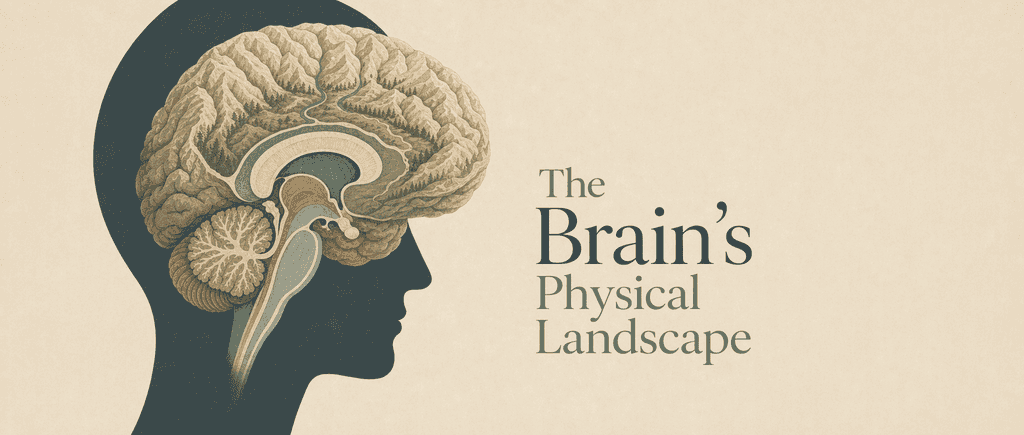
The human brain contains over 100 billion neurons at birth, each making thousands of connections with other neurons. A grain-of-sand-sized piece of brain contains 100,000 neurons with billions of connections, creating more possible brain states than elementary particles in the universe. The brain's structure includes the medulla controlling vital functions, the cerebellum coordinating movements, and the two cerebral hemispheres divided into four lobes (frontal, temporal, parietal and occipital).
Brain theories have oscillated between modularity (specialized brain regions for specific functions) and holism (the brain functioning as an interconnected whole). Ramachandran suggests these aren't mutually exclusive - the brain employs both approaches in complex interplay. Once we understand brain functions better, the question of "where" becomes less important than "how."
Neurological case studies illuminate these principles beautifully. A woman whose left hand tried to strangle her had a damaged corpus callosum, preventing her rational left hemisphere from controlling her emotionally volatile right hemisphere. With smiling, we see two distinct neural circuits: spontaneous smiles generated by the basal ganglia produce natural expressions, while voluntary smiles controlled by the motor cortex create forced grimaces.
Bill, a stroke patient, could discuss complex topics intelligently yet couldn't perform simple arithmetic. Paradoxically, he understood sophisticated numerical concepts - he knew what subtraction was, could make ballpark estimates, and even grasped the concept of infinity. His stroke had damaged his left angular gyrus, revealing that this brain region is necessary for arithmetic calculations but not for understanding numerical concepts.
3장
The Remapping Brain: Finding New Paths Through Neural Wilderness
When Tom lost his arm in a car accident, something extraordinary happened. Whenever his face was touched, he felt the sensation in his missing hand. This seemingly bizarre phenomenon reveals one of the brain's most remarkable capabilities: remapping. The brain contains topographic maps of the body's surface, with adjacent body parts represented next to each other. When an arm is amputated, the face area (which sits next to the hand area in the brain's sensory map) invades the now-unused hand territory.
This remapping occurs through two possible mechanisms. First, there might be sprouting of new neural connections - face neurons might physically grow new branches to connect with the hand area. Second, there might be redundant connections already present but usually inhibited - these hidden pathways become unmasked when the hand is removed. While both mechanisms likely contribute, the speed of these changes (sometimes occurring within 24 hours of amputation) suggests unmasking plays a significant role.
These findings challenge the static view of brain maps presented in textbooks. Each neuron exists in dynamic equilibrium with adjacent neurons, its significance depending on what neighboring neurons are doing or not doing.
This remapping phenomenon extends beyond hand amputations. A graduate student who lost her leg below the knee reported experiencing strange sensations in her phantom foot during sex - perfectly explained by the Penfield map showing the foot area adjacent to the genitals in the brain. Similarly, an engineer not only felt sensations in his phantom foot during intercourse but actually experienced his orgasms there, making them feel "much bigger than before."
This connection between genitals and feet in the brain may explain the prevalence of foot fetishes in the general population. While Freud suggested the penis resembles the foot, a more likely explanation is their adjacent representation in the brain's sensory map.
Similar remapping occurs after other body parts are removed. Men with amputated penises experience phantom erections. Women with mastectomies report phantom breasts, with sensations triggered by touching adjacent areas like the sternum. Surprisingly, one-third of these women experienced erotic sensations in their phantom nipples when their earlobes were stimulated.
4장
The Mirror's Magic: Healing Phantom Pain Through Visual Illusion
Phantom limbs aren't just curiosities - they often cause excruciating pain. Patients describe their phantoms as twisted into impossible positions or frozen in painful spasms. Traditional treatments like shortening amputation stumps, cutting nerves, or destroying brain centers typically fail, leaving patients in agony.
Ramachandran's breakthrough came from a simple insight: if the brain creates phantom limbs through remapping, perhaps we can use the brain's visual system to "remap" the phantom back to normal. He created a "mirror box" where amputees could see their intact arm reflected in a mirror positioned to make it appear where the phantom should be. When patients moved their intact arm while watching its reflection, many experienced their phantom moving in sync with what they saw.
This visual dominance over proprioception extends even to anatomically impossible positions. When Mary saw what appeared to be her phantom finger bending backward, she experienced the sensation without discomfort. Another patient, Karen, actually felt pain from an illusory twisted finger.
Most remarkably, this visual feedback could eliminate phantom spasms and erase associated pain memories. These findings contradict the popular "bucket brigade" theory of the brain as a computer with autonomous modules processing information in a one-way cascade. Instead, the brain operates through extraordinarily dynamic connections where perceptions emerge from reverberations between different sensory hierarchies.
Studying phantom limbs has revealed how the brain continuously updates its model of reality through complex interactions between genetic and experiential factors. Fascinating cases illustrate this interplay: patients with surgically cleaved stumps develop similarly cleaved phantoms; a girl born without forearms used her phantom fingers for arithmetic calculations; another born with a shorter leg developed three separate phantom feet after amputation; and leprosy patients who gradually lose limbs don't experience phantoms until sudden amputation resurrects the original body image.
Most remarkably, anyone can experience how malleable their body image is through simple experiments. In one, synchronized touching of your nose and someone else's while blindfolded creates the illusion that your nose extends several feet forward. In another, synchronous stroking of a hidden hand and visible rubber hand makes you feel sensations in the fake hand.
5장
The Zombie Within: When We Act Without Awareness
Diane Fletcher suffered carbon monoxide poisoning that damaged her visual cortex, leaving her clinically blind. Yet when asked to navigate an obstacle course or reach for objects, she performed with surprising accuracy while insisting she couldn't see anything. This condition, called blindsight, reveals a profound truth about our brains: we have multiple visual systems that can operate independently of conscious awareness.
The primary visual pathway runs from the retina through the lateral geniculate nucleus to the primary visual cortex. This "what" pathway identifies objects and gives us conscious visual experience. But a secondary "how" pathway runs to the parietal lobe, guiding movements without conscious awareness - what Ramachandran calls our "zombie" system.
Diane, despite her visual impairment, can interact with the world spatially while remaining consciously unaware of shapes, locations and sizes of objects. Though her what pathway was damaged, her how pathway remained intact, allowing her to navigate without conscious sight.
The opposite condition is Balint's syndrome, where bilateral damage to the parietal lobes impairs the how pathway while leaving the what pathway intact. These patients experience a kind of tunnel vision, focusing only on objects in their foveal vision while completely ignoring everything else. They can recognize objects perfectly once fixated but have extreme difficulty pointing to targets.
The discovery of multiple specialized visual areas raises the "binding problem" - how do these separate processing streams create our unified visual experience? Is there a central location where information converges, or do synchronized firing patterns between areas create perceptual unity? This remains one of neuroscience's great unsolved mysteries.
The zombie system may be more capable than we realize. Athletes often perform better when they "let go" rather than consciously focusing - quarterbacks calculating trajectories, outfielders running to intercept baseballs, basketball players making shots with eyes closed. This suggests that sometimes it's better to "release your zombie" and let the how pathway work unimpeded.
6장
The Mind's Eye: When Vision Happens Without Seeing
James Thurber lost his right eye at age six when his brother accidentally shot him with a toy arrow. By thirty-five, he had lost vision in his remaining eye and became completely blind. Yet rather than experiencing darkness, Thurber's visual field filled with vivid hallucinations - a brilliant world of surrealistic images that likely inspired his whimsical cartoons and imaginative writing.
Thurber described these hallucinations in colorful detail: "blue Hoover, golden sparks, melting purple blobs," a "corona" around lights with "thousands of radiating petals" containing "the colors of the prism." After his glasses once shattered, he saw "a Cuban flag flying over a national bank," "a gay old lady with a gray parasol walk right through the side of a truck," and "a cat roll across a street in a small striped barrel."
Ramachandran diagnoses Thurber with Charles Bonnet syndrome, a common but underreported neurological condition affecting millions with compromised vision. Patients experience vivid visual hallucinations that appear completely unbidden - unlike ordinary visual imagination which requires conscious effort. These hallucinations seem extraordinarily real, sometimes even "more real than reality" with "supervivid" colors.
Charles Bonnet syndrome represents a fascinating contradiction - hallucinations that seem utterly real yet are mere figments of imagination. Patients are rarely threatened by their hallucinations, which can blend into actual surroundings. They remain aware these visions aren't real - like the woman who embarrassingly realized the winter cows she complained about were hallucinations.
Given how common this syndrome is, Ramachandran suggests that many reported sightings of ghosts, UFOs and angels might be examples of Charles Bonnet hallucinations, noting that approximately one-third of Americans claim to have seen angels. Poor lighting and dusk particularly favor these hallucinations, which often cease when patients blink or turn on lights.
To understand these phenomena, Ramachandran explains that we must revise traditional "bottom-up" models of visual processing. Instead, perception resembles "images in a funhouse full of mirrors, continually reflected back and forth, and continually changed by the process of reflection." When we imagine objects, we actually run our visual machinery in reverse - memories flow from higher regions down to the primary visual cortex, creating a "mind's eye" perception almost as strong as actually seeing the object.
7장
Half a World Gone: The Strange Reality of Neglect Syndrome
When Ellen returned home after recovering from a stroke, her son Sam was shocked by her appearance. She had meticulously applied makeup, combed her hair and dressed herself - but only on the right side of her body. The left side remained completely neglected.
This condition, called hemi-neglect, often follows strokes in the right brain, particularly the right parietal lobe. Patients are profoundly indifferent to objects and events in the left side of their world, sometimes including the left side of their own bodies.
Ellen's neglect syndrome persisted, with Navy captain Steve describing his experience: "The left side simply did not exist! When I shaved, I neglected the left side of my face. When I dressed, I would incessantly leave the left arm outside its sleeve."
In a remarkable experiment, Ramachandran placed a mirror on Ellen's right side at right angles to her shoulder. When his student held a pen in Ellen's neglected left visual field, she could see it clearly in the mirror. But instead of reaching correctly toward the left, Ellen repeatedly banged on the mirror trying to grab the reflection, saying "It's not in my reach" or "It's behind the mirror." This perfectly intelligent adult made the absurd mistake of thinking the object was inside the mirror.
Ramachandran named this condition "mirror agnosia" or "the looking glass syndrome." Testing twenty more neglect patients revealed many had the same problem. This raised fascinating therapeutic possibilities - could repeated mirror exposure help overcome neglect?
The looking glass syndrome might occur because patients unconsciously reason: "Since the reflection is in the mirror, the object must be on my left. But the left doesn't exist on my planet-therefore, the object must be inside the mirror." Most striking were patients' reactions: "The pen is inside the mirror and I can't reach it!" It's as though the laws of optics had changed in their universe.
8장
The Self Deluded: How Our Brains Construct Reality
Perhaps the most profound neurological condition is anosognosia - the denial of one's own paralysis following a stroke. A patient with a completely paralyzed left arm might insist it's moving normally or claim they're not moving it because they're tired. When confronted with evidence of their paralysis, they confabulate elaborate explanations, often creating increasingly complex justifications that defy logic. Some patients claim they could pick up objects if they wanted to, while others insist their immobile arm belongs to someone else entirely.
To test whether denial patients have repressed knowledge of their condition, Ramachandran replicated Eduardo Bisiach's experiment using cold water irrigation in the ear canal. This procedure involves carefully introducing ice-cold water into the ear, which stimulates the vestibular system and temporarily disrupts certain neural pathways. When he squirted ice-cold water into Mrs. Macken's ear, her eyes displayed nystagmus (rapid eye movements). Upon questioning her afterward, she suddenly admitted, "my left arm is paralyzed" - the first time she'd used that word in three weeks. When asked how long she'd been paralyzed, she replied, "Oh, continuously, all these days," suggesting her memories of failed attempts had been registering somewhere but were blocked from conscious access.
Remarkably, this effect persisted for at least thirty minutes after the nystagmus ceased, during which time she could discuss her condition with surprising clarity and insight. However, twelve hours later, she denied her earlier admission, essentially creating two separate conscious beings: the "cold water" Mrs. Macken who acknowledged her paralysis, and the regular Mrs. Macken who adamantly denied it. This phenomenon suggests the existence of parallel awareness systems in the brain, with one system maintaining the denial while another registers the truth.
Most patients recover from denial within weeks while remaining physically paralyzed, though the timeline varies significantly from person to person. Some recover gradually, progressing through stages of partial acknowledgment, while others experience sudden recognition. Remarkably, when asked about their previous denials after recovery, they rewrite history. Mumtaz Shah, who had repeatedly denied her paralysis for a month, later insisted she had always acknowledged it, stating "if I said otherwise, I would be lying." Similar cases show patients constructing entirely new memories to maintain their self-narrative consistency.
These cases reveal how memory actively constructs rather than passively records reality, with the left hemisphere working to maintain a coherent self-narrative even when that requires editing out threatening information. This process of narrative construction isn't limited to neurological patients - healthy individuals also engage in similar, though less extreme, forms of self-deception and memory reconstruction. The brain appears to prioritize maintaining a consistent narrative over preserving literal truth, suggesting our sense of reality is more constructed than we typically assume.
9장
The Sacred and the Profane: God in the Brain
When Canadian psychologist Dr. Michael Persinger used a transcranial magnetic stimulator on his temporal lobes, he experienced God for the first time in his life. This isn't entirely surprising - medical students learn that patients with temporal lobe epilepsy often have intense spiritual experiences during seizures and become preoccupied with religious and moral issues.
The limbic system functions as our emotional core, with the hypothalamus serving as a crucial hub. It sends signals to the pituitary gland, controls the autonomic nervous system, and drives the "four F's" - fighting, fleeing, feeding and sexual behavior.
Patients with temporal lobe epilepsy experience profound emotional and spiritual states during seizures. They describe feelings "on fire," ranging from ecstasy to despair, and sometimes deeply moving spiritual experiences - a direct communion with God where everything suddenly makes cosmic sense. Ironically, this sense of revealed truth comes not from rational brain regions but from emotional limbic structures.
These brief "temporal lobe storms" can permanently alter personality through "kindling" - repeated electrical bursts opening new neural pathways. Patients develop "temporal lobe personality" - seeing cosmic significance in trivial events, becoming humorless, self-important, and obsessed with philosophical and theological issues.
To test whether kindling indiscriminately strengthens all connections from temporal cortex to amygdala, Ramachandran conducted an experiment with two temporal lobe epilepsy patients. He measured their galvanic skin response to various stimuli - ordinary objects, familiar faces, sexual images, violent scenes, and religious words/icons. Surprisingly, rather than showing heightened responses to everything, they responded strongly only to religious stimuli while showing diminished responses to other categories, even sexual ones that typically evoke strong reactions.
This selective amplification suggests that temporal lobe epilepsy doesn't simply make everything meaningful, but rather creates specific pathways enhancing religious experience while potentially dampening others. The bottom line is that specific brain circuits are involved in religious experience and become hyperactive in some epileptics. Whether these circuits evolved specifically for religion or generate emotions conducive to religious beliefs remains unknown, but we can now begin to address questions about God and spirituality scientifically.
10장
The Laughing Brain: Evolution's Signal of Safety
What happens when the brain's laughter circuit malfunctions? Willy Anderson, a twenty-five-year-old plumber, began laughing uncontrollably at his mother's funeral. Despite his profound embarrassment and desperate attempts to stifle it, his laughter echoed through the cemetery. Two days later, he died from a ruptured brain aneurysm that had compressed his hypothalamus and mammillary bodies.
Ruth Greenough, a fifty-eight-year-old librarian, suffered a similar fate when she was seized by unstoppable laughter that persisted for an hour and a half despite morphine injections. She literally died laughing, with an autopsy revealing blood filling her brain's third ventricle and compressing her thalamus.
These cases reveal a specialized "laughter circuit" in the brain, primarily in the limbic system. But identifying this circuit doesn't explain why laughter evolved or what biological function it serves.
Ramachandran proposes a "false alarm theory" of humor: laughter alerts others in a social group that a detected anomaly is trivial. When a person follows a path of expectation with a sudden twist requiring reinterpretation, and this new interpretation has trivial rather than threatening implications, laughter ensues. This explains why laughter is contagious - the signal's value is amplified as it spreads through the group.
This theory explains slapstick humor too - we laugh at someone slipping on a banana peel only if they're unharmed, signaling to others that aid is unnecessary. Though this explains laughter's evolutionary origin, it doesn't account for all modern functions of humor, which may have been adapted for creativity and psychological defense.
Smiles may have similar origins as "weaker" forms of laughter - an aborted threatening grimace that evolved into a ritualized greeting signaling "I pose no threat."
Pain asymbolia offers additional support for this theory. Patients with damage to the insular cortex don't experience the aversive emotional impact of pain and often giggle when stabbed with needles. One part of their brain registers a threat while another immediately signals "no danger" - creating the perfect conditions for laughter according to the false alarm theory.
Human consciousness, with all its peculiarities and contradictions, emerges from the interplay of specialized brain systems that evolved for specific survival functions but have been repurposed and interconnected in ways that create our sense of self. Far from diminishing the wonder of human experience, this neurological perspective enhances it, revealing the extraordinary complexity that underlies our ordinary perceptions and the profound adaptability that allows our brains to overcome even the most devastating injuries.
As Ramachandran concludes, despite all our noble qualities and intellect, humans still bear in our bodily frame "the indelible stamp of our lowly origin." Yet it is precisely this evolutionary heritage, with its jury-rigged solutions and unexpected adaptations, that makes the human brain the most fascinating object in the known universe.