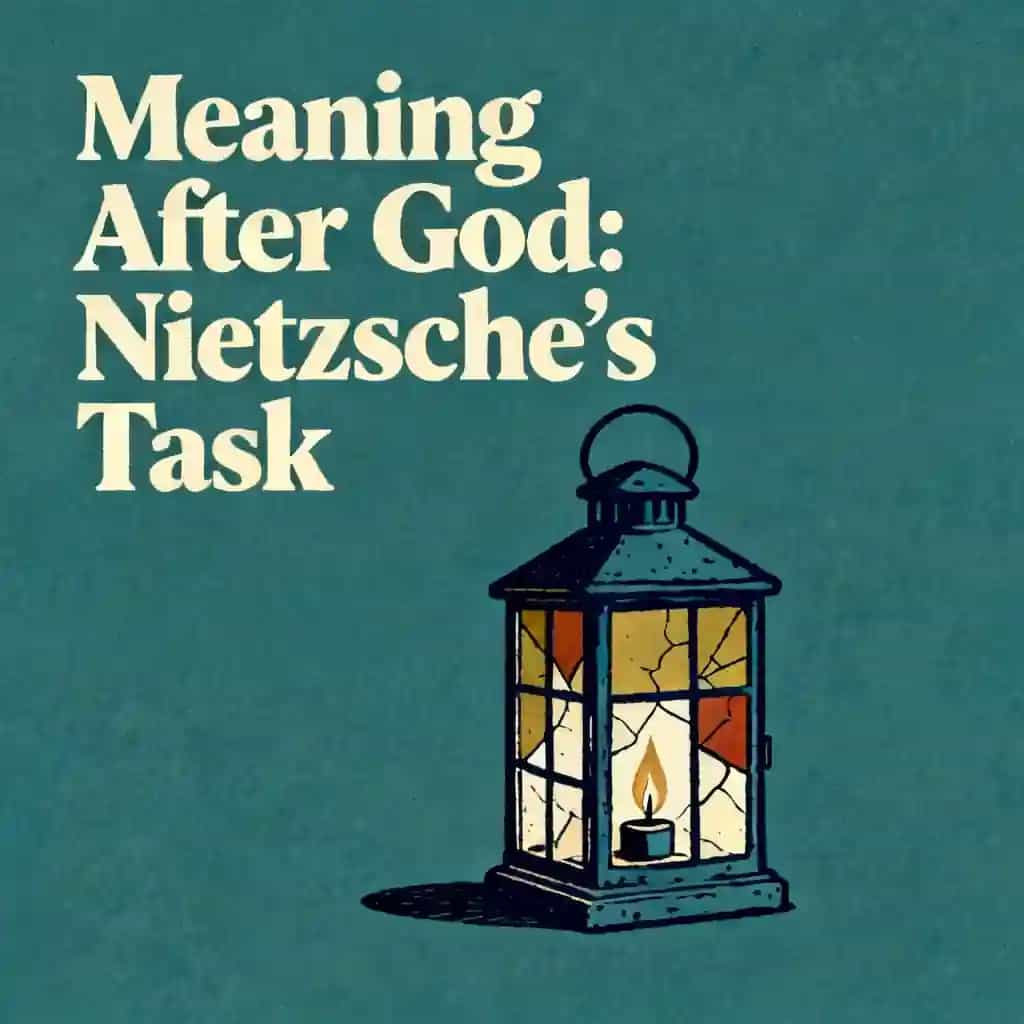
On the Genealogy of Morals book cover

On the Genealogy of Morals

Friedrich Nietzsche
4.12 (34327 Reviews)

On the Genealogy of Morals 개요

Nietzsche's explosive critique of morality that transformed philosophy forever. Jordan Peterson frequently references its master-slave morality concept, while existentialists from Sartre to Camus drew inspiration from its radical ideas. What if our deepest moral values are built on historical lies?

On the Genealogy of Morals의 핵심 주제

  • slave revolt morality
  • master slave dialectic
  • psychology of resentment
  • ascetic ideals
  • genealogical method

On the Genealogy of Morals의 명언

  • That lambs dislike great birds of prey does not seem strange: only it furnishes no reason for reproaching these birds of prey for taking the little lambs.

  • What is good? Everything that heightens the feeling of power in man, the will to power, power itself. What is bad? Everything that is born of weakness.

  • The sick are mankind's greatest danger.

  • 'The judgment 'good' did not originate with those to whom goodness was shown!'

  • To see others suffer does one good, to make others suffer even more.

On the Genealogy of Morals의 등장인물

  • Friedrich NietzscheAuthor and philosopher who dissects human values
  • Herbert SpencerEnglish philosopher who theorized on morality
  • Jordan PetersonContemporary figure acknowledging Nietzsche

저자 소개

On the Genealogy of Morals의 저자 소개

Friedrich Wilhelm Nietzsche (1844–1900) was an influential German philosopher and cultural critic, and the author of On the Genealogy of Morals, a seminal work of moral philosophy that deconstructs traditional ethics and explores the psychological origins of morality. A classical philologist turned revolutionary thinker, Nietzsche challenged Christian morality, Enlightenment rationalism, and metaphysical traditions, arguing instead for perspectivism and the "will to power." His critiques of slave morality and nihilism in Genealogy build on themes from earlier works like Beyond Good and Evil and Thus Spoke Zarathustra, which introduced his iconic concepts of the Übermensch and eternal recurrence.

Nietzsche’s academic career began at the University of Basel, where he became the youngest-ever professor of classical philology at age 24. Plagued by health issues, he resigned in 1879 but produced his most transformative ideas in the following decade. His writings later reshaped 20th-century philosophy, influencing existentialists like Sartre, postmodernists like Foucault, and critics of institutional power.

Translated into over 50 languages, Nietzsche’s works remain foundational in philosophy curricula worldwide. On the Genealogy of Morals continues to provoke debate on ethics, power dynamics, and human motivation, cementing his legacy as a cornerstone of modern thought.

On the Genealogy of Morals 요약 다운로드

On the Genealogy of Morals 요약을 무료 PDF 또는 EPUB으로 받으세요. 인쇄하거나 오프라인에서 언제든 읽을 수 있습니다.

이 책에 대한 FAQ

On the Genealogy of Morals by Friedrich Nietzsche critiques Western morality by tracing its historical origins across three essays. Nietzsche argues that concepts like "good" and "evil" emerged from power dynamics, not inherent truths, with aristocratic "master morality" contrasting oppressed "slave morality." The book challenges religious asceticism and advocates re-evaluating values to prioritize life-affirming ideals over self-denial.

Philosophy students, critics of religious morality, and readers exploring ethical systems will find this book compelling. Nietzsche’s dense, polemical style suits those interested in existentialism, postmodern thought, or the psychological roots of moral judgment. It’s ideal for readers seeking to confront traditional values and explore alternatives to Judeo-Christian ethics.

Yes—it’s a cornerstone of modern philosophy for its radical critique of morality’s origins and enduring influence on existential and postmodern thought. Nietzsche’s insights into power dynamics, resentment, and asceticism remain relevant to debates about ethics, culture, and individualism. Its provocative ideas challenge readers to rethink societal norms.

Nietzsche’s genealogical method examines morality’s evolution through history, rejecting fixed origins. Instead, he reveals how concepts like "good" and "evil" shifted meanings based on power struggles. For example, "good" initially denoted aristocratic strength but was redefined by the powerless as humility and piety. This approach exposes morality as fluid, not universal.

  • Master morality: Associated with the powerful, it values strength, pride, and nobility.
  • Slave morality: A reactive system by the oppressed, prizing humility, pity, and obedience. Nietzsche argues slave morality dominates modern ethics, fostering resentment against natural human instincts.

Ressentiment describes the bitter envy driving slave morality. The powerless vilify strength as "evil" and redefine weakness as "good" to justify their position. Nietzsche claims this inversion stifles human potential by glorifying self-sacrifice over self-affirmation.

Nietzsche condemns ascetic ideals (e.g., monastic self-denial) for glorifying suffering and devaluing earthly life. He ties these ideals to religious institutions that exploit guilt, arguing they perpetuate sickness by prioritizing imaginary afterlife rewards over present flourishing.

Though not explicitly named in Genealogy, the "will to power" underpins Nietzsche’s view of morality as a tool for dominance. Master morality embodies this drive through self-assertion, while slave morality stifles it via resentment. The concept reflects Nietzsche’s belief in life’s inherent striving for excellence.

The book remains relevant for critiques of moral absolutism, debates on identity politics, and discussions about secular ethics. Nietzsche’s emphasis on self-determination over dogma resonates in movements challenging systemic oppression or advocating individualism.

Critics argue Nietzsche oversimplifies morality’s origins, dismisses religion’s social value, and glorifies hierarchy. Others note his opaque writing style and reliance on historical speculation. Despite this, the work’s bold ideas continue to inspire philosophical discourse.

Nietzsche rejects Enlightenment rationalism and Christian ethics, contrasting thinkers like Kant or Rousseau. He critiques Paul Rée’s utilitarian approach, insisting morality stems from power, not reason or utility. His focus on historical contingency influenced later thinkers like Foucault.

This concept urges redefining morality to celebrate life, creativity, and strength instead of meekness or guilt. Nietzsche envisions a future where individuals create values aligned with human potential, not religious or societal constraints.

나만의 학습 방법 탐색하기

On the Genealogy of Morals은 단순한 책이 아닙니다 — Philosophy의 마스터클래스입니다. 당신에게 가장 잘 맞는 방식으로 교훈을 흡수할 수 있도록 5가지 고유한 학습 모드를 제공합니다. 깊이 생각하는 사람이든, 빠른 학습자이든, 이야기를 좋아하는 사람이든, 당신의 스타일에 맞는 모드가 있습니다.

빠른 요약 모드

On the Genealogy of Morals 요약을 9분 만에 읽거나 듣기

On the Genealogy of Morals의 핵심 아이디어를 이해하기 쉬운 포인트로 분해하여 혁신적인 팀이 어떻게 창조하고, 협력하고, 성장하는지 이해합니다.

play
00:00
00:00

재미있게 모드

On the Genealogy of Morals의 교훈을 22분 스토리로

생생한 스토리텔링을 통해 On the Genealogy of Morals을 경험하고, 혁신 교훈을 기억에 남고 적용할 수 있는 순간으로 바꿉니다.

play
00:00
00:00

개인화 모드

On the Genealogy of Morals을 나만의 학습 스타일로 경험하기

무엇이든 묻고, 학습 스타일을 선택하고, 나에게 맞는 인사이트를 함께 만들어보세요.

Personalize Mode

샌프란시스코에서 컬럼비아 대학교 동문들이 만들었습니다

BeFreed는 1,000,000 호기심 넘치는 글로벌 커뮤니티를 하나로 연결합니다

"Instead of endless scrolling, I just hit play on BeFreed. It saves me so much time."

@Moemenn
platform
star
star
star
star
star

"I never knew where to start with nonfiction—BeFreed’s book lists turned into podcasts gave me a clear path."

@Chloe, Solo founder, LA
platform
comments
12
likes
117

"Perfect balance between learning and entertainment. Finished ‘Thinking, Fast and Slow’ on my commute this week."

@Raaaaaachelw
platform
star
star
star
star
star

"Crazy how much I learned while walking the dog. BeFreed = small habits → big gains."

@Matt, YC alum
platform
comments
12
likes
108

"Reading used to feel like a chore. Now it’s just part of my lifestyle."

@Erin, Investment Banking Associate , NYC
platform
comments
254
likes
17

"Feels effortless compared to reading. I’ve finished 6 books this month already."

@djmikemoore
platform
star
star
star
star
star

"BeFreed turned my guilty doomscrolling into something that feels productive and inspiring."

@Pitiful
platform
comments
96
likes
4.5K

"BeFreed turned my commute into learning time. 20-min podcasts are perfect for finishing books I never had time for."

@SofiaP
platform
star
star
star
star
star

"BeFreed replaced my podcast queue. Imagine Spotify for books — that’s it. 🙌"

@Jaded_Falcon
platform
comments
201
thumbsUp
16

"It is great for me to learn something from the book without reading it."

@OojasSalunke
platform
star
star
star
star
star

"The themed book list podcasts help me connect ideas across authors—like a guided audio journey."

@Leo, Law Student, UPenn
platform
comments
37
likes
483

"Makes me feel smarter every time before going to work"

@Cashflowbubu
platform
star
star
star
star
star

"Instead of endless scrolling, I just hit play on BeFreed. It saves me so much time."

@Moemenn
platform
star
star
star
star
star

"I never knew where to start with nonfiction—BeFreed’s book lists turned into podcasts gave me a clear path."

@Chloe, Solo founder, LA
platform
comments
12
likes
117

"Perfect balance between learning and entertainment. Finished ‘Thinking, Fast and Slow’ on my commute this week."

@Raaaaaachelw
platform
star
star
star
star
star

"Crazy how much I learned while walking the dog. BeFreed = small habits → big gains."

@Matt, YC alum
platform
comments
12
likes
108

"Reading used to feel like a chore. Now it’s just part of my lifestyle."

@Erin, Investment Banking Associate , NYC
platform
comments
254
likes
17

"Feels effortless compared to reading. I’ve finished 6 books this month already."

@djmikemoore
platform
star
star
star
star
star

"BeFreed turned my guilty doomscrolling into something that feels productive and inspiring."

@Pitiful
platform
comments
96
likes
4.5K

"BeFreed turned my commute into learning time. 20-min podcasts are perfect for finishing books I never had time for."

@SofiaP
platform
star
star
star
star
star

"BeFreed replaced my podcast queue. Imagine Spotify for books — that’s it. 🙌"

@Jaded_Falcon
platform
comments
201
thumbsUp
16

"It is great for me to learn something from the book without reading it."

@OojasSalunke
platform
star
star
star
star
star

"The themed book list podcasts help me connect ideas across authors—like a guided audio journey."

@Leo, Law Student, UPenn
platform
comments
37
likes
483

"Makes me feel smarter every time before going to work"

@Cashflowbubu
platform
star
star
star
star
star

"Instead of endless scrolling, I just hit play on BeFreed. It saves me so much time."

@Moemenn
platform
star
star
star
star
star

"I never knew where to start with nonfiction—BeFreed’s book lists turned into podcasts gave me a clear path."

@Chloe, Solo founder, LA
platform
comments
12
likes
117

"Perfect balance between learning and entertainment. Finished ‘Thinking, Fast and Slow’ on my commute this week."

@Raaaaaachelw
platform
star
star
star
star
star

"Crazy how much I learned while walking the dog. BeFreed = small habits → big gains."

@Matt, YC alum
platform
comments
12
likes
108

"Reading used to feel like a chore. Now it’s just part of my lifestyle."

@Erin, Investment Banking Associate , NYC
platform
comments
254
likes
17

"Feels effortless compared to reading. I’ve finished 6 books this month already."

@djmikemoore
platform
star
star
star
star
star

"BeFreed turned my guilty doomscrolling into something that feels productive and inspiring."

@Pitiful
platform
comments
96
likes
4.5K

"BeFreed turned my commute into learning time. 20-min podcasts are perfect for finishing books I never had time for."

@SofiaP
platform
star
star
star
star
star

"BeFreed replaced my podcast queue. Imagine Spotify for books — that’s it. 🙌"

@Jaded_Falcon
platform
comments
201
thumbsUp
16

"It is great for me to learn something from the book without reading it."

@OojasSalunke
platform
star
star
star
star
star

"The themed book list podcasts help me connect ideas across authors—like a guided audio journey."

@Leo, Law Student, UPenn
platform
comments
37
likes
483

"Makes me feel smarter every time before going to work"

@Cashflowbubu
platform
star
star
star
star
star

더 많은 이야기를 보시겠어요?

웹에서 사람들이 BeFreed에 대해 이야기하는 방법
1.5K Ratings4.7
지금 바로 학습 여정을 시작하세요