Journey inside North Korea through intimate defector stories that shattered international perceptions. A National Book Award finalist revealing forbidden love, famine survival, and hidden resilience under history's most secretive regime. What happens when ordinary people discover their entire reality is fabricated?
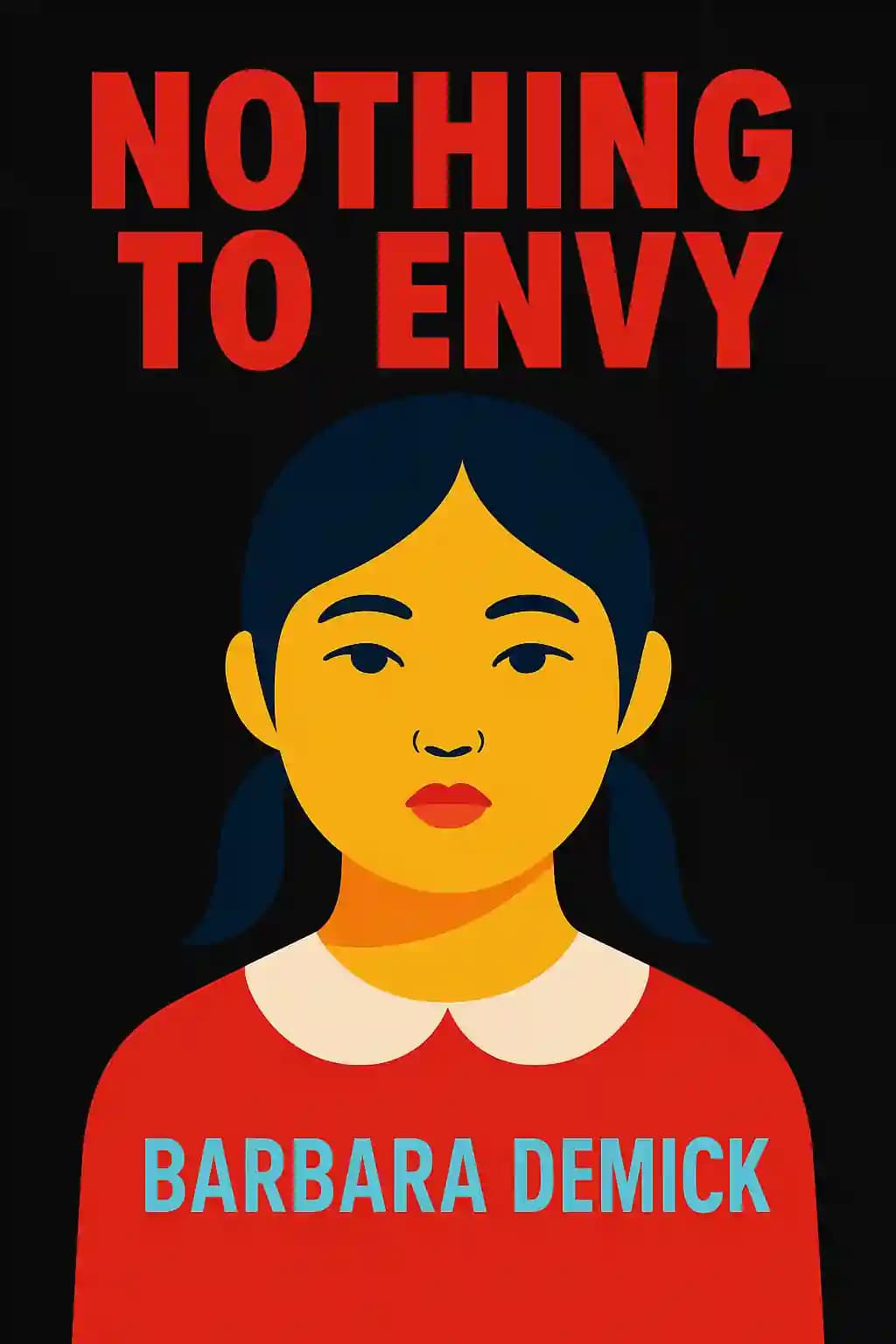
Barbara Demick, the award-winning author of Nothing to Envy: Ordinary Lives in North Korea, is a seasoned journalist renowned for her immersive reporting on authoritarian regimes and conflict zones. A former Beijing and Seoul bureau chief for the Los Angeles Times, Demick combines rigorous investigative journalism with narrative storytelling to expose human rights issues, particularly in North Korea.
Her work on Nothing to Envy—a National Book Award and National Book Critics Circle Award finalist—draws from years of interviews with defectors, revealing the resilience of ordinary citizens under totalitarianism.
Demick’s expertise spans other regions, documented in Logavina Street: Life and Death in a Sarajevo Neighborhood (chronicling Bosnia’s siege) and Eat the Buddha: Life and Death in a Tibetan Town. A recipient of the Samuel Johnson Prize, George Polk Award, and Overseas Press Club honors, she has taught journalism at Princeton and contributed to major publications like The New York Times.
Nothing to Envy has been translated into over 20 languages and remains a seminal work on North Korea’s hidden realities.
Nothing to Envy chronicles the lives of six ordinary North Koreans over 15 years, revealing their struggles under a repressive regime and during the devastating 1990s famine. Through intimate stories of love, survival, and defection, Barbara Demick exposes the harsh realities of propaganda, surveillance, and poverty in one of the world’s most secretive nations.
This book is ideal for readers interested in North Korean society, human rights, or immersive non-fiction. Journalists, historians, and anyone seeking to understand daily life under authoritarianism will find its firsthand accounts of resilience and defection compelling.
Yes—it won the Samuel Johnson Prize for Non-Fiction and is praised for its gripping narrative and meticulous research. Demick’s portrayal of North Koreans’ humanity amid oppression makes it a seminal work on the subject.
Barbara Demick is an award-winning journalist and former Los Angeles Times bureau chief in Korea. Her reporting on North Korean human rights issues earned her the Overseas Press Club’s Joe and Laurie Dine Award and the Asia Society’s Osborn Elliott Prize.
The book depicts pervasive malnutrition, state-mandated loyalty rituals, and a lack of electricity or modern medicine. Demick highlights how citizens navigate constant surveillance, rigid class systems, and propaganda, using anecdotes like families scavenging for wild vegetables during the famine.
Key themes include:
Some note Demick’s focus on defectors from Chongjin city may not fully represent all North Korean experiences. However, her deliberate use of corroborated stories ensures factual rigor, avoiding reliance on single testimonies.
By detailing personal moments—like Mi-ran and Jun-sang’s secret romance or Mrs. Song’s unwavering regime loyalty—Demick contrasts individual humanity with systemic oppression. She emphasizes emotions and relationships rarely shown in media depictions.
The 1990s famine (“Arduous March”) serves as a turning point, exposing state failure and eroding citizens’ loyalty. Demick describes starvation deaths, black markets, and the collapse of social trust, pushing characters toward defection.
Notable lines include:
Unlike works focused on politics or nuclear threats, Demick’s narrative prioritizes grassroots experiences. It complements accounts like The Aquariums of Pyongyang but stands out for its multi-year, multi-perspective approach.
The book remains a critical resource for understanding North Korea’s socio-political dynamics, offering insights into how isolation and propaganda sustain authoritarianism—a lens applicable to modern global conflicts.
저자의 목소리로 책을 느껴보세요
지식을 흥미롭고 예시가 풍부한 인사이트로 전환
핵심 아이디어를 빠르게 캡처하여 신속하게 학습
재미있고 매력적인 방식으로 책을 즐기세요
Love itself became dangerous.
Darkness became their sanctuary.
Regression from development back to pre-industrial conditions.
The country literally faded to black.
Faith in the system.
Nothing To Envy의 핵심 아이디어를 이해하기 쉬운 포인트로 분해하여 혁신적인 팀이 어떻게 창조하고, 협력하고, 성장하는지 이해합니다.
Nothing To Envy을 빠른 기억 단서로 압축하여 솔직함, 팀워크, 창의적 회복력의 핵심 원칙을 강조합니다.

생생한 스토리텔링을 통해 Nothing To Envy을 경험하고, 혁신 교훈을 기억에 남고 적용할 수 있는 순간으로 바꿉니다.
무엇이든 물어보고, 목소리를 선택하고, 진정으로 공감되는 인사이트를 함께 만들어보세요.

샌프란시스코에서 컬럼비아 대학교 동문들이 만들었습니다
"Instead of endless scrolling, I just hit play on BeFreed. It saves me so much time."
"I never knew where to start with nonfiction—BeFreed’s book lists turned into podcasts gave me a clear path."
"Perfect balance between learning and entertainment. Finished ‘Thinking, Fast and Slow’ on my commute this week."
"Crazy how much I learned while walking the dog. BeFreed = small habits → big gains."
"Reading used to feel like a chore. Now it’s just part of my lifestyle."
"Feels effortless compared to reading. I’ve finished 6 books this month already."
"BeFreed turned my guilty doomscrolling into something that feels productive and inspiring."
"BeFreed turned my commute into learning time. 20-min podcasts are perfect for finishing books I never had time for."
"BeFreed replaced my podcast queue. Imagine Spotify for books — that’s it. 🙌"
"It is great for me to learn something from the book without reading it."
"The themed book list podcasts help me connect ideas across authors—like a guided audio journey."
"Makes me feel smarter every time before going to work"
샌프란시스코에서 컬럼비아 대학교 동문들이 만들었습니다

Nothing To Envy 요약을 무료 PDF 또는 EPUB으로 받으세요. 인쇄하거나 오프라인에서 언제든 읽을 수 있습니다.
What does it mean to fall in love in a country where the lights never turn on? North Korea from space looks like a black void-not because it's undeveloped, but because it has regressed from modernity back into darkness. This isn't poetic metaphor. It's the lived reality of millions trapped in the world's most secretive nation, where electricity became a luxury after the Soviet Union's collapse in the early 1990s pulled the plug on subsidized fuel. The skeletal power lines still hang overhead like monuments to a functional past, reminders to older citizens who remember when their country actually outshone South Korea in development. Yet this darkness offers something precious in a surveillance state: invisibility. When adults retire early without power for televisions or lights, teenagers can slip out unnoticed. For Mi-ran and Jun-sang, two young people whose relationship violated North Korea's rigid social hierarchy, night became their sanctuary. They would meet after sunset and walk to an abandoned hot springs resort where ginkgo trees shed yellow leaves like delicate fans. Under brilliantly unpolluted stars, they could talk for hours-a love story that satellite analysts studying nuclear facilities would never detect. In this bleak country where millions starved, there was also love, friendship, and the universal human longing for connection, all flourishing in spaces carved from absolute darkness.