4장
The Unexpected Leader: Defying Predictions of Failure
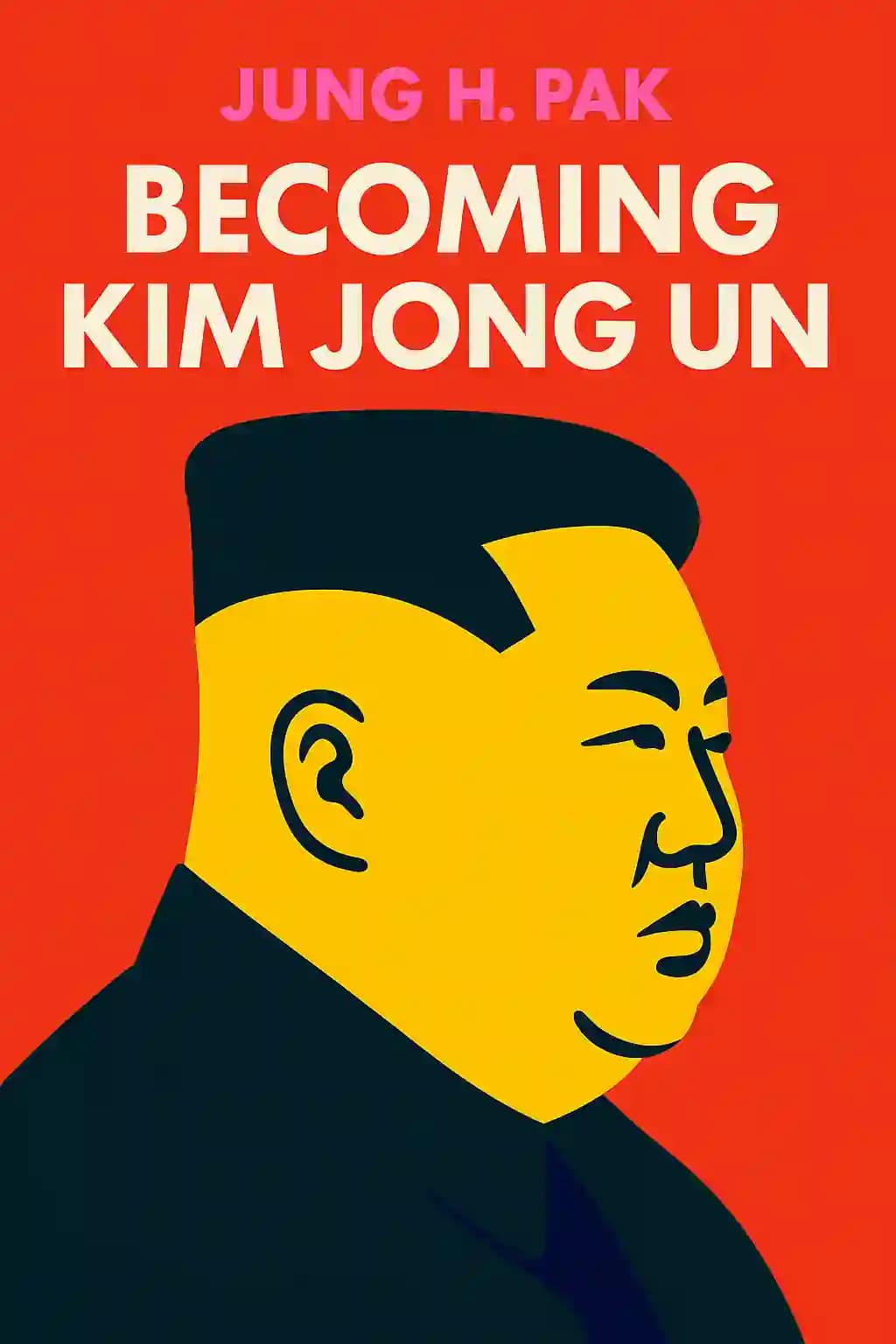
When Kim Jong Il died in December 2011, many experts predicted his twenty-something son would fail to maintain power. His exiled half-brother Kim Jong Nam dismissed the succession as "a joke to the outside world," suggesting the young Kim would be merely a figurehead while regime elites held actual power. Intelligence agencies anticipated North Korea's collapse, with a 1998 CIA assessment doubting the regime could remain viable beyond five years.
Instead of showing timidity, Kim Jong Un immediately displayed swagger and ruthlessness. Within months of taking power, he had replaced or purged many senior military officials loyal to his father. In April 2012, during celebrations marking his grandfather's 100th birthday, Kim delivered his first public address - the first time North Koreans had heard their leader's voice since Kim Il Sung's era. He deliberately styled himself after his revered grandfather, adopting similar clothing, haircut, and public speaking mannerisms to overcome his problematic background - his dancer mother born in Japan, his lack of military experience, and his years in Europe.
Kim accelerated North Korea's nuclear and missile programs despite increasing international isolation and sanctions. In December 2012, North Korea successfully launched a satellite, followed by its third nuclear test in February 2013. Kim personally directed these provocations, appearing in state media smiling beside missiles and nuclear facilities. Unlike his more reserved father, he embraced a public leadership style, hugging citizens, visiting amusement parks, and creating photo opportunities that portrayed him as accessible and dynamic.
In 2013, North Korea amended its constitution to declare itself a "nuclear-armed state," making denuclearization even more difficult. Kim made clear he wouldn't abandon nuclear weapons regardless of threats or engagement offers, seeing them as vital to regime security and his legitimacy. The regime frequently referenced Iraq and Libya as cautionary examples of what happens to states that relinquish nuclear capabilities. Kim was likely deeply affected by Muammar al-Qaddafi's gruesome 2011 death at rebels' hands just months before his own father died.
By 2017, North Korea had conducted six nuclear tests of increasing sophistication and launched missiles capable of reaching the continental United States. This rapid advancement shocked intelligence agencies and demonstrated Kim's willingness to endure economic hardship to achieve strategic goals. Rather than collapsing under pressure, Kim had consolidated power and established himself as a nuclear-armed leader who could not be ignored on the world stage.
5장
Pyonghattan: Creating a 21st Century Dictatorship
While accelerating the nuclear program, Kim simultaneously pursued a vision of modernizing North Korea's image and economy. He transformed Pyongyang's skyline with gleaming skyscrapers, luxury apartments, and recreational facilities that earned the capital the nickname "Pyonghattan." New attractions included water parks with candy-colored slides, the Mirim Riding Club with horses gifted by Vladimir Putin, high-tech shooting ranges, and the Masikryong ski resort with luxury amenities.
In a surreal 2012 moment, state media released photos of Kim riding a roller coaster with foreign diplomats at the new Rungra People's Pleasure Ground - the nuclear-armed dictator grinning with boyish abandon. This carefully curated image of prosperity served multiple purposes: rewarding elite loyalty, competing with South Korean affluence shown in smuggled media, and creating the appearance of economic progress despite sanctions.
Kim also cautiously expanded market activities that had emerged during the famine years when the state food distribution system collapsed. By 2017, North Korea had over 400 state-sanctioned markets, with informal markets potentially bringing the total to 750. The wealthy elite (donju or "masters of money") flourished in this ambiguous space between state and private enterprise, with an estimated 1.6 million North Koreans working in informal markets that generated 70-80% of average household income.
This limited prosperity remained concentrated among elites in Pyongyang, while most North Koreans continued to face harsh conditions. A 2019 UN report found that nearly 11 million citizens were undernourished, 140,000 children under five suffered acute malnutrition, and 20% of children were stunted. Kim's "socialist fairyland" vision attempted to combat the cognitive dissonance between propaganda and reality, but ultimately relied on the tools of repression inherited from his predecessors.
Kim embraced technology internally while maintaining strict control over information flow. He created a tech-elite class with privileged housing like the Mirae Scientists Street and the atom-shaped Sci-Tech Complex. While allowing widespread adoption of smartphones, tablets, and computers, these devices connect only to North Korea's closed "Kwangmyong" intranet featuring regime-approved content - essentially an alternate virtual universe completely disconnected from the global internet.
Unlike other authoritarian states that merely censor content, North Korea built a comprehensive digital ecosystem that enables surveillance while creating the appearance of modernization. By 2017, nearly 80% of North Koreans used mobile phones, but without access to global information. As experts note, "North Korea is systematically moving its people onto networks over which it has complete control," demonstrating how the internet can become "a new tool for maintaining power" rather than undermining authoritarian control.
6장
Pruning the Family Tree: Brutality as Leadership Strategy
In December 2013, Kim Jong Un shocked the world by publicly executing his uncle Jang Song Thaek, husband of Kim's father's sister Kim Kyong Hui. State media announced that Jang had been tried for treason as an "anti-party, counter-revolutionary factional element" and executed. Reports later emerged that Jang had been killed by anti-aircraft guns and his remains burned with flamethrowers - a spectacularly brutal method even by North Korean standards.
This unprecedented public elimination of a family member revealed Kim's boldness, brutality, and high risk tolerance early in his rule. Unlike his predecessors who conducted purges secretly with opportunities for rehabilitation, Kim's public humiliation of Jang marked a radical departure. The regime methodically eliminated Jang's associates, recalling ambassadors and targeting blood relatives who were sent to prison camps.
Several factors drove Kim's decision to remove top government layers so early in his rule. First, he wanted to establish his own support base rather than rely on his father's loyalists. Chinese expert Zhu Feng noted Kim was "eager to prove he is no longer the puppet controlled by some senior minister." Though Jang had been elevated to assist with succession, his extensive knowledge, Chinese connections, and financial acumen made him threatening - especially given international speculation that Jang was the real power behind the throne.
Second, Jang's control of natural resources businesses created conflict. Reports described "open warfare" between Jang's loyalists and the military over lucrative enterprises, with armed confrontations over fishing grounds that enraged Kim. The struggle revealed deep fractures among elites over who controlled foreign currency.
Since Jang's execution, Kim has purged over 340 senior officials. This dangerous atmosphere made officials double down on loyalty rather than risk criticism, while creating intense competition to demonstrate devotion. Kim's contempt for older officials was evident - from teenage incidents of taunting his grandfather's aide to being caught on camera using foul language with elderly party members. He publicly criticized "ideologically degenerate" officials who had become "contaminated with bourgeois ideology" and demanded physical fitness, once ordering navy commanders to strip and swim while he watched, smoking with his prominent belly jutting out.
In February 2017, Kim demonstrated his global reach by orchestrating the assassination of his half-brother Kim Jong Nam at Malaysia's Kuala Lumpur International Airport. Two women approached Kim Jong Nam and rubbed VX nerve agent on his face, causing a painful death within an hour. The assassination eliminated a potential rival who had criticized the regime and lived under Chinese protection. The brazen use of a chemical weapon in a public international airport sent a clear message: no dissenter is safe, regardless of location or protection.
7장
The Hackers and the Movie Star: North Korea's Asymmetric Arsenal
While international attention focuses primarily on North Korea's nuclear program, Kim has developed other powerful asymmetric capabilities. In 2014, North Korean hackers breached Sony Pictures' systems in retaliation for "The Interview," a comedy depicting a fictional assassination plot against Kim. The hackers stole confidential information, destroyed data, and threatened 9/11-style attacks against theaters showing the film, ultimately forcing Sony to cancel its wide theatrical release.
What truly alarmed the regime about "The Interview" was its potential to undermine Kim's godlike image and expose the hypocrisy of North Korean propaganda. The movie depicted Kim's luxurious lifestyle amid his country's poverty and suggested factions within North Korea might want to unmask the regime's lies. With North Koreans already smuggling banned South Korean media across increasingly porous borders, the regime feared the film could become a "cultural bomb." As former North Korean propagandist Jang Jin-sung explained, the movie was "as explosive as if a real bomb were dropped on Kim Jong-un... It's beyond-the-pale blasphemous."
North Korea's cyber capabilities have grown increasingly sophisticated since Kim took power. The regime's 2016 attack on Bangladesh Bank netted $81 million by breaching the supposedly secure SWIFT global financial messaging system. Kim's hackers have targeted at least sixteen financial institutions across eleven countries since 2014, including banks in Vietnam, Taiwan, Mexico, and Chile. In 2017, the U.S. blamed North Korea for the WannaCry computer worm that affected 230,000 computers across 150 countries, causing billions in damages. By 2019, a UN report estimated Kim's hackers had generated $2 billion through increasingly sophisticated cyberattacks on financial institutions and cryptocurrency exchanges.
The Kim Jong Nam assassination highlighted North Korea's chemical and biological weapons capabilities. According to various intelligence assessments, North Korea's suspected biological arsenal includes anthrax, cholera, plague, typhoid fever, and yellow fever, while its chemical weapons inventory features nerve agents (including VX), blister agents, blood agents, and choking agents. South Korean intelligence estimates North Korea maintains 2,500-5,000 metric tons of chemical weapons with annual production capacity of up to 12,000 tons, deliverable through special operations or missiles.
These non-nuclear capabilities provide Kim with options for asymmetric warfare and revenue generation despite international sanctions. They demonstrate his willingness to operate outside international norms and his strategic focus on developing multiple means of projecting power and ensuring regime survival.
8장
The Queen of Pyongyang: Ri Sol Ju and the Modern Image
Just seven months into Kim's leadership, state media revealed a mysterious woman at his side during a Disney-themed concert, generating intense speculation. Soon identified as "Comrade Ri Sol Ju," Kim's wife, her public appearance marked a striking departure from past practices. While Kim's grandfather had once condemned feminine fashion as distracting to revolution, and Kim Jong Il had banned women from wearing trousers outside work, Ri appeared fashionable and modern.
Born in 1989 and reportedly married to Kim in 2009, Ri was a former member of the elite Unhasu Orchestra. Her stylish appearance - from smart black skirts to bright green blouses and sparkly brooches - drew inevitable comparisons to figures like Jackie Kennedy and Kate Middleton, providing a colorful contrast to the sea of military uniforms surrounding her husband.
Ri's carefully crafted public image reflects Kim's vision for North Korea's future and his self-perception. Unlike previous regime matriarchs who were portrayed as revolutionary fighters and self-sacrificing mothers, Ri embodies a modern femininity. She serves as the face of Kim's "North Korean dream," a walking advertisement for his dual-track policy of nuclear weapons and economic development.
During the 2018 diplomatic opening, Ri made her international debut, hosting South Korean officials and accompanying Kim to summits with Chinese and South Korean leaders. Her presence provided a softer counterpart to Kim's diplomatic efforts. During the third Moon-Kim summit, Ri and South Korea's First Lady Kim Jung-sook toured Pyongyang's music university and children's hospital, presenting North Korea as normal and modern while distracting from its nuclear programs and human rights abuses.
Kim's elevation of Ri and her growing public profile reveal his long-term succession planning. Having witnessed the power struggles among his father's multiple families, Kim appears to be deliberately establishing Ri as his only legitimate spouse to ensure their children will be his undisputed heirs. Despite being only in his mid-thirties, Kim is already planning for generations ahead. The couple has at least one confirmed child (whom Dennis Rodman held during his second visit) and reportedly two others according to South Korean intelligence.
9장
Fire, Fury and Friendship: The Trump-Kim Saga
By his seventh year in power, Kim Jong Un had amassed notable successes: consolidating power, advancing his nuclear program, demonstrating cyber and chemical weapons capabilities, and outlasting several adversaries. In 2017, tensions with the United States reached dangerous heights as North Korea tested increasingly sophisticated missiles capable of reaching the American mainland.
The escalation included unprecedented personal insults between Kim and President Trump. After Trump threatened "fire and fury like the world has never seen" and mocked Kim as "Little Rocket Man" at the UN General Assembly, Kim responded with an unprecedented personal statement calling Trump a "mentally deranged dotard" unfit to hold office. Trump countered by tweeting that his nuclear button was "much bigger & more powerful" than Kim's. By January 2018, the Bulletin of Atomic Scientists moved the Doomsday Clock to two minutes to midnight, the closest to nuclear annihilation since 1953.
Then came a stunning diplomatic reversal. In his 2018 New Year's address, Kim expressed willingness to send a delegation to the February Winter Olympics in South Korea. This "peace Olympics" initiative launched a "summit spring" that transformed regional dynamics. Kim held his first-ever meeting with South Korean President Moon Jae-in at the DMZ in April 2018, creating powerful imagery as the two leaders stepped across the border line together. Within months, Kim had met with Chinese President Xi Jinping, Russian officials, and prepared for an unprecedented summit with President Trump.
The historic Trump-Kim summit took place on June 12, 2018, at Singapore's luxurious Capella Hotel. Against a backdrop of alternating American and North Korean flags, the two leaders shook hands for a global audience. In a quiet moment, Kim remarked that many would think of this scene as "fantasy...science fiction," acknowledging the historic significance of the first-ever meeting between sitting leaders of the United States and North Korea.
Trump showed Kim a four-minute movie trailer-style video casting them as heroic protagonists with the power to "remake history," though clearly positioning Kim as the one who needed to make a choice between prosperity and isolation. The Singapore joint communique was widely criticized for its vague language, merely stating that North Korea would "work toward complete denuclearization of the Korean Peninsula" - far weaker than previous agreements.
Despite the lack of substance, Trump declared victory, praising Kim as "very talented" and even tweeting afterward, "There is no longer a Nuclear Threat from North Korea." A second summit in Hanoi in February 2019 ended without agreement when Kim demanded comprehensive sanctions relief before taking meaningful denuclearization steps. Though Trump and Kim met briefly at the DMZ in June 2019, the diplomatic opening ultimately failed to produce concrete results, with North Korea resuming missile tests later that year.
10장
The Ongoing Challenge: Understanding the Real Kim Jong Un
Kim Jong Un defied expectations by not only surviving but thriving as North Korea's leader. Rather than being a figurehead controlled by regents, he established himself as a decisive, if brutal, leader who accelerated North Korea's nuclear program while maintaining tight control over the country. He eliminated potential rivals, restructured the military and party leadership, and pursued a dual-track policy of nuclear weapons development alongside limited economic modernization.
Kim's confidence has grown dangerously since his successful nuclear developments. Rather than pursuing nuclear war or genuine normalization with the U.S., North Korea's actions align with its long-held aspiration for reunification on its own terms. Kim's nuclear arsenal goes beyond mere deterrence, potentially allowing him to conduct conventional attacks against South Korea while deterring U.S. intervention. He's successfully wielded diplomacy to normalize North Korea's nuclear status and human rights violations while driving wedges between the U.S. and South Korea.
To alter Kim's risk calculus, the international community must undertake coordinated actions that convince him nuclear weapons make his survival less secure rather than more. This requires focusing on alliances first - any perceived fissures among partners only advantage Kim. Second, maintaining maximum pressure sanctions to create negotiating leverage and prevent proliferation. Third, institutionalizing five-party talks with regional stakeholders to signal international unity. Fourth, eroding North Korea's infrastructure of repression through human rights advocacy. Finally, increasing information penetration into North Korea to empower its people toward creating internal pressure on the regime.
Kim's return to provocative actions is inevitable. Since the Hanoi summit failure, his "plan B" resembles his father's coercive diplomacy: portraying North Korea as aggrieved while calibrating provocations to pressure Washington. Despite claiming good relations with Trump, Kim warned in April 2019 that the U.S. "will not be able to move us one iota" and set a year-end deadline for policy changes. He's backed this tough talk with actions - testing tactical guided weapons, ballistic missiles, and submarine capabilities.
As Kim approaches his second decade of rule, intelligence analysts must continuously revisit their assumptions. Kim is still becoming - learning, adapting, and adjusting. The international community must shape and constrain his dangerous ambitions and illusions before they reach new heights. Understanding the real Kim Jong Un - his psychology, motivations, and worldview - remains crucial for developing effective strategies to address the North Korean nuclear threat and promote regional stability.