1장
When Systems Fail: The Anatomy of Modern Disasters
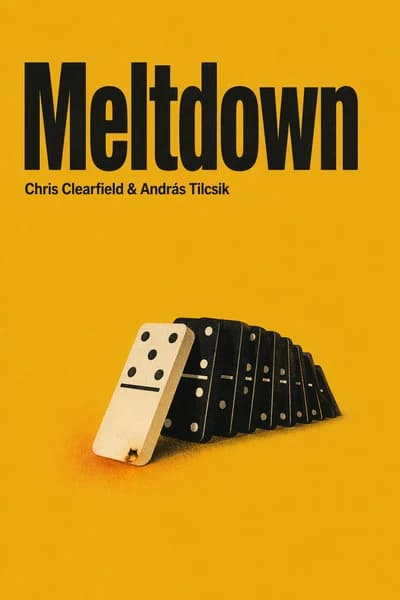
What happens when a stopped train becomes invisible to sensors? Or when a single misplaced envelope embarrasses Hollywood's elite? Or when doctors unwittingly kill patients with unwashed hands? These aren't isolated incidents but symptoms of a deeper pattern that affects our increasingly complex world. "Meltdown" has become a cultural touchstone since its 2018 publication, praised by Bill Gates as "essential reading" and featured in The New York Times' list of most notable books. The work draws connections between seemingly unrelated catastrophes-from nuclear meltdowns to social media fiascos-revealing their shared DNA and offering practical solutions anyone can implement. As our systems grow more interconnected, understanding these patterns isn't just interesting-it's essential for navigating our complex world.
2장
The Danger Zone: Where Complexity Meets Catastrophe
On a warm June day in 1979, America experienced its worst nuclear disaster at Three Mile Island. What began as a simple plumbing problem escalated when operators misinterpreted instrument readings, believing they had too much water in the reactor when the opposite was true. The control room descended into chaos-alarms blared, readings contradicted each other, and communication became nearly impossible as radiation forced everyone to wear respirators. For hours, they couldn't determine what was happening, while the computer monitoring system produced only lines of question marks.
This disaster caught the attention of sociology professor Charles "Chick" Perrow, who received materials about industrial accidents while vacationing in the Berkshires. Within five years, his book "Normal Accidents" revolutionized our understanding of catastrophes. Perrow recognized that Three Mile Island's failure stemmed not from massive engineering errors but from small problems combining catastrophically. The accident unfolded with stunning speed-critical failures occurred within thirteen seconds, with core damage complete in under ten minutes.
Perrow identified two critical factors that make systems vulnerable. First, complexity-when components interact in unexpected ways that operators can't anticipate or comprehend. Second, "tight coupling"-when little slack exists between components, allowing failures to spread rapidly. Nuclear plants exemplify both characteristics: controlling chain reactions requires precise conditions where small deviations cause major problems, timing is critical, and the system can't simply be paused when issues arise.
By mapping systems based on their complexity and coupling, Perrow identified the upper-right quadrant (complex and tightly coupled systems) as the "danger zone" where "normal accidents" become inevitable-not because they're frequent, but because they're natural outcomes of the system design itself.
Surprisingly, meltdowns aren't limited to engineering disasters. When Starbucks launched a holiday social media campaign displaying customer messages on a giant screen at a London ice rink, a broken content filter allowed angry messages about tax avoidance to appear publicly. The avalanche of tweets proved unstoppable. Even seemingly simple systems like Thanksgiving dinner demonstrate Perrow's concepts-from travel logistics to interconnected cooking timing, making holiday meals prone to systemic failures too.
3장
Modern Systems in the Crosshairs: Universities, Finance, and Beyond
Systems once considered simple are increasingly moving into Perrow's danger zone. When Yale lecturer Erika Christakis sent an email questioning administrative guidance on Halloween costumes, she inadvertently triggered a campus controversy that exploded beyond university grounds. After students confronted her husband Nicholas in the college courtyard, a visitor's smartphone video went viral, thrusting local disagreements into the international spotlight. The incident demonstrates how technology has transformed universities from loosely coupled systems into complex, tightly coupled ones where local interactions can instantly become global controversies.
The financial system provides perhaps the perfect example of complexity and tight coupling. From the 1987 crash triggered by portfolio insurance algorithms to the 2008 financial collapse, interconnected financial instruments have created webs of hidden risk. When Long-Term Capital Management borrowed $100 billion to invest in assets like high-yield Russian bonds, they sat at the center of a complex financial web that began unraveling when Russia defaulted on its debt, requiring a $3 billion Federal Reserve bailout.
Even trading firms aren't immune. On August 1, 2012, Knight Capital experienced a catastrophic trading error when its automated systems went haywire, sending hundreds of unintended orders per second in 140 stocks. In just thirty minutes, Knight lost over $15 million per minute, accumulating an unwanted $6.5 billion position. The meltdown stemmed from a seemingly trivial IT error: an employee failed to copy new trading software to one of Knight's eight servers.
The Deepwater Horizon oil rig explosion similarly resulted from BP's failure to manage complexity. Drilling a mile underwater and five miles through earth created conditions where engineers couldn't directly observe what was happening. Instead, they relied on computer simulations and indirect measurements, missing critical warning signs. When the blowout occurred, the rig's elaborate emergency systems with their overwhelming number of controls and contingencies paralyzed the crew rather than helping them respond effectively.
Even systems once considered simple have moved into the danger zone. The UK Post Office's Horizon IT system, implemented at a cost of a billion pounds, created accounting nightmares for sub-postmasters. Despite mounting evidence of system failures, the Post Office maintained "absolute confidence" in Horizon's accuracy, accusing hundreds of sub-postmasters of theft and fraud. Many lost their businesses, homes, and reputations; some were even jailed before an independent investigation revealed the system's flaws.
4장
Vulnerability in the Connected Age: Hacking, Fraud, and Hidden Risks
As systems become more complex and interconnected, they become increasingly vulnerable to exploitation and failure. In 2010, security researcher Barnaby Jack demonstrated how vulnerable ATMs were to hacking. With a few clicks, he remotely accessed one ATM to steal card numbers, then made another spew cash while flashing "JACKPOT!!" on its screen. Unlike Jack, who was a "white hat" hacker helping to improve security, malicious hackers exploited similar vulnerabilities when they breached Target in 2013, stealing forty million credit card numbers by infiltrating the retailer's network through credentials from a heating contractor.
The dangers of hacking extend beyond financial systems to potentially life-threatening scenarios. When hackers Charlie Miller and Chris Valasek remotely attacked a Jeep Cherokee while journalist Andy Greenberg drove at 70 mph, they disabled his transmission and controlled various vehicle systems through the Jeep's internet-connected entertainment system. They later developed capabilities to control steering and brakes at high speeds. The threat extends beyond cars to medical devices-Barnaby Jack demonstrated how to remotely hack insulin pumps and defibrillators, potentially with lethal consequences.
Financial fraud also thrives in complex systems. Enron's mark-to-market accounting not only increased complexity but transformed it into a tightly coupled system. By recording years of potential profits immediately, Enron created a quarterly earnings treadmill requiring ever-larger deals to maintain growth. The company needed real money for salaries and acquisitions, so it borrowed heavily while hiding debt through convoluted transactions between entities it controlled. By 2000, CFO Andrew Fastow had created over 1,300 specialized companies for these shell games. As Fastow later admitted, they viewed accounting complexity "not as a problem, but as an opportunity."
Journalism isn't immune either. Jayson Blair, an ambitious young reporter at the New York Times, fabricated numerous stories during a period of national tension following 9/11. His articles featured vivid, emotional details that were entirely made up. Blair exploited the complexity of modern journalism to perpetrate his fraud, claiming to conduct in-person interviews while never leaving New York and expensing meals with non-existent sources. The Times' fragmented newsroom structure enabled his deception-when he moved between departments, concerns about his performance didn't follow him.
5장
Out of the Danger Zone: Creating Transparency in Complex Systems
The infamous 2017 Oscars fiasco where "La La Land" was mistakenly announced as Best Picture instead of "Moonlight" demonstrates how safety features often backfire by adding complexity. The error occurred when PwC accountant Brian Cullinan handed presenter Warren Beatty the wrong envelope-a duplicate Best Actress card rather than Best Picture. Despite seeming like a simple task, the envelope system had critical weaknesses: hard-to-read category labels, chaotic backstage conditions, and ironically, a redundant two-briefcase safety system that actually increased complexity.
Similar problems occur in hospitals, where excessive bedside alarms (2.5 million in one month across five ICUs) create "alarm fatigue." At UCSF, a teenage patient nearly died when multiple safety systems-computerized ordering, pharmacy robots, and barcode scanning-failed to prevent a massive medication overdose. The doctor misunderstood the interface, warnings were ignored due to alert fatigue, and the nurse trusted the barcode system over her own doubts.
The contrast between Boeing and Airbus aircraft designs illustrates the importance of transparency. While the sleek Airbus A330 with its elegant sidesticks seems more sophisticated, its design proved dangerous in crashes like Air France 447, where pilots couldn't see their colleagues pulling back on sidesticks during aerodynamic stalls. The Boeing 737's seemingly awkward yokes provide crucial transparency-when one pilot moves the controls, the other can't miss it.
This transparency principle extends to other systems like car gearshifts, where visible feedback prevents errors. Transparency reduces complexity and helps us avoid the danger zone, whether in physical systems or accounting practices that turn companies into dangerous "black boxes."
6장
Tools for Managing Complexity: From Forecasting to Premortems
The four-meter height difference between Onagawa's and Fukushima's seawalls proved critical during Japan's 2011 tsunami. While Onagawa's 14-meter wall adequately protected against the 13-meter tsunami, Fukushima's 10-meter wall was overwhelmed, leading to catastrophic meltdowns. This highlights the challenge of determining appropriate safety margins in complex systems.
The problem reflects our poor ability to make accurate probability forecasts. Research shows that when we're 90% confident about predictions, we're right less than half the time. The SPIES method (Subjective Probability Interval Estimates) improves forecasting by considering multiple intervals across all possible outcomes rather than just best and worst cases. When tested, SPIES improved accuracy from 30% to 74% for temperature forecasts and from 54% to 77% for historical date estimates-critical improvements for preventing disasters.
People in complex systems often work in what psychologists call "wicked environments"-settings where feedback on predictions is rare, making it difficult to develop expertise through experience. Research shows immigration officers accept mismatched ID photos one in seven times, judges grant parole 65% of the time after meals but nearly 0% before breaks, and even meteorologists struggle with rare events like tornadoes despite excelling at routine rain forecasts.
To overcome these limitations, we need simple, predetermined criteria rather than gut instinct. The Ottawa Ankle Rules demonstrate this approach: by using just four criteria (pain, age, weight bearing, and bone tenderness), doctors reduced unnecessary X-rays by a third while catching every severe fracture.
Another powerful tool is the "premortem" technique developed by researcher Gary Klein. Unlike traditional brainstorming about potential risks, a premortem asks participants to imagine that a project has already failed and explain why. In studies, those asked to imagine failure generated more diverse and unexpected risks than those simply asked about potential threats.
The premortem works through "prospective hindsight"-imagining an outcome has already occurred makes us generate more concrete and precise explanations. It changes team dynamics from avoiding disruption to surfacing potential problems. As Daniel Kahneman notes, tools like SPIES, predetermined criteria, and premortems provide necessary interruptions to business-as-usual thinking, helping us question our intuitions in complex environments where feedback is limited.
7장
Reading the Writing on the Wall: Learning from Warning Signs
In 2014, Flint switched water sources to save money. Despite resident complaints about foul water, officials denied problems while secretly providing bottled water to state employees. LeeAnne Walters discovered one of her twins had lead poisoning from corrosive water eating through city pipes. Officials deliberately manipulated testing procedures to hide the problem-instructing residents to flush pipes before sampling, using narrow-mouthed bottles that prevented full water flow, and testing mostly homes without lead pipes. The decision to skip corrosion control chemicals saved merely $60 per day, while nine thousand Flint children drank contaminated water, requiring hundreds of millions in remediation funds.
Washington DC's Metro system experienced a similar failure when trains disappeared from detection in the middle of track blocks. Engineers identified the problem in 2005, replaced components, and developed testing procedures and monitoring software. But the organization forgot about the problem and failed to use these tools. In June 2009, workers replaced components in track segment B2-304 but left despite ongoing issues. For five days, trains disappeared from sensors in this section, but no one noticed. On June 22, Train 214 stopped within the faulty block-becoming invisible to the system. The following Train 112 was instructed to accelerate and crashed into the stalled train, killing nine people.
Commercial aviation demonstrates a better approach-reducing accident rates from forty fatal crashes per million departures in the late 1950s to just two crashes per ten million departures today by learning from small errors and near-misses. To prevent failure in complex systems, organizations need to gather data about problems, fix issues raised in reports, dig deeper to understand root causes, share information across the organization or industry, and audit solutions to ensure they work.
Culture is central to this process-organizations must avoid "shooting the messenger" and instead thank those who raise concerns, even when they're wrong. Novo Nordisk demonstrates this approach. After a costly FDA compliance crisis in 1993, the pharmaceutical company implemented organization-wide changes to better detect warning signs. They created a department to scan for external challenges, conducted internal audits using respected facilitators who interview employees about concerns not normally discussed, and tracked corrective actions to completion.
8장
The Power of Dissent: Speaking Truth to Power
In 1846 Vienna, women dreaded being assigned to the First Obstetrical Clinic at the General Hospital, where hundreds died annually from childbed fever-compared to just sixty in the nearly identical Second Clinic. The difference? The First was staffed by doctors and medical students, the Second by midwives. Ignac Semmelweis, the clinic's chief resident, instituted mandatory chlorine handwashing after realizing doctors were carrying infectious particles from autopsies to patients. Mortality rates plummeted from over 10% to just 1%.
Despite his success, convincing the medical establishment proved nearly impossible, as his findings implied doctors throughout Europe had been killing patients with their bare hands. Semmelweis faced the horrific realization that he and his colleagues had unwittingly killed countless women through their standard practices.
Our brains are wired against dissent. Neuroscience shows that when we hold opinions different from our group, our brain's error detection region activates while reward anticipation decreases-essentially punishing us for nonconformity. In one study, participants viewing 3D objects went along with incorrect group answers 40% of the time, with brain scans showing their visual perception actually changed to match the group consensus. This neurological conformity presents a serious problem for complex organizations where speaking up about potential threats is crucial.
Since the 1970s, the airline industry transformed from one where captains were "infallible kings" to one emphasizing team safety through Crew Resource Management (CRM). A revealing 1994 NTSB study found nearly three-quarters of major accidents occurred during the captain's turn to fly-not because captains were poor pilots, but because first officers failed to challenge their mistakes. CRM revolutionized aviation safety by teaching a simple five-step process for raising concerns, giving everyone from baggage handlers to pilots a sense of purpose in safety.
Small changes in behavior can dramatically improve communication across power differentials. A skilled ER doctor with low patient satisfaction scores transformed his relationships by simply sitting down during patient interactions rather than standing over them. Airline captain Ben Berman begins each flight by telling new first officers "I've never done a perfect flight," making it easier for junior pilots to challenge his decisions despite his impressive credentials.
Leaders must also learn to speak last. In experiments about school management scenarios, teams with "open leaders" (who spoke last and emphasized hearing all viewpoints) generated more solutions and shared almost twice as many facts before reaching consensus compared to teams with "directive leaders" (who stated their solution first and emphasized agreement).
9장
The Speed Bump Effect: How Diversity Prevents Failure
Diversity helps prevent failures in complex systems by creating healthy skepticism and more careful decision-making. Researchers conducted experiments in Singapore and Texas showing that ethnically diverse trading groups priced stocks more accurately and experienced fewer price bubbles than homogeneous groups. The key finding wasn't that minority traders contributed unique perspectives, but rather that their mere presence changed everyone's behavior. In diverse groups, all participants became more skeptical and less likely to blindly trust others' judgments or copy mistakes.
While homogeneity creates comfort and smooth interactions, it also leads to excessive conformity. Diversity introduces productive friction that makes people more vigilant and objective, despite potential discomfort. As researcher Evan Apfelbaum explains, "We tend to think that if someone looks different, they also think different," which leads to healthier decision-making.
Despite evidence that diversity improves decision-making, bias persists in hiring practices. In one revealing case at a prestigious consulting firm, interviewers rejected a Black candidate for lacking "structure" while giving a white candidate with the same issue a second chance. Similar biases affected orchestras until blind auditions behind curtains dramatically increased gender diversity.
Most diversity programs fail to increase representation because they police managers who resist being controlled. More effective approaches include voluntary diversity training, targeted recruitment, formal mentoring programs, and diversity task forces that track representation. These "soft tools" work because they engage managers rather than controlling them, exposing them to wider talent pools and appealing to their desire to appear fair-minded.
The blood-testing startup Theranos exemplifies what happens without diversity. Once valued at $9 billion, the company claimed revolutionary technology that could run dozens of medical tests from just a drop of blood. However, investigation revealed devastating problems-Theranos wasn't using its own technology for most tests, results were inaccurate, and the company operated in extreme secrecy.
Theranos's board was strikingly homogeneous: apart from Holmes and COO Sunny Balwani, all ten directors were white men with an average age of 76. Despite being called "the most illustrious board in U.S. corporate history," it lacked medical and biotechnology expertise. This contrasts sharply with community banks that survived the financial crisis, which typically had diverse boards including non-bankers.
Both surface-level diversity and expertise diversity work similarly-not because minorities or amateurs bring unique perspectives, but because diversity makes the whole group more skeptical and prevents too-easy agreement. Diversity functions like a speed bump-a nuisance that snaps us out of our comfort zone, makes it hard to barrel ahead without thinking, and ultimately saves us from ourselves.
10장
Adapting to Complexity: Learning from Outsiders and Surprises
Georg Simmel, a brilliant but marginalized 19th-century social theorist, developed the concept of "The Stranger"-someone who is in a group but not of the group. Simmel argued that strangers possess unique objectivity because they aren't bound by local customs, prejudices or partisan dispositions.
This outsider perspective proves invaluable in complex systems. Matthew Mirante, a truck driver, discovered a software error in Washington State's Department of Corrections that was causing early releases of prisoners. Despite Mirante alerting the DOC in 2012, the fix was delayed more than a dozen times. When programmers finally implemented the correction, they discovered it affected 3,000 release dates by an average of two months. Tragically, one released prisoner murdered Ceasar Medina-Gonzalez just two weeks after his erroneous release-a death that could have been prevented had officials heeded the outsider's warning.
Organizations often exhibit "normalization of deviance"-gradually accepting risks that were once considered unacceptable. After the Columbia space shuttle disaster, NASA directed its centers to combat this tendency. Jet Propulsion Laboratory responded by creating risk review boards and an Engineering Technical Authority program where engineers not associated with specific missions could provide independent oversight. These engineers embody Simmel's concept of the outsider-skilled enough to understand the technology but detached enough to bring a different perspective, with clear pathways to escalate concerns.
When unexpected situations arise, successful teams adapt through role shifting. Researchers studying both SWAT teams and film crews found that when surprises occur-like unexpected house layouts or equipment failures-team members instantly change positions to cover new needs. This flexibility requires cross-training and understanding the bigger picture. In film, careers often progress through various departments, while SWAT teams explicitly train members to "know everybody else's job."
Contrast this with most companies, where specialists negotiate whose viewpoint wins, producing what IDEO's CEO calls "at best, average" results. Nasdaq's Facebook IPO disaster exemplifies what happens without cross-training-when trading failed to start, managers who didn't understand the system ordered programmers to remove a validation check, causing cascading failures that cost hundreds of millions in losses.
11장
Bringing the Golden Age of Meltdowns to a Close
We are currently in "the golden age of meltdowns" where our systems increasingly operate in the danger zone, but our management capabilities haven't caught up. This parallels the Black Death of the Middle Ages, when new trade routes and dense living conditions created perfect conditions for disease spread, but humanity lacked the scientific understanding to prevent epidemics.
The solutions exist: designing safer systems, making better decisions, noticing warning signs, and learning from diverse voices. While these ideas might seem obvious-using structured tools for tough decisions, learning from small failures, building diverse teams, creating transparent systems with slack-they're rarely implemented in practice. Many organizations still celebrate intuition in complex environments, ignore warning signs, maintain homogeneous teams, and allow complexity and tight coupling in dangerous systems.
These solutions don't always require massive budgets or fancy technologies-anyone can run a premortem, use predetermined criteria, or make predictions using the SPIES method. While implementing these solutions often contradicts our natural instincts to celebrate intuition, hear good news, and surround ourselves with similar people, research shows that structured decision tools, diverse teams, and norms encouraging healthy skepticism actually fuel innovation and productivity.
We now have the knowledge to bring the golden age of meltdowns to a close. We just need the conviction to try.