1장
The Innovation Apocalypse: When Disruption Strikes Like Lightning
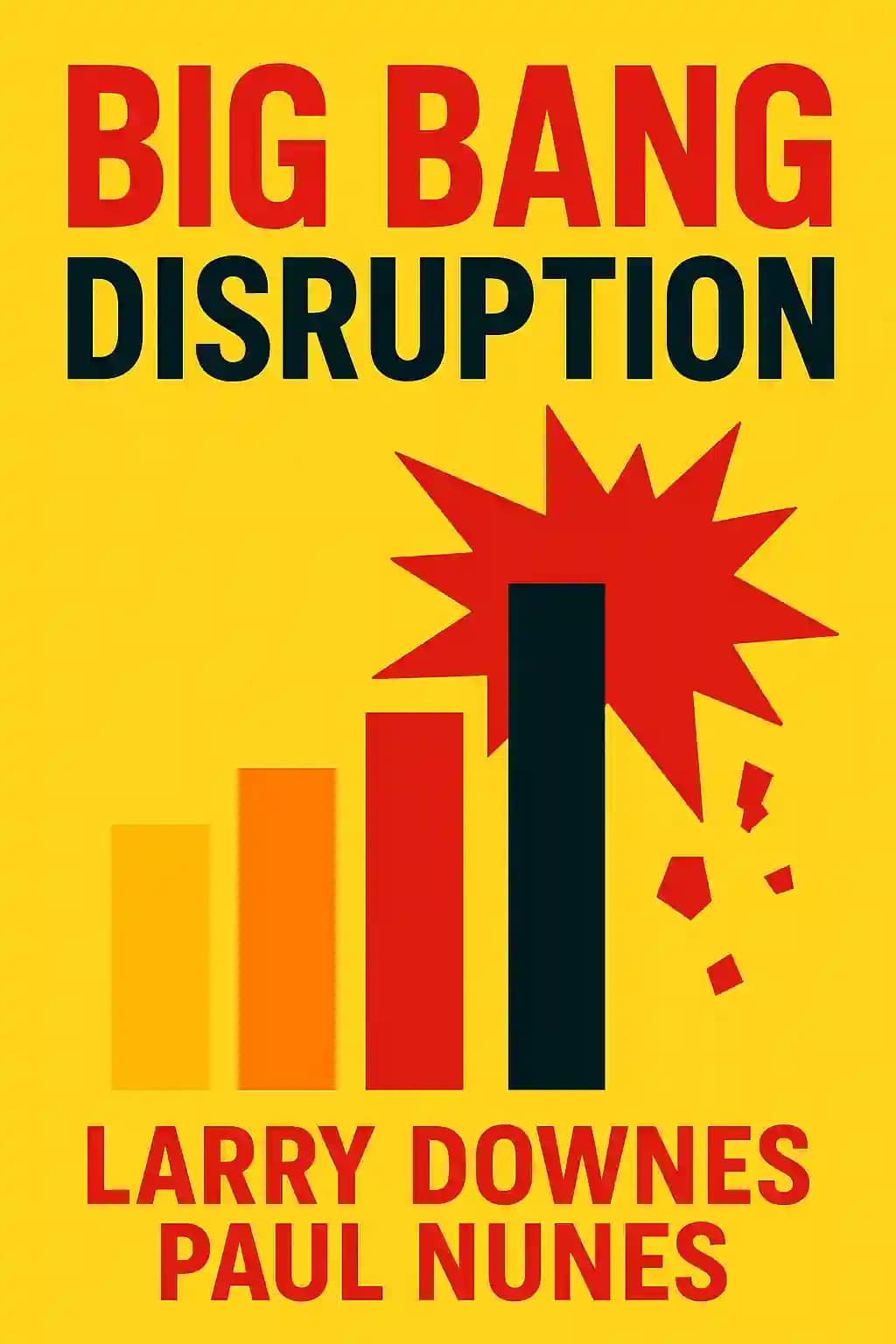
In 2009, a small Finnish company called Rovio was on the brink of bankruptcy after developing 51 unsuccessful mobile games. Their last-ditch effort-a simple game featuring cartoon birds launched at green pigs-seemed unremarkable. Yet within 24 hours of its release, Angry Birds had been downloaded one million times. By 2012, it had reached one billion downloads and spawned a global merchandise empire worth over $200 million annually. What made this particular game demolish all competition wasn't just its addictive gameplay, but how it perfectly exploited the capabilities of the newly released iPhone touchscreen, creating an entirely new gaming experience that made traditional mobile games instantly obsolete. This wasn't gradual disruption-it was market annihilation that nobody saw coming. Angry Birds represents exactly the kind of "big-bang disruption" that authors Larry Downes and Paul Nunes warn is transforming business across every industry, creating a world where market leaders can be toppled not in years, but overnight.
2장
When Innovation Breaks All the Rules
Forget everything you thought you knew about disruptive innovation. The classic model described by Clayton Christensen suggested that disruptors start with cheaper, inferior products at the market's low end before gradually improving and moving upmarket. This gave incumbents time to respond-years, sometimes decades. But today's disruptors don't follow this playbook at all, instead launching with immediate, devastating impact across all market segments simultaneously.
Big-bang disruptors deliver superior products at lower prices from day one, often achieving instant market dominance. Take navigation apps like Google Maps-they immediately offered better functionality than $300 GPS devices, yet cost nothing. The result? Companies like Garmin and TomTom saw their market values plummet by over 85% in just two years. Similar disruptions occurred when Netflix streaming instantly made video rental stores obsolete, and when WhatsApp made international calling cards irrelevant overnight. There was no gradual erosion-just sudden, catastrophic collapse.
What makes these disruptions so devastating is their complete disregard for strategic orthodoxy. Management theorists like Michael Porter and Michael Treacy argued that successful businesses must choose between competing on cost, innovation, or customer intimacy - the classic "strategic triangle." Big-bang disruptors ignore this wisdom entirely, delivering on all three dimensions simultaneously. They're cheaper, better, and more personalized right from launch. Companies like Uber and Airbnb exemplify this trend, offering services that are simultaneously more convenient, less expensive, and more customized than traditional alternatives.
How is this possible? The exponential improvement of core digital technologies-processing power, storage, and bandwidth-combined with cloud computing and mobile platforms has created a perfect storm. Development costs have plummeted while capabilities have soared. Instagram reached 100 million users with just 13 employees. Waze built a navigation system superior to those costing billions to develop by simply crowdsourcing traffic data from its users. Spotify transformed music distribution with algorithms and cloud storage, while Discord revolutionized communication platforms with minimal initial investment.
Most unsettling for incumbents is that these disruptors often don't even see themselves as competitors. They're not trying to enter your market-they're creating entirely new ones that happen to make yours irrelevant. When Square introduced its mobile payment system, it wasn't targeting traditional payment processors; it was simply solving a problem for small merchants who couldn't afford conventional systems. Similarly, when Robinhood launched commission-free trading, it wasn't trying to compete with traditional brokerages - it was creating a new category of mobile-first investing for millennials. The collateral damage to established players was merely a side effect of their innovative solutions.
The implications for established companies are profound. Traditional defensive strategies like premium positioning or customer lock-in prove ineffective against these new-wave disruptors. Companies must now monitor potential threats from completely unexpected directions and be prepared to fundamentally reinvent their business models at a moment's notice. The luxury of gradual adaptation has disappeared, replaced by the urgent need for rapid transformation and continuous innovation.
3장
The Three Deadly Characteristics of Market Meteorites
Big-bang disruptions operate with three devastating advantages that make them nearly impossible to combat using traditional competitive responses: unencumbered development, unconstrained growth, and undisciplined strategy.
Unencumbered development means today's innovations often emerge not from corporate R&D labs but from weekend "hackathons" where engineers experiment for fun. Twitter began as a simple side project to send text messages to multiple users simultaneously. These innovations typically require minimal new technology, instead combining existing components in novel ways. With cloud computing providing instant infrastructure, entrepreneurs can launch ideas directly to market with almost no capital investment.
This low-cost experimentation creates a "fail fast, fail cheap" environment where thousands of potential disruptors can try their luck. Most will fail, but it only takes one success to devastate an industry. When Skype launched, telecommunications giants dismissed it as a toy. Within years, international calling revenues had collapsed as millions switched to free internet calling.
Unconstrained growth represents the second deadly characteristic. Traditional product adoption followed a bell curve-innovators, early adopters, early majority, late majority, and laggards-requiring carefully timed marketing strategies for each segment. Big-bang disruptions collapse this curve into just two groups: trial users and everyone else. When the product reaches its tipping point, adoption becomes nearly vertical-rising rapidly and falling just as fast when saturation occurs or newer disruptions appear.
The iPad exemplifies this compressed adoption curve. Rather than targeting tech enthusiasts first, it appealed to all customer segments simultaneously from launch. Within three years, it had captured over 50% of the personal computing market, something that took Microsoft Windows over a decade to achieve.
Perhaps most devastating is the third characteristic: undisciplined strategy. Big-bang disruptors compete on all strategic dimensions at once, offering superior performance, lower prices, and greater customization from day one. This strategic paradox is enabled by technologies that dramatically reduce all major costs: components, embedded technologies, and development. The result? Customers now expect every product to get cheaper and better daily, forcing incumbents into continuous innovation just to maintain prices.
4장
Detecting Disruption Before It's Too Late
How do you see a big-bang disruption coming when traditional market signals are absent? The key is finding "truth tellers"-visionaries with equal parts genius and industry immersion who can interpret seemingly random experiments as harbingers of transformation. These individuals possess a rare combination of deep domain expertise and the ability to see beyond current paradigms.
Truth tellers emerge from various corners of the business ecosystem. They might be frontline employees who notice subtle shifts in customer behavior, like bank tellers observing the growing preference for mobile banking over in-person transactions. They could be longtime customers expressing frustration with current offerings, similar to how early smartphone users complained about physical keyboards before touchscreens became prevalent. Venture capitalists funding seemingly outlandish startups often serve as truth tellers, as do science fiction writers whose technological predictions frequently precede reality by decades.
Toyota's launch of Lexus exemplifies the challenge of heeding truth tellers. Executive Yukiyasu Togo recognized an untapped opportunity in luxury vehicles, despite Toyota's established success in reliable, affordable cars. The company's engineers, steeped in cost-efficiency mindsets, couldn't fathom why consumers would pay premium prices for what they viewed as essentially the same car with fancy trim. Togo's dramatic threat of resignation ultimately forced Toyota to invest in what became one of its most profitable divisions, generating billions in revenue and establishing a new benchmark for luxury automobiles.
Truth tellers often appear as organizational outliers or troublemakers because they challenge entrenched beliefs. Netflix's Reed Hastings exemplifies this role, having predicted streaming video's dominance years before adequate internet infrastructure existed. While Blockbuster doubled down on retail locations, Hastings methodically positioned Netflix for the digital transition, first through DVD-by-mail service, then through early investments in streaming technology and content creation.
Detecting disruption requires vigilant monitoring of seemingly unrelated industries. The smartphone's impact on digital cameras illustrates this principle perfectly - neither Nikon nor Canon anticipated that their biggest threat would come from phone manufacturers. Similarly, traditional software companies didn't invent cloud computing, yet Amazon Web Services revolutionized the entire industry by approaching the problem from a fresh perspective.
Smart organizations implement systematic approaches to detect weak signals of disruption. IBM's technology scouts maintain deep connections with university research labs and startup ecosystems worldwide, providing early warning of emerging technologies. Amazon's "working backwards" approach to innovation, starting with press releases for hypothetical future products, helps identify potential disruptions before they manifest. Google's "20% time" policy has produced numerous market-disrupting innovations, from Gmail to Google Maps, by giving engineers freedom to explore unconventional ideas.
The most successful companies combine multiple detection methods: establishing dedicated innovation teams, maintaining close relationships with startups and academic institutions, and creating formal processes to evaluate and act on weak signals. They also cultivate an organizational culture that welcomes and rewards contrarian thinking, recognizing that tomorrow's disruptions often appear first as today's crazy ideas.
5장
Buying Time When Disruption Strikes
When facing inevitable disruption, the best survival strategy often involves slowing competitors' profitability until you can develop an effective response. While you can't stop a big-bang disruption once it gains momentum, you can make monetization harder by implementing several tactical maneuvers that create breathing room for strategic transformation.
First, consider aggressive price cutting to reduce the disruptor's margin advantage. When Amazon launched its Kindle e-reader, major publishers immediately lowered e-book prices to maintain their position while developing their own digital strategies. This didn't prevent the e-book revolution, but it bought valuable time for adaptation. Random House, for instance, cut e-book prices by 20-40% while simultaneously investing in digital distribution infrastructure. Similarly, when Netflix disrupted video rental, Blockbuster responded by eliminating late fees and matching Netflix's monthly subscription prices, buying time to develop its own streaming service.
Second, secure your most valuable customers with long-term contracts or loyalty programs. When Salesforce.com began disrupting enterprise software with its cloud-based CRM, Oracle and SAP responded by offering multi-year discounts to their largest clients, creating breathing room to develop competitive cloud offerings. Microsoft employed a similar strategy when Google Docs emerged, introducing Office 365 subscriptions with deep enterprise discounts to lock in corporate customers while building its cloud capabilities.
Third, form strategic alliances with advertisers, suppliers, and partners critical to rivals' plans. When Google Maps threatened traditional GPS providers, TomTom quickly partnered with Apple to provide mapping data for iOS devices, ensuring continued relevance even as standalone GPS devices declined. Garmin similarly diversified into specialty markets like marine and aviation navigation while partnering with automotive manufacturers for built-in GPS systems.
Williams Electronics exemplified this comprehensive approach when video games began disrupting the pinball machine market. Rather than fighting the inevitable, they licensed early home games for arcades while simultaneously pivoting toward high-tech slot machines, applying their technological knowledge in a less competitive space. They also secured key partnerships with casino operators and gaming regulators. By the time pinball collapsed entirely, Williams had successfully transformed into a leading casino gaming manufacturer with a diverse portfolio of electronic gaming products.
The key is recognizing that buying time isn't about denial-it's about creating space for strategic reinvention. Kodak saw digital photography coming but wasted its lead by trying to protect its film business rather than embracing digital transformation. In contrast, Fujifilm used its temporary film profits to fund diversification into medical imaging, cosmetics, and industrial materials, emerging stronger while Kodak filed for bankruptcy. Fujifilm's success came from investing heavily in R&D during its transition period, acquiring strategic companies in growth sectors, and maintaining strong relationships with key business partners throughout the transformation.
Successful companies use the breathing room created by these tactics to fundamentally reimagine their business models, develop new capabilities, and position themselves for long-term survival in a disrupted marketplace. The goal isn't to prevent disruption but to ensure your organization has sufficient resources and time to adapt and evolve.
6장
Planning Your Escape Route Before Disaster Strikes
When facing big-bang disruption, preparing for rapid market evacuation becomes essential. This requires a fundamental shift in how executives think about corporate assets and strategy. Traditional accounting values physical assets like factories, inventory, and equipment, but in disruption scenarios, these often become liabilities rather than strengths.
The truly valuable assets during disruption are intangibles: expertise, customer relationships, brands, and intellectual property. Netflix maintained its customer data and recommendation algorithms when shifting from DVD rentals to streaming. Amazon leveraged its e-commerce expertise to build AWS, now its most profitable division. Apple's brand value allowed it to enter entirely new markets from music to payments.
For physical assets, anticipate rapid value decline by arranging early sales or repurposing. The semiconductor industry has long practiced this approach, contracting plant sales before facilities are even built, recognizing the short window of technological relevance. When digital photography emerged, some photo processing labs converted their chemical expertise and equipment to specialized industrial applications rather than competing in the shrinking consumer market.
Ruthlessly reassess merger and acquisition strategies before customer shifts make graceful exits impossible. Borders Books delayed its digital strategy by partnering with Amazon for online sales, then failed to develop its own e-book platform until it was too late. By the time management recognized the existential threat, liquidation became the only option.
Smart companies maintain "strategic options"-small investments in potential future directions that can be quickly scaled if market conditions change. Microsoft's early investment in Facebook, Google's acquisition of Android, and Amazon's development of AWS all began as hedges against uncertain futures before becoming central to their businesses.
Perhaps most importantly, develop organizational capabilities for rapid pivoting. This means flatter hierarchies where market signals reach decision-makers quickly, cross-functional teams that can implement changes without bureaucratic delays, and a culture that rewards adaptation rather than punishing failed experiments. Netflix CEO Reed Hastings describes this as "embracing the chaos" of disruption rather than fighting it-a mindset that allowed the company to transition from DVDs to streaming to content production ahead of competitors.
7장
Diversification as Survival Strategy
In the age of big-bang disruption, diversification is no longer just a hedge against cyclical industries-it's essential for survival. The traditional conglomerate model fell out of favor in the 1980s as focus became the management mantra, but today's market volatility demands a new approach to diversification.
Consider Fujifilm's response to digital photography. While Kodak clung to its film business, Fujifilm leveraged its chemical expertise into multiple new markets: cosmetics (using collagen technology from film production), medical imaging (applying photographic precision to healthcare), and display materials (utilizing film coating techniques for flat-panel screens). By 2012, these new businesses generated over 80% of Fujifilm's profits while Kodak filed for bankruptcy.
The key difference from traditional conglomerate diversification is technological coherence-leveraging core capabilities across seemingly unrelated markets. Amazon isn't randomly entering businesses; it's extending its expertise in logistics, cloud computing, and customer data. Google's ventures from search to self-driving cars all build on its artificial intelligence capabilities.
For your own innovations, build platforms that can be easily extended, experimented with, and quickly scaled both up and down. Apple's iOS ecosystem allows rapid deployment of new services from payments to health monitoring. Microsoft transformed from a software vendor to a cloud services provider by building Azure as a flexible platform for future offerings.
The profitable life of a big-bang disruptor may be short, requiring constant innovation. Nintendo dominated gaming with the Wii's motion controls, only to see that advantage evaporate when Microsoft released Kinect. Rather than doubling down on motion gaming, Nintendo pivoted to new innovations like the Switch's hybrid portable design.
Amazon exemplifies this platform approach-less a set of businesses than a technology foundation that repurposes its intangible assets as market conditions change. What began as an online bookstore evolved into the world's largest retailer, then leveraged its infrastructure expertise to create the dominant cloud computing platform, then applied its logistics capabilities to revolutionize grocery delivery. Each pivot built on existing strengths while entering entirely new markets.
This approach requires rethinking investment strategy. Rather than concentrating resources on core businesses, allocate small amounts to multiple potential futures-what venture capitalists call "options investing." Google's parent company Alphabet explicitly structures itself this way, with core profitable businesses funding numerous "moonshots" that might become tomorrow's growth engines.
8장
No Industry Is Safe: Disruption Goes Mainstream
Big-bang disruption isn't confined to technology-intensive businesses-it's spreading across every industry as digital capabilities transform physical products and services. Even the most traditional sectors now face existential threats from unexpected directions.
The automotive industry illustrates this perfectly. Electric vehicles aren't following the classic disruption model of inferior products gradually improving. Instead, companies like Tesla entered at the high end with superior performance while simultaneously building the charging infrastructure needed for mass adoption. Traditional automakers now face a potential big bang when battery technology crosses the threshold where electric vehicles become both better and cheaper than combustion engines-a moment that could trigger sudden, massive market shifts.
Payment processing stands ready for similar transformation. For decades, credit card networks enjoyed stable, profitable businesses with high barriers to entry. Now mobile payment systems like Apple Pay, Venmo, and blockchain-based cryptocurrencies threaten to bypass traditional networks entirely. The shift won't be gradual-once digital payments reach critical convenience and security thresholds, consumer behavior could change virtually overnight.
Even highly regulated industries face pressure from disrupters targeting inefficiencies. Higher education remained largely unchanged for centuries until online learning platforms began offering credentials at a fraction of traditional university costs. Healthcare's complex regulations didn't prevent telemedicine from exploding during the pandemic, permanently changing patient expectations. Taxi regulations couldn't stop Uber from revolutionizing urban transportation with smartphone-based ordering and tracking.
The most vulnerable businesses share common characteristics: high fixed costs, expensive physical infrastructure, complex supply chains, and business models that haven't fundamentally changed in decades. These elements once provided competitive moats but now create dangerous rigidity when facing digital disruptors with minimal fixed costs and maximum flexibility.
Financial services exemplifies this vulnerability. Traditional banks maintain expensive branch networks and legacy IT systems while fintech startups deliver superior customer experiences through mobile-first platforms with a fraction of the overhead. When Simple, Chime, and other digital banks began offering fee-free accounts with intuitive interfaces, they didn't just compete with traditional banks-they made the entire concept of physical banking branches seem obsolete to younger consumers.
The silver lining? Those who master the new rules of unencumbered development, unconstrained growth, and undisciplined strategy may find their businesses replaced by something more dynamic but also more profitable. Netflix earns higher margins streaming digital content than it ever did mailing DVDs. Apple makes more profit from services than hardware. Amazon's cloud computing division generates more profit than its much larger retail operation.
9장
Embracing the Big Bang: From Victim to Victor
The most successful companies in the age of big-bang disruption aren't just surviving-they're becoming disruptors themselves, even against their own successful products. This requires a fundamental mindset shift from defending existing businesses to continuously reinventing them before someone else does.
Amazon exemplifies this philosophy with its willingness to cannibalize its own businesses. When e-books threatened physical book sales, Amazon developed the Kindle and aggressively promoted digital reading despite being the world's largest physical book retailer. When third-party sellers began competing with Amazon's direct sales, the company transformed into a marketplace platform, eventually generating more profit from seller fees than its own retail operations.
Microsoft demonstrated similar courage when it embraced cloud computing despite the threat to its lucrative Windows and Office licenses. Under CEO Satya Nadella, Microsoft recognized that protecting its traditional software model would eventually lead to irrelevance. By developing Azure and Office 365, Microsoft cannibalized its own licensing business but emerged stronger with more stable, recurring revenue streams.
This self-disruption requires overcoming powerful organizational resistance. Executives whose careers were built on existing products naturally defend them. Financial systems designed around current business models penalize experiments that don't immediately contribute to quarterly results. Middle managers focus on optimizing today's processes rather than reimagining tomorrow's possibilities.
Overcoming these barriers requires structural changes. Some companies establish separate "disruptive" divisions with different metrics and compensation systems. IBM created its Internet division away from headquarters specifically to escape legacy thinking. Others adopt venture capital approaches internally, funding multiple competing initiatives and rapidly scaling successful ones while shutting down failures.
Leadership communication becomes crucial-executives must clearly articulate why disruption is necessary even during periods of apparent success. When Netflix CEO Reed Hastings pushed the company toward streaming despite its thriving DVD business, he repeatedly emphasized that "companies rarely die from moving too fast, and frequently die from moving too slowly."
Perhaps most importantly, successful self-disruptors develop organizational capabilities that transcend specific products or technologies. Amazon isn't fundamentally a retailer but a company that excels at customer obsession, operational efficiency, and platform building-capabilities applicable across countless markets. Apple isn't a computer company but a design and user experience organization that can apply its expertise to phones, watches, or whatever comes next.
The ultimate lesson of big-bang disruption is that market leadership is increasingly temporary. The question isn't whether your business will be disrupted, but when and how you'll respond. Those who cling to existing models face sudden, catastrophic collapse. Those who embrace the new reality-developing capabilities for rapid experimentation, ruthless self-disruption, and continuous reinvention-may find themselves not just surviving disruption but leading it, replacing today's success with something even more valuable tomorrow.