1장
The Battlefield of Leadership: Lessons from a SEAL Commander
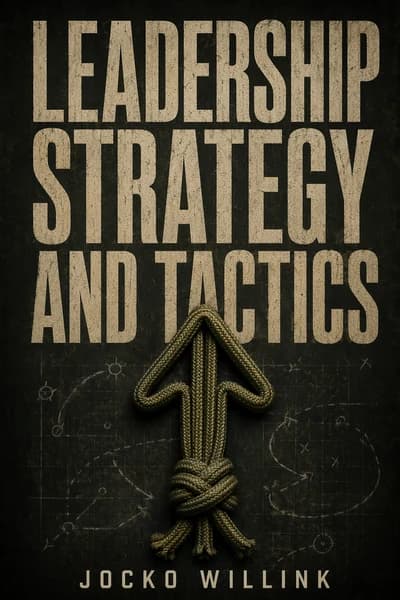
Leadership is often portrayed as a lofty, theoretical concept, but Jocko Willink strips away the academic veneer to reveal its raw, practical core. As a decorated Navy SEAL commander who led the most honored special operations unit of the Iraq War, Willink learned leadership not in classrooms but through life-and-death situations. His approach has resonated far beyond military circles-with CEOs citing his book as transformative and tech entrepreneurs adopting his 4:30 AM workout regimen as a discipline practice. What makes Willink's perspective so compelling is his insistence that leadership isn't about charisma or authority, but about taking absolute responsibility and serving those you lead. His philosophy has attracted followers ranging from Joe Rogan to Tim Ferriss, who appreciate his no-excuses approach to getting results. Whether you're leading a SEAL team through enemy territory or a marketing team through a product launch, the fundamental principles remain the same: detach, own everything, and put the mission and team before yourself.
2장
Detachment: The Foundation of Clear Leadership
In my first SEAL platoon, I discovered the power of detachment during a training exercise on an offshore oil platform. Our entire team froze in a skirmish line, everyone fixated on their weapon sights, waiting for someone to make a tactical decision. I finally elevated my weapon, stepped back, and gained a complete view of the situation. By physically and mentally detaching from the immediate problem, I could see the entire deck and the solution became obvious.
I called out "Hold left, move right!" - a standard cover-and-move procedure we'd rehearsed countless times. Despite being the most junior member, I'd made a sound tactical decision because I could see what others couldn't. This moment taught me that effective leadership requires stepping back from the chaos to see the bigger picture.
As I advanced in leadership positions, detachment became foundational to my approach. It worked not just in tactical scenarios but in all aspects of leadership - helping me read others' emotions, manage my own, and make better decisions under pressure. When planning missions, detachment prevented me from getting caught in details and enabled me to see strategic opportunities and threats.
To practice detachment: stay aware of your surroundings, monitor your physical responses (breathing, voice, tension), physically step back when situations become emotional or chaotic, lift your chin to elevate your vision, take deep breaths, and scan methodically from left to right. This physical detachment triggers mental detachment, allowing for dispassionate assessment and better decisions.
The balance is critical - don't become so detached that you lose connection to what's happening on the ground. You need enough distance to see clearly but enough connection to understand the human elements at play. This balance of engagement and detachment is what allows leaders to make sound decisions when others are caught in the fog of immediate problems.
3장
The Dichotomy of Humility and Confidence
When Delta Charlie took over our platoon, he demonstrated true leadership through a perfect balance of detachment and humility. Unlike our previous commander who forced his plans on us, Delta Charlie let us develop our own plans, then reviewed them from a detached perspective, easily spotting weaknesses we'd missed despite hours of planning. This approach gave us complete ownership, making us fully committed to success.
What impressed me most was watching this senior, experienced commander taking out the trash - something our previous leader considered beneath him. This simple two-minute action represented pure humility from the most respected man in the platoon. Out of admiration, we started preemptively cleaning so he wouldn't have to. His humility, more than his tactical brilliance, drove us to excel - we didn't want to disappoint him.
This experience transformed my understanding of leadership. Delta Charlie showed me how a good leader could turn a miserable situation into something positive through humility and detachment. I decided then that someday I wanted to "make the world good for sixteen SEALs in a platoon," which started me on the path to becoming an officer.
Yet humility alone isn't enough. In my third platoon, I learned the importance of balancing humility with appropriate assertiveness. During a desert training exercise, I impatiently called out tactical instructions when my platoon commander hadn't given orders quickly enough. Though the maneuver executed smoothly, the commander was rightfully frustrated: "There was no absence of orders. I was assessing."
This taught me a crucial lesson: I didn't always need to lead or be at the center of decision-making. My job was to support the team, mission, and boss. Being a good leader requires being a good follower - subordinating my ego to the mission doesn't make me weak; it puts the team above myself so we can win. The dichotomy of leadership requires knowing when to step up and when to step back, when to assert and when to support.
4장
The Laws of Combat: Core Principles That Save Lives
My leadership lessons were tested during my final deployment leading SEAL Team Three, Task Unit Bruiser, in the Battle of Ramadi. However, these principles weren't fully crystallized until I took over tactical training for West Coast SEAL Teams and witnessed a complete disaster during one exercise.
A SEAL task unit created an overly complex plan to assault a desert target, splitting into six elements approaching from different directions. This violated the principle of simplicity and prevented teams from supporting each other. When the assault began, elements were immediately pinned down by enemy fire with no cover support available. The leader in the main building tried handling multiple problems simultaneously - wounded men, civilians, headcounts, and enemy fire - accomplishing nothing while giving complicated instructions no one could follow.
This failure stemmed from one thing: leadership. That night, I wrote down what would become the Laws of Combat:
Cover and Move - Teams must support each other, multiplying effectiveness exponentially. No element operates alone.
Simple - Plans must be clear and understandable by everyone involved. Complexity breeds confusion.
Prioritize and Execute - Address the most critical task first, then move to the next. Don't try to solve everything at once.
Decentralized Command - Leaders at all levels must understand the mission's intent and be empowered to make decisions.
Two additional principles emerged later: Extreme Ownership (taking complete responsibility without excuses) and the Dichotomy of Leadership (balancing opposing forces like talking too much versus too little, micromanaging versus being too hands-off).
These principles apply beyond the battlefield to all leadership situations - from jiu-jitsu competitions to family life to business operations. Though difficult to master, they're essential for effective leadership in any domain. When properly applied, they create teams that function seamlessly under pressure, adapt to changing circumstances, and accomplish missions that would otherwise be impossible.
5장
Relationships: The Currency of Leadership
Leadership fundamentally requires strong relationships in all directions - with people above, below, and beside you in the chain of command. Better relationships create more open communication, which strengthens the team and improves mission outcomes.
Building trust with superiors starts with performance - complete tasks on time, on budget, and with minimal drama. This includes doing things you might not fully agree with, from extra paperwork to covering shifts to handling unpleasant missions. With each problem solved, your boss's trust increases, giving you more influence when it really matters.
When your team questions following flawed orders, be honest: "We might see better ways to do this, but executing well builds trust with the boss so when something truly critical comes up, we'll be heard." Balance compliance with appropriate pushback - being a yes-man all the time damages your credibility with both subordinates and superiors.
Playing the game means taking the long view of leadership rather than seeking immediate victories through force. While the hyperaggressive approach might work temporarily, it ultimately destroys relationships and leads to failure. Support your boss and build trust - not for personal advancement, but to better accomplish the mission.
This extends downward too: when subordinates object to your directives, listen to their alternatives and often say yes, even when their method seems less efficient than yours. This builds trust, so when you must say no, they'll understand and remain committed. Don't be a brownnoser who claims all the boss's ideas are perfect, but be genuinely interested in understanding their perspective.
Store up leadership capital for when it truly matters. Only when faced with something devastating to the team or mission should you refuse to play along. Disobeying a superior should be an absolute last resort, as it causes massive team disruption and can lead to complete mission failure. However, subordinates must refuse orders that are illegal, immoral, or unethical - there's no excuse for following immoral commands.
6장
The Myth of Natural-Born Leaders
Leaders are both born and made. People are born with different physical attributes, cognitive capacities, and leadership traits that give them advantages or disadvantages. Natural leadership qualities include being articulate, analytical ability to simplify complex problems, charisma, a loud voice, and the ability to read people.
However, all these traits can be improved. Leaders can become more articulate through practice, reading, and expanding vocabulary. They can get better at simplification by detaching and thinking abstractly. Even charisma can be enhanced through better posture, eye contact, attentive listening, and projecting confidence. Reading people improves by paying attention to body language and baseline behaviors.
While genetics set certain limits, the most effective way for leaders to overcome natural weaknesses is to build teams that counterbalance their shortcomings. I witnessed this with a SEAL officer who had a critically quiet voice - a serious liability in combat when commands must be heard over gunfire. After I repeatedly addressed this weakness, he brilliantly adapted by having the loudest member of his team relay his commands during operations.
This demonstrates that good leaders find team members who compensate for their deficits. The only people who can never become good leaders are those who lack humility - they won't acknowledge weaknesses, work to improve them, or bring in others to offset their shortfalls.
Leadership and manipulation share striking similarities - both aim to get people to do what you want. Both use relationship building, influence, and political maneuvering to achieve desired outcomes. But there's one critical difference: manipulators get people to do things that benefit themselves, while leaders get people to do things that benefit the team and the individuals themselves.
The manipulator's ultimate priority in every move is self-advancement - seeking promotions, better positions, or looking good to their boss. Their focus is entirely self-serving. True leaders put themselves at the bottom of the priority list. Though manipulators might win short-term victories, they eventually reveal themselves, while good leaders build lasting reputations through sacrifice and prioritizing the mission and team.
7장
Extreme Ownership: The Ultimate Leadership Principle
Extreme Ownership means the leader takes complete responsibility for everything in their world. While this concept resonates with many leaders, truly understanding its depth can be challenging. It means being responsible for absolutely everything-even when subordinates make unexpected mistakes.
I illustrate this with the example of a SEAL machine gunner. When a machine gunner fires outside his designated field of fire during training exercises, young leaders typically blame the gunner. But if the gunner makes this mistake, it means the leader failed to properly train him, brief him, or identify and address his incompetence.
Even circumstances seemingly beyond control, like weather canceling a mission, fall under Extreme Ownership. A good leader develops contingency plans for bad weather rather than accepting it as an excuse. There are no "buts" in Extreme Ownership-it applies to everything, eliminating the possibility of shifting blame.
When a leader knows they cannot blame others, they implement preemptive ownership-taking steps to prevent problems before they occur. The leader who can't blame his machine gunner will focus on training him properly. The leader who knows weather isn't an excuse will develop multiple contingency plans. This highest form of Extreme Ownership happens before mistakes occur, not just after.
When people blame you as a leader, the answer is simple: accept it. Say, "Yes! Everything is my fault. I am responsible for everything-good and bad. Here's how I'll fix it." Then shift to proactive problem solving. This is difficult because our egos make us defensive when blamed.
Even as a subordinate, if your boss blames you for something that wasn't directly your fault, take ownership rather than deflecting. A good leader wants team members who step up and take responsibility, not those who evade blame. Taking ownership demonstrates leadership potential and earns respect, even when the mistake wasn't technically yours.
Leaders aren't superior to subordinates-they must show respect by occasionally doing menial tasks alongside them. In the SEAL Teams, after shooting exercises, everyone must pick up thousands of brass shell casings-a tedious, skill-less task. While leaders have administrative duties and planning to do, joining troops in this work builds relationships, shows humility, and provides insight into team dynamics.
8장
Strategic Leadership: When to Lead from Where
While "Lead from the front" is a common mantra, effective leaders know when to lead from different positions. Leading from the front is crucial when setting examples, breaking through fear-inducing moments, or tackling arduous tasks. However, leaders must also know when to step back.
As a SEAL assault force commander, I avoided being among the first to enter hostile buildings because those SEALs would be fully engaged in immediate tactical problems. My job was to detach, assess the broader situation, and coordinate support. Good leaders maintain strategic perspective by sometimes leading from the middle or rear, allowing team members closest to problems to develop solutions. The best ideas often come from frontline troops-give them the knowledge and power while you maintain situational awareness of the bigger picture.
When facing unexpected situations, good leaders remain levelheaded and keep emotions in check. They take measured account before reacting, knowing initial information is often incomplete or inaccurate. Even in crisis situations like combat, a pause for assessment is crucial - determining enemy size, evaluating terrain, and considering strategic implications before committing to action.
In business contexts, the same principle applies: when projects go off track or personnel issues arise, calm investigation yields better results than emotional outbursts. Overreaction not only leads to poor decisions but undermines leadership credibility, making you appear out of control. The best approach is to detach emotionally, gather facts, and make logical decisions based on reality.
Not caring is a powerful form of detachment that effective leaders master. Like the negotiator's ability to walk away, this mindset gives you freedom from emotional entanglement. When someone prefers their plan over yours? Don't care. Asked to do a demeaning task? Don't care. Need to give leadership opportunities to others? Don't care.
This detachment requires subduing your ego - the root of most negative reactions. Your ego makes you want to win, pushes you forward, but can be dangerously shortsighted. Paradoxically, by not caring about ego-driven concerns, you demonstrate humility, build trust, and ultimately achieve greater strategic victories. The dichotomy is that to truly win in the long game, you must set aside your ego and not care about short-term status.
9장
Understanding Human Nature: The Leadership Advantage
Every organization contains archetypal characters - natural leaders, shy loners, cerebral thinkers, aggressive competitors - yet each person remains uniquely different in their motivations, idiosyncrasies, and needs. This dichotomy makes leadership challenging.
Like a master woodworker who must understand both wood types generally and individual pieces specifically, a leader must communicate consistently while adapting to individual differences. You can't apply leadership tools universally. When a technique fails, poor leaders simply apply more pressure, often making things worse. Good leaders recognize when an approach isn't working and adjust - perhaps replacing micromanagement with autonomy when initiative is lacking, or adding responsibility rather than removing it when performance falters.
People emerge from both nature and nurture, with inherent traits and developed attributes. As a leader, your goal isn't to determine which traits came from where, but to utilize them effectively. Match attributes with appropriate roles - don't force introverts into sales or creative thinkers into rigid procedures. However, avoid permanent pigeonholing.
Everyone should occasionally work outside their comfort zones to develop weaker areas. The effective leader ensures this happens in measured ways - having shy team members practice sales calls to build confidence or conducting role-playing exercises with blunt communicators to develop tact. Growth requires pushing boundaries, but with intentional guidance. While people should grow through challenges, their primary duties should align with natural strengths, benefiting both individuals and the team.
Leadership brings inevitable separation from troops, requiring comfort with solitude. You'll work longer hours, arrive earlier, and leave later. While decisions ultimately rest on your shoulders alone, leadership needn't be lonely. Cultivate strong relationships cautiously throughout your chain of command, developing trusted agents at various levels who help you monitor team dynamics and provide feedback.
These relationships offer stress relief and camaraderie, but must maintain professionalism - no preferential treatment, undue influence, or complete transparency. The final decisions still rest solely with you as leader. Even with extensive input, the unique perspective of leadership means ultimate responsibility cannot be shared or escaped.
10장
Practical Leadership: Tools for Real-World Application
Every team member should understand they are the most important person on the team - and it's never a lie. In combat situations, I told this to everyone from point men to radiomen to medics to machine gunners, explaining their critical role in our survival. At any moment, any team member can become the most crucial person, and if they fail at a critical moment, consequences could be catastrophic.
Leaders must help everyone understand how their role, even seemingly menial tasks, connects to the strategic mission and big picture. When everyone believes their job is absolutely critical, the team functions at its highest capacity.
The number of people a leader can effectively manage depends on several variables. In dynamic environments like combat, the span should remain small - typically four to six people per fire team. Decentralized Command allows larger units to function through a hierarchy of leaders, each managing a manageable number.
In administrative environments, a leader might handle eight to ten direct reports. The quality and experience of subordinate leaders also impacts span of control - trusted, experienced subordinates require less supervision, allowing you to oversee more of them, while inexperienced leaders demand more attention, limiting your capacity. The goal is developing subordinates who need minimal guidance, freeing you to "look up and out instead of down and in."
Discipline isn't coddling-it's the ultimate form of caring. In the SEAL Teams, taking care of your people means pushing them hard through rigorous training so they're prepared for combat and have the highest probability of returning home. The same applies in business-you must drive people toward their goals so they can achieve professional success and provide for their families. This drive requires balance; you can't push so hard that burnout occurs. The path of discipline leads to freedom, while the easy path leads to misery.
Pride is a powerful dichotomy-both deadly sin and positive force. When excessive, it breeds arrogance, inflates ego, and leads to stagnation. But healthy pride drives teams to maintain high standards, put in extra work, and care about details. Military units with strong pride display exceptional standards in everything they do. Pride comes from shared history and challenges overcome together. To build pride in a team without history, give them opportunities to earn it through hard work and shared suffering.
11장
Communication: The Lifeblood of Effective Leadership
The primary mode of transportation for SEALs is the foot patrol. During patrols, each position in the formation receives different levels of information. The point man leads and has the best situational awareness, followed by the patrol leader, radioman, and others. Those at the back of the patrol often have minimal information about location, distance to target, or upcoming terrain features.
This creates both tactical disadvantages and morale problems. Without knowing where you are or what's coming, you can't effectively respond to attacks or navigate if separated. I learned this by experiencing all positions, so as a leader I made it my mission to keep everyone informed through clear briefings, sharing map details at rest stops, and checking on each team member's condition.
This principle applies beyond tactical situations. In any organization, team members who don't understand where they are, where they're going, or how their efforts connect to the mission become ineffective. Leaders must proactively share information rather than assuming subordinates know what's happening or will ask questions. When people lack information, morale plummets and performance suffers.
If rumors are spreading in your organization, you've created an information vacuum that allows them to flourish. When people lack facts, they create their own explanations - usually negative ones. Get ahead of rumors by communicating proactively. Whether you're laying people off, discontinuing products, or shutting down offices, explain the reasons directly. Without explanation, the default rumor becomes "We're going out of business!"
The longer you wait to address issues, the larger rumors grow and the harder they become to control. Attack rumors by being truthful, direct and timely with information. Early transparency minimizes the damage rumors can cause.
When subordinates aren't following your intent, examine your own communication first. Effective guidance must be simple, clear, and concise - more words often create confusion rather than clarity. In Ramadi, Iraq, I simplified complex rules of engagement into language my SEALs could apply under stress: "If you have to pull the trigger, make sure the person you are killing is bad." I also explained why following these rules mattered - harming civilians would undermine our entire mission of protecting the populace.
To ensure comprehension, don't just ask if people understand. Have them explain the guidance back in their own words or apply it to scenarios. Communicate through multiple channels - written documents, face-to-face meetings, videos, conference calls - since different people absorb information differently.
12장
Leadership as Service: The Ultimate Paradox
When a subordinate comes in angry, telling them to "calm down" only makes things worse. Instead, use the Reflect and Diminish technique: mirror their emotion but at a slightly lower intensity to de-escalate. If they're furious about late supplies, raise your voice a bit saying "You've got to be kidding! How late are they?" This makes you an ally rather than an adversary. Then gradually lower the emotional temperature while solving the problem.
This works for any emotion - sadness, envy, even humor - and both up and down the chain of command. Don't isolate yourself emotionally; foster shared emotions but diminish them to focus on solutions.
Yelling at subordinates is almost never appropriate. Raising your voice for volume when needed is different from emotional yelling, which displays weakness and will be mimicked by your team. If subordinates don't understand you, yelling won't help - you need to explain better. The rare times to yell should be calculated, not from losing your temper. I yelled perhaps five times in my twenty-year military career, and only after multiple calm attempts to address an issue.
When someone interrupts or talks over you, let them finish rather than fighting to be heard. This works for multiple reasons: it satisfies their need to speak, and it gives you valuable information about their thinking. In group settings, listening to everyone argue gives you comprehensive understanding while you quietly develop your own thoughts. When you finally speak, you'll have the most developed perspective. The less you talk, the more weight your words carry.
Leaders who think apologizing shows weakness are usually weak and insecure themselves. Taking ownership includes apologizing when you've made a mistake, especially when you've negatively impacted someone. Accompany your apology with an explanation: what you saw, how you read the situation, what happened, and how you'll prevent the same mistake.
Your team watches everything you do as a leader - your attitude, behavior, punctuality, appearance, rule-following. They not only notice but will imitate what they see. If you're late, they'll be late. If you break rules, they will too. They'll even mirror your emotions - staying calm if you're calm, panicking if you panic. Don't try to cover up mistakes; they'll see through it. Admit errors, own them, and explain how you'll prevent them from happening again. In everything you do, you must set the example.
As a leader, there are no excuses and no one else to blame. Leadership requires making decisions, building relationships, clear communication, controlling your ego and emotions, detaching when needed, instilling pride, training your team, maintaining balance, and taking ownership. If you lead effectively, the team succeeds and accomplishes the mission. If not, you fail and the mission fails. Leadership is all on you.
But leadership is not about you - it's about the team. The moment you put your own interests above the team and the mission is when you fail as a leader. Your people will notice self-serving behavior. If you use leadership principles to further your own career, they'll eventually backfire. But if you use them to help others and accomplish the mission, the team will succeed, and that is true leadership.