1장
When Love Is the Only Gospel That Matters: Rediscovering Faith's Beating Heart
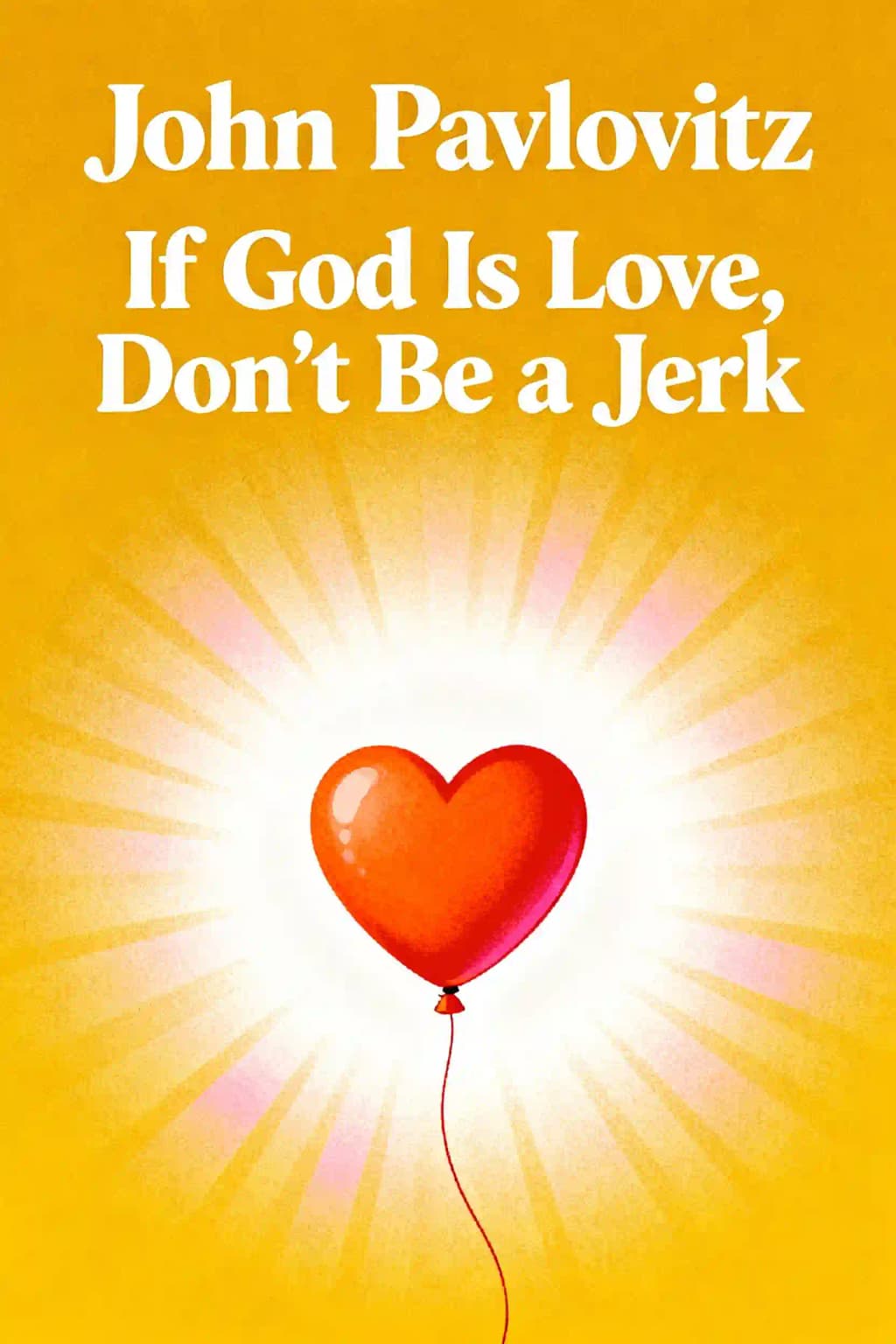
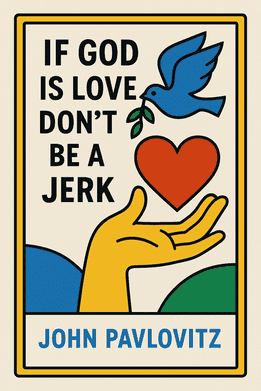
What if Christianity's core message was simply "don't be a jerk"? In John Pavlovitz's provocative spiritual manifesto, he challenges the modern church to return to Jesus's radical ethic of love-or risk becoming completely irrelevant. As a former megachurch pastor turned progressive Christian voice, Pavlovitz has become a beacon for those disillusioned with toxic religion. His work has garnered millions of followers across social platforms, with celebrities like Glennon Doyle and Elizabeth Gilbert praising his refreshing take on faith. Written during the tumultuous year of 2020, this book arrived at a critical moment when American Christianity seemed more invested in political power than compassionate service. "If God is Love, Don't Be a Jerk" doesn't just critique religious hypocrisy-it offers a roadmap back to the revolutionary love that once defined the Jesus movement. For anyone who has ever wondered if there's something more authentic beyond the culture wars and religious dogma, Pavlovitz extends an invitation to rediscover faith's beating heart.
We all reach moments when we outgrow our inherited religious frameworks. Pavlovitz humorously compares this experience to getting trapped in decades-old pants that once fit perfectly but now cause "spiritual claustrophobia." This discomfort signals not a loss of faith but an evolution-our souls expanding beyond the containers that once held them comfortably.
When people describe themselves as "spiritual but not religious," they're often saying, "I've outgrown my God box and am currently looking for a bigger one." These spiritual wanderers haven't abandoned their hunger for meaning or justice; they've simply discovered irreconcilable differences with traditions that no longer accommodate their questions, experiences, or moral intuitions. Perhaps they've grown exhausted by religious silence in the face of injustice, or realized they can no longer pray as they once did.
The problem with small religion isn't just that it breeds exclusion (though it certainly does). The deeper issue is that all religion is ultimately "small religion"-including our own. A God our brains can fully comprehend or our buildings can completely contain simply isn't big enough to be truly God. As the Apostle Paul prayed that believers might grasp Christ's love that "surpasses knowledge," he acknowledged that mystery is essential to authentic faith.
2장
Scary Bedtime Stories and the Humility of Not Having It All Together
Our earliest received ideas about God's character fundamentally shape our spirituality and behavior. Pavlovitz reflects on his Catholic upbringing where he was taught about a God who both fully loved him yet whose anger was never far away-a paradox adults around him never questioned. These inherited beliefs about whether God is fundamentally for or against us determine our capacity for self-love and how we treat others.
Punitive religion often preaches a conditional gospel where God's love comes with caveats, creating terrified adults who struggle to love well. Despite his progressive journey, Pavlovitz admits fear still lurks in his periphery-the worry he'll "get it wrong, piss off God, and bear the full weight of His fury." He understands the impulse to hoard blessings while seeking that sacred place called "enough."
Crisis reveals the gap between our declared beliefs and our actual ones. The COVID-19 pandemic illustrated this perfectly. Pavlovitz describes Christians who sing about God's abundance on Sundays but hoarded toilet paper during the pandemic while simultaneously claiming faith protects them from the virus. This selective faith abandons safeguards in some areas while ignoring compassion in others.
Pavlovitz confesses his spiritual journey could be summarized as "God, I cannot get my sh*t together." Despite being a pastor for decades, he's lived with persistent uncertainty while publicly projecting certainty. He now embraces this uncertainty, recognizing that all humans-regardless of religious pedigree-operate with incomplete information about the infinite.
This necessary mystery in spirituality means everyone is always wondering about something, if they're honest. Intellectually honest religious people should experience impostor syndrome, as this humility keeps them open to revising their beliefs and showing kindness to fellow "stumbling pilgrims."
Sitting in a coffee shop near a Baptist seminary, Pavlovitz observes clusters of bearded young men discussing hermeneutics, moms in Bible study, and male professors talking missions. He's struck by their overconfidence when discussing unfathomable mysteries as casually as making a sandwich. This represents what organized Christianity often looks like: a "cult of sanctified sameness" lacking the diversity Jesus regularly hosted. Our echo chambers reinforce our rightness while shielding us from necessary interrogation.
In his "disorganized spirituality" far from organized religion, faith becomes more emotional awareness than intellectual decision. He's had to hold his "Christian" label more loosely, describing himself now as "an asker with more questions, a seeker still looking." Rather than defining what he is, he's more concerned with how others perceive his beliefs through his actions and treatment of people.
3장
The First Commandment: Don't Be a Jerk to Anyone
We all have the capacity for jerkish behavior, but there's a crucial distinction between accidentally hurting others (being human) and intentionally wounding them (being a jerk). Pavlovitz reflects on his interactions with angry critics, constantly asking himself whether he's genuinely trying to understand them or merely defeat them.
While speaking truth doesn't guarantee positive reception, Jesus commands us to keep our hearts "as blameless as we can" and avoid being cruel in his name. The key distinction is between accidentally hurting someone through ineloquence or carelessness versus intentionally wounding them because that was your purpose. While both require attention, the latter demands "repentance and a severe attitude adjustment."
Everyone is "playing hurt" in some way-carrying invisible burdens while doing their best to show up for others. Pavlovitz shares the story of Terry, a songwriter traumatized by religious rejection after being outed in his youth, who told him, "Every day of my life, Christians preached a Jesus they absolutely refused to show me."
People of faith should be "helpers and healers" like Jesus, positioned "on the front lines of human beings in crisis." When we fail to embody empathy, we "rob people of the chance to know a bigger God" and "further damage human beings already playing hurt." Regardless of religious affiliation, if faith doesn't make you more compassionate and aware of others' pain, "it's probably not made of God stuff" and won't matter to those who see religion as "at best superfluous and at worst, toxic."
Our gendered conception of God limits our theology and damages our world. Pavlovitz reflects on growing up with the image of God as male-"God the Father. God the man. God, the He of Hes"-and how this masculine conception took decades to deconstruct. This male-centric view not only justifies sexism but fuels violence against LGBTQ people.
Despite Jesus' references to "Father in heaven," a single-gendered God doesn't make sense for a being who is spirit, not body. If all humans are made in God's image, God must transcend traditional gender definitions. The Bible itself challenges binary understanding of God by using feminine imagery for the divine: God as nursing mother in Isaiah, David comparing his relationship with God to a weaned child with its mother, and Jesus likening himself to a hen gathering chicks. The Hebrew name for God's Spirit, Ruach, is feminine.
This more expansive view of God allows us to recognize the divine in all people regardless of gender identity or sexual orientation, rather than using ancient texts to "destroy other people." Understanding God beyond gender binaries helps us treat diverse humanity with proper reverence.
4장
Faith, Nationalism, and the Weaponization of Religion
Christianity in America has become dangerously entangled with nationalism, creating a distorted theology that places national identity above Christ's teachings. This America-centered religion has spawned white supremacy, xenophobia, and anti-immigrant rhetoric, particularly evident in evangelical support for Trump's presidency.
While Jesus preached selflessness, humility, and care for the marginalized, many American Christians have embraced a contradictory gospel of privilege and supremacy that drives decent people away from organized religion.
The murder of George Floyd sparked unprecedented cross-cultural outrage that transcended political and religious boundaries, drawing many previously silent people into activism. Yet the strongest opposition to Black Lives Matter, LGBTQ equality, and human rights movements often comes from Christians themselves, revealing how far many churches have strayed from Jesus's mission.
After tweeting that equality means children everywhere deserve equal care, Pavlovitz received hostile responses from both neo-Nazis and conservative Christians-an alarming convergence revealing a shared territorialism. Many American Christians have embraced a selective "pro-life" position that values American lives above others, contradicting Jesus's borderless compassion.
A Philadelphia pastor once confessed to Pavlovitz that he "missed hell" as a theological tool, explaining that the threat of eternal damnation gave him leverage to motivate his congregation to volunteer, donate, and evangelize. Without this fear-based currency, his now-progressive church became less easily mobilized.
This reveals why conservative evangelicals can be marshaled to support extremist candidates, embrace conspiracy theories, and justify cruelty-they're driven by terror of divine punishment. While effective for mobilizing voting blocs, this fear-based approach values conversion over conversation and fails to foster genuine love.
Condemning someone to hell requires believing in God, claiming intimate knowledge of God's character, accepting that God created a place of eternal torture, knowing the precise requirements for damnation, and being certain others meet these requirements while you don't. Pavlovitz argues it's nearly impossible to genuinely love your neighbor while believing they're in unrepentant sin that disqualifies them from God's presence.
Pavlovitz challenges conservative Christians who claim to be "Bible believing" or worship a "biblical God," pointing out that no one truly wants a completely biblical God. He illustrates how the Bible portrays God in ways many would find uncomfortable: holding eternal grudges, drowning humanity except for Noah's family, sanctioning city slaughters, and allowing Job's suffering.
5장
The Rainbow Cake Controversy: Exclusion in the Name of Love
Pavlovitz examines the paradox of Christians who are terrified by rainbow cakes and LGBTQ identities, citing cases like Masterpiece Cakeshop and a fifteen-year-old girl expelled from her Christian school for posting a photo with a rainbow birthday cake. He notes the tragic irony that the rainbow-originally a biblical symbol of God's expansive love-has become something Christians rally against.
This exclusionary behavior stems from inherited bigotry and an evangelical narrative portraying outsiders as dangerous threats to "normal" folks. This perspective assumes whiteness, American identity, Republican politics, and heteronormativity as the moral baseline, allowing cruel discrimination to be justified as righteousness.
Excluding LGBTQ people isn't just morally wrong-it's counterproductive evangelism. If Christians truly believed being gay was sinful, they should maintain loving community rather than expelling those they claim need saving. Such exclusion creates unnecessary trauma, especially for vulnerable teens who desperately need community during adolescence.
The phrase "Love the sinner, hate the sin" enables Christians to inflict tremendous harm while claiming righteousness. This clever invention of the Religious Right appears nowhere in Jesus's teachings yet justifies excluding LGBTQ people from community and denying their civil rights.
True love requires accountability to how others experience our actions-not just our intentions. The countless emails Pavlovitz receives from LGBTQ individuals carrying condemnation and fear demonstrate the damage done by Christians claiming to love while causing profound suffering.
People actually want a "selectively biblical God" that matches their comfort level. Similarly, many Christians aren't interested in emulating Jesus's more demanding biblical teachings about feeding the hungry, elevating the poor, or welcoming foreigners when these conflict with their comfort or financial security.
After posting a video arguing that the Bible never unequivocally declares homosexuality a sin, Pavlovitz received a comment equating LGBTQ identities with sins like adultery and theft. This creates a false equivalency between identity/orientation and harmful actions, making it impossible to truly love LGBTQ people while seeing them as morally flawed.
Everyone "cherry-picks" scripture, bringing their own prejudices, fears, and experiences to interpretation. Those who weaponize the Bible often haven't read much of it-just enough to condemn others. When confronted with contradictory passages (like Leviticus condemning both homosexuality and disrespectful children to death), these Christians typically fall silent or change tactics.
6장
The God We Create in Our Own Image
We all bring our unique "story-shaped lenses" to our understanding of God and religion. Though we assume others see things as we do, each person carries subjective filters formed by upbringing, teachers, faith communities, life experiences, and personality. This creates inevitable friction as billions of separate sacred stories collide daily.
The fundamental problem is that we all make God slightly or substantially in our own image, creating personalized versions of Jesus that confirm our biases and politics. Even when using the Bible as common ground, people extract completely different meanings from the same passages about issues like guns, violence, and sexuality.
Christians tend to imagine themselves as the heroes in biblical stories, never the hypocrites Jesus condemns. This bias creates challenges for spiritual communities trying to determine which version of Jesus to follow together, leading to fractures in churches over social justice issues.
Jesus embodied seemingly contradictory roles: compassionate caregiver and radical system-challenger, table-setter and table-overturner, pastor and activist. The challenge for Christians is embracing these different dimensions of Jesus while recognizing themselves as recipients of both his tender care and sharp critique.
We inevitably anthropomorphize God, attaching human characteristics to the divine, which creates problems as we often use ourselves as the reference point. People frequently create a God whose prejudices mirror their own, withholding community from those who don't meet their standards.
People often confidently claim to know God's specific intentions, especially during tragedies. Religious figures like Kirk Cameron have declared hurricanes were God's intentional message requiring human repentance, while Joel Osteen suggested God allows suffering because "he knows you can handle it." Such interpretations make God seem abusive and drive people away from faith.
Pavlovitz challenges the theology that portrays God as needing human persuasion to act. He critiques the idea of prayer as a "spiritual GoFundMe campaign" where gathering enough people praying creates a critical mass that moves God to action. This approach creates problematic theological questions: if someone recovers, did we engineer their survival? If healing doesn't come, did we fail to pray hard enough?
7장
When the Danger Comes from Inside the House: Christianity's Self-Inflicted Wounds
Like the horror film "When A Stranger Calls," where the terrifying revelation is that danger comes from inside the house, the greatest threats to American Christianity come from within. While religious people often blame external factors for church decline, Pavlovitz believes the most serious wounds to Christianity are self-inflicted.
Pavlovitz frequently feels "I can't Christian today"-unable to remain tethered to something that has become toxic and painful to many. He struggles with the bad theology and predatory behavior of pulpit-pounding pastors, the malice masquerading as Christianity, and the face-palming moments of watching celebrity evangelists support border walls or witnessing viral videos of racist rants from self-proclaimed Christians.
He questions whether Christianity's net effect remains redemptive or if the name "Christian" has become so entangled with misogyny, bigotry, and homophobia that it cannot be reclaimed from those who've weaponized it politically.
Pavlovitz shares the story of a tearful woman who left her longtime church over its stance on immigration and response to Black Lives Matter protests. When she expressed feeling like she'd given up too soon, he reassured her: "You have changed the church. You left it." He explained that she had influenced the congregation both through her presence and her departure, which might serve as a catalyst for decisions that might never otherwise happen.
His connection to Christianity now feels tenuous, maintained more by spiritual muscle memory than present conviction. He finds decreasing joy in identifying as Christian because of what that declaration aligns him with in others' eyes: homophobic politicians, Muslim-hating evangelists, gun-toting preachers, and social media trolls.
The COVID-19 pandemic stripped away pretense and revealed our true character. Pavlovitz describes his disappointment in seeing former church friends express outrage at mask mandates while claiming to be "pro-life," exposing a profound cognitive dissonance.
Many Christians' selective "pro-life" stance-focusing exclusively on abortion while showing disregard for already-born human beings-stems from laziness and self-preservation. Adopting a truly consistent pro-life ethic would require confronting privilege, phobias, and biases-a price many aren't willing to pay.
He illustrates this hypocrisy with an example of Trump supporters laughing at the suggestion of shooting immigrants, revealing the duplicity of selective compassion. The true test of faith is answering: "Do you care about other people?"
8장
Holy Ferocity: When Love Demands Action
Anger and love aren't mutually exclusive-sometimes what appears as anger is actually prompted by love, a "holy discontent" that drives us to action. While spiritual traditions warn against unhealthy anger, Aristotle suggested that the right anger directed at the right person, to the right extent, at the right time, with the right motive, and in the right way can be redemptive.
Pavlovitz suggests replacing "anger" with "ferocity"-the passionate defense of others that fueled movements like civil rights and Black Lives Matter, and even Jesus's own table-flipping righteous indignation.
Love that looks like Jesus is fierce, audacious, and bold-not quietly tolerating bigotry or discrimination. This Christ-like love refuses to be tone-policed, doesn't apologize for its passion for humanity, confronts ugliness, welcomes turbulence, and drives believers out of privilege into the trenches.
Pavlovitz embraces being labeled "angry" while ensuring his anger is directed appropriately, encouraging good people to "stay angry" in the face of injustice.
Reflecting on the loss of a 23-year-old family member despite countless prayers, Pavlovitz refuses to question God's character or their prayer effectiveness, simply acknowledging "This sucks." He now sees prayer as valuable for unlocking empathy, building solidarity, and connecting us to each other and God-not as a mechanism to change God's mind about healing.
Pavlovitz rejects the notion that global suffering like the pandemic is "part of God's plan." He finds it inconceivable that a loving God would engineer widespread illness, death, job loss, and emotional devastation to make a point or bring humanity closer.
Rather than trying to decode the "whys" of senseless tragedy, he looks for God in human responses to suffering-in the helpers, healers, and caregivers. Instead of seeking God's "plan," which is difficult to discern, he searches for God's "presence" in acts of compassion: nurses sleeping in hospital closets, teachers transforming curricula, musicians singing from balconies, and neighbors helping neighbors. For Pavlovitz, love is the only divine plan, and living it out is the greatest prayer.
9장
The Church of Not Being Horrible: Finding a New Way Forward
American Christianity has become an inverted version of Jesus's original movement. While early Christianity was a humble, compassionate resistance to Roman power, today's version often seeks dominance, control, and political power. This toxic religion needs to die for the heart of Jesus to be resurrected. Jesus never intended Christianity to hold power or dictate laws but rather to renovate the world through love.
Pavlovitz proposes a new church with a simple mission: "Don't be horrible to people." Instead of doctrinal statements, it would have promises about treating people with dignity, not creating caricatures based on identity, not taking away others' rights, letting people tell their own stories, and not imposing one's experience as universal. The central question would be "Am I being horrible right now?"
When we operate from love, every person becomes sacred, every place sanctified, and each moment potentially blessed. The most transformative communities embrace messiness and discomfort rather than sterile perfection, living together in the unknowing while giving each other grace when they fall.
At a mountain retreat, Pavlovitz witnessed the power of belonging when a woman burst into the room shouting "MY PEOPLE!" Though strangers moments before, attendees shared a commonality that ensured acceptance without moral litmus tests. Similarly, Luis and Maria drove ten hours from New Mexico just to "be in a room with people who get us," escaping the exhaustion of concealing their true selves in their conservative hometown.
While the Religious Right has spent decades identifying enemies and going to war in the name of virtue, progressive Christians can be equally guilty of self-righteousness, extending tolerance only to those politically and theologically to their left while being uncharitable to conservatives.
Jesus' command to love enemies acknowledges we can have them. When Jesus warns against judging others unless willing to be judged by the same standard, he isn't asking followers to avoid naming injustice or to compromise convictions. Rather, Jesus cautions against imagining ourselves as solely capable of virtue while demonizing others.
The greatest challenge in loving the world is believing that people with whom we disagree reached their beliefs as thoughtfully as we did. Pavlovitz believes Jesus was a "social justice warrior" who engaged systemic brokenness, while others see this as a liberal distortion that distracts from saving souls from hell.
10장
Your Unique Gospel Story: Finding and Sharing Your Voice
Pavlovitz shares how he received a handwritten letter from Margaret, a 90-year-old Holocaust survivor who saw disturbing parallels between her childhood under Hitler's regime and contemporary American politics. She couldn't understand how people claiming to be Christians could participate in movements echoing such painful history. Her story reinforced his commitment to "keep working for a Christianity that resembles Jesus."
He recalls a children's pastor named Sharon who, despite facing denominational barriers to ordination as a woman, confidently declared, "I don't need to be ordained, I'm anointed!" She recognized that her journey, experience, study and ministry spoke for themselves-she had everything she needed from God without requiring institutional credentials.
Pavlovitz redefines "evangelist" beyond professional religious figures to include everyone who passionately shares good news about anything they love-whether food, music, or spiritual experiences. He points out how people naturally "preach" about restaurants, sports teams, TV shows, and other passions. This same impulse applies to spiritual matters, where each person is "the world's leading expert on your experience of God" with a unique story only they can tell.
He recounts a profound encounter at a Texas border church hosting Latino families released from ICE custody. Despite language barriers, he connected with Hector and his six-year-old daughter Angelina through simple gestures, drawings, and shared photos. Through translation, he discovered their many similarities as fathers with beloved daughters and dreams for their futures. "For a few hours, Hector, Angelina, and I got to be Jesus to one another," seeing this as the essence of faith: showing up to help others feel seen and loved.
Pavlovitz sees hope in what he calls the "Community of the Convinced" forming today-Christians alongside those uncomfortable in church, people of different traditions, doubters, and the non-religious-all speaking with one voice about human value and love without qualifiers. The "skeptics, backsliders, doubters, heretics, apostates, and 'sinners'" are building the redemptive community the world needs, just as Jesus intended.
Pavlovitz argues that God is fundamentally pro-choice, with free will being central to the Genesis creation narrative. He emphasizes that God created humans with self-determination and the right to choose their own path-not as mindless robots. For Christians, attempting to legislatively control women's bodies contradicts God's intentions, as the higher law grants women control over their bodies.
While Christians may believe life is sacred, they have no biblical mandate to force their will upon others. Until Christians find a pro-life ethic transcending politics and preference, they'll continue putting barriers between the Church and those who believe humanity beyond birth matters.
Pavlovitz concludes his book with a passionate plea that captures his entire message: "If you aspire to be someone who perpetuates the greatest goodness in this world, as difficult and confounding and costly as it is, may we pursue the elusive, difficult, but so very loving God-work of simply not being a jerk."