1장
The Ultimate Liberation: Finding Freedom Through Surrender
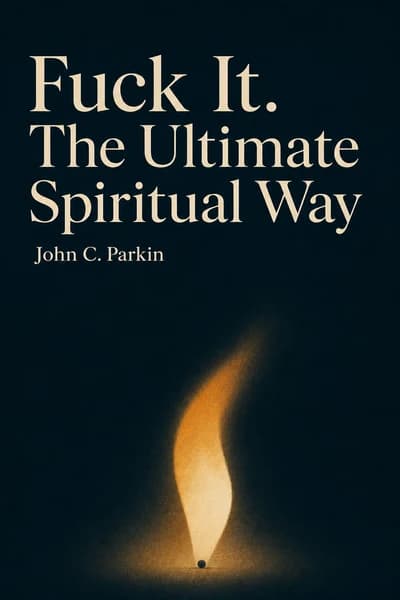
Have you ever been so overwhelmed by life's demands that you just wanted to throw your hands up and say "Fk It"? What if that impulse wasn't just a momentary breakdown but actually profound spiritual wisdom? John C. Parkin's groundbreaking book "Fk It: The Ultimate Spiritual Way" has transformed countless lives with its radical yet simple philosophy. This isn't just another self-help book-it's become a global phenomenon, translated into 26 languages and embraced by celebrities like Russell Brand and Fearne Cotton. Even Oprah Winfrey reportedly keeps a copy on her nightstand. What makes this profanity-laced spiritual guide so powerful? It distills complex Eastern wisdom into a two-word Western expression that instantly shifts your brain chemistry and releases you from the prison of caring too much about things that don't deserve your energy. Let's explore how these two simple words might just change your life.
2장
When Meaning Becomes a Burden: The Core Philosophy
At the heart of the Fk It philosophy lies a profound insight: our suffering stems from the excessive meaning we attach to things. We fill our lives with an elaborate tapestry of meanings-career success, relationship status, physical appearance, social standing-and then suffer when reality doesn't match our expectations.
Think about it: as children, we experience pure joy in simple things like feeling rain on our faces or playing with cardboard boxes. We haven't yet learned to care about status, achievement, or others' opinions. But as we grow, we accumulate meanings like barnacles on a ship, weighing us down and creating countless opportunities for disappointment.
This is where saying Fk It becomes revolutionary. When you say Fk It to something that's causing you pain, you're not being flippant-you're performing a profound spiritual act. You're releasing the grip of meaning and returning to a state of freedom. You're giving up the struggle against what is.
Eastern spiritual traditions have long recognized that attachment creates suffering. Buddhist monks spend decades learning to release attachments through meditation and mindfulness. Taoists practice wu-wei-non-doing-to align with life's natural flow. What Parkin brilliantly recognized is that Westerners have been sitting on a linguistic shortcut to the same spiritual state all along.
When you say Fk It, something remarkable happens in your brain. Unlike most language, which is processed in the left hemisphere, profanity activates both hemispheres or shifts processing to the right brain. This creates an immediate neurological shift at precisely the moment you need it most-when you're stuck in analytical overthinking. It's like flipping a switch from tension to relaxation, from resistance to acceptance.
The beauty of this approach is its simplicity. No need for years of meditation, expensive retreats, or complicated practices. Just two words can begin the process of liberation from whatever is causing you pain.
3장
The Essential Techniques: Building Your F**k It Toolkit
While saying Fk It is powerful on its own, Parkin identifies five essential techniques that enhance its effectiveness. Think of these as fingers forming a fist "ready to smash your uptight life into submission."
First comes relaxation-the foundation of the entire philosophy. Most of us don't realize how chronically tense we are until we deliberately focus on our bodies. That tightness in your shoulders, jaw, or forehead? It's been there so long you've stopped noticing it. Learning to genuinely relax isn't just pleasant; it's transformative for your health. The key is finding internal pleasure in relaxation itself-enjoying the sensation of melting tension, deep breathing, and the tingling energy that flows through a truly relaxed body.
Next is letting go-accepting the impermanence of everything we cling to. Our youth, relationships, possessions, skills-all are temporary, yet we desperately pretend otherwise. Try this exercise: go through everything you want to hang onto-partner, job, health, family-and tell yourself you'd actually be okay without them. This isn't about devaluing what matters but recognizing your fundamental resilience. You can survive with very little. When you truly know this, fear loses its grip.
The third technique is acceptance-embracing reality exactly as it is rather than wishing it were different. We waste enormous energy complaining about things we can't change-the weather, other people's behavior, past events. As you practice saying Fk It, you'll find complaining becomes less appealing because it actually makes you feel worse, not better. What would it be like to accept yourself exactly as you are? Your life exactly as it is? The world-messy and imperfect-just as it is?
Fourth is watching impartially-developing your inner observer. During meditation, practice watching your thoughts as if they're not yours. Don't judge them, just observe them passing like clouds. This creates space between you and your mental activity, revealing that you are not your thoughts. They're just happening, and you don't have to get involved with them.
Finally, conscious breathing connects all these techniques. When you breathe consciously, your body responds immediately: heart rate slows, stress hormones decrease, and every cell gets the message to relax. The Fk It Outbreath involves breathing out slowly with a sigh, telling your body "that's it, you can relax now." The Fk It Inbreath is about pulling in energy and strength-the yang to the outbreath's yin. Most of us live between proper "yanging" and "yinning," neither embracing life vigorously nor relaxing fully.
4장
Saying F**k It to What Others Think: The Ultimate Liberation
Of all the applications of the Fk It philosophy, none is more universally needed than saying Fk It to others' opinions. Our concern with external validation often stems from childhood-when we sought approval and developed self-worth through others' responses. Those with low self-approval continue seeking external validation as adults, often at great personal cost.
This preoccupation with others' judgments constrains life in countless ways. It keeps talented singers working as accountants, creative spirits in conventional careers, and many LGBTQ+ individuals in straight relationships. It prevents us from expressing our authentic selves, following our passions, or making necessary changes.
The reality check is simple but profound: you simply can't please everyone, no matter how hard you try. Everyone has what Parkin humorously calls a unique "Genetic Fucked-Up Code," making universal approval mathematically impossible. Even if you somehow managed to please 99% of people, that still leaves 80 million critics in a world of 8 billion.
Most negative interactions aren't actually about you. When someone seems to target you specifically, they're usually projecting their own issues, jealousy, or bad mood. Almost nothing is worth taking personally because it rarely reflects on you.
When you start saying F**k It to things that matter to others, prepare for resistance. People get upset when you challenge their meaning systems because deep down they recognize their own imprisonment. Those who make genuine leaps to freedom-leaving unfulfilling relationships, abandoning career ladders, saying no when expected to say yes-often face the strongest criticism from those still chained to conventional meanings.
The path to liberation begins with small steps. Practice saying what you really think in low-stakes situations. Wear what feels comfortable rather than fashionable. Express preferences instead of always compromising. With each authentic choice, you'll discover that the feared consequences rarely materialize, and the freedom feels increasingly natural.
5장
F**k It and Do What You Fancy: Following Your True Desires
This deceptively simple approach can transform your life: sit still, take deep breaths, relax, sense what you fancy doing next, then do it. Most people spend their precious days not doing what they fancy, instead following "shoulds" or others' desires.
The key steps are: Fk It (let go of what you think you should do), What (tune in to what you truly want), You (not what others want for you), Fancy (embrace the racy feeling of choosing for yourself), and Do (the critical final stage-actually doing it).
This practice challenges our conditioning to prioritize obligation over desire. We're taught that following our whims leads to laziness, irresponsibility, or selfishness. Yet Parkin suggests the opposite is true-when we honor our genuine impulses, we often discover they're wiser than our "shoulds."
Sometimes this means giving in completely to laziness. Parkin describes spending seven hours stretched on his sofa watching Scandinavian noir, ordering takeaway, and refusing to move despite feeling he "should" go for a walk. Yet the next morning he was up at 7am writing productively. This illustrates an important balance: "It's hard to yang if you haven't yinned. There's no up if there hasn't been a down."
Other times, doing what you fancy means asking for what you want-something many people struggle with, especially those who generously give to others. This hesitation often stems from childhood experiences where our needs weren't respected. Saying Fk It to this fear means starting small: requesting pizza topping changes, asking for favors, or expressing preferences instead of compromising.
As we improve at listening to ourselves, we also develop sensitivity to external "signs"-subtle markers of warning or encouragement. Most people miss these beneath life's noise, dismissing intuitive feelings as irrational or superstitious. The practice begins by simply looking for these signs, which are everywhere once we start noticing.
6장
Saying F**k It to Fear: From Retreat to Embrace
The true opposite of love isn't hate but fear. We operate in either mode: embracing life with love (libido in its broader sense) or retreating from it in fear. We bounce between these states like a game of snakes and ladders-climbing up with love, sliding down with fear.
Some fears are natural and rational-snakes, spiders, blood-as they evolved from genuine dangers. However, these fears can become disproportionate. The author suggests being "aware" of dangers rather than "scared" of them-the original meaning of "beware" being "be aware."
Fear grows from experiencing pain. When something hurts us-physically or emotionally-we naturally want to avoid repeating that experience. Our fear response isn't determined by how much pain we encounter, but by how we respond to pain. This response is largely conditioned by our early experiences. If we're surrounded by anxious people when we experience pain as children, we learn that anxiety is the appropriate response.
The key to overcoming fear is recognizing this conditioned response and saying "Fk It" to pain. When you accept pain and realize you're safe regardless of what you're feeling, fear begins to evaporate, replaced by a love for life. This creates positive momentum-the less you fear, the more you crave experiences that would have previously scared you.
Try this powerful self-cancelling statement: "I am safe, no matter what I'm feeling." It acknowledges your current fear while contradicting it. Since our response to pain forms the heart of fear, saying Fk It to pain is the key. When you encounter pain, counter your conditioned response by simply saying F**k It.
7장
F**k It and Relationships: Creating Space for Love
Relationships represent the Times Square of your "meaning city"-where all the action happens, attention focuses, and collisions occur. Unlike more predictable areas of life, relationships involve higher stakes with everything invested emotionally. When hurtful things are said, we feel them deeply; when we're not heard, we feel childlike; when love feels imbalanced, we experience pain or guilt.
The Fk It philosophy suggests a counterintuitive approach: relaxing your grip on attachment. By saying Fk It to clingy dependency, you create space for a different kind of love to emerge. When you stop taking things personally, stop worrying about forever, and let your partner breathe, the relationship can transform.
Like chi flowing through a relaxed body, love flows more readily through a relaxed relationship. This doesn't mean loving less-it means loving differently, with less tension and more freedom. Whatever your relationship issues, try saying Fk It to them and feel what happens when things don't matter quite as much. Either your relationship will find new energy or you'll both realize it's time to move on-either way, movement happens where there was stuckness before.
This applies equally to parenting. Children provide insight into our world of meaning by dramatically shifting our priorities. Within weeks of having children, you can't imagine life without them or why you worried about things that now seem trivial.
New parents face the challenge of having no formal training for this difficult job. Everyone rushes to fill this vacuum with advice, which Parkin calls "a form of bullying." His solution: say Fk It to the barrage of trendy theories and trust your instincts.
Most parents fear their children because they cause pain through tantrums, defiance, and constant demands. Parents respond by trying to control children, but Parkin argues this approach is misguided: "Children are beautiful, innocent and pure beings. Nothing a child does is wrong." The less you try to control your kids, the more they'll take care of themselves.
8장
When You Can't Say F**k It: Navigating Life's Hardest Moments
While saying Fk It works for many situations, there are times when it seems impossible or inappropriate-when someone you love is dying, when you're in physical agony, or when facing financial ruin.
For times when you're feeling down, flat, worried, anxious or overwhelmed, Parkin offers "Fk It Advanced": "Fk It, this is how I'm feeling now." Though simple-sounding, this approach is challenging because our natural instinct is to avoid painful feelings through distractions, blaming others, or creating action plans to "pull ourselves together."
Like a loving parent comforting a scared child, saying "Fk It, this is how I'm feeling now" creates safety around our feelings. Everyone struggles sometimes-we're not alone-and seeking help from others, including professionals, is sometimes necessary.
Financial anxiety has a unique, gnawing quality that's difficult to say Fk It to. Unlike typical Fk It philosophy where we realize things don't matter much, financial struggles demand a different approach: "Fk It, it matters, I need to pay attention to this (even though I want to run away)."
When ill, the Fk It approach means saying "Fk It to all those thought processes about the future and past" and concentrating only on getting through today. Unlike financial troubles that can be temporarily ignored, physical pain demands immediate attention. The approach becomes: "Fk It, I'll just get through today, then we'll see."
When terrified, the Fk It philosophy shifts to action: "Fk It to everything else and ACT." Action is the antidote to terror, engaging the fight-or-flight response rather than freezing.
Even existential threats like death require a Fk It approach. For those facing death-whether losing someone or being sick themselves-Fk It means following grief's natural course rather than being diverted by others' expectations. It means crying when needed, saying what needs saying, feeling fully, and distracting when necessary.
9장
The Transformative Effects: Mind, Body, and Spirit
When we say Fk It to anything, our perception transforms in profound ways. We begin noticing beauty in ordinary things that we've learned to filter out as adults. Like children who find fascination in everything from wrapping paper to leaking taps, we rediscover the miracle of existence when meanings start to crumble.
Our anxiety evaporates as we realize most things don't matter that much. While some anxiety remains useful (like when facing an elephant on a country road), the chronic stress from everyday worries dissipates when we say Fk It.
Our views become less rigid. Unlike politicians who must maintain consistent positions, saying Fk It allows us to change our minds, make U-turns, and respond freshly to each situation without being bound by past positions.
Finally, we "lose the plot" of our life story. The character (ourselves) becomes less predictable, the past less solid, and our surroundings fuller with possibilities. We plan less, may lose our sense of purpose, and realize there are infinite directions our life could take-ultimately recognizing there is only the present moment.
Physically, our bodies undergo remarkable transformations. First, the body softens as tension releases from our thoughts. This physical relaxation becomes noticeable in our face (appearing younger), neck and shoulders (fewer headaches and pains), and throughout our muscles.
As relaxation deepens, our chi-the life-force energy-begins to flow more freely. The principle is beautifully simple: the more you relax, the more chi you feel. This energy flow helps rebalance the body. In Traditional Chinese Medicine, tension creates blocks in meridians connected to organ systems. When we say Fk It and release tension, energy flows through previously blocked areas.
As energy rebalances, illnesses begin to disappear. Each F**k It becomes like "one well-placed needle," increasing energy levels, reducing sleep and food needs, and allowing healing to occur naturally. Ultimately, this relaxation extends your lifespan-the less life means to you, the more of it you get.
10장
Embracing the Ordinary: The Revolutionary Act of Being Yourself
The author challenges the pervasive cultural obsession with exceptionalism, noting that "it's not fashionable to be ordinary" in a world dazzled by achievement, success, and fame. Our stories consistently celebrate the journey from ordinary to extraordinary, heavily influenced by the "American Dream" belief that anyone can rise to exceptional status through hard work and determination.
Social media intensifies this pressure, creating a "zero-sum game" where appreciating the exceptional diminishes the ordinary. We've become so embedded in this "cult of exceptionalism" that we primarily remember our achievements and high points while overlooking the vast "landscape of time and experience" between these peaks.
The reality is that life-even for exceptional people-consists mostly of ordinary moments: sleeping, eating, cleaning, commuting, chatting with friends, and other mundane activities. The author encourages readers to "flip the view" and "find the value in the ordinary," appreciating the beauty in everyday experiences and embracing one's ordinariness.
Rather than striving to be unique and different, we can "sit back into being one of the crowd, this beautiful crowd of human beings" and enjoy the "cosiness" of being ordinary.
This extends to self-improvement. The author delivers a concise but powerful challenge to the self-improvement industry, arguing that "the biggest 'improvement' any of us could ever make is accepting ourselves more, as we are." He points out the irony that the constant barrage of improvement messages actually reinforces the harmful belief that "we are not good enough (yet) and need to keep improving."
This creates a paradox where the pursuit of improvement often stems from a place of insufficiency rather than self-acceptance. Saying F**k It to improvement doesn't mean abandoning growth or development, but rather changing the motivation behind it-pursuing it "from a place of self-acceptance and sufficiency" instead of from a belief that you're fundamentally lacking.
11장
The Ultimate Freedom: This Is It
As we come to the end of this exploration, we confront the profound truth that everything-or at least everything we care about-ends. Rather than skipping to the next thing or averting our eyes from difficult truths, the Fk It way invites us to sit with the feelings of endings, to experience both the sadness of conclusion and the emerging excitement of what comes next. Like watching a sunset, there's beauty in both the fading light and the promise of dawn.
The Fk It philosophy ultimately reveals that the answer we've been searching for has been here all along. There's no need for endless spiritual quests, self-improvement regimens, or achievement marathons. This moment-exactly as it is-contains everything we need. Whether you're stuck in traffic, dealing with a difficult colleague, or facing a major life transition, the present moment offers a complete toolkit for peace and acceptance.
By saying Fk It to excessive meanings, others' opinions, fear, control, and the endless pursuit of more, we discover a profound truth: freedom isn't found in getting everything we want, but in releasing our attachment to wanting itself. Consider how much mental energy we spend wanting different weather, wanting people to behave differently, or wanting our past decisions to be different. Each "Fk It" moment releases us from these exhausting patterns of resistance.
The philosophy works in both mundane and significant situations. When your coffee spills on your shirt before an important meeting: Fk It. When your carefully laid plans fall apart: Fk It. When facing major life decisions or relationship challenges: Fk It. It's not about dismissal or denial, but about finding the space between rigid control and total surrender.
In a world that constantly tells us we need to be more, do more, and have more, saying Fk It is a revolutionary act of liberation. It's permission to be exactly who you are, to feel what you feel, and to live with an open heart rather than a clenched fist. This might mean accepting your body as it is, speaking your truth even when it's uncomfortable, or choosing a path that others don't understand.
The practice becomes particularly powerful in moments of transition or crisis. Instead of fighting against reality or trying to force outcomes, we can learn to surf the waves of change with grace and even humor. Whether facing job loss, relationship endings, or personal setbacks, the Fk It approach offers a way to move through challenges with less resistance and more resilience.
So the next time you feel overwhelmed, tense, or trapped by life's demands, remember these two magic words. Take a deep breath, let your shoulders drop, and say "Fk It." Feel the immediate physical release as tension melts away. Notice how problems that seemed overwhelming become manageable. In that moment of surrender, you might just discover the ultimate spiritual truth-that freedom has been yours all along, waiting patiently for you to claim it through the simple act of letting go.