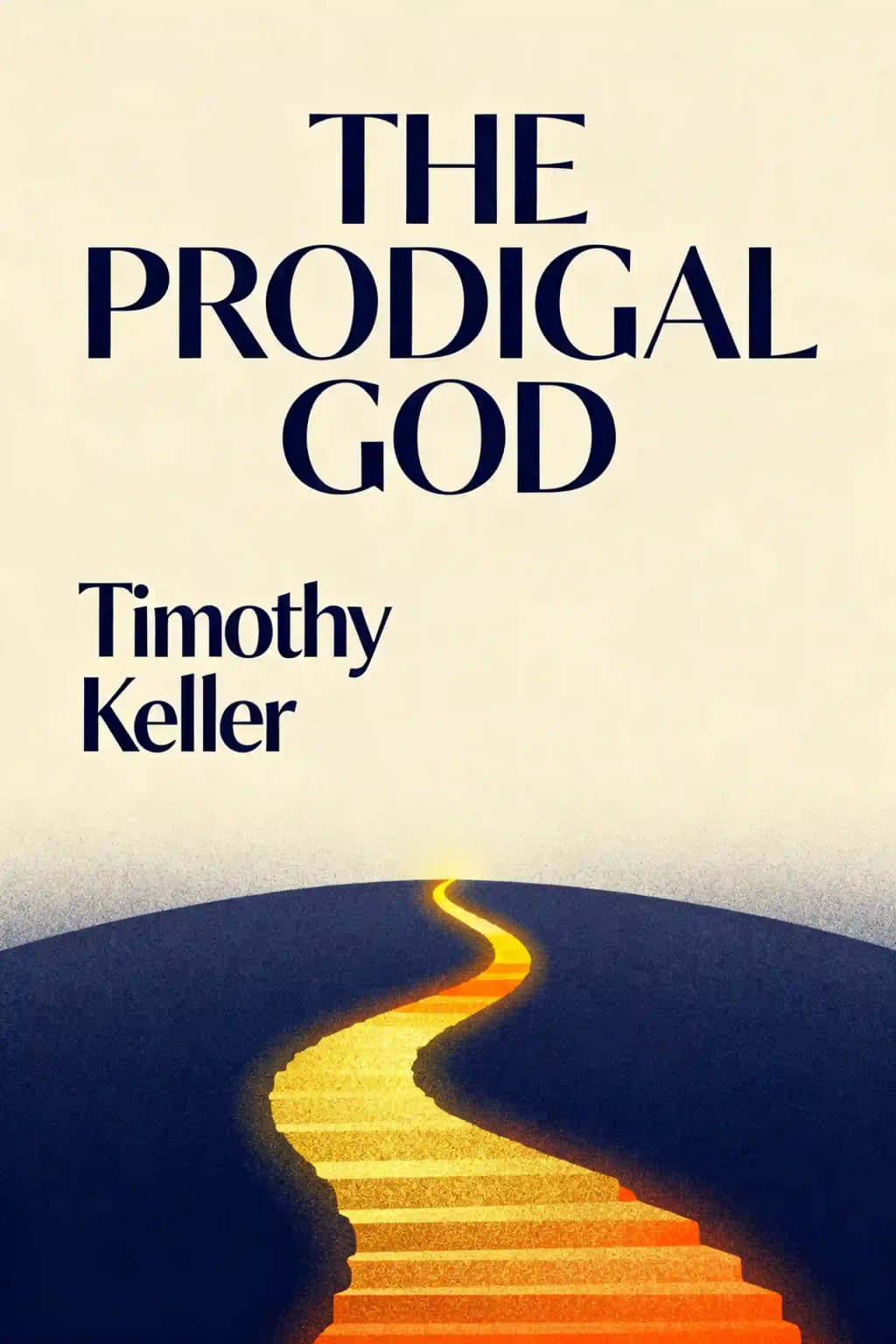
Keller's refreshing 130-page exploration reframes the Prodigal Son parable, revealing how both religious and irreligious can be spiritually lost. Praised by Christian leaders worldwide, this concise 2008 masterpiece challenges conventional thinking about grace, legalism, and our deepest search for home.
Timothy James Keller (1950–2023) was the bestselling author of The Prodigal God and an influential Christian theologian. He served as the founding pastor of New York City’s Redeemer Presbyterian Church, which grew to over 5,000 attendees under his leadership.
A pioneer in urban ministry, Keller specialized in making classical Christian theology accessible to modern audiences, particularly skeptics and seekers. The Prodigal God, exploring grace and redemption through Jesus’ parable of the prodigal son, reflects his signature approach of blending biblical exegesis with cultural engagement. His other acclaimed works include The Reason for God (a New York Times bestseller addressing doubt) and Prayer: Experiencing Awe and Intimacy with God.
As co-founder of Redeemer City to City, Keller trained pastors globally to establish churches in urban centers. His free sermons, downloaded millions of times monthly through Gospel in Life’s podcast, expanded his reach beyond print. Recognized by Christianity Today as a defining voice for “new urban Christians,” Keller’s books have sold over 2 million copies and been translated into 25 languages. The Prodigal God remains a cornerstone text for discussions on forgiveness and spiritual identity.
The Prodigal God reinterprets Jesus’ parable of the Prodigal Son, revealing God’s radical grace for both the rebellious (younger brother) and the self-righteous (elder brother). Timothy Keller challenges traditional readings, arguing the story exposes two flawed paths to fulfillment—moralism and irreligion—while pointing to the Father’s unconditional love as the heart of Christianity.
This book is for Christians seeking a deeper grasp of grace, skeptics exploring faith, and anyone wrestling with feelings of spiritual emptiness. Keller’s insights resonate with both religious and non-religious readers, offering a fresh lens on forgiveness, repentance, and acceptance.
Yes. A New York Times bestseller, it’s praised for transforming how readers view Christianity’s core message. Reviewers highlight its intellectual depth, accessibility, and ability to challenge entrenched beliefs about morality and redemption.
Keller redefines “prodigal” as extravagant rather than wayward, emphasizing God’s reckless generosity toward both sons in the parable. The term reflects divine grace that surpasses human expectations.
Keller argues both paths lead to alienation from God, contrasting them with the Father’s unconditional love.
Often overlooked, the elder brother embodies religious hypocrisy. Keller uses his resentment to critique self-righteousness, showing how moral conformity can be as spiritually destructive as outright rebellion.
The feast symbolizes God’s kingdom—a celebration of restored relationship, not earned merit. Keller ties this to the biblical narrative of reconciliation, urging readers to embrace grace over performance.
Keller challenges churches that prioritize rule-keeping (elder brother mindset) or cultural relevance (younger brother tendencies), advocating instead for a gospel-centered faith rooted in transformative grace.
While The Reason for God addresses skeptics’ intellectual doubts, The Prodigal God focuses on heart-level transformation through parable. Both emphasize grace but target different audiences.
Yes. It offers frameworks for overcoming guilt (younger brother) and pride (elder brother), advocating repentance as a daily return to the Father’s grace rather than a one-time moral fix.
In an era of polarized identity politics and performative spirituality, Keller’s call to reject moral tribes for radical grace remains urgent. The book’s critique of transactional faith resonates in a culture weary of ideological divisions.
Some note its narrow focus on one parable, though most praise its depth. A minority argue Keller overemphasizes elder brother hypocrisy, but this critique is less common.
As founder of NYC’s Redeemer Presbyterian, Keller’s urban ministry experience informs his analysis of cultural rebellion and religious legalism, making the parable accessible to modern audiences.
저자의 목소리로 책을 느껴보세요
지식을 흥미롭고 예시가 풍부한 인사이트로 전환
핵심 아이디어를 빠르게 캡처하여 신속하게 학습
재미있고 매력적인 방식으로 책을 즐기세요
Both sons wanted the father's wealth, not the father himself.
The parable doesn't just comfort sinners-it confronts our deepest assumptions about how divine love works.
Self-righteousness blinds us to our need for grace.
The elder brother syndrome may actually be the more dangerous spiritual condition.
Prodigal God의 핵심 아이디어를 이해하기 쉬운 포인트로 분해하여 혁신적인 팀이 어떻게 창조하고, 협력하고, 성장하는지 이해합니다.
Prodigal God을 빠른 기억 단서로 압축하여 솔직함, 팀워크, 창의적 회복력의 핵심 원칙을 강조합니다.

생생한 스토리텔링을 통해 Prodigal God을 경험하고, 혁신 교훈을 기억에 남고 적용할 수 있는 순간으로 바꿉니다.
무엇이든 물어보고, 목소리를 선택하고, 진정으로 공감되는 인사이트를 함께 만들어보세요.

샌프란시스코에서 컬럼비아 대학교 동문들이 만들었습니다
"Instead of endless scrolling, I just hit play on BeFreed. It saves me so much time."
"I never knew where to start with nonfiction—BeFreed’s book lists turned into podcasts gave me a clear path."
"Perfect balance between learning and entertainment. Finished ‘Thinking, Fast and Slow’ on my commute this week."
"Crazy how much I learned while walking the dog. BeFreed = small habits → big gains."
"Reading used to feel like a chore. Now it’s just part of my lifestyle."
"Feels effortless compared to reading. I’ve finished 6 books this month already."
"BeFreed turned my guilty doomscrolling into something that feels productive and inspiring."
"BeFreed turned my commute into learning time. 20-min podcasts are perfect for finishing books I never had time for."
"BeFreed replaced my podcast queue. Imagine Spotify for books — that’s it. 🙌"
"It is great for me to learn something from the book without reading it."
"The themed book list podcasts help me connect ideas across authors—like a guided audio journey."
"Makes me feel smarter every time before going to work"
샌프란시스코에서 컬럼비아 대학교 동문들이 만들었습니다

Prodigal God 요약을 무료 PDF 또는 EPUB으로 받으세요. 인쇄하거나 오프라인에서 언제든 읽을 수 있습니다.
Imagine a story so familiar you think you know it by heart, yet so misunderstood it's been hiding its most radical message in plain sight for centuries. The Parable of the Prodigal Son isn't just about a wayward youth who squanders his inheritance-it's a revolutionary text that completely redefines our understanding of God, grace, and human nature. When Jesus first told this story, he wasn't offering a simple moral lesson but responding to religious leaders scandalized by his association with "sinners." Through this parable, Jesus doesn't merely defend his actions-he turns the entire religious and social order on its head. The younger son's request for inheritance while his father still lived was essentially saying, "I wish you were dead." In Middle Eastern culture, this would have been an unthinkable insult. Yet the father's response-running publicly to embrace his disgraced son before any proper repentance-would have shocked Jesus' audience even more. This wasn't just forgiveness; it was a complete redefinition of how divine love operates.