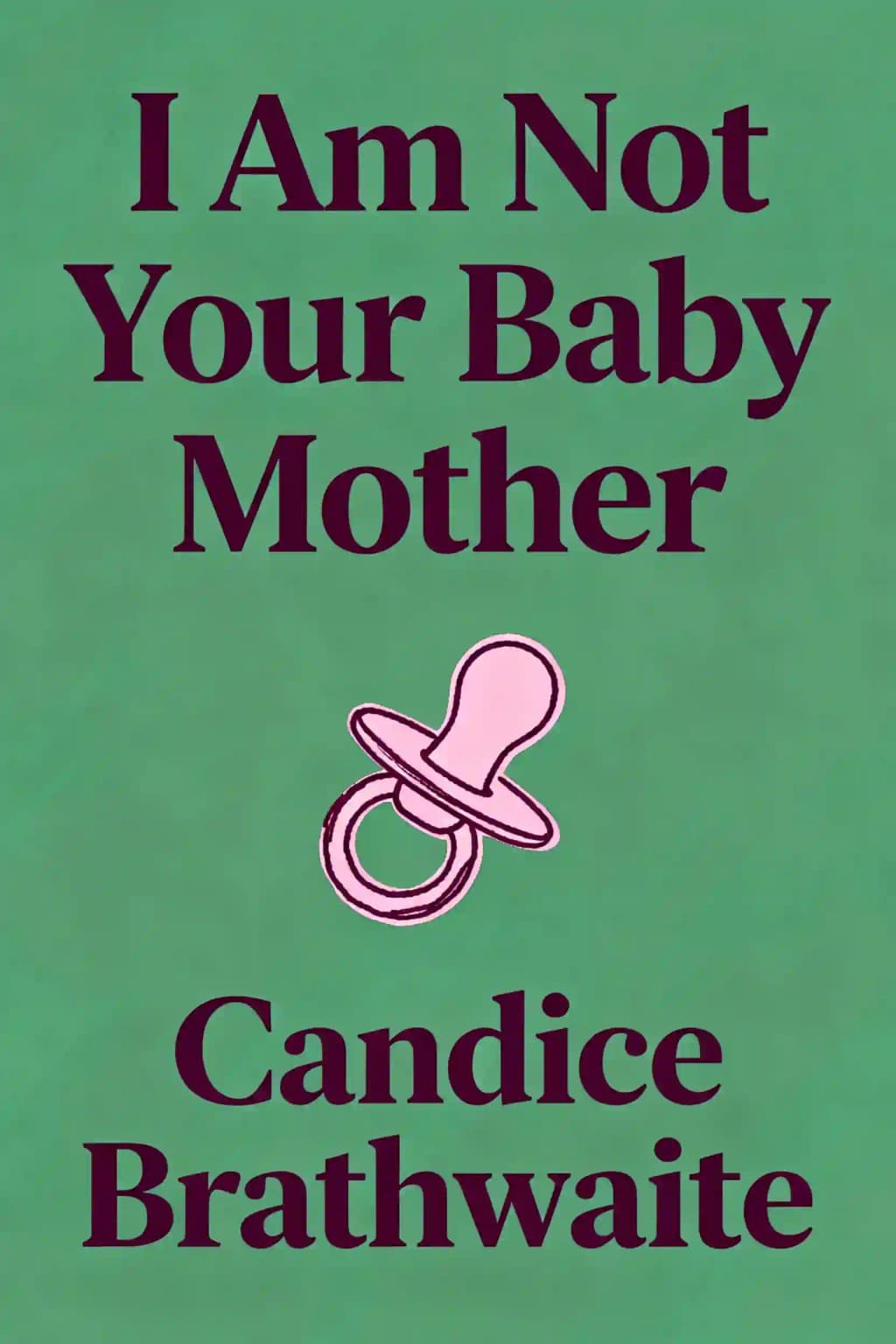
In "I Am Not Your Baby Mother," Candice Brathwaite boldly confronts Black British motherhood's invisibility. This Sunday Times bestseller sparked vital conversations about maternal healthcare inequality, with one midwife calling it "life-changing." What uncomfortable truths about racism might you discover in your own thinking?
Candice Brathwaite is the Sunday Times bestselling author of I Am Not Your Baby Mother, a groundbreaking exploration of Black British motherhood and systemic inequalities.
A prominent journalist, speaker, and advocate, Brathwaite blends memoir and social critique in this non-fiction work, drawing from her lived experiences as a mother and founder of the platform Make Motherhood Diverse.
Her expertise extends to acclaimed titles like Sista Sister (2021), a manifesto for young Black women, and Manifesto (2024), a guide to intentional living. As co-host of the million-download podcast Closet Confessions and a contributing editor to Grazia Magazine, Brathwaite amplifies conversations about race, parenting, and societal inclusivity through mainstream TV appearances and speaking engagements.
I Am Not Your Baby Mother became an instant cultural touchstone upon release, cementing Brathwaite’s reputation as a vital voice in contemporary British literature and social commentary.
I Am Not Your Baby Mother is a memoir exploring Black British motherhood, addressing systemic racism, representation gaps in media, and societal pressures faced by Black mothers. Candice Brathwaite shares her journey through infertility, breastfeeding struggles, and mental health challenges while advocating for inclusive narratives about motherhood.
This book is essential for Black mothers seeking validation, allies aiming to understand racial disparities in parenting, and readers interested in intersectional feminism. It’s especially relevant for those exploring themes of identity, systemic bias, and community support in motherhood.
Yes—it’s praised for its candid storytelling, wit, and urgent critique of societal norms. Reviewers highlight Brathwaite’s ability to blend personal anecdotes with broader social commentary, making it a vital read for understanding Black motherhood’s unique challenges.
Brathwaite recounts her traumatic breastfeeding journey, critiquing societal pressure to breastfeed without adequate support. She emphasizes the mental health toll on Black mothers and advocates for nonjudgmental healthcare interventions and community aid.
Brathwaite links societal expectations of Black mothers to anxiety and depression, urging readers to reject “perfect mother” stereotypes. She highlights therapy and communal support as vital tools for mental wellness.
Some readers note discomfort with Brathwaite’s blunt critiques of white privilege, prompting self-reflection about defensiveness. Others desire more structural solutions beyond personal anecdotes.
She dismantles tropes like the “Strong Black Woman” by sharing vulnerabilities, from financial strain to postpartum struggles. The book calls for media diversity and policy changes to support Black families.
Brathwaite credits community groups and Black-led organizations with providing emotional refuge and practical resources. She advocates building networks to combat isolation and systemic neglect.
It addresses ongoing issues like healthcare inequities, representation gaps, and racial bias in parenting—topics amplified by movements like Black Lives Matter. Brathwaite’s work remains a touchstone for inclusive maternal advocacy.
Her experiences with infertility, financial hardship, and navigating predominantly white parenting spaces ground the narrative in authenticity. These stories humanize statistical disparities about Black maternal outcomes.
While her later books (Sista Sister, Cuts Both Ways) explore Black girlhood and fiction, this memoir remains her seminal work on motherhood, offering foundational insights into her advocacy for racial and gender equity.
저자의 목소리로 책을 느껴보세요
지식을 흥미롭고 예시가 풍부한 인사이트로 전환
핵심 아이디어를 빠르게 캡처하여 신속하게 학습
재미있고 매력적인 방식으로 책을 즐기세요
Don't become someone's baby mother!
It's not about reclaiming the term-it can stay on the shelf.
My version of motherhood deserves to be seen as righteous and sacred.
I wanted a name that wouldn't reveal my child's Blackness.
I Am Not Your Baby Mother의 핵심 아이디어를 이해하기 쉬운 포인트로 분해하여 혁신적인 팀이 어떻게 창조하고, 협력하고, 성장하는지 이해합니다.
I Am Not Your Baby Mother을 빠른 기억 단서로 압축하여 솔직함, 팀워크, 창의적 회복력의 핵심 원칙을 강조합니다.

생생한 스토리텔링을 통해 I Am Not Your Baby Mother을 경험하고, 혁신 교훈을 기억에 남고 적용할 수 있는 순간으로 바꿉니다.
무엇이든 물어보고, 목소리를 선택하고, 진정으로 공감되는 인사이트를 함께 만들어보세요.

샌프란시스코에서 컬럼비아 대학교 동문들이 만들었습니다
"Instead of endless scrolling, I just hit play on BeFreed. It saves me so much time."
"I never knew where to start with nonfiction—BeFreed’s book lists turned into podcasts gave me a clear path."
"Perfect balance between learning and entertainment. Finished ‘Thinking, Fast and Slow’ on my commute this week."
"Crazy how much I learned while walking the dog. BeFreed = small habits → big gains."
"Reading used to feel like a chore. Now it’s just part of my lifestyle."
"Feels effortless compared to reading. I’ve finished 6 books this month already."
"BeFreed turned my guilty doomscrolling into something that feels productive and inspiring."
"BeFreed turned my commute into learning time. 20-min podcasts are perfect for finishing books I never had time for."
"BeFreed replaced my podcast queue. Imagine Spotify for books — that’s it. 🙌"
"It is great for me to learn something from the book without reading it."
"The themed book list podcasts help me connect ideas across authors—like a guided audio journey."
"Makes me feel smarter every time before going to work"
샌프란시스코에서 컬럼비아 대학교 동문들이 만들었습니다

I Am Not Your Baby Mother 요약을 무료 PDF 또는 EPUB으로 받으세요. 인쇄하거나 오프라인에서 언제든 읽을 수 있습니다.
The term "baby mother" carries a heavy weight in Black British communities. Originally from 1960s Caribbean English, it was considered "the mark of the beast" long before mainstream culture co-opted it as "baby mama." Growing up, warnings echoed through my community: "Don't become someone's baby mother!" Even unsuitable bachelors proclaimed they didn't want "no baby mother." By the late 1980s, young Black women raising children alone-whether abandoned or choosing independence-found themselves stripped of their individual identities and relegated to mere "baby mothers." Today, this label isn't just aimed at single Black mothers-it undermines the legitimacy of Black women's motherhood in general, erasing any association with positivity and success. The stereotype affects everything from healthcare to education to social acceptance, explaining why many Black women might resist motherhood altogether. What matters isn't reclaiming the term-it can stay on the shelf. What's important is allowing Black women who happen to be mothers to share their multifaceted journeys with pride. Their version of motherhood deserves to be seen as righteous and sacred, worthy of protection like any other woman's experience, regardless of family makeup or circumstances.