1장
The Courage to Be Vulnerable in a World That Demands Strength
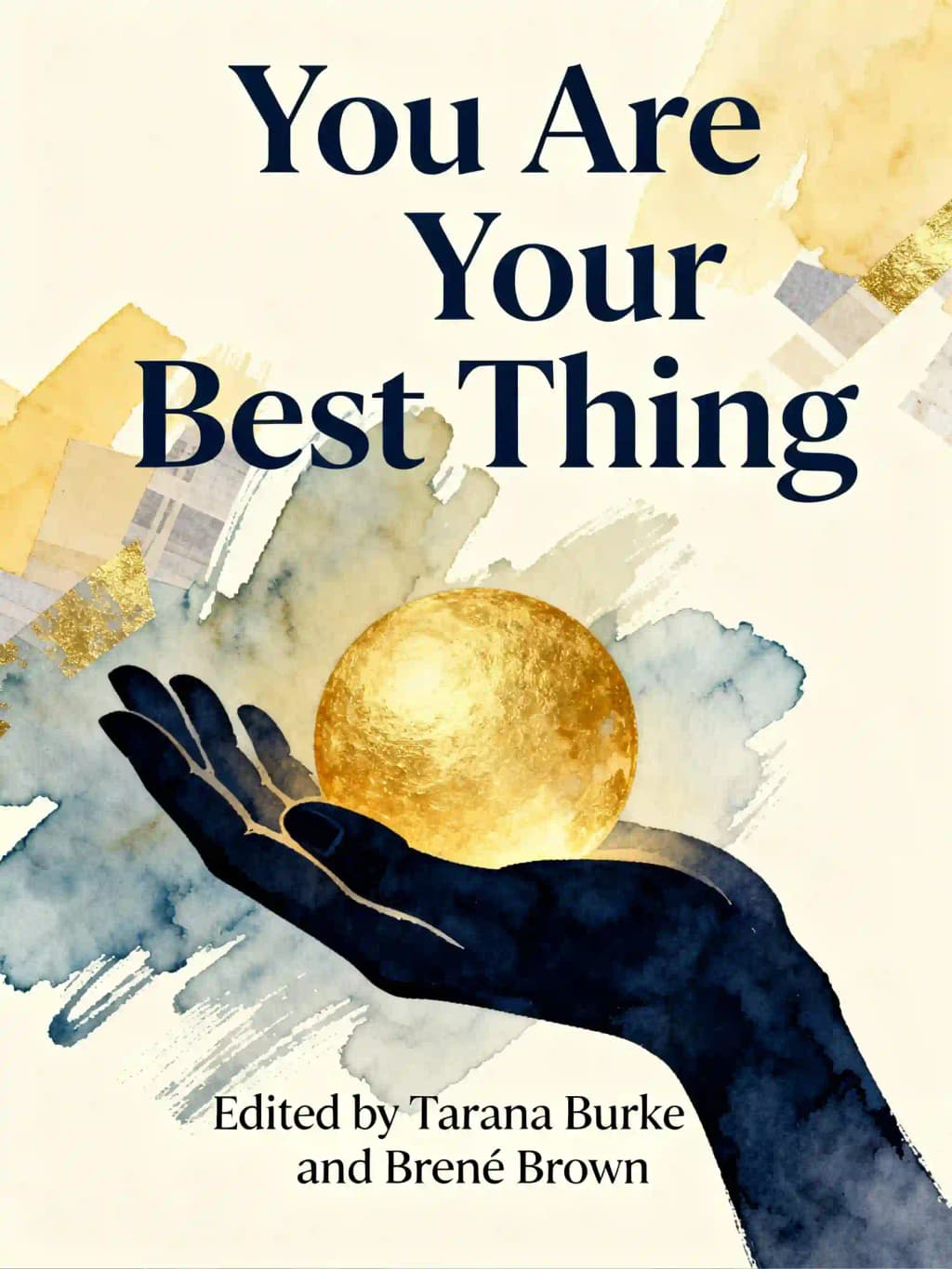
What does it mean to be vulnerable when your very existence is already a risk? This groundbreaking anthology explores the unique challenges Black Americans face when practicing vulnerability in a society built on white supremacy. Edited by Tarana Burke, founder of the 'me too' movement, and vulnerability researcher Brene Brown, this collection has become essential reading for understanding the intersection of race, trauma, and healing. Praised by Michelle Obama as "a vital contribution to our collective healing," the book emerged from Burke and Brown's recognition that vulnerability research often fails to address how racial trauma complicates the ability to be open. In a culture where Black Americans are frequently told to "be twice as good" while simultaneously being denied basic humanity, these essays offer a revolutionary perspective on what it means to reclaim one's wholeness in the face of systemic oppression.
2장
The Birth of a Revolutionary Conversation
The anthology opens with a profound and transformative conversation between Tarana Burke and Brene Brown that illuminates the genesis of this groundbreaking project. Burke approached Brown with a critical observation that would reshape both their perspectives: while Brown's extensive research on shame and vulnerability had touched millions, it inadvertently overlooked the complex layers of shame that Black Americans navigate within a system of white supremacy. Burke articulated how vulnerability carries additional weight and risk for Black Americans, who throughout history have faced severe consequences - from physical violence to social and economic repercussions - for displaying any sign of vulnerability or asserting their full humanity.
This dialogue delves deep into historical context, exploring how generations of Black Americans learned to armor themselves against a society that weaponized their vulnerability. Burke shares specific examples from her work with survivors of sexual violence, illustrating how Black women, in particular, often feel compelled to project strength at all costs, fearing that any display of vulnerability might reinforce harmful stereotypes or expose them to further harm. Brown's response to these insights demonstrates the transformative power of listening and learning, as she openly acknowledges how her white privilege had created blind spots in her research and public discourse about vulnerability.
The conversation establishes the book's fundamental premise with striking clarity: while vulnerability remains essential for authentic human connection, joy, and healing, systemic racism has made it particularly dangerous for Black people in America. Burke's powerful observation that shame threatens to "kill us" resonates with historical and contemporary examples of how Black resilience has prevailed despite overwhelming obstacles. This resilience, often unnamed and unexamined, forms the heart of what the anthology seeks to explore and celebrate.
Their exchange further illuminates the critical gap in antiracist work that often fails to engage with the full spectrum of Black humanity. Burke emphasizes that this anthology creates essential "breathing room" for Black experiences to exist without the constant pressure of performance or explanation. Through personal anecdotes and professional observations, they examine how trauma manifests across different communities but emphasize the distinct historical and social contexts that shape these experiences. For instance, they discuss how intergenerational trauma in Black communities carries unique markers of historical oppression and resistance.
The conversation concludes by highlighting the urgent need to understand these different paths to trauma and healing, arguing that this understanding is fundamental to dismantling oppressive systems. They emphasize that creating truly safe spaces for vulnerability requires acknowledging and addressing the historical and ongoing impacts of racial inequality, while also celebrating the strength and wisdom that emerge from Black experiences of resilience.
3장
Generational Wounds and Personal Reckonings
Several contributors explore how family relationships become the first sites where vulnerability is either nurtured or suppressed, revealing the complex interplay between personal history and inherited trauma. Jason Reynolds recounts the profound impact of his grandfather's death and his own devastating choice to leave his mother's hospital bedside to sign his first publishing contract. This decision haunted him with shame for years, manifesting in sleepless nights and persistent self-doubt, until his mother, now seventy-five, finally absolved him: "Why be ashamed of what you've atoned for?" His story illuminates how career aspirations and family obligations often create impossible choices for Black creators, particularly those from working-class backgrounds.
Kiese Makeba Laymon explores his complex relationship with his body, particularly his head-the part he rarely acknowledges as physical. His oversized head that couldn't naturally exit his mother's body has helped him "fly underneath the dirt of Mississippi" but receives punishment rather than care. Throughout his essay, he weaves together memories of childhood injuries, academic achievements, and physical pain, creating a tapestry of survival. He acknowledges needing help but fears white doctors will kill him, trapped between recognizing his need for care and the danger of seeking it in a racist medical system. This fear isn't abstract - he cites specific instances of medical racism and the historical trauma of medical experimentation on Black bodies that continues to influence healthcare decisions in Black communities.
Tanya Denise Fields describes her lifelong struggle with shame about her dark skin, broad features, and life choices, including having six children with four different men. Her narrative traces the origins of her shame to childhood experiences where colorism within her own community left lasting wounds. Through West African spirituality, therapy, Black feminist ideology, and supportive community, she "labored and rebirthed" herself after surviving domestic violence. She details her journey through various healing modalities, including ancestral healing practices and contemporary therapeutic approaches. Fields embraced "joy as my birthright" rather than something earned through socioeconomic status or desirability, committing to the uncomfortable work of rejecting shame-a "messy and nasty affair" requiring shadow work and emotional pain.
These personal reckonings reveal how shame becomes embedded in Black identity through both familial and societal messages, often passing through generations like an unwanted inheritance. The contributors demonstrate that healing requires not just individual work but a radical reimagining of what it means to be vulnerable in a society that has historically punished Black vulnerability. Their stories highlight the importance of creating safe spaces for emotional expression within Black communities and the need to challenge systemic barriers to mental and physical healthcare. Through their candid sharing, they offer pathways to healing that acknowledge both personal responsibility and collective trauma, suggesting that true liberation requires addressing both individual wounds and societal structures that perpetuate harm.
4장
The Paradox of Black Joy
Austin Channing Brown examines what she calls "foreboding joy"-the fear that happiness invites disaster. While this phenomenon exists across cultures, she argues that for Black Americans, this foreboding isn't just psychological but evidence-based. During the pandemic, she worries about her grandmother's heightened vulnerability as an elderly Black person, noting the disproportionate COVID-19 death rates in Black communities. She fears police violence when her husband drives, particularly at night or in predominantly white neighborhoods, and was struck by seeing her hooded toddler resembling Trayvon Martin, a moment that crystallized the intersection of parental love and racial anxiety.
Unlike general anxiety about joy, this foreboding stems from racism's persistent threat regardless of one's achievements or circumstances. Brown shares conversations with other Black women whose joy is similarly constrained - successful professionals who still clutch their purses tighter in elevators, mothers who carefully coach their children about police interactions, and artists who struggle to celebrate their achievements without waiting for the other shoe to drop. She cannot honestly reassure them that racism won't continue to threaten their joy, but emphasizes the Black community's resilience in finding joy despite oppression: "This joy I have, the world didn't give it to me, and the world can't take it away."
This paradox-finding joy while acknowledging its precarity-emerges as a central theme throughout the anthology. Contributors describe how Black joy persists through love, family ties, ancestral legacy, shared culture, and leaving one's mark. They share stories of Sunday dinners where multiple generations gather to share food and stories, of dance parties where inhibitions fall away, of garden plots tended with seeds passed down through generations, and of artistic expression that channels both pain and celebration. While taking practical precautions against racism, they conclude that embracing vulnerability and joy is itself resistance: "We will love hard. We will dance with abandon. We will laugh loudly and often."
The contributors reveal that Black joy isn't merely happiness-it's an act of defiance, a reclamation of humanity in a society that has systematically denied it. It manifests in countless ways: the pride in wearing natural hair despite workplace pressure to conform, the pleasure in speaking African American Vernacular English among friends, the satisfaction in supporting Black-owned businesses, and the delight in passing down cultural traditions. When Brown looks at her son and thinks of Trayvon Martin, she chooses to love him harder, becoming softer and vulnerable, trusting that her joy in him cannot be taken away. This revolutionary perspective transforms joy from a simple emotion into a political act of self-determination, a declaration that Black life and Black happiness matter, persist, and flourish despite systemic attempts to diminish them.
5장
Redefining Black Masculinity Through Vulnerability
Several male contributors confront how traditional notions of masculinity have constrained their ability to be vulnerable. Growing up in volatile households where violence could erupt as easily as laughter, they learned early that "business had to stay in the family"-a rule about both decorum and safety that required hiding their authentic selves. This silence became a generational inheritance, passed down like an heirloom of hurt. Media offered few alternative models, with even positive Black father figures expressing only lust or rage-the hallmarks of American manhood. From The Cosby Show to Fresh Prince, Black fathers were portrayed as either stern disciplinarians or absent figures, rarely showing tenderness or emotional depth.
The authors describe how Black men often model manhood after those who oppress them, measuring their humanity against those who seek to kill them. This paradox manifests in multiple ways: adopting the swagger of street culture while working corporate jobs, performing toughness in safe spaces, and maintaining emotional distance even in intimate relationships. They embrace toxic hypermasculinity, hypersexuality, homophobia, misogyny, and violence, feeling less human whenever they deviate from this script. One contributor writes, "We swallow poison-venerating screaming coaches, bonding through violent fraternity rituals, romanticizing rage. Our humanity becomes tied to harm and oppression." These patterns begin early, with young boys learning to suppress tears, hide fear, and channel all emotions into acceptable forms of anger.
The journey toward vulnerability requires Black men to run toward their fears, often against powerful cultural and social currents. Professional vulnerability asks what jobs they're willing to lose in environments that expect Black men to be twice as tough and half as sensitive. Social vulnerability asks what networks and friendships they'll sacrifice in communities that often equate emotional openness with weakness. Emotional vulnerability asks which layers of masculinity they'll shed to become whole, even as society questions their manhood. It's easy to proclaim progressive values publicly, but the true test comes in private moments - choosing gentle words over harsh ones, expressing hurt instead of anger, showing tenderness rather than toughness.
These essays reveal how emotional rigidity undermines relationships, making it difficult to connect with partners who need emotional presence. Men describe struggling to comfort crying children, to express love without qualification, to admit uncertainty or fear. The cost is measured in failed marriages, distant children, and friendships that never move beyond surface-level connection. At the same time, they celebrate younger generations creating healthier forms of masculinity through therapy, emotional literacy, and open discussions about mental health. Despite failures and ongoing struggles, several contributors describe feeling more emotionally expressive, available to loved ones, and free than ever before. They share specific practices - journaling, meditation, therapy, vulnerable conversations with other men - that have helped them break free from restrictive masculine norms. Their stories suggest that vulnerability, while difficult, offers a path to wholeness that rigid masculinity cannot provide, allowing Black men to finally exhale and embrace their full humanity.
6장
The Church as Both Wound and Balm
The anthology examines how religious institutions simultaneously inflict shame and offer healing in Black communities. The elder women of Black churches are described as both secret keepers and arbiters of shame. Though they wielded power behind the scenes, they enforced patriarchal theology from the pulpit, throwing scarves over "immodest" girls' legs and whispering about single mothers while running the church as effectively as any corporation.
For these women, vulnerability was the privilege of rich white women. Black women were expected to suffer silently, perhaps with cognac flasks hidden in bosoms or extra pills, saving tears only for worship when "God could bottle them up." This hypocrisy reveals how shame infiltrates the Black church at the intersection of race and gender.
The shame narratives defining Black women's church experiences stem from white-supremacy-laced theology embraced by the Black church. Patriarchy has twisted Scripture's interpretation, burying Jesus's liberating message under religious power structures. As one contributor notes, Eve's story justifies women's inequality in Christian traditions, while Jesus's suffering gets inverted to frame women's continued suffering as redemptive rather than recognizing him as a revolutionary leader for the dispossessed.
The glorification of suffering helps make sense of racial oppression, but its burden falls heaviest on Black women who power the church while patriarchy sustains its negative impact. Too many choose a theology that says Black people "must suffer" versus the truth that they "will suffer"-the former implying something inherently deserving of punishment in Black identity.
Despite these critiques, contributors also find pathways to healing through spirituality. They envision a church where nurturing love replaces transactional relationships-like an elder sharing her own youthful experiences with a young woman instead of shaming her for her dress. This counters shame and resists diminishing narratives, offering a model where God holds people accountable but doesn't define them by their worst moments.
7장
Art as Testimony and Healing
Several contributors explore how creative expression provides space for vulnerability when other avenues are closed. Irene Antonia Diane Reece, a contemporary artist from Houston, describes her work as cathartic, each series a call and response to her life memories. Her art centers her Black identity, which is "not linear but fluid and multifaceted." She aims to eliminate the single Black narrative showcased in white-centric art institutions.
During graduate school, Reece encountered ignorance when people thought she had staged her father's childhood birthday photo, revealing they had never seen Black joy authentically portrayed. She fought to protect her family archives and Black identity, declaring, "My goal is to break down the canon, the white gaze. I want to make work for my communities."
Another contributor, a writer, describes typing with eyes closed, almost in a trance, letting words come despite internal editing. After being sexually assaulted in graduate school, writing became a practice of surrender. Despite training as a therapist, she couldn't ease her flashbacks, panic attacks, or hair-pulling urges. Writing helped her address trauma by unlearning expectations and accepting herself.
These creative practices become more than self-expression-they're acts of reclamation. By documenting Black joy, pain, resilience, and complexity, these artists resist the flattening of Black experience into simplistic narratives. Their work creates spaces where vulnerability can exist without punishment, where the fullness of Black humanity can be witnessed and celebrated.
The contributors reveal how art allows them to express emotions-love, grief, rage, and joy-that might otherwise remain suppressed. This work grows with them spiritually and physically, offering resolution and healing similar to family albums. By rescuing discarded images and creating new ones, they preserve memories that hold both joy and heaviness for their communities, consciously addressing the African diaspora and its erasure.
8장
Intersectionality and the Layers of Vulnerability
The anthology powerfully illustrates how multiple marginalized identities create unique challenges for vulnerability. Laverne Cox describes how at 48, despite her fame, she remains terrified walking down the street because "it remains unsafe to be a Black trans woman." Her family history carries generational trauma, from her great-grandfather being jailed for taking a dead cow and sold into sharecropping, to her grandfather's experiences of violence that he later perpetuated.
Cox notes that most people killing Black trans women are Black men-not to demonize them, but to acknowledge reality. The venom she's experienced from some Black folks feels like she's considered "a disgrace to the race." This stems from the historic literal emasculation of Black men during lynchings, trauma projected onto her identity as a trans woman. But her transness isn't a result of white supremacy; trans people have always existed.
Another contributor explores growing up in a biracial household-Mexican American mother and Black father. She danced Ballet Folklorico while reciting Langston Hughes poems, proudly embracing both heritages. Now as an artist, she's criticized for not making enough work about her Mexican heritage. But she notes that Latinidad often doesn't acknowledge Black or Indigenous Latinx people. She refuses to separate these identities or create art under a false romanticization of Latinx culture.
For Black people with disabilities, vulnerability takes on additional dimensions. One contributor describes being diagnosed with a prolactinoma pituitary tumor she'd been born with. For years before, she experienced nosebleeds, joint pain, and vision changes, but was repeatedly dismissed as attention-seeking. She kept severe symptoms secret for four years, defeated by disbelief. Through art, she finally found her voice: "I experience pain. My pain is real-I am human-I matter!"
These intersectional experiences reveal how systems of oppression compound one another, creating unique barriers to vulnerability. At the same time, they demonstrate how embracing one's complete identity-across race, gender, sexuality, disability, and culture-becomes an act of resistance against systems that demand fragmentation.
9장
Pathways to Healing and Wholeness
Throughout the anthology, contributors offer frameworks for healing that honor both individual and collective dimensions of trauma. Deran Young, founder of Black Therapists Rock, explains that racial trauma makes us feel trapped in our skin, suffocating on daily messages of shame, from workplace humiliation to witnessing public murders of Black bodies. We armor up to function, creating steel cages around our hearts that reduce our capacity for connection.
Young argues that we can't heal if we pretend we aren't hurting. When we don't have healthy connections, we merely function rather than live. Many Black people consider discussing emotions selfish-it won't change reality or put food on the table. We fear being overwhelmed by emotions when we still must function in a hostile world. Scarcity mindset tells us we'll never have enough time for vulnerability. Because of systemic racism and poverty, many believe vulnerability is a costly privilege.
Acknowledging racism's impact is like walking into a dark cave-you know you won't see clearly, but you enter anyway to reclaim what's been taken from you. As a Black woman, living an intentional, meaningful life feels like resistance. Constant fear shortens future orientation and reduces hope.
Prentis Hemphill, a therapist and somatics practitioner, argues that for Black people, healing exists against a political backdrop where ancestral healing tools have been suppressed while traumas accumulate. America has denied both Black pain and its role in causing it. Yet denial is temporary-the body waits for healing.
Hemphill suggests that pain, when experienced at a digestible rate with safety intact, can actually develop us-building empathy and self-knowledge. But healing Black trauma requires remaking social relations and examining structures. This work recovers Black life span, possibility, and futures. The wisdom of the process is that we don't know what we become when we heal-we simply become more of ourselves, moving away from control and insecurity toward discovery.
10장
The Revolutionary Act of Self-Love
The anthology concludes by framing self-love as a revolutionary act in a society built on the devaluation of Black life. Aiko D. Bethea describes growing up as the only Black child regularly bused to a "white school" for a gifted program, learning not just that she was Black, but about "Blackness in relation to whiteness." Being Black and female means being drafted into identity groups conflated with classism, sexism, and racism. Even wealthy, educated Black women are seen through white supremacist stereotypes: poor, uneducated, promiscuous, loud. We enter every room at a deficit.
When deemed unacceptable, Bethea argues, we typically respond in one of four ways: (1) assimilate for acceptance, (2) fight fire with fire, (3) hide under the radar, or (4) live wholeheartedly. The first three require armoring up against vulnerability. Assimilation means using tools of white supremacy as armor: academic credentials, professional titles, marital status, beauty that mimics white features, displays of luxury goods, and family pedigree. Fighting fire with fire means rejecting respectability politics with toughness and nonconformity: "I reject you before you reject me." Hiding under the radar means playing small and avoiding attention: "If I just lie low, no one will have anything to say."
Shame is often the barrier to wholehearted living. It confines us on a hamster wheel, racing for approval or hiding our presence. When we share our stories and deconstruct shame-inducing beliefs, we become "shame resilient." Tools for this resilience include: deconstructing and naming inequity through the works of Black intellectuals; finding community and connection through Sister Circles that validate our experiences; embracing Black creatives who provide spaces where we thrive; and connecting to spirituality and purpose that transcends daily hardships.
Yolo Akili Robinson powerfully concludes that to understand shame and Blackness, one must first understand that through white supremacy's lens, being Black is shame itself. Our struggle for self-love is synonymous with battling white supremacy. For too long, shame has been a central organizing force in Black communities-motivating church attendance, voting, controlling women's bodies, and rejecting trans and gay children. To transform shame, we must weed it out and find ways to express concern without turning our backs on our "ugly." We must chant from street corners to halfway homes, from ERs to church pews: Shame is not your name. Shame is not my name. There is nothing wrong with us at our core. We are unlearning generations of shame and remembering love.