1장
When Touch Becomes Too Much: The Silent Struggle of Modern Motherhood
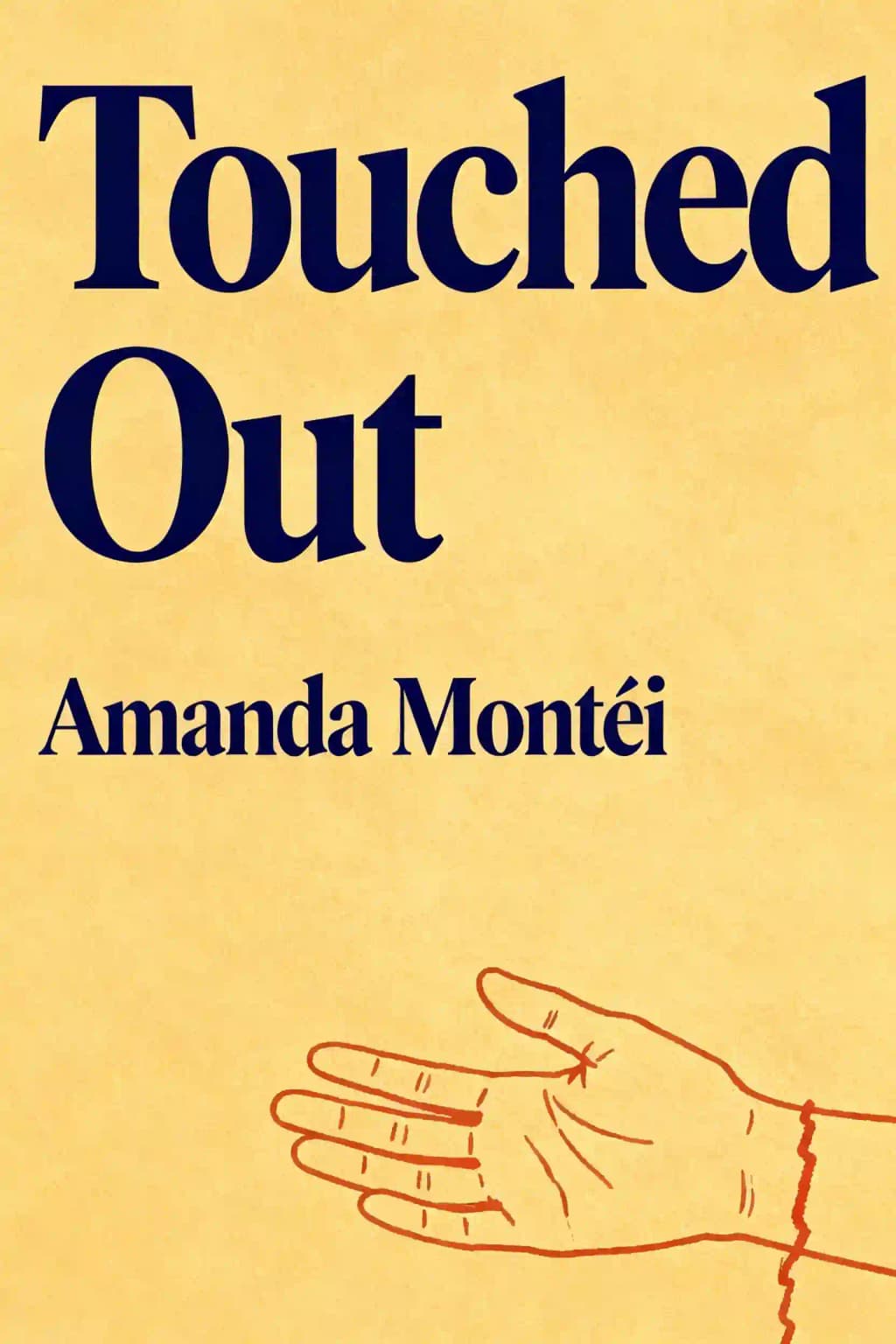
In a world where women's bodies have long been sites of both reverence and control, Amanda Montei's "Touched Out" arrives as a revolutionary examination of motherhood's physical and emotional toll. This raw, unflinching memoir has become something of an underground sensation among millennial mothers, with celebrities like Chrissy Teigen and Jessica Alba praising its honesty about the rarely discussed phenomenon of maternal touch aversion. Montei's work comes at a critical cultural moment when reproductive rights are under attack and the pandemic has exposed America's broken care economy. Through her personal journey, she illuminates how the seemingly private experience of maternal overwhelm connects to broader systems of gender inequality, offering both validation and a roadmap for reimagining care work in America.
2장
The Body's Betrayal: When Motherhood Meets Misogyny
The phrase "touched out" entered the parenting lexicon quietly, whispered between mothers hiding in bathrooms, creating imaginary barriers between themselves and their children's grasping hands. It describes the visceral, overwhelming sensation when a mother's body has been so thoroughly claimed by others that she recoils from additional contact. This physical aversion isn't simply about fatigue-it's about the complete surrender of bodily autonomy that motherhood often demands. From nursing infants to toddlers demanding constant cuddles, mothers find their bodies becoming public property, accessible 24/7 to meet others' needs.
For Montei, this sensation crystallized during the pandemic in 2020, when she found herself overwhelmed by the constant physical demands of her two children under five. The endless cycle of diaper changes, feeding sessions, and comfort-giving left her feeling like her skin itself had become a battlefield. Despite identifying as a feminist, she had internalized motherhood as femininity's pinnacle, only to discover herself desperately seeking escape from the very touch she once craved. Her physical overwhelm coincided with the #MeToo movement, connecting her maternal aversion to America's broader culture of assault and revealing how motherhood had triggered unprocessed memories of violation. The isolation of lockdown intensified these feelings, as mothers everywhere found themselves without the support systems that traditionally helped buffer such demands.
What makes this phenomenon particularly insidious is how it's normalized within American culture. Women's profound struggles with touch-critical to human intimacy and development-are typically dismissed as natural, biological, or simply "normal," sidestepping the cultural and political factors at play. When mothers express feeling "touched out," they're reassured it's perfectly normal to want to "jump out of one's skin," while simultaneously being expected to perform sexually in marriages, renegotiate careers, parent in isolation, and remain pleasant regardless of circumstances. This dismissal extends beyond individual relationships into healthcare settings, where postpartum depression and anxiety are often minimized or treated as hormonal inevitabilities rather than symptoms of a broader systemic failure.
This contradiction reflects the impossible standards American mothers face. As Montei writes, "Patriarchal power is closing in," with reproductive rights under attack and motherhood expectations that normalize women's suffering. The myth of maternal instinct persists despite evidence it's a male-created fiction, and these unreasonable expectations affect all women as unpaid care work makes "housewives of us all." Modern mothers are expected to be endlessly nurturing while maintaining professional careers, managing households, and preserving their pre-motherhood identities - all while their physical and emotional boundaries are repeatedly transgressed. The resulting tension between societal expectations and personal needs creates a profound disconnect that many mothers struggle to reconcile, often in isolation and shame.
The commodification of maternal care extends beyond individual households into broader economic systems, where women's unpaid labor props up entire economies while remaining largely invisible and undervalued. This systematic exploitation of maternal labor and bodies continues to shape women's experiences of motherhood, creating a cycle of exhaustion and resentment that many feel unable to voice without risking judgment or dismissal.
3장
Pain and Pleasure: The Complicated Dance of Maternal Bodies
The cultural narratives surrounding childbirth had warped Montei's understanding long before she experienced it firsthand. Despite approaching pregnancy at thirty with an academic's determination to craft a new narrative about women's bodies, she found herself caught between Western medicine's history of pathologizing women and natural birthing philosophies that often glorified maternal suffering.
Her gynecological history included uncomfortable exams where doctors invited observers without consent and performed invasive procedures that left her feeling violated. These experiences connected to her complicated sexual past, from painful first experiences to questionable consent in her twenties. She hoped childbirth might restore her agency after years of dissociation from her body.
Instead, childbirth became "a catastrophic collapse of boundaries between self and other." After thirty-six hours of labor that abandoned hypnosis for Pitocin, she described the experience as feeling "blasted apart," caring for her baby "like a wound." The postpartum high faded quickly, and in the shower, blood clots sliding down her legs, she nearly fainted-caught by a nurse who wrapped her in towels and brushed her tangled hair as she gazed at her baby, now separate yet somehow still part of her.
The physical pleasure of early motherhood came unexpectedly through breastfeeding, which Montei describes as "bottomless, unpolluted intimacy." When nursing her daughter Hannah, her husband became "an outsider to our romance" as the baby's rhythmic swallows created a hypnotic state with oxytocin coursing through her body. As Maggie Nelson writes, it "isn't like a love affair. It is a love affair." This relationship initially felt unspoiled by gendered power struggles-her baby had no history of masculinity with which to contend.
Yet this pleasure came with its own complications. The pressure to breastfeed often becomes "mothers' first deep denial of their bodily needs." As Kate Manne notes, the benefits are rarely weighed against "the pain, exhaustion, and lack of freedom" involved, with minimal support for meeting these demands-no national paid leave, minimal lactation education, and few workplace protections for pumping.
4장
The Invisible Labor: Motherhood as Economic Exploitation
When Montei returned to work with her three-month-old daughter, she organized her teaching schedule around breastfeeding and fell into what she'd later recognize as "intensive parenting"-the child-centered, expert-guided, emotionally absorbing approach that emerged as women entered the workforce after WWII. This approach, coupled with America's lack of affordable childcare and paid leave, created what she calls "the classic American childcare trap": she couldn't make enough money to send her child to daycare without having her child in daycare first.
The "choice" to become a stay-at-home mother was, as Kim Brooks writes, "more of a response to circumstance and lack of alternatives" than a deliberate decision. Despite the rhetoric of choice sold to modern parents, the absence of federally funded parental leave and affordable childcare severely limited her options. As journalist Katherine Goldstein noted, mothers don't simply "drop out" of the workforce-they're "forced out" or "thrown out of a five-story window."
America's childcare system represents "a total market failure" with underpaid workers (mostly women of color), unaffordable costs, and no recognition of childcare as a public good. As Jenny Brown writes, "the labor of bearing and rearing children is done cheaply, with the costs pushed onto the family."
Montei dove into homemaking to prove her worth, submerging herself in Pinterest boards and educational activities. Her identity was fading into compulsions she could no longer distinguish from internalized expectations. The work of quelling what Duras calls the "discontinuity" caused by children felt infinite as her daughter became more mobile, pulling things off shelves and throwing food.
Cleanliness maintains the "ghostly character" of women's work, keeping it systematically hidden. Even critics of capitalism have failed to acknowledge labor beyond factory gates. Marx characterized domestic work as "unproductive," leaving "nothing behind," while Hannah Arendt noted this misunderstanding arose from care work's temporal features-its effort "almost as quickly consumed as the effort is spent."
Modern America seems built around erasing women's domestic labor. Despite being a feminist researcher who studied "women's work," Montei never understood how significantly society was designed for men with wives. The paradigm of careerism, requiring children's absence for forty hours weekly, now felt outrageous to her.
5장
The Performance of Motherhood: Attachment and Expectations
In the mid-2010s, Attachment Parenting (AP) was experiencing its peak influence, and Montei embraced it with complete dedication. The Searses' website, which became a virtual bible for new mothers, metaphorized mothers as emotional gas stations where children would "fill up" - a powerful image that shaped how countless women viewed their maternal role. While the site provided extensive guidance on responding to babies' needs, it offered remarkably little direction on maternal self-care or maintaining personal boundaries. They aggressively promoted what they called "raising babies the way nature intended" through their comprehensive "5 B's" framework: birth-bonding, breastfeeding, babywearing, bed sharing, and being responsive - each presented as essential elements of optimal parenting.
A thoughtful critique from Montei's mother-poet friend highlighted AP's problematic emphasis on mothers as the exclusive attachment figures. This narrow view left no space for the rich diversity of modern family structures - fathers as primary caregivers, queer families, adoptive parents, extended family arrangements, or other caregiving configurations. Though Montei had initially committed to rejecting traditional gendered division of labor in her marriage, she found herself drawn to the belief that certain aspects of early parenting were intrinsically linked to her female body - particularly breastfeeding and the intimate constellation of holding, calming, and settling that naturally flowed from it. The concept of maternal instinct held powerful appeal because it seemed to grant her special insight into her daughter and explained why she appeared to possess knowledge that eluded her husband.
The early 2000s witnessed parenting's transformation into what Judith Warner astutely describes in Perfect Madness as "all about performance." Motherhood evolved into something resembling a high-stakes religion, driven by what Warner identifies as "incredible competition and insecurity." Author Kim Brooks captures the pervasive anxiety that characterized this era, noting "When I wasn't worrying about fevers and mucus, there were plenty of other uncertainties." The overwhelming array of parenting philosophies meant that "countless methods for nurturing these little people" existed, with every minor decision carrying "a tiny tinge of fear" about the "infinite ways it seemed possible to mess up" - from sleep training choices to feeding schedules to educational approaches.
Montei gradually realized she had unconsciously absorbed the demanding narrative that proper motherhood required complete bodily surrender to her child. The prevailing wisdom suggested she owed her baby not just the postponement of professional ambitions - as other mothers frequently reminded her, "They're only little once" - but total dedication of her physical and emotional being: her arms, legs, breasts, face, thoughts, and emotions. This expectation of absolute maternal sacrifice, which can seem natural and universal, is actually deeply rooted in specific cultural and historical conditions, particularly America's increasingly isolated approach to caregiving, where mothers often parent without the extended family and community support systems common in other cultures and times.
6장
Setting Boundaries: The Struggle for Autonomy
As Montei's body became "a curio, claimed and set aside" at her child's request, she struggled with setting appropriate boundaries. Finding language proved difficult. She adopted phrases from other mothers: "Mommy is not a jungle gym," "I need personal space," or "My body needs a break right now." Yet growing up in the '90s and early 2000s, she'd received persistent cultural messages that her body was indeed a plaything, making it harder to assert these boundaries without guilt.
When she told her daughter she needed a break, she struggled to articulate what she needed a break from - the constant touching, climbing, pulling, or simply the unrelenting physical presence of another person. She'd read about feeling "touched out" in parenting forums and Facebook groups, but the material didn't fully explain her visceral experience. A 2016 La Leche League article described it as a complex mix of anxiety, claustrophobia, and "guilt over feeling irritated by your loved ones," though even this definition felt incomplete to many mothers living the experience.
By the late 2010s, Attachment Parenting had evolved into the broader "gentle parenting" movement, gaining momentum through social media and parenting blogs. As Jessica Winter wrote in the New Yorker, gentle parenting emphasizes acknowledging children's feelings and underlying motivations rather than correcting behavior itself. This approach advocates for constant emotional availability and physical presence, but often becomes disconnected from socioeconomic context and practical realities. By 2022, many parents expressed fatigue from "the deference to a child's every mood, the strict maintenance of emotional affect," and the expectation of endless patience.
The sheer volume of parenting advice Montei consumed - from books, podcasts, Instagram accounts, and parenting experts - led to exhaustion long before she could articulate it. Motherhood felt like an abduction, constantly pushing her to report for duty and behave according to an impossible standard. The only comfort came from finding other mothers online who shared her bewilderment-mothers who "wanted to pull their own skin off" and weren't afraid to admit it in private Facebook groups and anonymous forums.
During the pandemic, content about being "touched out" exploded across social media platforms, with mothers attributing the feeling to various factors: rampant consumerism pushing "attachment" products, sensory overload from parenting alone without community support, and the urgent fleshiness of constant physical demands from nursing, carrying, and comforting. One viral TikTok creator's confession resonated with millions when she explained how motherhood transformed her from "a hugger" to someone who hadn't felt ownership of her body for six years: "All day my body belongs to another human being, and at the end of the day I am done being touched." Her video sparked thousands of comments from mothers sharing similar experiences of physical and emotional overwhelm, highlighting the universal yet rarely discussed aspect of modern motherhood.
This tension between meeting children's needs while maintaining bodily autonomy became a central challenge for many mothers, particularly those trying to balance attachment parenting ideals with their own mental health and personal boundaries. The pandemic only intensified these struggles, as support systems disappeared and the physical demands of motherhood became even more consuming.
7장
Refusal as Resistance: Reclaiming the Body
In early 2017, alone in her apartment, nothing made Montei feel less motherly and less like a woman than her own anger at her child. After the 2016 presidential election, her rage became unshakable as she witnessed male power in America while feeling helpless to respond. Women's anger is rarely seen as a reasonable response to America's isolating parenthood models or the depreciation of their domestic work-instead, they're labeled as "nagging bitches" rather than workers in struggle.
Montei's second pregnancy coincided with the #MeToo movement. At seven months pregnant, she watched women share stories of sexual violence online. She began reconsidering all her relationships with men, realizing how she'd disbelieved her mother's pain as a girl. After her son Elliott was born, her husband had nine weeks of partially paid leave, during which he bonded with their daughter while Montei got to know Elliott. Then he returned to work, and everything fell on her again.
After #MeToo, she saw clearly how men remain ignorant of women's lifelong burden of caring for everyone while projecting happiness. Her husband would offer to "trade places" so she could focus on writing, but she found this suggestion impossible. Despite his devotion as a father, she realized her children had become her "great love story."
When the pandemic hit, she was crushed by domestic labor while her husband taught remotely. She turned to wine and gardening, disappearing into drunkenness each evening. Eventually, she quit drinking-the ultimate refusal, taking her body back from a culture that expected women to blend into walls. The couple separated within their home as she withheld sex, not from frigidity but as a resignation, freeing herself for more important work.
Lisa Taddeo writes that for women today, "the love language should be getting whatever you want" after centuries of performing acts of service for men. Montei believed men needed to listen if women's bodies were to heal from patriarchal damage. In early marriage, she didn't know what she wanted-only what she didn't want. Her love language was refusal. There was punishment in her refusal but also a request for penance, for repair of past damage.
8장
Motherhood and Consent: Teaching What We Never Learned
When Montei became a mother, the physical intimacy of caring for children triggered unprocessed memories of sexual violation. The constant touching, feeding, and physical care required in motherhood reopened wounds she thought had healed. She found herself downplaying her struggles with motherhood just as she had minimized her sexual trauma, falling into familiar patterns of silence and self-doubt. She feared for her daughter on multiple levels-that she might experience violation, that she might blame herself, that she might not access her own pleasure, and that she might inherit the same patterns of shame and silence that had shaped her own life.
Parenting required imagining something beyond the painful truth that Andrea Dworkin articulates: "Being female in this world is having been robbed of the potential for human choice by men who love to hate us." This stark reality haunted her daily interactions with her daughter. After her daughter's birth, Montei attempted Magda Gerber's "sportscasting" approach-narrating a child's behaviors without moral judgment-but eventually abandoned this neutral stance as insufficient for the complex emotional landscape they inhabited. Instead, she used their time together to actively teach her daughter the language of consent, setting clear boundaries when needed: "I don't like it when you tug on my nipple" or "stop licking my arm." These small moments became opportunities to model self-advocacy and respect for bodily autonomy.
Her daughter's intense anxiety about blood and injuries revealed the deeper complexity of teaching bodily autonomy in a world that often dismisses children's feelings. Her unrestrained distress at minor wounds undid Montei, yet over time she developed trust despite her impatience, learning to balance protection with independence. When her daughter seriously injured her leg at the park, the subsequent ER visit forced Montei to navigate consent in a medical context-explaining why a strange man needed to touch her despite her wishes, while acknowledging her daughter's right to feel uncomfortable. From her birth, when nurses pricked her feet for glucose tests while Montei helplessly asked "How much more?", she's been confounded by the "potent dance of consent" between mother and daughter, constantly revising her approach to balance necessary care with respect for autonomy.
In America, mothers are expected to possess complete self-knowledge and certainty-to be intentional about marriage and children, to wait until they're "ready" for the profound disempowerment motherhood often entails. This expectation ignores the complex realities of how women come to motherhood and the ongoing negotiations of power and autonomy it requires. We're told to consent or not, as if it's entirely our choice, when parenthood remains secreted away as a private experience while we're simultaneously told motherhood is a position of status we should desire above all else. This contradiction leaves many women struggling to reconcile their lived experience with societal expectations, particularly around issues of bodily autonomy and consent.
9장
Beginning Again: Finding Hope in Collective Struggle
In another version of her life, Montei might have given up writing and kept working at the daycare-not less worthy, but for her, it would have meant unhappiness and disavowal of herself. The logic that says women should silently endure whatever chaos emerges after having children is the same logic that supports domination and violation.
Our bodies change irrevocably through parenthood. Care rewires brains, alters skeletal structures, jumbles emotions, and unearths memories. The anthropologist Dana Raphael called this transformation "matrescence"-not becoming a "mother" but learning to mother, to care for oneself while caring for another. Most parents aren't prepared for the physical and psychological changes of parenthood, especially the stress of constant touch and physical labor.
Yet discovering the "touched body" offers possibility-the chance for women to take ownership in a culture that resists this. As Dr. Aurelie Athan notes, the fundamental need for space can lead us to reclaim boundaries on our own terms. Rather than "reclaiming lost parts," Rebecca Woolf suggests we "let those parts go and build a new paradigm."
During the pandemic, it briefly seemed possible that everything might change-that we might collectively learn to value caregiving and support those doing that work. But policymakers repeatedly failed parents, including 3.5 million mothers pushed from the workforce. We kept telling our stories, but no one seemed to listen.
Mending what's been broken by the erasure of care work requires achieving what Nancy Fraser calls "gender justice." For Fraser, the most revolutionary models "induce men to become more like women are now"-people who do primary carework. Bringing men into caregiving is perhaps the most radical step toward gender justice. Real gender equity requires dismantling gender itself and the "gender-coding" of care, plus employment policies offering time for care work and continuous social services.
Montei's professional life proceeded in fits and starts, but she began again not through internet hacks but through time, money, and community support. During the pandemic, unemployment and child tax credits gave her financial freedom to write this book while affording childcare-contrary to myths that social services breed dependency, economic autonomy allowed more meaningful work.
As Angela Garbes writes in "Essential Labor," parenting is fundamentally inefficient, at odds with a culture obsessed with productivity. Care takes time, but it teaches us that our best work happens body to body. In early human cultures, power was rooted in daily survival and transformation rather than dominance-what Federici describes as "power against those who oppress us" rather than "power over others."
For children to grow, they must learn to lose the world as they know it repeatedly. The question for the rest of us is how we might stand before our world and refuse to let it coalesce into the familiar story we've read so many times before.