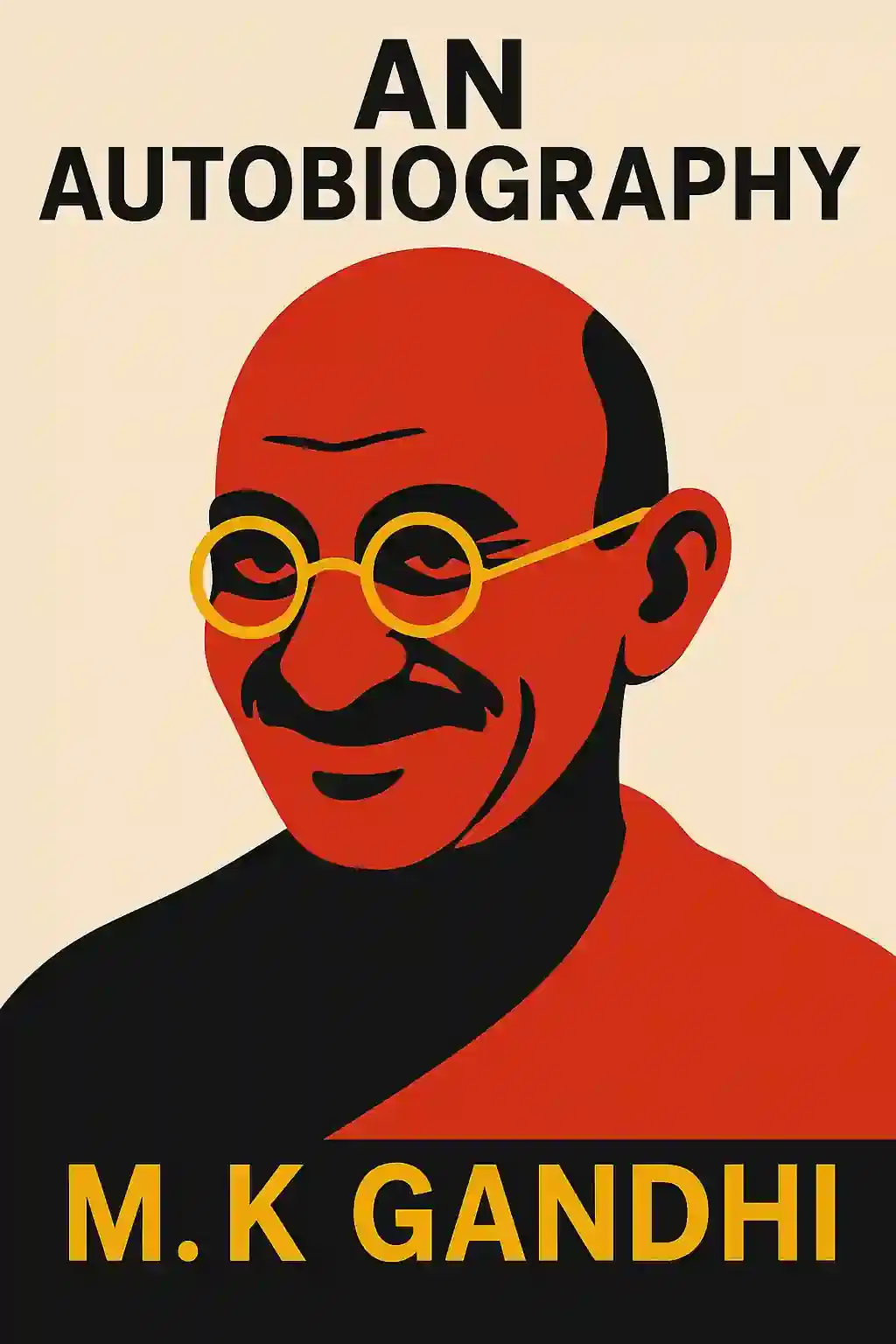
Louis Fischer's 1950 masterpiece reveals the man behind the legend, from childhood to martyrdom. This definitive Gandhi biography - translated into eight Indian languages - corrected Western misconceptions and inspired global civil rights movements. What spiritual practice did Gandhi maintain for 40+ years that shaped his revolutionary philosophy?
Louis Fischer (1896–1970) was an acclaimed journalist and political historian, best known as the author of Gandhi: The Life of Mahatma Gandhi, a definitive biography exploring themes of nonviolent resistance, colonialism, and moral leadership.
A Philadelphia native, Fischer established his expertise through 14 years as a Moscow-based correspondent, analyzing Soviet politics in works like The Soviets in World Affairs and The Life of Lenin.
His firsthand experiences reporting on global conflicts—including the Spanish Civil War and India’s independence movement—led to friendships with Gandhi and Jawaharlal Nehru, deeply informing his portrayal of India’s struggle for freedom. Fischer’s disillusionment with communism, chronicled in the seminal anti-totalitarian anthology The God That Failed, sharpened his focus on ethical governance.
A Princeton University lecturer and prolific author, his 1950 Gandhi biography became the primary source for Richard Attenborough’s Oscar-winning film Gandhi (1982), cementing its status as a 20th-century historical landmark.
Louis Fischer’s biography chronicles Mahatma Gandhi’s life from his early years to his leadership in India’s nonviolent independence movement. It emphasizes Gandhi’s philosophy of truth (satyagraha) and nonviolent resistance (ahimsa), while contextualizing his political strategies and personal struggles. The book also explores how Gandhi’s ideals influenced global civil rights movements, blending historical analysis with insights into his spiritual growth and ethical convictions.
This book is ideal for readers interested in historical biographies, nonviolent activism, or India’s independence movement. It appeals to students of political philosophy, social justice advocates, and those seeking to understand Gandhi’s enduring impact on modern protest movements. Fischer’s accessible narrative also makes it suitable for Western audiences exploring Eastern philosophies.
Yes, Fischer’s well-researched account offers a balanced yet admiring portrayal of Gandhi, combining historical depth with engaging storytelling. While criticized for occasional hero-worship, it remains a seminal work for understanding Gandhi’s strategies and moral convictions. Its relevance to contemporary social justice issues adds enduring value.
Central themes include:
Fischer highlights Gandhi’s experiments with celibacy, dietary restrictions, and fasting as reflections of his quest for self-mastery. The book details his challenges in uniting Hindus and Muslims, his conflicts with British colonial rule, and his internal battles to align actions with ethical principles. These struggles humanize Gandhi while underscoring his resilience.
Critics note Fischer’s occasional bias toward hero-worship, particularly in dramatizing Gandhi’s assassination. Some argue the narrative prioritizes Western perspectives over Indian cultural nuances. However, most praise its thorough research and clarity in explaining Gandhi’s global significance.
Fischer’s work provides external historical context and analysis, while Gandhi’s autobiography offers intimate self-reflection. Fischer clarifies complex political events like the Salt March and Quit India Movement, making them accessible to readers unfamiliar with Indian history. Both texts complement each other for a holistic understanding.
Key quotes include:
The biography connects Gandhi’s methods to contemporary movements like civil rights and climate activism, illustrating how nonviolent resistance remains a potent tool against systemic injustice. Fischer argues that Gandhi’s emphasis on ethical consistency offers a framework for addressing modern societal divides.
Fischer drew from Gandhi’s writings, historical records, British colonial documents, and personal interviews with Gandhi’s associates. He also incorporated global press coverage and his own observations as a journalist, ensuring a multidimensional perspective.
Fischer critiques Gandhi’s limited success in bridging religious divides despite his efforts, notably during the Partition of India. The biography examines his fasts and speeches aimed at curbing violence, while acknowledging the lingering tensions that led to his assassination.
As a Western journalist, Fischer bridges cultural gaps by explaining Gandhi’s philosophy in terms relatable to non-Indian readers. His admiration for Gandhi’s moral clarity is tempered by journalistic rigor, offering both inspiration and critical analysis. This duality makes the book a staple in Gandhi studies.
저자의 목소리로 책을 느껴보세요
지식을 흥미롭고 예시가 풍부한 인사이트로 전환
핵심 아이디어를 빠르게 캡처하여 신속하게 학습
재미있고 매력적인 방식으로 책을 즐기세요
His zeal for the cause dissolved his shyness and loosened his tongue.
He did not easily become a serene-minded yogi.
That book marked the turning point of my life.
Gandhi remained celibate from age
Gandhi의 핵심 아이디어를 이해하기 쉬운 포인트로 분해하여 혁신적인 팀이 어떻게 창조하고, 협력하고, 성장하는지 이해합니다.
Gandhi을 빠른 기억 단서로 압축하여 솔직함, 팀워크, 창의적 회복력의 핵심 원칙을 강조합니다.

생생한 스토리텔링을 통해 Gandhi을 경험하고, 혁신 교훈을 기억에 남고 적용할 수 있는 순간으로 바꿉니다.
무엇이든 물어보고, 목소리를 선택하고, 진정으로 공감되는 인사이트를 함께 만들어보세요.

샌프란시스코에서 컬럼비아 대학교 동문들이 만들었습니다
"Instead of endless scrolling, I just hit play on BeFreed. It saves me so much time."
"I never knew where to start with nonfiction—BeFreed’s book lists turned into podcasts gave me a clear path."
"Perfect balance between learning and entertainment. Finished ‘Thinking, Fast and Slow’ on my commute this week."
"Crazy how much I learned while walking the dog. BeFreed = small habits → big gains."
"Reading used to feel like a chore. Now it’s just part of my lifestyle."
"Feels effortless compared to reading. I’ve finished 6 books this month already."
"BeFreed turned my guilty doomscrolling into something that feels productive and inspiring."
"BeFreed turned my commute into learning time. 20-min podcasts are perfect for finishing books I never had time for."
"BeFreed replaced my podcast queue. Imagine Spotify for books — that’s it. 🙌"
"It is great for me to learn something from the book without reading it."
"The themed book list podcasts help me connect ideas across authors—like a guided audio journey."
"Makes me feel smarter every time before going to work"
샌프란시스코에서 컬럼비아 대학교 동문들이 만들었습니다

Gandhi 요약을 무료 PDF 또는 EPUB으로 받으세요. 인쇄하거나 오프라인에서 언제든 읽을 수 있습니다.
Three bullets shattered the evening calm of New Delhi on January 30, 1948. Mohandas K. Gandhi-the man who freed India without an army-fell to the ground, whispering "He Rama" (Oh God). The world stopped. UN Security Council members paused mid-debate. George Marshall called him "the spokesman for the conscience of humanity." Here was a man who owned nothing, yet moved millions. A lawyer who couldn't speak in court became history's most powerful voice for nonviolence. His methods would later inspire Martin Luther King Jr., Nelson Mandela, and the Dalai Lama. But how did this shy, mediocre student transform into the Mahatma-the Great Soul? The answer lies not in what he achieved, but in how he remade himself, proving that moral conviction can indeed bend the arc of history.