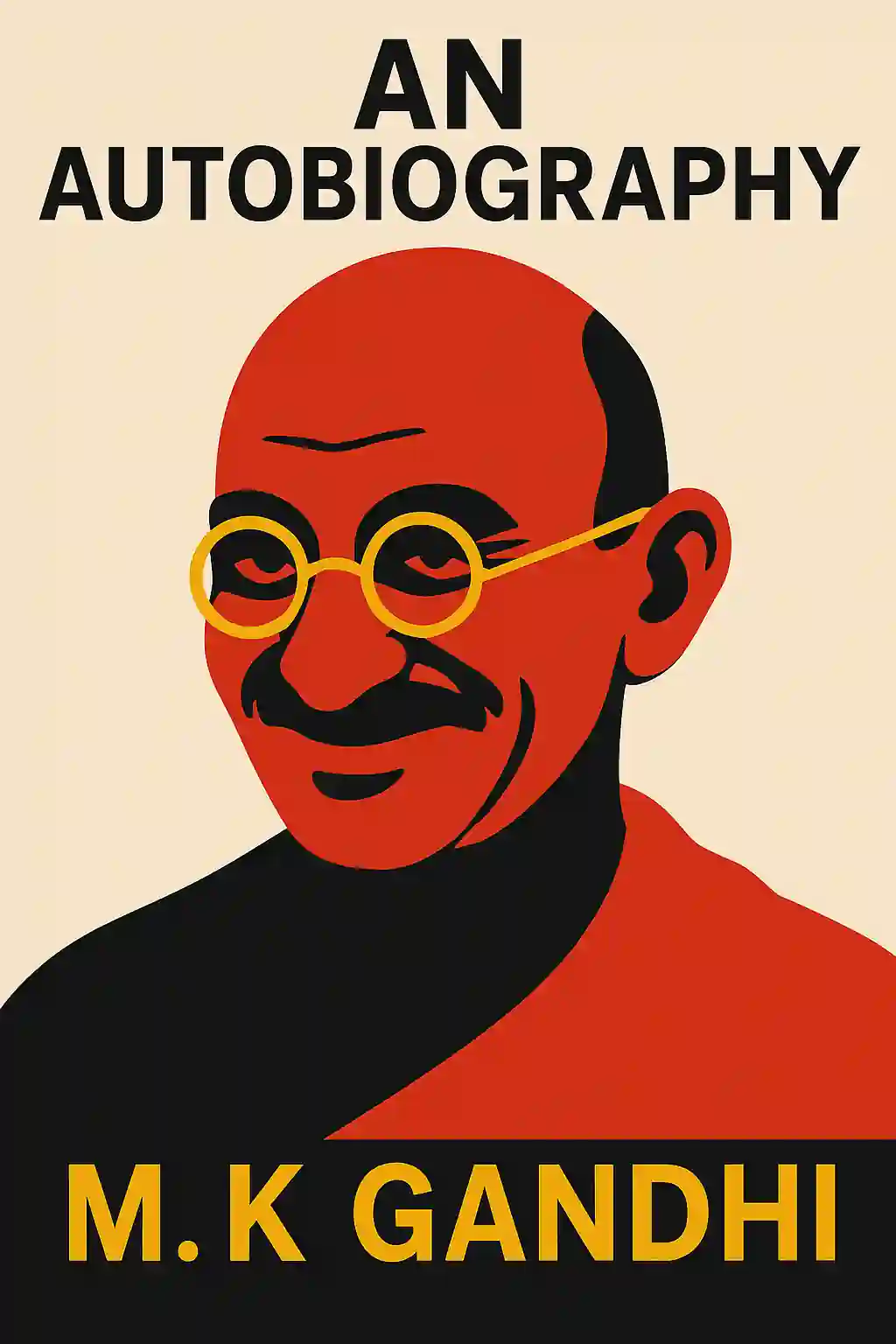
Explore the historical connection between Mahatma Gandhi and Leo Tolstoy. Discover the truth behind Tolstoy Farm, their letters, and Gandhi's practice of Jesus' teachings.

Tolstoy was the tree, Gandhi was the fruit. The Russian aristocrat provided the philosophical scaffolding, but Gandhi took those ideas into the streets to prove that the law of love could actually stand up to a machine gun.
I want to look at Jesus through the imeyes of Gandhi. I heard there was a town named after Tolstoy and that there are letters between them. What’s the truth though. The history is written by people who want us to think one thing , but the truth. Was he wrapped up in politics ? Communism ? Or was he truly a man that practiced the ways of Jesus.

샌프란시스코에서 컬럼비아 대학교 동문들이 만들었습니다
"Instead of endless scrolling, I just hit play on BeFreed. It saves me so much time."
"I never knew where to start with nonfiction—BeFreed’s book lists turned into podcasts gave me a clear path."
"Perfect balance between learning and entertainment. Finished ‘Thinking, Fast and Slow’ on my commute this week."
"Crazy how much I learned while walking the dog. BeFreed = small habits → big gains."
"Reading used to feel like a chore. Now it’s just part of my lifestyle."
"Feels effortless compared to reading. I’ve finished 6 books this month already."
"BeFreed turned my guilty doomscrolling into something that feels productive and inspiring."
"BeFreed turned my commute into learning time. 20-min podcasts are perfect for finishing books I never had time for."
"BeFreed replaced my podcast queue. Imagine Spotify for books — that’s it. 🙌"
"It is great for me to learn something from the book without reading it."
"The themed book list podcasts help me connect ideas across authors—like a guided audio journey."
"Makes me feel smarter every time before going to work"
샌프란시스코에서 컬럼비아 대학교 동문들이 만들었습니다

Jackson: You know, we often hear about history being written by the winners, which makes you wonder—was Gandhi really just a saintly figure, or was he a savvy political strategist using "peace" as a weapon?
Lena: It’s a heavy question. And the answer might actually lie in a series of letters he exchanged over a century ago with the Russian novelist Leo Tolstoy.
Jackson: Right, the *War and Peace* author! It’s wild to think they were even in touch. Was this just a polite fan club, or something deeper? I mean, Gandhi even named a community in South Africa "Tolstoy Farm." Was that just a tribute, or a radical experiment in living?
Lena: It was definitely the latter. They were exploring whether the "law of love" could actually collapse an empire. Let’s explore how a Russian aristocrat’s letters became the intellectual bedrock for a revolution.
Jackson: So, if we’re moving past the "fan club" idea, we have to look at what actually sparked this. It wasn’t just two famous guys being polite. There’s this specific document—"A Letter to a Hindu"—that seems to be the real catalyst. I’ve heard it wasn’t even written to Gandhi initially?
Lena: That’s exactly right. It’s one of those amazing historical accidents. In late 1908, an Indian revolutionary named Taraknath Das, who was actually based in the U.S. at the time, wrote to Tolstoy asking for his support for India’s independence. But Das was thinking in terms of a traditional struggle—you know, politics, perhaps even force. Tolstoy, who was already eighty years old and deep into his radical pacifist phase, responded with this massive, meditative letter that basically flipped the script.
Jackson: And how did Gandhi get his hands on it? He was in South Africa at the time, right?
Lena: He was. The letter was published in a journal called *Free Hindustan*, and when Gandhi read it in 1909, it hit him like a lightning bolt. He was this young lawyer, still trying to find a "stable form" for his ideas of resistance. He actually wrote to Tolstoy asking for permission to translate it and redistribute it in his own paper, *Indian Opinion*. That request was the start of their year—long correspondence.
Jackson: It’s fascinating because it suggests Gandhi wasn’t just born with these ideas. He was searching. And Tolstoy provided a kind of "philosophical scaffolding," as one of our sources puts it. But what was in that letter that was so revolutionary? Was it just "hey, let’s all be nice to each other"?
Lena: Not at all. It was actually quite biting. Tolstoy looked at the British occupation of India—thirty thousand Englishmen ruling two hundred million Indians—and basically called it a mathematical absurdity. He argued that the British weren't holding India by force as much as the Indians were holding themselves in subjection by participating in the system. He used verses from the *Mahabharata* and the words of Krishna to argue that the "law of love" was the only legitimate governing principle.
Jackson: Wait, so a Russian Orthodox—born writer is quoting Hindu scripture back to a Hindu lawyer to explain how to free India?
Lena: Isn't that wild? Tolstoy had been obsessed with Eastern philosophy since his student days at Kazan University. He’d even met a Buddhist lama in a hospital when he was nineteen, which first introduced him to the concept of *ahimsa*, or non-violence. So, by the time he’s writing to Gandhi, he’s synthesizing the Sermon on the Mount with the *Bhagavad Gita*. He’s telling Gandhi that if you use violence to kick out the British, you haven't actually freed yourselves—you’ve just swapped one set of masters for another.
Jackson: That speaks directly to the listener’s question about whether Gandhi was wrapped up in politics or truly practicing the ways of Jesus. Tolstoy’s argument was that politics *as we know it* is the problem because it’s based on coercion.
Lena: Precisely. Tolstoy believed that humanity had spent centuries mistaking violence for a survival instinct. He called this a "tragic deviation." To him, the "law of love" wasn't a weak, sentimental thing—it was the fundamental law of life, most visible in children before they get tangled in what he called the "lying net of worldly thoughts."
Jackson: So, Gandhi reads this and realizes that his struggle in South Africa isn't just a legal battle for civil rights—it’s a spiritual war. I mean, he said that reading Tolstoy made all other books seem "insignificant." That’s a huge statement for a man as well—read as Gandhi.
Lena: It changed his entire internal chemistry. He started to see that non—resistance wasn't "passive" at all. It was "the discipline of love un—deformed by false interpretation." It gave him the courage to stop trying to win within the British legal system and start trying to transcend it.
Jackson: And that leads us to the "stable form" he was looking for—*Satyagraha*. It’s like Tolstoy provided the raw ore, and Gandhi forged the sword. Or, as the former Indian Ambassador to Russia, P. Srinivasan Raghavan, put it: "Tolstoy was the tree, Gandhi was the fruit."
Lena: I love that analogy because it acknowledges the growth. Tolstoy was the philosopher in the estate, but Gandhi had to take those ideas into the streets, into the jails, and onto the farms. He had to prove that "love as a moral law" could actually stand up to a machine gun.
Jackson: It makes me wonder, though—if Tolstoy is the "tree," how much of Gandhi’s "Jesus—centered" approach was actually just "Tolstoy—centered"? Was he looking at Christ through his own eyes, or through the lens Tolstoy ground for him?
Lena: That’s the core of the mystery. To understand that, we have to look at the specific book that Gandhi said "overwhelmed" him—Tolstoy’s *The Kingdom of God Is Within You*. That’s where the "politics vs. Jesus" tension really comes to a head.
Jackson: You mentioned *The Kingdom of God Is Within You*. Gandhi said that book left an "abiding impression" on him. For someone who hadn't even met Tolstoy, that’s a deep spiritual connection. What was Tolstoy doing in that book that was so different from standard Christian teaching?
Lena: He was stripping away the "churchianity"—the rituals, the hierarchies, the state—sanctioned religion—and focusing purely on the ethical radicalism of Jesus. Tolstoy argued that if you actually take the Sermon on the Mount seriously, you cannot have an army, you cannot have courts of law, and you cannot have a government that relies on "brute force."
Jackson: So, he’s basically saying that the modern state and the teachings of Jesus are fundamentally incompatible? That’s a pretty "anarchist" take for a Russian Count.
Lena: He was essentially a Christian anarchist. He believed that the state is a "soulless machine" that owes its existence to violence. And Gandhi, reading this in South Africa, realized that the British Empire wasn't just a political enemy—it was a spiritual manifestation of this "soulless machine."
Jackson: This goes back to our listener’s concern about whether history is "written by people who want us to think one thing." The "sanitized" version of Gandhi is that he was a nice man who liked peace. But if he’s following Tolstoy’s lead, he’s actually calling for a complete dismantling of the way we organize society.
Lena: Exactly. It wasn't about "better" government; it was about the "renunciation of all opposition by force." Gandhi saw that the theology of his time often treated the Sermon on the Mount as a "nice idea" that didn't apply to "mundane things" or politics. He was perplexed by that. He wrote that Christianity comes to humanity in a "tainted form" when it supports governments based on force.
Jackson: It’s like Gandhi was saying to the British, "I’m practicing your religion better than you are." He famously said, "I like your Christ. I don't like your Christians. Your Christians are so unlike your Christ." That’s a direct echo of Tolstoy’s frustration with the Russian Orthodox Church, isn't it?
Lena: A total mirror image. Tolstoy was actually excommunicated for these views. He believed that the "law of love" was the supreme law, and any deviation into violence was a betrayal of the soul. Gandhi took that and applied it to the Indian context. He warned that if Indians simply replaced British rulers with Indian rulers but kept the "factories of guns" and the "colonial machinery," they would lose their spiritual core.
Jackson: That’s a really important distinction. He wasn't just "wrapped up in politics"—he was trying to *redefine* politics. He didn't want to just win; he wanted to "dissolve evil through compassion." It sounds poetic, but how does that actually work when you’re facing a soldier?
Lena: Well, that’s where the "turning the other cheek" thing comes in. Gandhi—and Tolstoy—didn't see it as a submissive act. They saw it as a "heroic, brave, and creative action." Think about it—if someone strikes you and you don't strike back, but you also don't run away, you’re forcing the oppressor to see you as a human being. You’re breaking the "circle of violence."
Jackson: Right, it’s like what we read in the Rynne lecture. Turning the other cheek tells the master, "You haven't overawed me. Do it again if you must, but I’m still standing here." It’s an invitation for the oppressor to change. It’s an attack on their conscience rather than their body.
Lena: And that’s the "truth" the listener is looking for. Was he a politician? Yes, in the sense that he dealt with the masses. But his "program" was a "program of love," as Harry Ward put it in 1925. He was trying to prove that you could have a revolution of "goodness."
Jackson: But there’s a tension there, isn't there? I mean, he’s creating "Tolstoy Farm" in 1910. He’s organizing people. He’s using these ideas to achieve a political end—independence. Doesn't that make it "pragmatic" rather than purely "divine"?
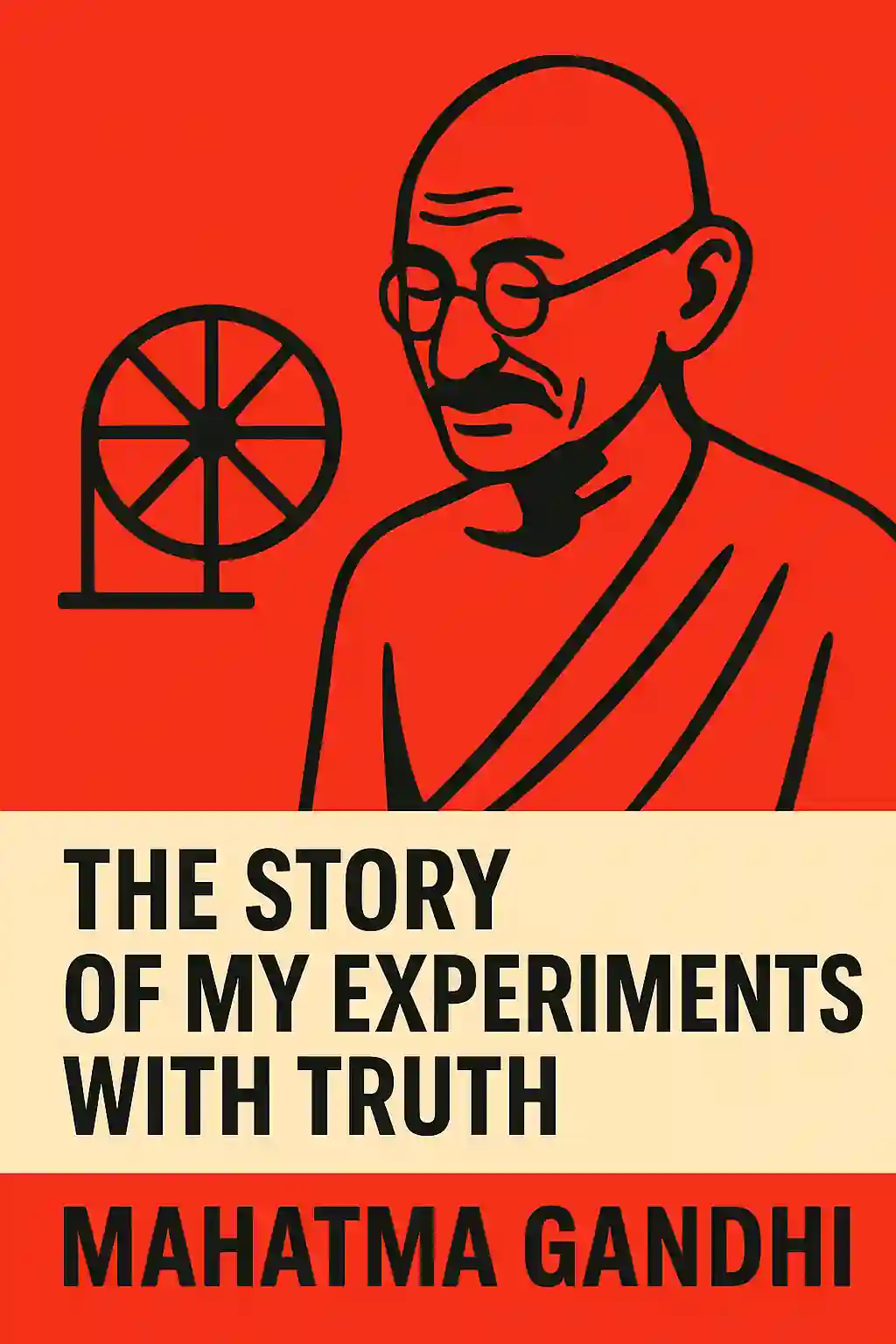
Lena: For Gandhi, the pragmatic and the divine were the same thing. If the "law of love" is the fundamental law of the universe, then practicing it is the only "pragmatic" way to live. Anything else is just a temporary fix that leads to more bloodshed. He called his autobiography *The Story of My Experiments with Truth* because he was literally "testing" these spiritual laws in the real world.
Jackson: "Experiments with Truth"—that’s a scientist’s phrase, not a mystic’s. He’s saying, "Let’s see if this Tolstoy stuff actually holds up when we’re tilling the soil and facing the police."
Lena: And that’s exactly what they did at Tolstoy Farm. It wasn't just a place to hide; it was a "training ground for satyagraha." They were trying to live the "future India" in the present moment. No punishment for children, manual labor for everyone, self—sufficiency. They were trying to be the "change they wanted to see," to use the famous phrase.
Jackson: So, it’s not just about letters. It’s about a lifestyle. But I want to dig deeper into the "Jesus" part of this. Gandhi was a Hindu, and he died a Hindu—his last word was "Rama." How does a man who finds "solace in the Bhagavad Gita" that he misses "even in the Sermon on the Mount" become the world’s most famous practitioner of the ways of Jesus?
Lena: That is the ultimate paradox, Jackson. And it has everything to do with how he viewed the Cross. Not as a theological "transaction" for sins, but as a political and historical "final step." Let’s look at that scene at the Vatican—it’s incredibly revealing.
Jackson: You mentioned a scene at the Vatican. Gandhi, this Hindu leader, standing before a crucifix in Rome. What happened there?
Lena: It was in 1931, on his way back from the Roundtable Conference in London. He saw a "rough crucifix" at the Vatican and was moved to tears. He wrote that he could "hardly tear himself away from that scene of living tragedy." He said, "I saw there at once that nations like individuals could only be made through the agony of the cross and in no other way."
Jackson: That’s a stunning thing for a non—Christian to say. "Nations are made through the agony of the cross." He’s taking the most central symbol of Christianity and turning it into a blueprint for national liberation.
Lena: Exactly. But he didn't see it the way a lot of traditional churches do. He rejected the "penal substitution theory"—you know, the idea that Jesus died as a sacrifice to appease God’s anger. To Gandhi, that was "revolting." Instead, he saw the Cross as the "result of his living out this way of life to the end."
Jackson: So, Jesus dies not because of some cosmic debt, but because he "befriended the poor" and "stood with outsiders" against the powers of his day?
Lena: Right. The Cross was the "final step" of a life spent resisting oppression non—violently. Gandhi believed that "joy comes not out of infliction of pain on others, but out of pain voluntarily borne by oneself." That is the heart of *Satyagraha*. You take the blows, you bear the suffering, and in doing so, you transform the world.
Jackson: It’s a very "active" kind of suffering. It’s not "woe is me." It’s "I am choosing this pain to show you the truth." And he’s saying this is the *only* way to build a nation?
Lena: He really believed that. He warned that if India gained independence through violence, it would be a "tainted" freedom. He wanted a "revolution of goodness." It’s interesting how he connects this back to his own roots, too. He found a similar "renunciation" in the *Bhagavad Gita*—the idea of performing your duty without attachment to the results.
Jackson: So, he’s synthesizing. He’s taking Tolstoy’s "Christian" pacifism and merging it with the Gita’s "selfless action." But it makes me think about the listener’s question about Communism. There’s a lot of talk in the 1920s comparing Gandhi to Lenin. Both were trying to "emancipate the poor," but their methods were polar opposites.
Lena: That’s a huge part of the history that often gets glossed over. While Gandhi was looking at the Cross, Lenin was looking at the "altar of violence." In the 1920s, people like René Fülöp—Miller and Shripad Amrit Dange were obsessed with this "Gandhi vs. Lenin" comparison. Both men were born within six months of each other, both were middle—class, both were driven to end injustice.
Jackson: But one believed in "crushing" opponents—*écraser*—and the other believed in "loving" them. Lenin saw power as force; Gandhi saw power as "love." It’s like two different paths for the "people at the bottom" to come up.
Lena: And that’s where the "Communism" question gets interesting. Gandhi was often called a "socialist by intent," but he was terrified of the "increase of the power of the State." He called the State a "soulless machine" that "can never be weaned from violence."
Jackson: So, he wasn't a Communist because he didn't believe in state coercion? He didn't want the government to "enforce equality" through force?
Lena: Precisely. He said that if the State suppresses capitalism by violence, it will be "caught in the coils of violence itself." His version of socialism was "voluntary." He wanted the wealthy to act as "trustees" for the poor. He didn't want to "destroy the capitalist" because that would "mean destruction in the end of the worker."
Jackson: "Trusteeship." That sounds like a very "Jesus—like" concept too—the idea of being a steward of what you’ve been given rather than an owner. But was it realistic? Or was it just a "camouflage" for the status quo, as some of his critics claimed?
Lena: Gandhi insisted it wasn't camouflage. He said it had the "sanction of philosophy and religion." He literally gave up his own wealth to prove it. He believed that if you could "transform hearts," you wouldn't need a "soulless" state to enforce equality.
Jackson: It’s a very high bar for human nature. As Dange wrote in 1921, "Gandhism suffers from too much an unwarranted faith in the natural goodness of human nature." While "Bolshevism suffers from too much neglect of human interests."
Lena: That’s the tension! Gandhi is betting everything on the "atman"—the soul. He believes that "self—ignorance" is the root of all problems. If we realize we are all "One," the walls of prejudice and class will naturally tear down.
Jackson: It’s like he’s trying to build a world based on the "meeting of two divines"—the *Namaste* gesture you mentioned. "The divine in me greets the divine in you." If you truly believe that, how can you shoot someone? Or even exploit them in a factory?
Lena: You can’t. And that’s the "truth" that was being tested at Tolstoy Farm. It wasn't just a commune; it was an attempt to create a "classless society" without the "drastic coercive measures" of the Russians. But we should really look at what life was actually like on that farm. It wasn't just sitting around and thinking about Jesus and Tolstoy.
Jackson: Okay, so "Tolstoy Farm." Johannesburg, 1910. Gandhi and his friend Hermann Kallenbach set this up. It’s not just a name; it’s a "radical experiment." But what were they actually *doing* there? Was it just a bunch of people living in the woods?
Lena: It was a very deliberate community of "Hindus, Muslims, Christians, and Parsis." They spoke Gujarati, Hindi, Tamil, and English. Gandhi acted as the "Father" of the family. And the rule was simple: "the youngsters were not asked to do anything what the teachers did not do."
Jackson: That’s a powerful educational principle. No "do as I say, not as I do." If the kids had to sweep, the teachers were sweeping next to them.
Lena: Exactly. They spent three hours every morning on "gardening, farming, sandal—making, and cloth—sewing." Kallenbach actually went to a Trappist monastery to learn how to make shoes, and then he taught Gandhi, who taught the students. Gandhi even learned how to cook for everyone!
Jackson: So, the "Great Soul" was also the "Great Cobbler" and the "Great Chef." It sounds like he was trying to prove Tolstoy’s idea that the "whole aim of life is to perform self—sacrificing labor for others." Tolstoy himself used to till the soil and make his own boots, right?
Lena: He did. Tolstoy believed that manual labor "vivified the future of mankind." He opened a school for peasant children on his own estate. Gandhi took that and turned it into a "training ground for satyagraha." He didn't use textbooks; he said the "true textbook for the pupil is his teacher." The lessons were based on "character building" and "building up of the body."
Jackson: It’s so far removed from the "industrial modernity" he was suspicious of. He wanted people to be "self—reliant." This is where the *Swadeshi* movement starts, isn't it? The idea of spinning your own cloth—the *charkha*?
Lena: Yes! It was an "economic weapon against imperial exploitation." If you spin your own cloth, you aren't dependent on British factories. You’re "refusing participation in the colonial machinery." Gandhi saw that thirty thousand Englishmen couldn't rule India if the Indians refused to "pay the price" of compliance—taxes, courts, recruitment.
Jackson: So, the "Farm" was a "sketchbook for a future India." A decentralized, rural, self—sufficient society. It’s the opposite of the "urban industrial growth" model that Nehru later followed.
Lena: And this is where the "politics" part gets tricky. Gandhi’s "socialism" was "ethical and voluntary." He wanted a "bottom—up approach." He believed that "enduring change can only come through some real transformation of hearts."
Jackson: But what about the "Jesus" connection at the farm? Did they study the Bible there?
Lena: They studied everything! They sang *bhajans* and discussed the Sermon on the Mount. Gandhi believed that "the Sermon on the Mount has no meaning if it is not of vital use in everyday life to everyone." He didn't think it was just for the "twelve disciples." He wanted it to be the "ethical norm of action" for everyone on the farm.
Jackson: It’s like he was trying to create a "Christianity without the tainted form" he saw in the world. A "revolution of goodness." But it makes me wonder about the "Tolstoy" part of the name. Why not "Gita Farm" or "Jesus Farm"? Why "Tolstoy Farm"?
Lena: I think it was a tribute to the man who gave him the "intellectual bedrock." Kallenbach suggested the name, and Gandhi loved it because Tolstoy represented the "simplicity of life" and the "fearlessness of utterances" that Gandhi aspired to. Tolstoy was the one who had "overwhelmed" him with the idea that the "Kingdom of God is within you."
Jackson: It’s also a bridge between cultures. A Russian name for a farm in South Africa run by an Indian leader. It proves that "cultures are much closer than they seem to be" and that "basic moral values are the same despite all the social and political infringements."
Lena: That’s a beautiful way to put it. And it speaks to the listener’s point about "history being written by people who want us to think one thing." The "one thing" we’re usually told is that these are separate worlds—East and West, Russia and India. But in those letters, and on that farm, those boundaries dissolved.
Jackson: But there’s a "final letter" from Tolstoy, isn't there? Written just weeks before he died in 1910. He’s nearing death, and he’s writing to this "unknown lawyer" in South Africa with this incredible urgency. What did he say?
Lena: He told Gandhi that "the renunciation of all opposition by force... really simply means the doctrine of the law of love unperverted by sophistries." He said it’s the "highest and indeed the only law of life," and that "any employment of force is incompatible with love."
Jackson: "Incompatible." That’s the key word. You can’t have both. You have to choose. And Gandhi chose. He took that "farewell with fire still in it" and carried it for the next forty years.
Lena: He really did. And he became the "fruit" of that "tree." But as he got more "wrapped up in politics" in India, did he stay true to that "law of love"? Or did the "soulless machine" of the state eventually catch him in its coils?
Jackson: So, Gandhi leaves South Africa, goes back to India, and becomes the "Mahatma"—the "Great Soul." But he’s also leading a massive political movement. Is he still practicing the "ways of Jesus" as Tolstoy defined them, or is he becoming a "savvy political strategist"?
Lena: Well, he would say there’s no difference. His "strategy" *was* the "way of Jesus." He called it *Satyagraha*—the "non—violent fight for truth." He believed that "non—cooperation" would collapse the empire "more thoroughly than any battle."
Jackson: But he’s dealing with millions of people now, not just a few dozen on a farm. He’s calling for boycotts, he’s leading the Salt March. Is he still "loving his enemies" when he’s trying to bankrupt their textile industry?
Lena: He insisted that he was. He said, "If we do not want the English in India, we must pay the price." The price was refusing to participate in their "cycles of violence and submission." He wasn't trying to "crush" the British; he was trying to "convert" them. He wanted them to see the "agony of the cross" in the suffering of the Indian people.
Jackson: It’s a very "Tolstoyan" way of looking at it. But his contemporaries, like Nehru, were skeptical, right? Nehru wanted a "modern, industrial, state—led economy." He saw Gandhi’s "spinning wheel" as a bit... romantic?
Lena: "Romantic" is one word for it. Others saw it as "anti—machine dogma." But Gandhi wasn't against technology itself; he was against "technology that destroyed livelihoods." He saw that unchecked industrialization "alienated humans from labor, community, and dignity." He wanted an economy "rooted in ethics," not just "growth statistics."
Jackson: This is that "Moral Economics" we saw in the Al Balushi article. "Wealth does not mean welfare." That’s a very radical idea. It’s a direct challenge to both Capitalism and state—enforced Socialism.
Lena: Exactly. Gandhi’s "socialism" was "ethical and voluntary." He didn't want the state to "dictate to people or force them to do its will." He said, "Under my plan the State will be there to carry out the will of the people." He was terrified of the "soulless machine" of centralized control.
Jackson: It sounds like he was trying to find a "third way"—not the "altar of violence" of Lenin, and not the "greed" of colonial capitalism. But did it work? I mean, India *did* get independence, but it also got the Partition. It got a lot of violence.
Lena: And that was Gandhi’s great "wrench." He felt that "Christianity comes to a yearning humankind in a tainted form," and he felt the same about the independence movement when it turned to violence. He said that if Indians "replaced the British with their own violence," they would "lose their spiritual core."
Jackson: It’s like he was a "gadfly" to his own followers, just like he was to the Christians. He was always "nagging" them to "never lose sight of the man called Jesus of Nazareth."
Lena: He really was. He even "accused the Christians for abandoning this central teaching of Jesus." He felt that the "Sermon on the Mount" was the "center of what Jesus taught and lived and died for," and he was "perplexed" that so many Christians ignored it in their "mundane things."
Jackson: It’s a bit "arrogant," isn't it? A Hindu telling Christians how to be Christian? Or is it just "intellectual honesty," as one of our sources says?
Lena: I think it was a deep, experiential "knowing." He wasn't just talking; he was "testing" it. He said that "the teachings of Hinduism... entirely satisfies my soul," but he also said the "Sermon on the Mount went straight to my heart." He didn't see them as "conflicting truths." He saw them as "One."
Jackson: This is that "atman" and "Brahman" thing. If everything is "One," then there’s no "us" vs "them." There’s no "Hindu" truth vs "Christian" truth. There’s just... Truth. And he called his movement *Satyagraha*—"truth—force."
Lena: "Truth—force." Not "brute—force." That’s the "different kind of force" Harry Ward talked about in 1925. It’s the force of "love" that "overcomes the force of the oppressor."
Jackson: But what about the "Communism" part of the listener’s question? Was he "wrapped up" in it? I mean, he was a contemporary of Lenin. They were both trying to "emancipate the poor." Did they ever connect?
Lena: They never met, and they represent "polar perspectives," as Ramachandra Guha puts it. Lenin believed in "force of the same kind" to overcome the oppressor. Gandhi believed in a "different kind of force." Lenin’s "philosophy of power" led to a "one—party state." Gandhi’s "philosophy of love" led to... well, a struggle that is still being "tested" today.
Jackson: It’s interesting that some people, like Philip Spratt, tried to "reconcile" them. Spratt was a British communist who went to jail in India, read Gandhi, and came out a "confused Marxist." He ended up thinking that "Gandhi’s method would presumably take far longer... but its results might be of such value... that one could almost prefer it."
Lena: "Abolition of hatred from human affairs." That’s what Spratt saw in Gandhi. He realized that "bourgeois democracy"—civil liberties, freedom of thought—was a "most valuable achievement" that shouldn't be "crushed" by a Leninist revolution.
Jackson: So, Gandhi was the "antidote to democratic backsliding" even back then? He was trying to preserve the "soul" of the individual against the "soulless machine" of the state?
Lena: He really was. He believed that "individuality... lies at the root of all progress." He didn't want a "classless society" enforced from the top down; he wanted a "bottom—up" transformation of hearts.
Jackson: It’s a very "Jesus—like" vision—the "Kingdom of God" being "within you," not in some government building. But how do we apply this "Tolstoy—Gandhi" legacy today? Is it just a "naive" spiritual path, or does it have "vital use in everyday life"?
Jackson: We’ve talked about the "tree" and the "fruit," the "letters" and the "farm." But for our listener, who’s asking "what’s the truth," how does this actually translate into a "practical playbook" for today? I mean, we’re not all going to move to a farm and make our own shoes—though some might!
Lena: Well, the first takeaway is about the "purpose of economic activity." Gandhi’s "Moral Economics" challenges us to ask: is this for "profit or for people?" Every purchase we make, every production decision, "carries ethical weight." It’s about "responsibility not only from governments but from individuals."
Jackson: So, "Swadeshi" for today would be like "buying local," "supporting sustainable products," or just "reducing dependency" on "soulless machines" of global exploitation?
Lena: Exactly! It’s "decentralizing production" and "empowering the poorest." It’s about "restraint, simplicity, and local self—sufficiency." As Gandhi said, "the Earth provides enough for everyone’s need, but not for everyone’s greed." That’s a very "Jesus—like" principle of stewardship.
Jackson: And what about the "Trusteeship" idea? Most of us aren't "capitalists" in the big sense, but we all have "surplus resources" of some kind—time, skills, money.
Lena: Right. The "Trusteeship" model says that "no matter how much money we have earned, we should regard ourselves as trustees... for the welfare of all our neighbors." It’s a "voluntary ethical responsibility." It’s about being a "co—sharer" rather than a "slave" to capital—or a "sole owner" who "kills the hen that lays the golden eggs."
Jackson: I love that. "Don't kill the hen." It’s about balance. And what about the "Non—violence" part? In a world full of "anger and protest against the government," as one of our sources says, how do we "opt for quiet resilience instead"?
Lena: It’s about "creative and non—violent opposition." Remember the "turning the other cheek" exegesis? It’s not about being a "coward." it’s about "looking the oppressor in the eye" and saying "this will not overawe me." It’s about "dissolving evil through compassion" rather than "more force of the same kind."
Jackson: So, it’s "heroic" action. It’s "refusing participation" in "cycles of violence." That could mean anything from "refusing to spread hate online" to "refusing to comply" with "unjust systems." It’s "civil disobedience" founded upon *ahimsa*.
Lena: And it starts with the "transformation of hearts." Gandhi said "enduring change can only come through some real transformation." We can’t just wait for the state to "enforce equality." We have to "be the change" in our own lives, in our "character building."
Jackson: "The true textbook is the teacher." For parents or teachers listening, that means our "experiments and convictions" carry more weight than "lifeless pages." We have to "live the life" we want our children to follow.
Lena: Precisely. And for everyone "yearning for humankind" today, maybe it’s time to "remember Gandhi and Tolstoy’s unique legacy: love, peace and non—violence." Maybe we try to "turn from brothers—in—arms to just brothers."
Jackson: "Just brothers." That’s a powerful thought. It’s the "Namaste" gesture applied to the whole world. But it requires "fearlessness." Gandhi was "fearless" in his "utterances" and his "teaching on war and work."
Lena: And he was "sincere." Tolstoy said he was "struck" by Gandhi’s "independence of thought, profound morality and sincerity." That’s the "truth" the listener was looking for. He wasn't "wrapped up in politics" to the exclusion of his soul. He was "truly a man that practiced the ways of Jesus"—as he and Tolstoy understood them.
Jackson: It’s a "stable form" for a "spiritual path" that "must be followed by mankind" if we want to avoid "more and more blood being shed." It might "sound naive," as one of our sources says, but it’s the "only way to break through the circle of violence."
Lena: It’s the "last hope," as Gandhi put it. And it’s a "legacy sewn into India’s freedom"—and into the "moral vocabulary" of the world. From Nelson Mandela to Martin Luther King Jr., the "spirit of satyagraha" continues to "shake empires" with "silk—bladed" love.
Jackson: It’s amazing how a few letters from a "nearing—death" Russian Count could "tilt the arc of history" in that way. It makes you realize that "the revolution that shook an empire began not with a slogan but with a letter. Not with guns, but with love."
Lena: "Not with guns, but with love." That’s the "gentler hinge—moment" of history. And it’s something we can all participate in, every day, in our "experiments with truth."
Jackson: I think that’s the "truth" we were searching for. It’s not just "history written by the winners." It’s "truth written by the seekers."
Jackson: As we bring this to a close, I’m thinking back to that image of Gandhi at the Vatican—the "Great Soul" bowing his head before the "living tragedy" of the Cross. It’s such a powerful symbol of the "intertwining of ideas" between Russia, India, and the teachings of Jesus.
Lena: It really is. It shows that "cultures are much closer than they seem to be." Whether it’s the "law of love" in Tolstoy’s letters, the "ahimsa" of the *Mahabharata*, or the "Sermon on the Mount," the "basic moral values are the same."
Jackson: And the "truth" isn't found in "dry, chronological listing of dates" or "tainted forms" of religion. It’s found in the "agony of the cross"—the "pain voluntarily borne" to "dissolve evil." It’s found in "sincerity" and "profound morality."
Lena: Gandhi and Tolstoy proved that "any employment of force is incompatible with love." They chose the "pathway of bloodless fight." They weren't just "wrapped up in politics"; they were "truly practicing" a "law of life" that "everyone feels in the depth of one's soul."
Jackson: So, to everyone listening, perhaps the question isn't "Was Gandhi a saint or a politician?" but "Are we brave enough to follow the 'law of love' in our own 'mundane things'?" Are we willing to "pay the price" of non—cooperation with the "soulless machines" in our own lives?
Lena: It’s a "heroic, brave, and creative" challenge. It’s about "character building" and "self—reliance." It’s about "tilling the soil" of our own hearts.
Jackson: I want to thank you all for joining us on this "intellectual journey." It’s been fascinating to peel back the layers of this "unique legacy" and see how these "two greatest minds in human history" still "resound with a new force" today.
Lena: Absolutely. And as you reflect on this, maybe think about one area in your life where you can "opt for quiet resilience" or "creative non—violence." Maybe it’s a "transformation of heart" that starts with a "Namaste"—recognizing the "divine in the other."
Jackson: "The divine in me greets the divine in you." That’s a great place to start. Thank you for listening, and for exploring the "truth" with us today.
Lena: It’s been a pleasure. Take care of yourselves—and each other.