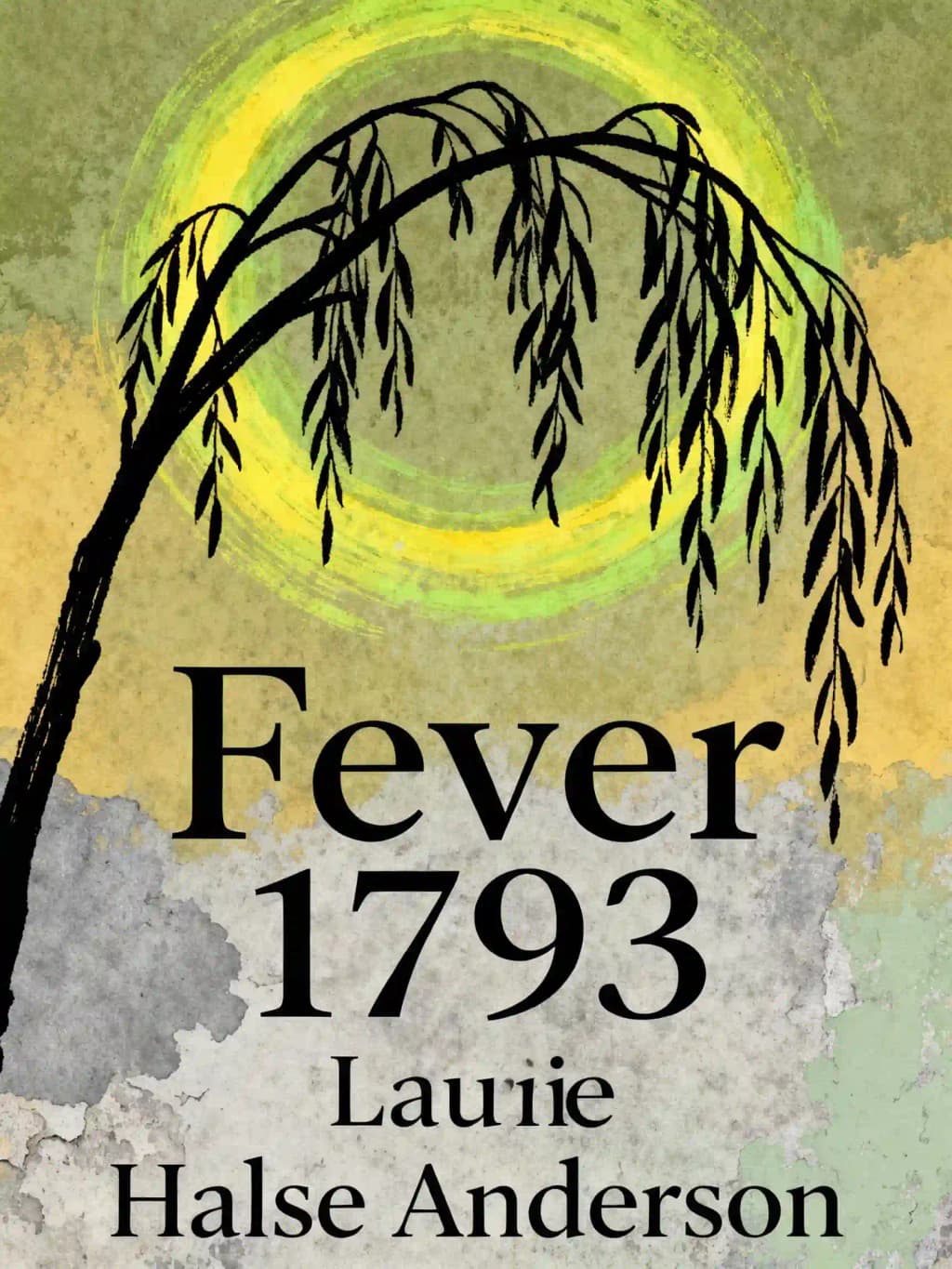
Fever 1793
Fever 1793 개요
In 1793 Philadelphia, yellow fever killed 5,000 people - 10% of the city. Anderson's award-winning novel vividly portrays this epidemic through a teenager's eyes, revealing forgotten heroes like the Free African Society. What would you do if your city became a death trap overnight?
Fever 1793의 핵심 주제
- yellow fever epidemic
- post-revolutionary philadelphia
- coming of age
- public health crisis
- social class inequality
Fever 1793의 명언
She was our servant, not a friend.
The city itself becomes a character.
Disaster often reveals society's deepest inequalities.
The disease strips away dignity along with health.
Fever 1793의 등장인물
- Matilda CookFourteen-year-old girl and coffeehouse worker
- Captain William Farnsworth CookMatilda's grandfather and Revolutionary veteran
- ElizaFree Black cook at the family coffeehouse
- Dr. Benjamin RushHistorical physician who advocates bloodletting
- Nathaniel BensonPainter's apprentice and Matilda's love interest
저자 소개
Fever 1793의 저자 소개
Laurie Halse Anderson, born October 23, 1961, in Potsdam, New York, is an award-winning author renowned for her impactful young adult literature.
Her historical novel Fever 1793 vividly portrays the 1793 yellow fever epidemic in Philadelphia, blending meticulous research with themes of resilience and survival. Anderson’s expertise in crafting narratives that tackle complex issues stems from her background in languages and linguistics, as well as her early career as a freelance journalist.
She gained widespread acclaim with Speak (1999), a National Book Award finalist that has become a staple in classrooms for its frank exploration of trauma. Other notable works include Chains, a National Book Award finalist and Carnegie Medal honoree, and Wintergirls, which delves into eating disorders.
Anderson’s contributions to literature earned her the 2009 Margaret A. Edwards Award and the 2023 Astrid Lindgren Memorial Award. Her books, translated into multiple languages, continue to resonate globally, with Speak adapted into a feature film in 2004.
Fever 1793 요약 다운로드
Fever 1793 요약을 무료 PDF 또는 EPUB으로 받으세요. 인쇄하거나 오프라인에서 언제든 읽을 수 있습니다.
이 책에 대한 FAQ
Fever 1793 is a historical fiction novel set during the 1793 yellow fever epidemic in Philadelphia. It follows 14-year-old Mattie Cook as she navigates loss, survival, and resilience while the deadly disease devastates her city. Themes of perseverance, societal collapse, and the human response to crisis unfold through Mattie’s journey from innocence to maturity.
This book is ideal for young adults and historical fiction enthusiasts interested in American history, pandemics, or coming-of-age stories. Educators may use it to teach resilience, historical analysis, or public health crises. Readers who enjoy character-driven narratives with strong thematic depth will find it compelling.
Key themes include survival against disaster, self-reliance, and societal inequality. The novel explores how individuals and communities adapt during crises, highlighting the roles of courage, ingenuity, and solidarity. It also critiques class and racial disparities, showcased through the Free African Society’s humanitarian efforts.
Anderson integrates real events, figures like Dr. Benjamin Rush, and locations like Bush Hill Hospital. The portrayal of Philadelphia as the U.S. capital, the epidemic’s death toll (~5,000 lives), and the Free African Society’s contributions align with historical records. Fictional elements, like Mattie’s personal journey, anchor the narrative in human experience.
Eliza, a free Black woman and coffeehouse cook, becomes a moral anchor, aiding Mattie and nursing fever victims. Her character highlights the Free African Society’s real-life heroism, as Black communities risked their lives to care for the sick despite being wrongly blamed for the epidemic.
Mattie transforms from a restless teenager into a resilient survivor. After losing her grandfather and nearly succumbing to fever, she reopens the family coffeehouse, symbolizing hope and renewal. Her arc underscores themes of responsibility, independence, and finding strength in adversity.
- Yellow balloon: Represents freedom and Mattie’s desire to escape societal constraints.
- Coffeehouse: Symbolizes stability and community rebirth post-epidemic.
- Fever: Mirrors societal fears and the fragility of progress.
The novel depicts Philadelphia’s descent into chaos: hospitals overflow, neighbors turn on each other, and wealthier citizens flee. It critiques how misinformation and class divides exacerbated suffering, while also honoring grassroots resilience and medical ingenuity.
While fictional, it blends historical events and figures with Mattie’s personal story. Real accounts of the epidemic, medical practices (e.g., bloodletting), and the Free African Society’s efforts anchor the narrative, offering educational insights into 18th-century America.
Its exploration of pandemics, social inequity, and community response resonates with modern readers, especially post-COVID-19. The novel underscores timeless lessons about crisis management, empathy, and the dangers of scapegoating vulnerable groups.
Unlike drier historical accounts, Anderson prioritizes emotional depth and relatable characters while maintaining factual rigor. It pairs well with novels like Chains (also by Anderson) or Johnny Tremain, offering immersive views of pivotal American events through youthful perspectives.
Some critics note the protagonist’s rapid maturity feels abrupt, while others argue secondary characters (e.g., Mattie’s mother) lack depth. However, most praise its balance of historical detail and accessible storytelling, making it a staple in classrooms.