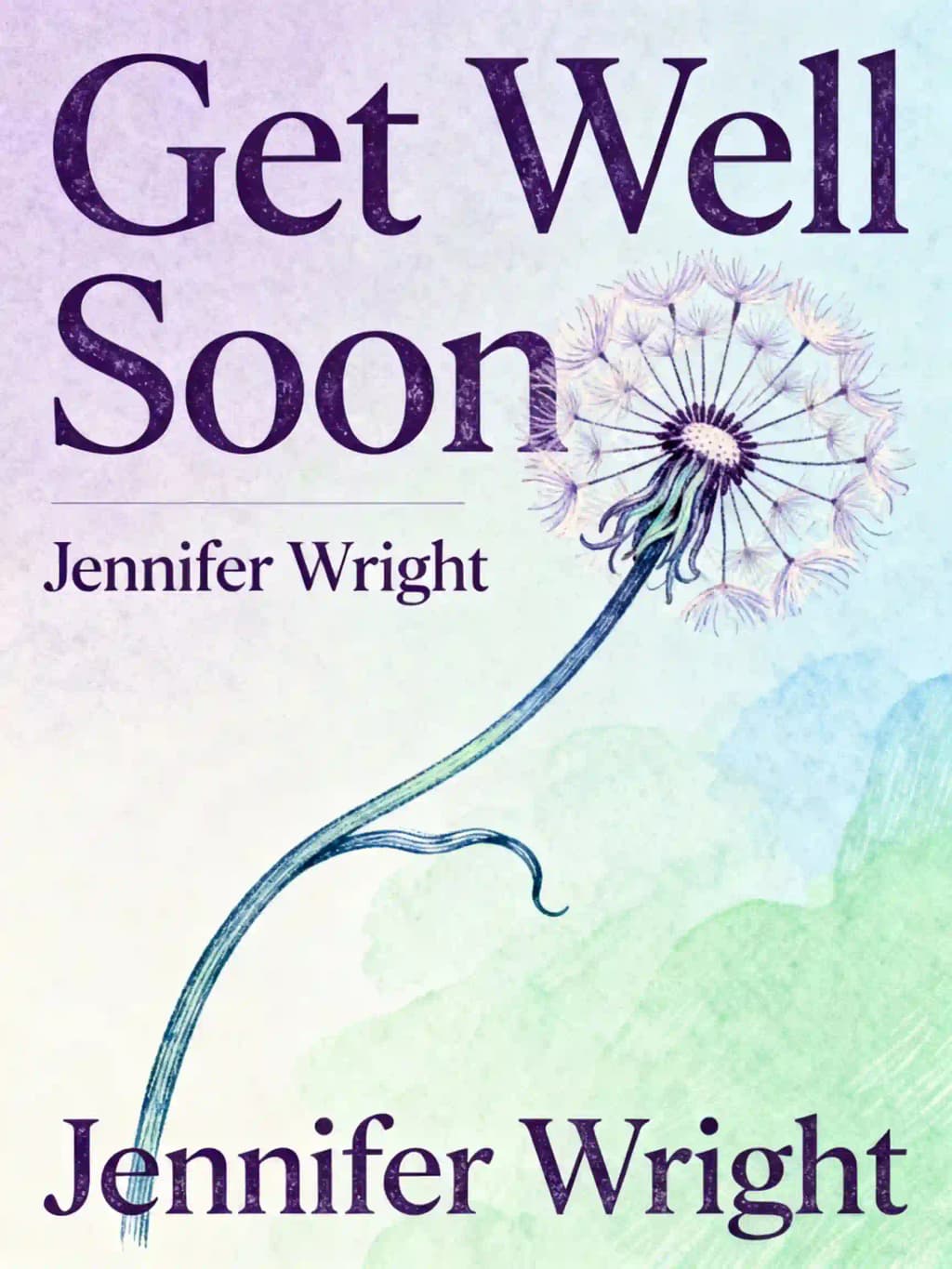
Journey through history's deadliest plagues with Jennifer Wright's darkly humorous masterpiece that reveals forgotten heroes and bizarre stories - from dancing plagues to "No Nose Clubs." Nominated for Goodreads Choice Award, this timely exploration shows how humanity's worst health crises sparked our greatest scientific triumphs.
Jennifer Wright is the bestselling author of Get Well Soon: History’s Worst Plagues and the Heroes Who Fought Them and an acclaimed popular historian specializing in societal challenges and medical history.
A graduate of St. John’s College, Wright combines rigorous research with engaging storytelling to explore themes of resilience and human ingenuity.
Her work as political editor-at-large for Harper’s Bazaar and contributions to The New York Times, The Washington Post, and Salon underscore her authority in historical and cultural analysis. Wright’s other notable books include It Ended Badly: Thirteen of the Worst Breakups in History and Madame Restell, a biography of a 19th-century abortion provider, which The New York Times praised for its bold historical insights.
A frequent media commentator, she has appeared on Watch What Happens Live and Mysteries at the Museum. Get Well Soon earned Audible’s Best History Book of 2017, solidifying Wright’s reputation for transforming complex histories into compelling narratives.
Get Well Soon explores history’s deadliest plagues—from the Antonine Plague to polio—and the heroes who fought them. Jennifer Wright combines dark humor with gruesome details to highlight how societies mishandled epidemics through superstition, prejudice, and censorship, while celebrating breakthroughs in science and compassionate leadership. The book emphasizes lessons for modern public health crises, like transparency and evidence-based responses.
History enthusiasts, medical history buffs, and fans of narrative nonfiction will enjoy this book. It’s ideal for readers seeking a gripping, accessible overview of pandemics and those interested in how past mistakes—like scapegoating victims or ignoring science—mirror modern public health challenges.
Yes—Wright’s witty, fast-paced storytelling makes complex medical history engaging. While it doesn’t dive deeply into each disease, it offers a compelling introduction to historical epidemics and their societal impacts. The dark humor and focus on unsung heroes (like syphilis researchers) balance the grim subject matter.
Key themes include the dangers of misinformation during outbreaks, the importance of scientific rigor over superstition, and the role of leadership in crisis response. Wright also critiques censorship and highlights how marginalized groups often bear the brunt of epidemics, as seen in the mishandling of AIDS.
The book spotlights figures like Antonine Plague survivors who documented outbreaks, syphilis treatment pioneers, and polio vaccine developers. Wright emphasizes anonymous caregivers and activists, such as those who risked their lives to comfort plague victims or challenge ineffective policies.
Wright argues for transparent communication, prioritizing science over politics, and avoiding stigmatization of affected groups. She praises leaders who acted decisively during historical outbreaks—like New York’s typhoid containment efforts—while condemning delayed responses, as seen in the AIDS crisis.
Some reviewers note the book’s brevity leaves little room for deep analysis of individual plagues. The dark humor and graphic descriptions of symptoms (e.g., leprosy, syphilis) may also unsettle sensitive readers. However, most praise its readability and relevance to contemporary health debates.
Unlike Madame Restell (focused on one historical figure) or It Ended Badly (about infamous breakups), Get Well Soon examines multiple epidemics. It shares Wright’s signature humor and emphasis on marginalized voices but adopts a broader scope to connect past and present public health failures.
While primarily focused on historical outbreaks, the book’s epilogue implicitly critiques COVID-19 responses by highlighting recurring mistakes—like downplaying threats or politicizing masks. Wright’s analysis of past censorship and misinformation parallels modern issues.
The 1518 “dancing plague” in Alsace—where hundreds danced uncontrollably for weeks—showcases how fear and mystery fueled irrational responses. Similarly, Typhoid Mary’s saga reveals how public health failures can turn victims into villains.
Wright uses well-documented events but simplifies complex contexts for readability. She cites primary sources, like diaries from plague survivors, and balances grim facts with lighter anecdotes (e.g., the No Nose Club for syphilis sufferers).
The book underscores timeless challenges:
By revisiting past triumphs (like smallpox eradication) and failures, Wright advocates for empathy and evidence in future outbreaks.
저자의 목소리로 책을 느껴보세요
지식을 흥미롭고 예시가 풍부한 인사이트로 전환
핵심 아이디어를 빠르게 캡처하여 신속하게 학습
재미있고 매력적인 방식으로 책을 즐기세요
This good fortune might not last forever.
The real terror that ends civilizations isn't moral decay...it's plague.
Mass hysteria didn't disappear after the sixteenth century.
One year they ranked among the world's greatest civilizations; the next they essentially ceased to exist.
treating patients kindly may be as important as medicine.
Get well soon의 핵심 아이디어를 이해하기 쉬운 포인트로 분해하여 혁신적인 팀이 어떻게 창조하고, 협력하고, 성장하는지 이해합니다.
Get well soon을 빠른 기억 단서로 압축하여 솔직함, 팀워크, 창의적 회복력의 핵심 원칙을 강조합니다.

생생한 스토리텔링을 통해 Get well soon을 경험하고, 혁신 교훈을 기억에 남고 적용할 수 있는 순간으로 바꿉니다.
무엇이든 물어보고, 목소리를 선택하고, 진정으로 공감되는 인사이트를 함께 만들어보세요.

샌프란시스코에서 컬럼비아 대학교 동문들이 만들었습니다
"Instead of endless scrolling, I just hit play on BeFreed. It saves me so much time."
"I never knew where to start with nonfiction—BeFreed’s book lists turned into podcasts gave me a clear path."
"Perfect balance between learning and entertainment. Finished ‘Thinking, Fast and Slow’ on my commute this week."
"Crazy how much I learned while walking the dog. BeFreed = small habits → big gains."
"Reading used to feel like a chore. Now it’s just part of my lifestyle."
"Feels effortless compared to reading. I’ve finished 6 books this month already."
"BeFreed turned my guilty doomscrolling into something that feels productive and inspiring."
"BeFreed turned my commute into learning time. 20-min podcasts are perfect for finishing books I never had time for."
"BeFreed replaced my podcast queue. Imagine Spotify for books — that’s it. 🙌"
"It is great for me to learn something from the book without reading it."
"The themed book list podcasts help me connect ideas across authors—like a guided audio journey."
"Makes me feel smarter every time before going to work"
샌프란시스코에서 컬럼비아 대학교 동문들이 만들었습니다

Get well soon 요약을 무료 PDF 또는 EPUB으로 받으세요. 인쇄하거나 오프라인에서 언제든 읽을 수 있습니다.
We've forgotten what plagues actually look like. Today we complain about "social media addiction" or "Netflix binges" with casual humor, but real plagues meant waking up covered in sores, watching neighbors die in the streets, and wondering if you'd be next. We're living through an unprecedented stretch of medical fortune-nearly three decades without a major disease decimating the developed world. But history whispers a warning: this luck won't hold forever. What matters most when disease strikes isn't just the pathogen itself, but how ordinary people respond. Do we turn on each other, or do we stand together? The answer has determined which civilizations survived and which crumbled into dust.