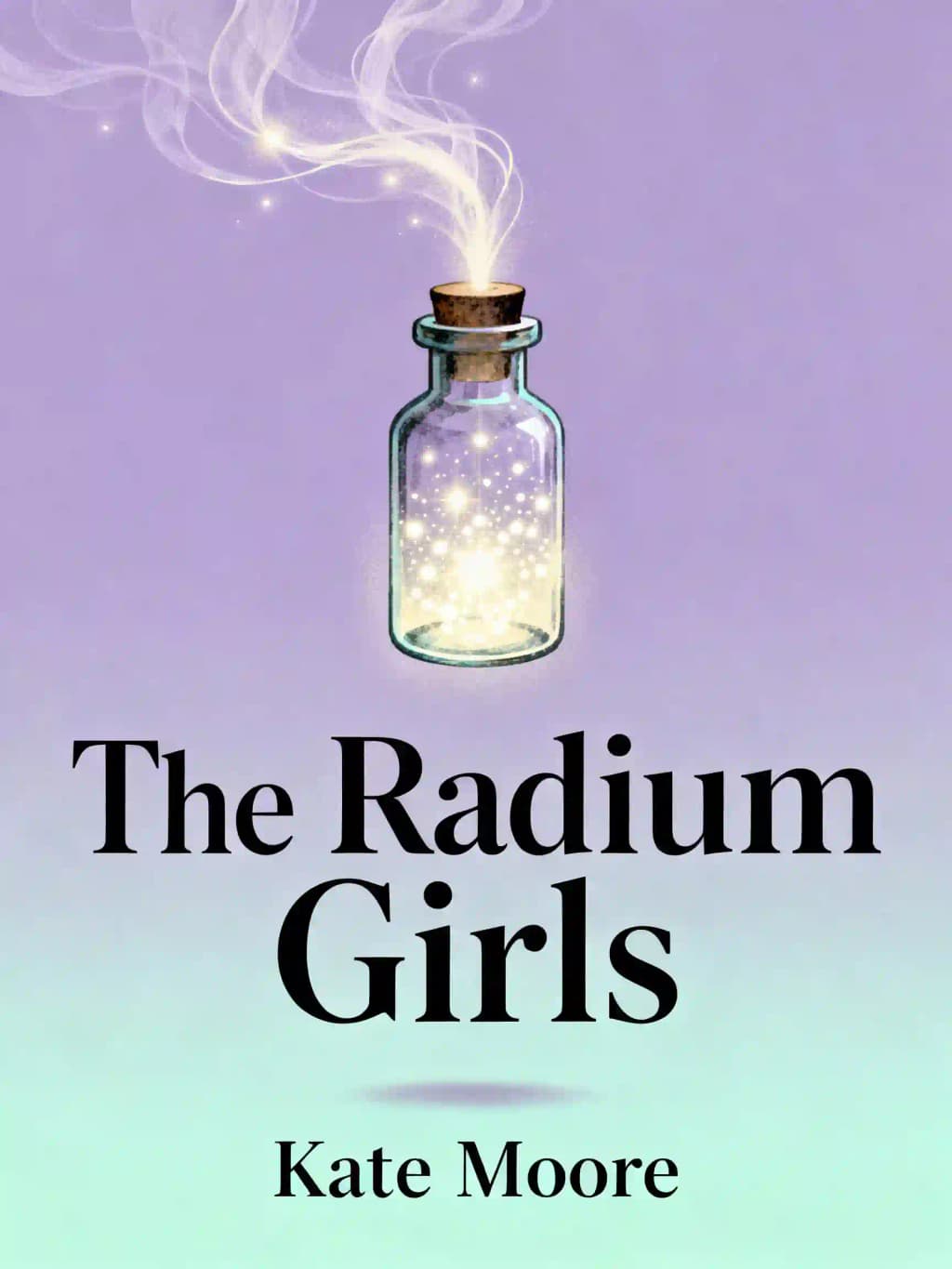
Radium Girls
They Paid with Their Lives. Their Final Fight Was for Justice
Radium Girls 개요
The forgotten heroes who painted watch dials with deadly radium, only to be betrayed by their employers. Their courageous fight against corporate giants revolutionized workplace safety laws. As Pulitzer winner Megan Marshall notes, this "dark chapter in American labor history" remains hauntingly relevant today.
Radium Girls의 핵심 주제
- corporate negligence
- workplace safety laws
- industrial poisoning
- female labor rights
- radiation health effects
Radium Girls의 명언
Their bodies literally glowed in the dark as they slowly died.
The public was enchanted by its most visible property.
"Every dial-painter did it."
The work was considered elite.
Their instructress would even eat luminous material.
Radium Girls의 등장인물
- Grace FryerDial-painter who fought for justice
- Katherine SchaubOne of the first dial-painters in New Jersey
- Mollie MaggiaDial-painter who suffered severe jaw deterioration
- Dr. Sabin von SochockyCompany founder and inventor of the luminous paint
- Mercedes ReedInstructress who encouraged girls to use radium
저자 소개
Radium Girls의 저자 소개
Kate Moore, New York Times and USA Today bestselling author of The Radium Girls: The Dark Story of America’s Shining Women, is a celebrated narrative nonfiction writer specializing in histories of overlooked women and social justice.
A British author and former editorial director at Penguin Random House UK, Moore combines rigorous research with vivid storytelling to resurrect forgotten voices. Her passion for the radium girls’ story emerged after directing a play about their lives, compelling her to document their fight for workers’ rights amid corporate betrayal.
The book, winner of the 2017 Goodreads Choice Award for Best History and a Notable Nonfiction selection by the American Library Association, has been translated into over 20 languages and adapted into curricula nationwide.
Moore’s subsequent work, The Woman They Could Not Silence (2021), further cemented her reputation for unearthing marginalized histories, becoming a USA Today bestseller and 2021 Booklist Editor’s Choice. An acclaimed speaker, she has presented the radium girls’ legacy in nearly 30 U.S. states, blending historical analysis with gripping narrative.
Radium Girls 요약 다운로드
Radium Girls 요약을 무료 PDF 또는 EPUB으로 받으세요. 인쇄하거나 오프라인에서 언제든 읽을 수 있습니다.
이 책에 대한 FAQ
The Radium Girls chronicles the harrowing true story of early 20th-century factory workers poisoned by radium, a "miracle" substance they painted onto watch dials. Kate Moore details their agonizing physical decline, corporate cover-ups, and relentless legal battles that spurred landmark workers’ rights and workplace safety laws. The book humanizes their resilience, blending meticulous research with vivid narratives of tragedy and triumph.
This book appeals to history buffs, feminists, and advocates for labor rights. Readers interested in narratives of corporate accountability, medical ethics, or unsung heroes will find it compelling. Teachers and students exploring industrial history or legal milestones benefit from its intersection of personal stories and systemic change.
Yes. Moore’s exhaustive research and empathetic storytelling make the radium girls’ plight unforgettable, though some critique its repetitive structure. The book balances visceral accounts of suffering with a tribute to their legacy, offering critical insights into gender, labor, and justice.
Radium caused catastrophic health issues: jaws disintegrating, bone cancers, infertility, and fatal anemia. Workers ingested toxins daily by lip-pointing brushes, unaware of risks. Employers dismissed symptoms as "hysteria," delaying medical care until suffering became irreversible.
Companies like U.S. Radium denied liability, suppressed evidence, and hired dodgy experts to disclaim radium’s dangers. They prioritized profits over safety, even as women died, showcasing systemic greed and gender-based exploitation.
Their lawsuits established employer liability for occupational hazards, leading to OSHA precursors and radium safety protocols. The cases also set precedents for workers’ rights to sue corporations, empowering future labor movements.
Moore elevates individual voices through diaries, letters, and interviews, rendering each woman’s courage and despair intimately. Her narrative emphasizes their agency amid victimization, transforming statistics into relatable human struggles.
Some find the narrative disjointed due to frequent shifts between locations and characters. While rich in detail, the exhaustive accounts of suffering can feel overwhelming, though they underscore the scale of corporate neglect.
“They glowed” symbolizes both the allure of radium and its deadly toll. Another pivotal line: “The companies had made us all liars” reflects systemic deceit that silenced victims until their bodies betrayed the truth.
The book underscores ongoing battles for workplace safety, corporate transparency, and gender equity. Its lessons resonate in debates over gig-economy protections, hazardous industries, and whistleblower rights.
Radium’s glow represents both progress and peril—a metaphor for corporate promises masking exploitation. The women’s literal luminosity becomes a haunting reminder of their commodification and resilience.
Their suffering spurred studies on radiation’s long-term effects, informing later nuclear safety protocols. Researchers used autopsy data to understand radium’s toxicity, aiding cancer treatment advancements.