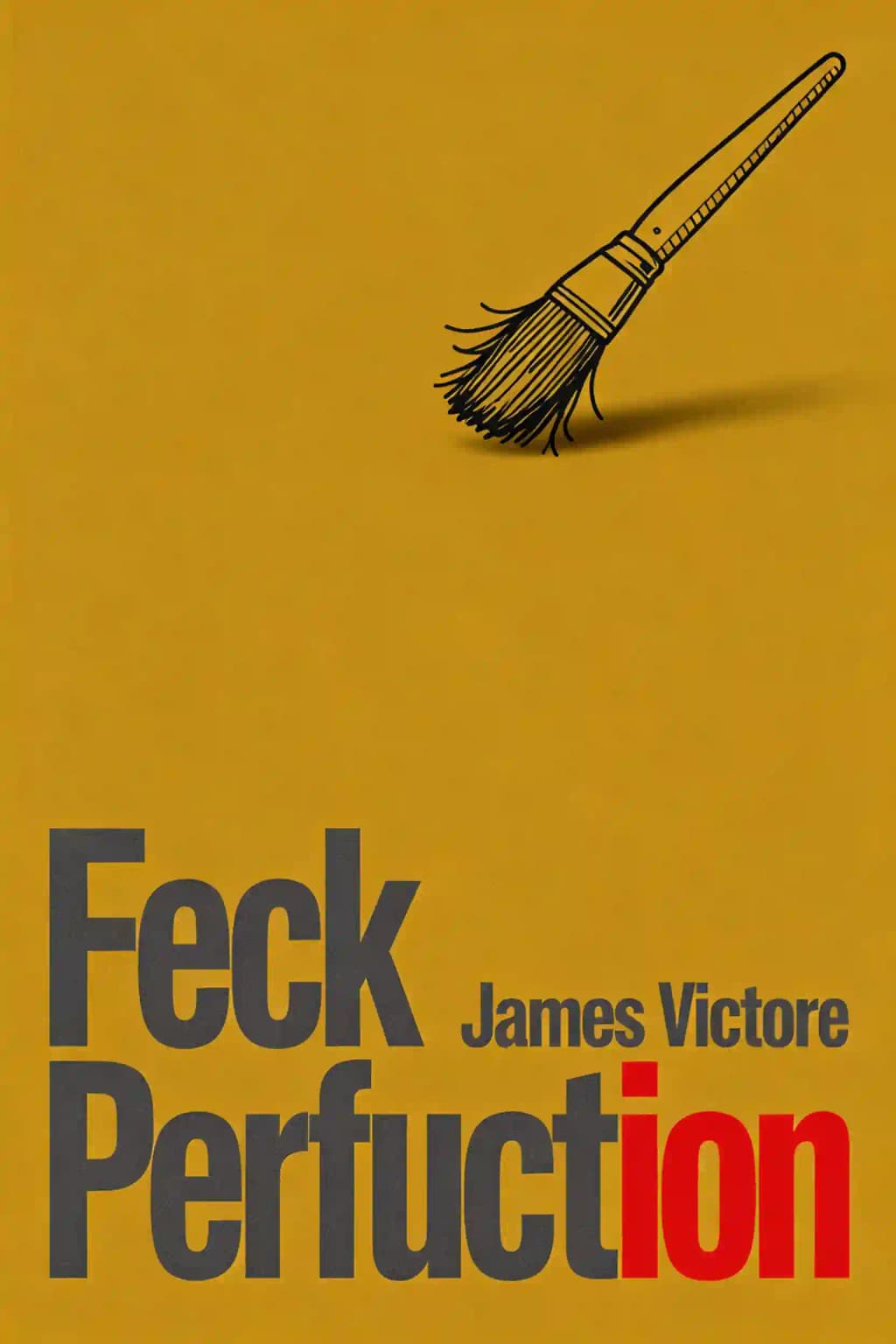
Feck Perfuction
Dangerous Ideas on the Business of Life
Feck Perfuction 개요
Rebel against perfection with James Victore's manifesto that made Kickstarter's co-founder embrace mistakes. What if your "weird" traits are your greatest assets? Robin Sharma claims these ideas "will devastate your limits" - no wonder it's among David Hieatt's five most-gifted books.

Feck Perfuction의 핵심 주제
- radical authenticity
- creative risk-taking
- dismantling perfectionism
- unconventional leadership
- artistic rebellion
Feck Perfuction의 명언
Our weirdness isn't a liability-it's our greatest asset.
Find out who you are and do it on purpose.
FEAR equals STOP.
If you're not falling, you're not skiing.
Feck Perfuction의 등장인물
- James VictoreAuthor, design legend, and creative mentor
- Dolly PartonSinger-songwriter cited for her wisdom on identity
- Oscar WildeWriter quoted regarding living authentic lives
- Bill BowermanNike co-founder used as a case study in innovation
저자 소개
Feck Perfuction의 저자 소개
James Victore, author of Feck Perfuction: Dangerous Ideas on the Business of Life, is a provocative designer, educator, and creativity thought leader renowned for challenging conventions in art and personal growth. A School of Visual Arts dropout turned influential mentor, Victore merges graphic design expertise with life philosophy, advocating for authenticity and bold self-expression. His work, featured in permanent collections at the Museum of Modern Art and the Louvre, reflects his activist ethos, tackling social and political issues through stark visuals.
Victore’s career spans bestselling books like Victore, or Who Died and Made You Boss? and Lust: A Traveling Art Journal, alongside high-profile collaborations with Adobe, The New York Times, and Moët & Chandon. As a sought-after speaker for brands like Google and Starbucks, he empowers audiences to embrace creative fearlessness.
Feck Perfuction distills his decades of unconventional wisdom, blending design principles with actionable advice for overcoming perfectionism. Translated into multiple languages, the book has become a manifesto for creatives and entrepreneurs seeking purpose-driven work.
Feck Perfuction 요약 다운로드
Feck Perfuction 요약을 무료 PDF 또는 EPUB으로 받으세요. 인쇄하거나 오프라인에서 언제든 읽을 수 있습니다.
이 책에 대한 FAQ
Feck Perfuction is a manifesto for creatives and professionals seeking freedom from perfectionism. James Victore combines gritty wisdom with actionable advice, advocating for courage over fear, embracing failure, and trusting one’s unique voice. The book dismantles societal norms around success, offering frameworks like “kill your darlings” and “make trouble” to spark creative rebellion.
This book is ideal for entrepreneurs, artists, and anyone feeling stifled by self-doubt or societal expectations. Victore targets individuals craving creative independence—whether launching a business, pursuing art, or seeking personal growth. Its blunt, inspiring tone resonates with those tired of “hustle culture” and ready to prioritize authenticity.
Yes—Feck Perfuction is praised for its no-nonsense approach to overcoming creative blocks. Readers gain tools to confront fear, reject perfectionism, and redefine success. Victore’s mix of personal anecdotes and provocative insights (e.g., “Your work is a gift”) makes it a standout in self-help and creativity genres.
Key concepts include:
- Embrace “dangerous ideas”: Challenge status-quo thinking.
- Action over perfection: Prioritize progress through imperfection.
- Creative courage: Trust intuition despite fear.
- Authenticity: Reject external validation to find your unique voice.
Victore reframes fear as a compass for growth, urging readers to “do it scared.” He shares practices like creating “ugly” drafts first and viewing criticism as feedback. The book’s mantra—“What would you do if you weren’t afraid?”—pushes readers to confront paralysis and take bold action.
The title blends “feck” (a playful substitute for an expletive) and “perfection,” encapsulating Victore’s rejection of flawless outcomes. It champions messy, authentic progress over sterile perfection—a rallying cry for creatives tired of playing it safe.
Unlike formulaic self-help guides, Feck Perfuction prioritizes mindset over step-by-step plans. It aligns with The War of Art’s focus on resistance but adds Victore’s signature humor and design-centric perspective. The book’s emphasis on action distinguishes it from theoretical takes on creativity.
Some readers find Victore’s advice overly blunt or dismissive of systemic barriers. Critics argue its focus on individualism may overlook collaborative or structured approaches to creativity. However, fans counter that its confrontational tone is necessary to break complacency.
Victore’s principles help navigate uncertainty during transitions:
- Trust your weirdness: Leverage unique strengths.
- Start before ready: Avoid overplanning.
- Embrace detours: View failures as data.
The book’s “burn the boats” mentality encourages decisive leaps.
- “Your work is a gift—stop selling it like a toaster.”
- “The world needs your particular gift, not your perfection.”
- “Fear is the compass—what scares you is probably what you should do.”
Each quote reinforces self-trust and action despite imperfect conditions.
In an era of AI and automation, Victore’s emphasis on human creativity and courage remains vital. The book addresses modern anxieties about originality, offering antidotes to comparison culture and burnout. Its call to “create before you consume” resonates amid digital overload.
It expands on themes from his 2010 book Who Died and Made You Boss?, diving deeper into personal empowerment. While earlier works focus on design philosophy, Feck Perfuction broadens its scope to life and business, reflecting Victore’s evolution as a mentor.
- The “3 C’s”: Clarity, Courage, Commitment.
- The “Draft Principle”: Create first, refine later.
- “Make Trouble”: Innovate by disrupting routines.
These tools help readers bypass perfectionist paralysis and maintain momentum.
Victore reframes imposter syndrome as proof of growth, advising readers to “fake it till you make it” while staying authentic. He advocates focusing on impact over credentials and viewing self-doubt as a sign of pushing boundaries.