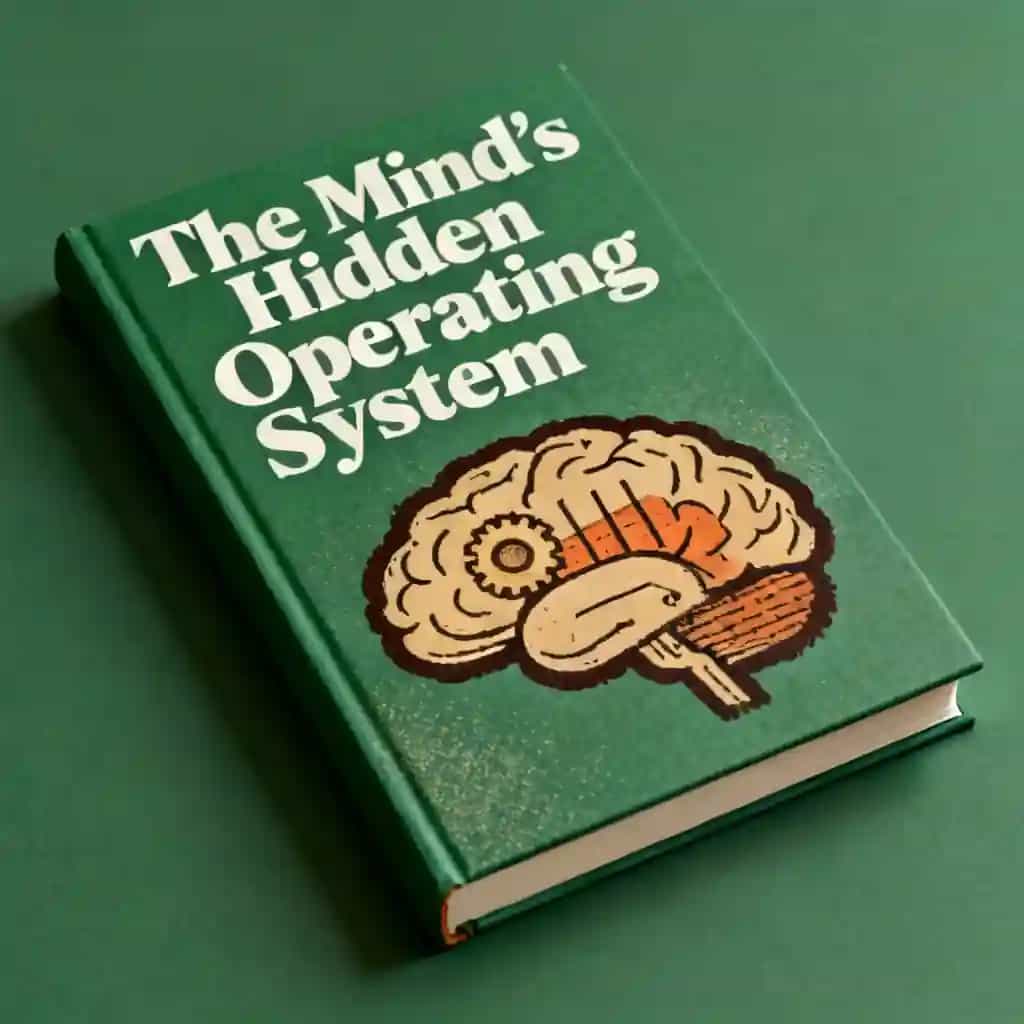
Designing the Mind: The Principles of Psychitecture by Designing the Mind and Ryan A Bush Summary

Overview of Designing the Mind
"Designing the Mind" reveals how to reprogram your psychological software using neuroplasticity principles. This cult classic blends ancient wisdom with modern cognitive science, offering a designer's approach to self-mastery. What if you could debug your mental patterns like computer code - and transform your entire life?
- Psychitecture reframes self-mastery as reprogramming your mind’s “psychological software.”
- Cognitive biases are mental bugs fixable through deliberate algorithm upgrades.
- Emotional resilience stems from rewiring reactions using Stoic-Buddhist mindfulness hybrids.
- Habit formation mirrors code optimization—delete inefficiencies, deploy better routines.
- Your mind’s default settings aren’t permanent; neuroplasticity enables lifelong upgrades.
- Introspection acts as a debug tool to isolate faulty belief patterns.
- Ancient philosophy meets neuroscience in psychitecture’s step-by-step cognitive redesign.
- Behavioral change requires editing subconscious scripts, not just willpower.
- Psychitecture’s triad model targets cognitive, emotional, and behavioral layers simultaneously.
- The “mental OS” metaphor transforms self-help into actionable system updates.
- Faulty emotional code can be patched via exposure and reevaluation protocols.
- Ryan Bush’s psychitecture merges evolutionary psychology with deliberate self-evolution.
About the Author of Designing the Mind
Ryan A. Bush is the bestselling author of Designing the Mind: The Principles of Psychitecture and a leading voice in psychitecture—a fusion of cognitive psychology, philosophy, and systems design for self-mastery. A thinker and designer specializing in human potential, Bush integrates ancient wisdom with modern cognitive science to create frameworks for reprogramming thought patterns and emotional responses.
As founder of Designing the Mind, he developed transformative programs like The Anxiety Algorithm and launched Mindform, the first psychitecture training platform. His work has been featured in Psyche, Lifehack, and Modern Stoicism, and he’s a frequent podcast guest discussing mental optimization.
Bush’s systems-design background includes collaborating with tech startups to build physical products, software, and business models. His follow-up book, Become Who You Are, explores self-esteem and human greatness. Over 50,000 readers have engaged with his practical philosophy, which is taught in self-development communities and applied by professionals worldwide. He resides in a mountain town with his partner and their corgi, Hootie, where he balances writing with outdoor adventures.
FAQs About Designing the Mind
What is Designing the Mind: The Principles of Psychitecture about?
Designing the Mind by Ryan A. Bush introduces psychitecture—the practice of reprogramming your mind’s cognitive, emotional, and behavioral patterns using insights from cognitive psychology, mindfulness, and philosophy. It offers actionable strategies to replace negative mental algorithms with constructive ones, enabling self-mastery and lasting personal growth.
Who should read Designing the Mind?
This book is ideal for readers seeking self-optimization through science-backed methods. It appeals to fans of Stoicism, cognitive psychology, or Buddhism, as well as those interested in overcoming cognitive biases, improving emotional resilience, or redesigning habitual behaviors.
Is Designing the Mind worth reading?
Yes. Ryan A. Bush synthesizes ancient wisdom (e.g., Marcus Aurelius, Lao Tzu) with modern psychology and neuroscience, providing a practical toolkit for mental reprogramming. Its blend of theory and exercises makes it valuable for anyone aiming to transcend default thought patterns.
What is psychitecture?
Psychitecture is the deliberate redesign of mental processes—cognitive biases, emotional reactions, and habits—to align with desired outcomes. Rooted in neuroplasticity, it treats the mind as malleable software, empowering individuals to become architects of their psychological evolution.
How does Designing the Mind combine ancient philosophy and modern science?
Bush links Stoic principles and Buddhist mindfulness to cognitive psychology and neuroscience. For example, he reframes mindfulness as a tool for debugging mental algorithms and ties Seneca’s teachings to modern emotional regulation techniques.
What are the key concepts in Designing the Mind?
- Triad of Mastery: Balancing cognitive, emotional, and behavioral realms.
- Neuroplasticity: Leveraging the brain’s adaptability to rewire mental patterns.
- Mental Algorithms: Identifying and reprogramming subconscious thought processes.
How does Ryan A. Bush suggest changing thought patterns?
He advocates mindfulness to observe automatic thoughts, cognitive restructuring to challenge biases, and habit formation to reinforce new behaviors. Practical exercises include journaling prompts and mental reframing techniques.
What is the Triad of Mastery?
This framework emphasizes mastering three domains:
- Cognitive: Correcting distorted thinking.
- Emotional: Regulating reactions through mindfulness.
- Behavioral: Aligning actions with values via habit design.
How does Designing the Mind address emotional regulation?
The book teaches emotional reframing (reinterpreting triggers) and mindful detachment (observing feelings without attachment). These methods help readers reduce anxiety and cultivate inner peace.
How does Designing the Mind compare to other self-help books?
Unlike generic advice, it offers a structured system (psychitecture) blending philosophy and science. It’s more technical than Atomic Habits but less abstract than pure philosophical texts, bridging theory and practice.
What criticisms exist about Designing the Mind?
Some readers may find its technical terminology (e.g., “mental algorithms”) challenging, and its emphasis on self-reliance might overlook systemic or interpersonal factors influencing mental health.
Can Designing the Mind help with anxiety or stress?
Yes. The book provides tools like cognitive defusion (detaching from negative thoughts) and value-based action to reduce anxiety. Its focus on neuroplasticity also underscores the brain’s capacity to adapt to stress.
Feel the book through the author's voice
Turn knowledge into engaging, example-rich insights
Capture key ideas in a flash for fast learning
Enjoy the book in a fun and engaging way
Key Themes in Designing the Mind
Quotes from Designing the Mind
The default human mind is inherently disorderly.
Enlightenment isn't some mystical state but a gradual, systematic process.
Thinking about your thinking.
Reality (territory) is infinitely complex.
Without clear thinking, distorted thoughts will sabotage efforts.
Characters in Designing the Mind
Quick Summary Mode - Read or listen to Designing the Mind Summary in 9 Minutes

Break down key ideas from Designing the Mind into bite-sized takeaways to understand how innovative teams create, collaborate, and grow.

Flash Card Mode - Top 7 Insights from Designing the Mind in a Nutshell

Distill Designing the Mind into rapid-fire memory cues that highlight key principles of candor, teamwork, and creative resilience.

Fun Mode - Designing the Mind Lessons Told Through 23-Min Stories

Experience Designing the Mind through vivid storytelling that turns innovation lessons into moments you'll remember and apply.
Personalize Mode - Read or listen to Designing the Mind Summary in 0 Minutes

Ask anything, pick the voice, and co-create insights that truly resonate with you.

From Columbia University alumni built in San Francisco
"Instead of endless scrolling, I just hit play on BeFreed. It saves me so much time."


"I never knew where to start with nonfiction—BeFreed’s book lists turned into podcasts gave me a clear path."


"Perfect balance between learning and entertainment. Finished ‘Thinking, Fast and Slow’ on my commute this week."
"Crazy how much I learned while walking the dog. BeFreed = small habits → big gains."
"Reading used to feel like a chore. Now it’s just part of my lifestyle."

"Feels effortless compared to reading. I’ve finished 6 books this month already."
"BeFreed turned my guilty doomscrolling into something that feels productive and inspiring."

"BeFreed turned my commute into learning time. 20-min podcasts are perfect for finishing books I never had time for."
"BeFreed replaced my podcast queue. Imagine Spotify for books — that’s it. 🙌"

"It is great for me to learn something from the book without reading it."
"The themed book list podcasts help me connect ideas across authors—like a guided audio journey."
"Makes me feel smarter every time before going to work"
From Columbia University alumni built in San Francisco
"Instead of endless scrolling, I just hit play on BeFreed. It saves me so much time."
"I never knew where to start with nonfiction—BeFreed’s book lists turned into podcasts gave me a clear path."
"Perfect balance between learning and entertainment. Finished ‘Thinking, Fast and Slow’ on my commute this week."
"Crazy how much I learned while walking the dog. BeFreed = small habits → big gains."
"Reading used to feel like a chore. Now it’s just part of my lifestyle."
"Feels effortless compared to reading. I’ve finished 6 books this month already."
"BeFreed turned my guilty doomscrolling into something that feels productive and inspiring."
"BeFreed turned my commute into learning time. 20-min podcasts are perfect for finishing books I never had time for."
"BeFreed replaced my podcast queue. Imagine Spotify for books — that’s it. 🙌"
"It is great for me to learn something from the book without reading it."
"The themed book list podcasts help me connect ideas across authors—like a guided audio journey."
"Makes me feel smarter every time before going to work"
"Instead of endless scrolling, I just hit play on BeFreed. It saves me so much time."
"I never knew where to start with nonfiction—BeFreed’s book lists turned into podcasts gave me a clear path."
"Perfect balance between learning and entertainment. Finished ‘Thinking, Fast and Slow’ on my commute this week."
"Crazy how much I learned while walking the dog. BeFreed = small habits → big gains."
"Reading used to feel like a chore. Now it’s just part of my lifestyle."
"Feels effortless compared to reading. I’ve finished 6 books this month already."
"BeFreed turned my guilty doomscrolling into something that feels productive and inspiring."
"BeFreed turned my commute into learning time. 20-min podcasts are perfect for finishing books I never had time for."
"BeFreed replaced my podcast queue. Imagine Spotify for books — that’s it. 🙌"
"It is great for me to learn something from the book without reading it."
"The themed book list podcasts help me connect ideas across authors—like a guided audio journey."
"Makes me feel smarter every time before going to work"
"Instead of endless scrolling, I just hit play on BeFreed. It saves me so much time."
"I never knew where to start with nonfiction—BeFreed’s book lists turned into podcasts gave me a clear path."
"Perfect balance between learning and entertainment. Finished ‘Thinking, Fast and Slow’ on my commute this week."
"Crazy how much I learned while walking the dog. BeFreed = small habits → big gains."
"Reading used to feel like a chore. Now it’s just part of my lifestyle."
"Feels effortless compared to reading. I’ve finished 6 books this month already."
"BeFreed turned my guilty doomscrolling into something that feels productive and inspiring."
"BeFreed turned my commute into learning time. 20-min podcasts are perfect for finishing books I never had time for."
"BeFreed replaced my podcast queue. Imagine Spotify for books — that’s it. 🙌"
"It is great for me to learn something from the book without reading it."
"The themed book list podcasts help me connect ideas across authors—like a guided audio journey."
"Makes me feel smarter every time before going to work"

Get the Designing the Mind summary as a free PDF or EPUB. Print it or read offline anytime.