1장
The Ultimate Predator: Finding Purpose Through Perseverance
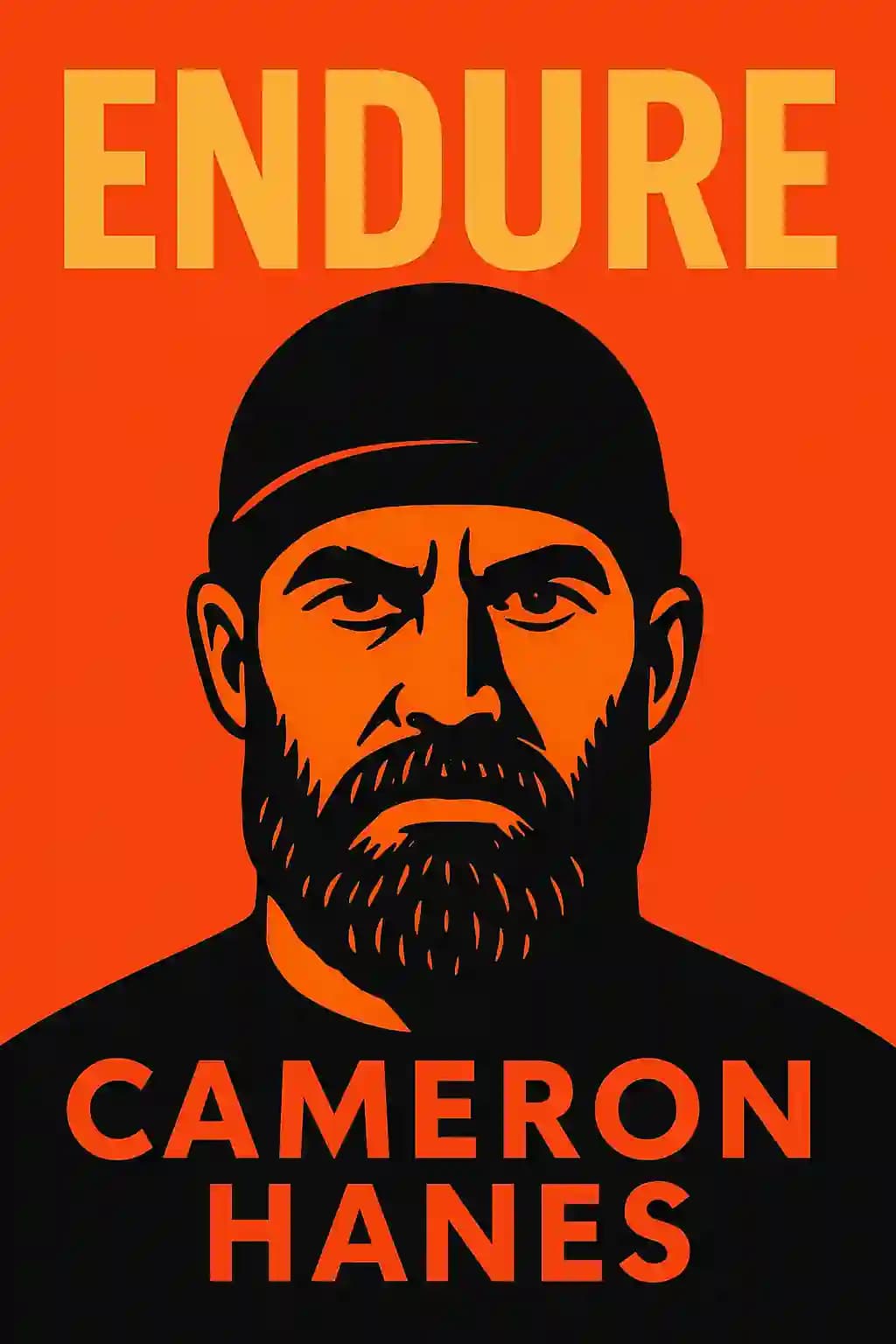
In a world where comfort and convenience reign supreme, Cameron Hanes stands as a defiant anomaly. His bestselling memoir "Endure" has captivated not just the hunting community but has crossed over to mainstream audiences, with celebrities like Joe Rogan and David Goggins championing his philosophy of relentless self-improvement. What makes this book resonate so deeply is its raw honesty about the human struggle against mediocrity. Unlike typical self-help books that promise easy solutions, Hanes offers something more authentic-a roadmap to fulfillment through deliberate discomfort and unwavering commitment. As Hanes puts it, "Easy sucks. No epic story comes from an easy path." This sentiment has transformed him from a directionless young man to one of the most recognized figures in bowhunting and endurance athletics, proving that extraordinary achievements come not from natural talent but from the willingness to outwork everyone else.
2장
From Troubled Youth to Purpose-Driven Hunter
Growing up in Oregon with divorced parents and an alcoholic stepfather, young Cameron found himself adrift. His childhood was marked by instability-bouncing between homes, enduring harsh discipline, and even being forced to fight for teenage babysitters' entertainment. Though his father Bob Hanes was a respected track coach at South Eugene High School, their relationship remained distant during Cameron's formative years.
Without direction, Cameron's early adulthood spiraled into mediocrity. After a failed attempt at college football, he found himself working at a cardboard recycling warehouse for $4.72 an hour, drinking excessively with friends at a local swimming hole called the Powerhouse. His reckless behavior included diving from his truck roof into a narrow, boulder-flanked pool-where one wrong move could have been fatal.
The turning point came at age twenty when his friend Roy Roth uttered four life-changing words: "Dude, you need to bowhunt." Though his first attempts were discouraging (he missed a massive bull elk despite months of practice), something ignited inside him. He hunted eighteen straight days until finally, on September 13, 1989, he killed his first bull-just a spike, but it didn't matter. At twenty years old, he had discovered his purpose.
"I quit college and everything else to bowhunt more," Hanes recalls. This obsession would become his salvation. Unlike many new bowhunters who quit when they discover the sport's difficulty (he missed sixteen deer his first year), Hanes persisted. The challenge of moving from rifle range into bow range-what he calls the animal's "red zone"-became both exciting and excruciating.
His life gained further focus when his son Tanner was born in 1993. Suddenly responsible for another life and determined not to be a "loser dad," he quit drinking and dedicated himself to becoming the ultimate predator-someone resembling a professional athlete focused on nutrition, training hard, and breaking mental barriers.
This transformation wasn't just about hunting success but about redefining his identity. In the wilderness, social status and wealth didn't matter-only preparation and mental fortitude determined success. For a warehouse worker who felt ordinary in everyday life, putting bulls and bucks on the ground in the mountains made him feel capable of greatness.
3장
The Wilderness as Teacher
The Eagle Cap Wilderness in Oregon-1,800 square miles of granite crags and bottomless canyons-became Hanes' classroom. This rugged land housed bighorn sheep, mountain goats, mule deer, bear, cougars, and Rocky Mountain elk, many roaming without ever encountering humans.
"There's something magical about wild country that defies explanation," Hanes writes. "Either it's in your soul or it isn't." After many days and close calls with big bulls in terrain every bit as nasty as promised, he arrowed his first wilderness bull. The grueling pack out did nothing to diminish his enthusiasm-backcountry hunting was now in his blood.
When Roy moved to Alaska, Hanes struggled to find another hunting partner who shared his backcountry passion. The few he persuaded only went once-the solitude and vast country overwhelmed them. Faced with going alone or not at all, he chose to continue, hunting the sprawling Eagle Cap Wilderness mostly solo for twelve years.
The wilderness tested him mentally more than physically. In distractionless country, the mind creates problems that don't exist. Sleeping alone deep in the mountains isn't natural for modern humans conditioned to fear darkness and seek comfort. But he learned to overcome self-doubt and confront his fears, which changed him forever.
"Being 'in deep' was the great equalizer," he explains-one of the few places where money and status didn't make hunting easier. The challenge of killing an elk with his bow in that wild country initially felt impossible. But he did it. And realizing he could changed him forever.
This approach to hunting wasn't just about the kill but about pushing personal boundaries. "I go where others won't go or can't go because it's too far and too difficult," he explains. "This eliminates competition and makes it just me against the animal." Places anybody can easily drive to became no-go zones for him. Instead, he sought the almost impossible to reach places-untamed wilderness with rocky crags and miles of unyielding country.
4장
Train Hard, Hunt Easy
What truly sets Hanes apart is his unconventional training philosophy. While most hunters prepare by sighting in their weapons and perhaps taking a few hikes, Hanes approaches hunting with the dedication of an Olympic athlete-running ultramarathons, lifting weights daily, and shooting thousands of arrows annually.
"Train hard, hunt easy" became his mantra. His regimen evolved into what he calls "Beast Mode" or "Lift, Run, Shoot." He wondered what would happen if he trained like elite athletes-if Kobe could shoot 1,000 jumpers daily and Pacquiao could do 2,000 sit-ups, what would happen if someone prepared for bowhunting with similar dedication?
His journey into extreme fitness began modestly. Before 2000, he'd never run more than a 10K. People thought he was crazy running 7.3 miles just to prepare for hunting. Then he ran a half-marathon, and in 2003, his first marathon, finishing third overall. He noticed his physical condition dramatically impacted his hunting success-better shape meant easier success, with no ceiling to this approach.
Since that first marathon, he's competed in ultramarathons, running at least twenty miles daily when in peak shape before bow season. This physical and mental training has paid off with consistent success. "I love endurance running for the same reasons I love bowhunting," he explains. "Both push even the toughest to their limits, and in both, those who work hardest reap the rewards."
His most grueling test came during the Bighorn Mountain Trail 100-mile endurance run-called the fourth-toughest ultramarathon worldwide. The course consisted mostly of single-track trail with approximately 17,500 feet of climb and 18,000 feet of descent. By mile 82, after a brutal six-hour climb, he had readjusted his goal from finishing in 24 hours to simply finishing under 30 hours, no matter what.
With 18 miles remaining, he was 10 pounds down from his starting weight. His right Achilles was acting up, his left foot felt like it had a bone sticking out, and his right knee caught with each step. But he kept thinking of Emiliano Zapata's quote: "It is better to die on your feet than to live on your knees." He finished in 29 hours, 20 minutes-a testament to his mental fortitude.
"I've become close friends with Misery through ultramarathons," he writes. "I've learned our bodies adapt to almost any challenge when we remove doubt, toughen up, sacrifice, and dig deep. Our spirits are capable of the same."
5장
Obsessed or Average
For Hanes, mediocrity is the enemy. "If you're not obsessed, you're going to be mediocre-that's the cold truth," he asserts. This philosophy extends beyond physical training to his entire approach to bowhunting and life.
His obsession with bowhunting led him to study every aspect of the craft. As a teenager, he devoured hunting magazines, idolizing writers the way kids today worship athletes. He watched his grainy "Elk Fever" VHS tape so many times he could recite every line from Dwight Schuh and Larry D. Jones. He emulated everything about his heroes-Dwight's green wool gloves, Larry's face paint techniques, even using his middle initial in bylines like Larry D. Jones did.
This passion extended to writing about his experiences. His first hunting article in 1990 described his spike bull kill from his first bow season. When he asked his coworker Carl Allen to review an article, Carl didn't offer empty praise but asked penetrating questions: "What is stalking like? What noises do you hear? Can you put me there?" This insight pushed him to dive deeper into his writing, painting pictures with words that would transport readers into the hunt.
Achieving dreams required sacrifice-not just money and time, but emotional energy and others' trust. In the mid-1990s, he wrote for Western Bowhunter for free. When offered a writer's hunt costing $3,000, he jumped at the opportunity despite being poor with a newborn son and his wife on maternity leave. They were on WIC food assistance, yet he put the hunt on credit card, considering it an investment in his future. He worked sixteen-hour warehouse shifts to pay it off.
He self-published his first book, Bowhunting Trophy Blacktail, without a business plan. It cost $50,000 to print 5,000 copies-money he didn't have. He borrowed from family, including $15,000 from his grandmother Ruby. Though financially unwise, he eventually sold all copies and repaid everyone. His second book, Backcountry Bowhunting (2005), was published professionally and has sold 90,000 copies through nine printings.
"What's your dream?" he asks readers. "Mine is to be the 'perfect' bowhunter, successful on every hunt with a perfect arrow release. Though bowhunting may not be something one can master, that's my goal."
6장
Finding Strength in Suffering
Hanes has developed a unique perspective on suffering-embracing it as a source of power rather than something to avoid. "I've learned to embrace suffering as a source of power and perspective," he writes. "My ability to endure more pain than others has become my competitive edge in hunting and endurance sports." This philosophy extends beyond mere physical endurance; it's become a fundamental life principle that shapes his approach to every challenge.
This approach was shaped by his difficult upbringing in rural Montana, where hardship was a daily companion. "I'm grateful for my difficult upbringing because it taught me to fight through adversity," he explains. Growing up with limited resources and facing constant challenges forged his resilient spirit. The journey of mountain endurance running and bowhunting demands pain, devotion, and perseverance - elements that mirror his early life struggles. It creates anguish but rewards with extraordinary achievements and personal growth.
He deliberately trains for misery with a methodical approach - running multiple times daily with the goal of sweating and suffering - because he knows the mountains will demand it. His training regimen includes pre-dawn runs in extreme weather conditions, weighted pack hikes, and high-altitude conditioning. Despite years of accumulated injuries from countless miles - including stress fractures, tendonitis, and chronic joint pain - he pushes through the aches rather than quit, viewing each step as an investment in future resilience.
His painful history serves as a psychological advantage in the wilderness, helping him carry heavy loads when his body screams to stop. During pack-outs that can exceed 100 pounds of meat and gear, he draws on memories of past hardships to fuel his determination. The physical suffering of packing meat out after a successful hunt gives him what he truly needs - the struggle that defines him. Without it, he wouldn't be himself. This connection between suffering and identity has become central to his philosophy.
This mindset has attracted him to other "outliers" who push human limits, creating a network of extraordinary performers. He's trained with UFC fighters Michael Chandler and Colby Covington, learning their mental toughness techniques and incorporating their warrior mindset into his hunting approach. He's run alongside ultramarathoner Courtney Dauwalter (who once won the Moab 240 race outright, beating every male competitor by more than 10 hours), studying her ability to maintain positivity through extreme fatigue. His friendship with former Navy SEAL David Goggins has particularly influenced his perspective on human potential.
"Being around Goggins makes me realize I haven't sacrificed enough," Hanes admits. "As he says, most people only tap into 40% of their ability." This was proven to Hanes after running 240 miles in the Moab desert - he felt terrible during the race but recovered surprisingly quickly afterward, showing he hadn't reached his true limit. This experience fundamentally changed his understanding of human capability and reinforced his belief that embracing suffering is the key to unlocking extraordinary potential.
7장
The Ethics of the Hunt
Despite his intense focus on the kill, Hanes maintains a deep respect for the animals he pursues. "I respect the animals I pursue, their wild habitat, and my craft," he writes. "I take responsibility for the animals that die so I might live, while respecting others who choose not to hunt."
This respect was tested during his dream hunt at the San Carlos Apache Indian Reservation in southeast Arizona. After wounding the "Tight Bull"-a magnificent 400+ inch ten-by-nine-with a poor shot, he was devastated. "This magnificent bull deserved better than my poor shot," he laments. Fortunately, he located the wounded bull the next morning and was able to make a clean kill with two perfect follow-up shots.
Sitting beside the dead bull brought conflicting emotions-success mixed with the solemn responsibility of taking such a majestic life. Yet there was pride knowing this animal would sustain his family for months. "Thanks for the nourishment, beast," he whispered. "Your flesh will fuel me and your antlers on my wall will ensure your life is honored as long as I live."
Hanes is deeply thankful for the ability to be a provider-going into mountains with bow in hand and returning with meat for family, friends, and those in need. "Non-hunters rarely understand the connection and respect hunters have with the animals we pursue," he explains. "The journey of self-sufficiency is why we do it, not just the kill."
He addresses anti-hunting criticism directly: "All humans have blood on their hands. Some anti-hunters threaten my life while their own refrigerators are full of meat others killed for them-often in less humane ways than hunting provides. Even vegans can't escape this reality: animals die for roads to be built, forests are cleared for homes, and countless creatures are killed during grain harvests."
"Without hunting," he argues, "wild game populations would exceed what shrinking habitats could sustain. Animals would starve, spread disease, cause vehicle accidents, and eventually require government culling at taxpayer expense." As an ethical hunter, his goal is always a quick, merciful kill-far preferable to how animals typically die in the wild: being eaten alive by predators or slowly succumbing to starvation or disease.
8장
Loss and Legacy
The mountains that gave Hanes purpose also taught him about loss. In 2015, he received devastating news that his hunting mentor and best friend Roy Roth had fallen 700 feet to his death on Pioneer Peak in Alaska-the same mountain where Hanes had killed a ram in 2008 and where Roy had hunted sheep for years.
"I sat up all night heartbroken, mad, and confused how someone I thought was invincible could have a life-ending accident," he recalls. The next morning, through tears, he searched for a buck he'd shot the night before. "I wanted to find this buck so bad for Roy it hurt. I knew Roy would have loved to hear a good hunting story." After walking six miles searching, he found what he's dubbed "Roy's buck" dead, about a mile from where he'd hit him.
Roy's service was beautiful, emotional, and empowering. Speaking at his service was harder than Hanes thought. "I couldn't adequately sum up how Roy had introduced me to my life's passion, been my anchor through a broken home poisoned by alcoholism, or his unceasing belief in my dreams."
While Roy's strength came from his Christian faith, Hanes still struggles with his own beliefs. "Some days I believe I'll see Roy again, other days I wonder. I'm still mad it happened," he admits. But he finds comfort in what Roy's wife Jill told him about seeing a bright light over Pioneer Peak the night Roy died. "Unable to sleep after receiving the news, she looked out at the mountain and saw a glow come over it-like the Lord saying, 'Don't you worry about Roy Boy. I am watching over him tonight.'"
Loss also came in the form of his father's death from liver cancer. Bob Hanes fought fiercely for eighteen months after diagnosis. "What stood out was how he fought-despite fear and depression about leaving us, he never quit," Hanes remembers. During his Western States Endurance Run-the most famous 100-mile race in the world-he thought constantly of his dad fighting for each extra day. He finished in 22:41, earning the coveted silver buckle that felt like his Olympic gold medal, though it came at this bittersweet time.
These losses reinforced his message about living with purpose: "Take time to be grateful... If you love someone, tell them; if you value a friendship, express it; if someone inspires you, let them know; if you've hurt someone, apologize. Life is too short for bitterness, pride or vengeance. Tomorrow isn't guaranteed, so speak your heart today."
9장
The Invincible Impostor
Despite his achievements, Hanes struggles with contradictory feelings of both invincibility and impostor syndrome. "I wake before my 4:55 a.m. alarm every day, embracing each morning as another chance to hammer," he writes of his sense of strength. "While others sleep, I'm already running through empty streets, turning sacrifice into strength."
Yet he simultaneously questions his worthiness: "Sometimes I look at my life and wonder how I got here. I remember where I came from and feel I don't deserve what I've achieved-the hunts I do, the people I meet, the lives I impact." He's shared this "impostor syndrome" with Joe Rogan, who feels similarly despite his $200 million podcast deal.
"Even at work as superintendent, I feel unworthy without a degree," he admits. "When followers say I've changed their lives, I'm humbled but uncomfortable, haunted by memories of letting people down or being selfish." This duality drives him to work harder-he must sacrifice more than anyone to justify his blessings. "I'll probably die before ever feeling like I've 'made it,'" he confesses.
This internal struggle extends to his family life. "I've always wanted to be a good example to my kids, showing them what hard work can achieve," he writes. "But obsession has its costs. Being great at one thing means sacrificing in other areas. I know I wasn't always the best dad or husband because of my bowhunting obsession."
Despite these sacrifices, his children have excelled-Tanner as an Army Ranger, Truett breaking records and completing ultramarathons, and Taryn with her brilliant mind. "Their success comes from their own abilities, Tracey's unwavering love balancing my toughness, and the values I've tried to instill: no excuses, giving your all, owning your mistakes, and living a life worth remembering."
10장
Enduring Beyond Limits
Ultimately, Hanes' message transcends bowhunting and ultrarunning to address the universal human struggle against complacency. "My strength is my ability to endure in the mountains-to withstand pain, pace, frustration, and whatever obstacles stand between me and my goal," he explains. This endurance isn't just physical; it's a mental fortress built through years of pushing beyond perceived limitations in the harshest conditions nature can deliver.
His journey proves that extraordinary achievement doesn't require exceptional talent-just exceptional perseverance. "I'm not talented, just a bowhunter with extraordinary drive who refuses to accept average results and unfulfilled dreams," he insists. "Each of us is capable of greatness in something." He points to his own early failures - missing countless shots, enduring brutal weather conditions, and facing repeated disappointments - as evidence that success comes from relentless persistence rather than natural ability.
The path to greatness requires embracing discomfort rather than avoiding it. "Find comfort in being uncomfortable," he advises, recounting nights spent sleeping on frozen ground, endless hours of training in driving rain, and pushing through muscle fatigue that would stop most people in their tracks. Let others doubt you. Ignore conventional wisdom from skeptics. "It is better to die on your feet than to live on your knees." Hanes emphasizes that this mindset carried him through his most challenging hunts, including a grueling seven-day pursuit in Alaska's Brooks Range where he survived on minimal sleep and pushed his body to absolute limits.
His philosophy can be distilled to a simple choice: "Be obsessed or be average." When he started bowhunting, he skipped two weeks of college classes until he tagged a bull, and would've missed a month without regret if needed. Even Wayne Gretzky described his hockey practice as passion, not obligation, shooting pucks until his hands bled. NFL legend Jerry Rice ran a brutal 2.5-mile hill daily in the off-season while others questioned its relevance to football. Rice would complete this punishing workout in scorching heat, often vomiting from exhaustion, yet never missing a day.
"To excel," Hanes concludes, "you must be obsessive about one thing, which means you can't excel at everything." This singular focus-this willingness to sacrifice comfort, convenience, and even balance-is what separates the extraordinary from the average. He demonstrates this through his own lifestyle choices: passing up lucrative career opportunities to pursue his passion, training at 3 AM before work, and structuring his entire life around his hunting seasons.
As he writes in his epilogue: "With hard work, you can achieve greatness-I'm here because of consistent work, not incredible talent. The journey is everything, and I'm asking you to begin yours. Without 'firsts' there is no progression... Whatever path you choose, own it, be the best you can be, and don't apologize. Just keep hammering!" He backs this up with countless examples from his own life, including completing a 100-mile ultramarathon with minimal training, taking down trophy animals in impossible conditions, and continuing to push boundaries well into his forties when most would have settled for comfort.