1장
The Relentless Pursuit of Greatness
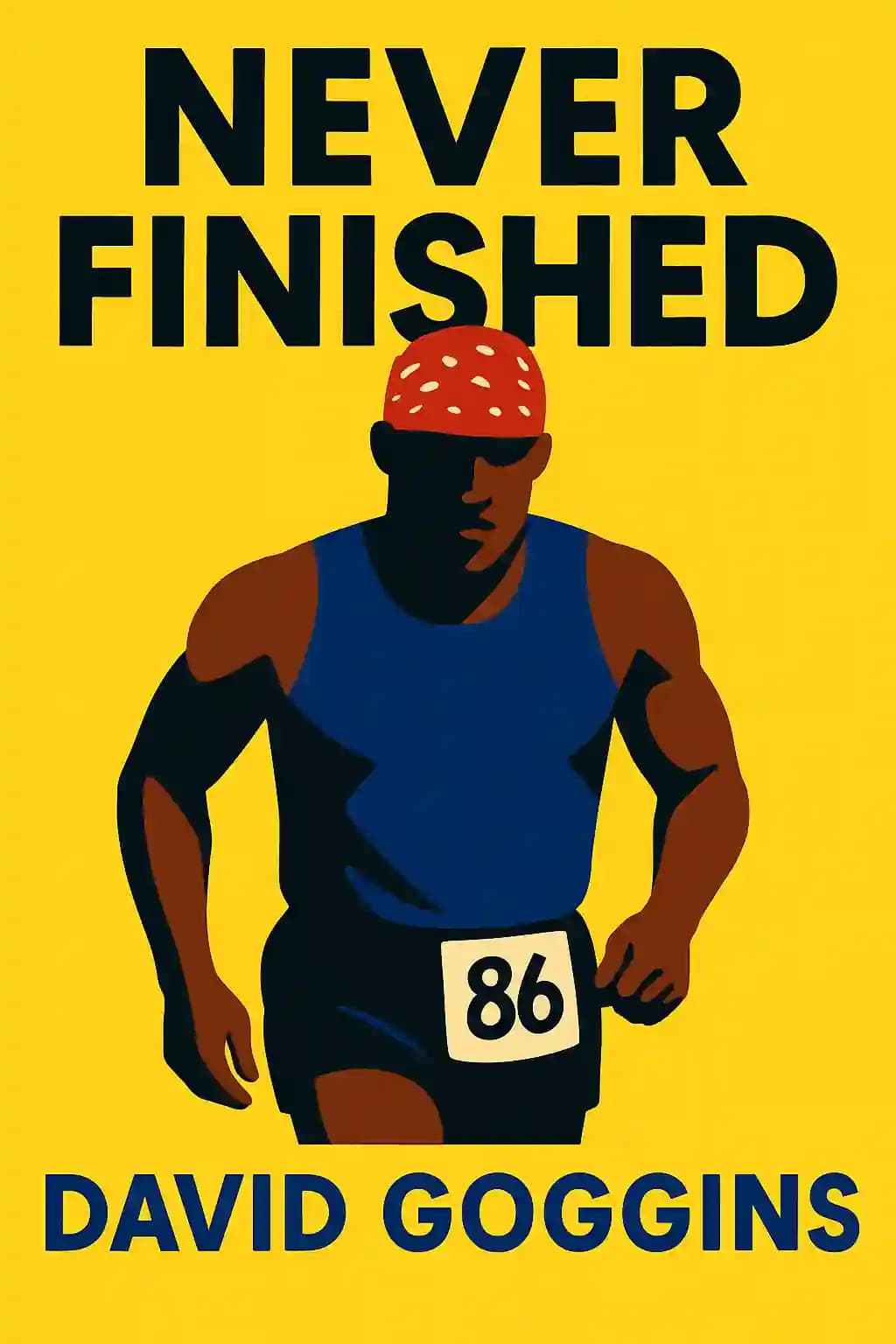
David Goggins' "Never Finished" has become a modern bible for those seeking to transcend their limitations. This raw, unfiltered manifesto has garnered a cult following among elite athletes, business leaders, and anyone hungry for transformation. Oprah Winfrey called it "a masterclass in mental toughness," while Dwayne "The Rock" Johnson credits Goggins' philosophy as instrumental to his own success. Unlike typical self-help books that offer temporary motivation, Goggins' work has sparked a movement of people embracing discomfort as a pathway to growth. What makes this former Navy SEAL's approach so compelling is that he doesn't just preach resilience-he embodies it. His journey from an abused child to an overweight exterminator to one of the world's most elite endurance athletes offers a roadmap for anyone seeking to discover what they're truly capable of when they refuse to be finished.
2장
The Awakening: From Broken to Becoming
Sitting among thousands of combat veterans at the 2018 VFW National Convention to receive the prestigious Americanism Award, David Goggins felt deeply confused rather than proud. Born into poverty and abuse, raised in a broken family, and having transformed from a 300-pound exterminator making just $1,000 monthly to a decorated military veteran, he struggled to understand how he had arrived at this moment of recognition.
The pivotal turning point in his life came at age 24, when he drove to Buffalo to confront his abusive father. Broken inside-numb, a quitter, a liar, fat, lazy, and deeply depressed-he hoped this confrontation would provide answers. Upon arrival, he was confused by his father's warm reception and the deteriorated state of Skateland, the roller rink his father owned. For a moment, he wondered if his childhood memories of abuse were false.
But when the bass dropped and the ceiling shook, his childhood nightmare returned with vivid clarity. He saw himself as a first-grader trying to sleep on that office couch after working all night, remembered his mother's fear, their cramped existence. The rage that propelled him upstairs to the Vermillion Room where his father slurped whiskey was confirmed later that night at Denny's, where his father's drunken belligerence emerged as he insulted Goggins' grandparents and mother.
This confrontation didn't provide the catharsis he sought, but it became the catalyst for his transformation. He realized he had been fixating on his "distracting injuries"-childhood abuse, neglect, and racist encounters-while ignoring problems he could actually solve. His Buffalo trip was merely an evidence-gathering mission to justify his failures.
When he finally shifted his mindset and began losing weight to become a SEAL-requiring extreme measures like eating only two small meals while exercising 6-8 hours daily for ten weeks-he discovered something profound: many people are similarly trapped in their pasts, neck-deep in distracting injuries that prevent them from moving forward.
People get stuck in their tragedies, using sad stories to grade themselves on a forgiving curve. They become entitled or self-righteous, refusing to move on until they receive apologies that will never come. Like skydivers fixated on tangled parachutes while ignoring their altimeters, they burn precious time instead of cutting away dead weight.
The "I'm only human" mentality becomes just a white towel fluttering in surrender. Goggins had to realize his father would never apologize, and that he needed to take back his power by humanizing him and understanding his own damage. We must all act with urgency, recognizing that opportunities have expiration dates.
3장
The Mental Laboratory: Engineering Your Mindset
Five weeks after the release of his first book, Can't Hurt Me, Goggins found himself disoriented by unexpected fame. Having always preferred working in the shadows, grinding while others relaxed, he struggled with the sudden attention. He carried an enormous burden, constantly pushing himself forward out of fear that if he stopped, his insecurities and "innate laziness" would overtake him again. Whenever exhaustion hit, he'd picture his former 300-pound self smiling, taunting him: "I'm still here, bitch. I am who you really are."
This internal struggle led him to develop what he calls his "Mental Lab"-a methodology for analyzing his impulses, insecurities, and actions without shame, finding motivation to transform. Construction of this lab started after his Buffalo trip, when he realized his difficult life provided all the raw materials needed for transformation.
His training for the ASVAB test and Navy SEALs revealed all his weaknesses-poor eating habits, tendency to cut corners, and especially his failure in Pararescue training. He realized his problems were never physical-they were all mental. He'd arrived at Air Force boot camp in peak physical condition but lacked mental strength. After quitting Pararescue training due to water fear, he knew he needed this Mental Lab.
For his SEAL preparation, each workout became a test of mental fortitude, not physical appearance. He created a savage alter ego-"Goggins"-who refused to quit under any circumstance, while "David" remained the scared, shackled kid. This methodology helped him harness his unused strength and dark matter for twenty years.
The Mental Lab isn't just about positive thinking-it's about mining negativity and transforming it into fuel. Goggins learned early to never waste anything, a principle his grandfather instilled in him when he taught him to carefully save wrapping paper from a rare gift he received as a child. This waste-not philosophy extends beyond physical resources to emotional energy. Even volatile emotions like fear and hate can be utilized as fuel for self-improvement-but only if you truly listen to yourself.
During his training for the Race Across America in 2009, he recorded his experiences to demystify his fears. Later, when preparing for public speaking, he recorded his trauma and fears, transforming them into confidence through repeated listening. Recording yourself neutralizes trauma and keeps you honest. When he felt too tired to run one day, he recorded his excuses and played them back-the pathetic sound of his inner weakness got him off the couch immediately.
Most people's negative self-talk makes them sleepwalk through life, but recording forces you to confront this weakness. Winners in life view everything as energy to be harvested, discarding nothing. When haters try to bring him down, Goggins transforms their words into motivation for another workout, another long run, another year of leveling up.
4장
The One-Second Decision: Between Quitting and Conquering
Many dreams die in moments of acute suffering. We conceive our grandest ambitions during times of comfort and clarity, but these aspirations face their true test in moments of intense pain and doubt. When training for the grueling Leadville 100-mile ultramarathon, Goggins rediscovered his savage nature by deliberately embracing the most brutal conditions possible. He ran punishing distances of 15-25 miles daily in scorching 90+ degree heat with 85% humidity, intentionally dehydrating himself to build mental fortitude. He pushed through empty tanks, swarms of mosquitoes, and aggressive dive-bombing birds, choosing to train in a swamp-like environment that others actively avoided. He selected these harsh conditions because "you're not" - a reminder that he would rediscover his true self by doing what others wouldn't dare attempt.
The One-Second Decision represents that crucial moment that separates those who quit from those who conquer. During his second Hell Week in SEAL training, Goggins faced this decisive moment when the first ocean wave crashed over him with crushing force. That flash of weakness - the thought "I don't really want to be a Navy SEAL" - could have derailed his entire journey. But he employed a critical technique: forcing himself to breathe deeply, vividly visualizing the lifelong consequences of quitting, and consciously recommitting to his dream in that crucial moment.
Dreams often perish when we allow emotional reactions to override rational thinking during intense suffering. Goggins witnessed this firsthand when another SEAL candidate approached him, ready to quit, displaying the same panic he'd personally experienced. Suffering creates a temporary disconnect between our rational minds and our deepest aspirations, fostering impostor syndrome and self-doubt. The essential skill is making that One-Second Decision to think strategically rather than react emotionally when every fiber of your being screams for escape.
In any high-stress combat scenario, the most effective person is the one who maintains enough composure to take a knee when bullets are flying overhead. This physical act creates a crucial moment to breathe through panic and regain control of a spinning mind. When life's challenges grip you and you feel your composure slipping, Goggins advocates this same approach: take a knee, literally or metaphorically, take several deliberate breaths, and quickly visualize your future. Ask yourself: if you fold now, what are the real consequences? This entire mental process must happen within seconds to be effective.
The decision to quit pursuing a dream creates an indelible mark that stays with you forever. Goggins shares the tragic reality that several men took their own lives after quitting SEAL training, unable to live with their decision. He emphasizes a crucial principle: if you must retreat from a goal, do it when conditions are easy, not when you're in the depths of the hardest challenge. The key is maintaining control of your thought process and pushing through the most difficult test first. The One-Second Decision is not a permanent achievement but rather a perishable skill that demands constant practice and reinforcement through regular exposure to challenging situations.
5장
Disciple of Discipline: The Foundation of Achievement
As a rebellious teenager, Goggins nearly flunked out of high school. When he received a letter warning that his failing grades would prevent graduation and end his Air Force aspirations, he returned to his grandfather, Sgt. Jack, craving the discipline that might save him.
Sgt. Jack was a military veteran who had taken Goggins in during his childhood. Life with him began with a 0530 wake-up and at least ten chores daily-sweeping porches, raking leaves, mowing lawns in perfect grids, and pulling weeds from gravel that scraped his skin raw. Initially, Goggins rebelled, doing half-assed work to spite his grandfather. Sgt. Jack's only feedback was a nod of approval or head shake meaning "try again."
Six months in, Goggins changed his approach, getting up promptly and focusing on details. An unexpected pride emerged in his work-he became bothered by streaks on glass or missed spots. While his cousin received affection and gifts during his Christmas visit, Goggins got a monogrammed lawn mower. "Merry Christmas," Sgt. Jack grinned.
What seemed like cruelty was actually preparation for the real world. Discipline became the skeleton key that could get him past all gatekeepers, even those built to keep him out. It's easy to be great nowadays because so many people focus on efficiency-getting the most with the least effort. Discipline builds mental endurance because when effort is your priority, you stop expecting everything to be enjoyable.
As Sgt. Jack aged into his late eighties, Goggins learned to hold himself accountable. He started waking before his grandfather, assessing what needed to be done, and working before Sgt. Jack had his morning coffee. Seeing this initiative, the task lists shrank and eventually disappeared. At home, these lists evolved into Goggins' Accountability Mirror, which helped him graduate on time and enlist in the Air Force.
When he needed to lose one hundred pounds to become a SEAL, he knew exactly what to do-become a disciple of discipline again. What was once a burden became an inner drive shaped by repeatedly doing what he didn't want to do. This discipline became so ingrained that he no longer needed external prompts-he'd see what needed doing and handle it immediately.
6장
Finding Your Foxhole: The Power of Your Inner Circle
Small minds and weak people kill big dreams. When selecting his crew for races and challenges, Goggins doesn't look for elite runners but individuals with a foxhole mentality-people who understand his mindset and make his success their priority. In military speak, the foxhole is a fighting position; in life, it's your inner circle. You must carefully choose who you invite in, because the wrong people can steer you away from your potential when things get tough.
You want people who shake you awake when you hit snooze, who remind you of your progress when you complain about your diet, who stay up late helping you study. You need a crew who's inspired by your struggle and refuses to give up on you. Most people don't have a selection process for their foxhole-they default to old cronies and relatives. But not everyone who's been in your life a long time is looking out for your best interests.
To populate your foxhole properly, you must first know yourself by examining and discarding old belief systems that no longer serve you. After leaving the Air Force at twenty-four, Goggins searched for his identity, wanting to become "the hardest motherfucker ever to live." When he discovered Navy SEALs through a documentary, his evolution began.
But when you change, not everyone will support you. Some people prefer you to stay the same because your growth threatens them or highlights their complacency. When Goggins decided to become a SEAL, only his mom fully supported him, allowing him to train with clear focus. As you evolve, your inner circle must evolve with you, or you risk halting your own growth to avoid losing those connections.
Sometimes you must turn your foxhole into a one-man fighting position rather than pulling deadweight up a hill. Keep doubters at arm's length and ensure those in your inner circle accept who you are becoming. When Goggins considered reenlisting in the military at forty-four despite having lucrative speaking opportunities, his wife Kish initially struggled with this decision. Over time, she became foxhole qualified-blocking off fire season and supporting his priorities without question. She understands that money and fame leave him feeling empty compared to pursuing what fulfills him.
7장
The Reckoning: Facing Your Ultimate Test
The minute Goggins returned from the Moab 240-mile race, he began training for the next year's race with unprecedented fire and focus. Running had become like breathing to him-not a hobby but a biological reflex. But in April 2020, his left knee swelled like a water balloon. Initially dismissing it as overuse, he continued pushing through the pain, substituting elliptical training for road miles while still hiking trails with a hundred-pound pack to prepare for firefighting season in Montana.
Three days before heading north, an MRI revealed devastating news: multiple meniscus tears, a sprained PCL, cartilage breakdown, arthritis, femur defects, a Baker's cyst, and a partially torn ACL. His knee was "eight-ways fucked." Despite this crushing diagnosis, he refused to abandon his firefighting commitment.
In Missoula, a sports physiotherapist named Casey drained 120 milliliters of bloody fluid from his knee and treated him intensively for two weeks. His season ended during an all-night dig when his unstable knee finally gave out completely on a slick log. The orthopedist who examined him said he had the knees of a ninety-year-old man and recommended knee replacement.
Despite this devastating setback, Goggins refused to let a bad attitude infect his mindset or those around him. His response to setbacks is simple: "Roger that"-not just acknowledging the situation but accelerating past it. In military terms, it means "Received, order given, expect results." This approach bypasses overthinking and stimulates action.
When Casey returned to his office after lunch, Goggins was already there doing pull-ups with his knee in an air cast, asking if he'd be healthy by October for the Moab 240. Having an audacious target allowed him to strategize and stay task-oriented through rehabilitation. He believes in setting unreasonable goals during dark times-not half-marathons when you could train for full ones.
During rehabilitation, he always started by facing the worst-case scenario to remove fear of failure. He stayed net positive by ensuring he accomplished something meaningful each day, no matter how bad things got. After a month of rehab, his first three-mile run revealed a transformed stride that distributed impact throughout his body instead of just his knees. While Casey provided expert guidance with innovative techniques, Goggins put in five additional hours of work for every hour with him.
8장
Beyond Limits: Redefining What's Possible
Five days before the Moab 240 race, doctors drained a baseball-sized Baker's cyst behind Goggins' knee, but he certified himself "good enough" and toed the starting line. He felt surprisingly strong until mile 130, when dehydration hit in 90-degree heat, and his anterior tibial tendon swelled thick as rope. The pain was excruciating. Casey examined his partially dislocated ankle and swollen tendon, warning that the tendon wanted to rupture but could be stabilized enough to continue-though it would hurt tremendously.
For the next hour, Casey scraped his puffy tendon with a blunt metal instrument while Goggins lay on a portable table wearing blinders. The pain was so intense he could only laugh or cry-and he chose laughter. He howled with breathless belly laughs, joking about being the only Black person stupid enough to think running 240 miles was a good time. His laughter transformed the crew's somber mood, shifting their perspective from witnessing another setback to sharing in the absurdity of his choices.
Humor became his power source, not just numbing the pain but reawakening his savage spirit. After treatment, his ankle was back in joint and wrapped in six types of tape like a cast. Despite being four hours behind the leader, he took off with renewed determination, immediately pushing a faster pace than the previous year.
By mile 201, however, his body was falling apart. A vicious rash had erupted, his left foot was one giant blister, and his taped ankle was unraveling. The pain was so intense he could barely walk. Six miles later, he hit his breaking point and hid in a campsite toilet just to get off his feet.
That's when his savage alter ego reappeared, took over, and pushed him to a level he didn't think possible. He finished in 62:21:29, just ninety minutes behind the winner after running one of the fastest back halves ever. He crossed the finish line howling "You don't know me, son!" before dropping to do twenty-five push-ups because he still could.
His savage hunger continued unabated. On the drive home, he signed up for the JFK 50 Mile in Maryland as a "layover" race. He finished in 7:08:26 (twenty-fifth overall), then paced Casey through his first ultra, turning his fifty-mile race into sixty-two miles. The next day, an old friend called about the Across Florida 200-a self-supported, 200-mile Gulf-to-Atlantic crossing that nobody had completed yet. Despite having just completed two grueling races, he couldn't resist the challenge.
For two and a half days, he ran past hillbilly hunting caravans, on highway shoulders, through private property, and navigated swampy forests filled with vipers, bears, gators, and bloodsucking insects. He became the first person to complete the AF 200, crossing Florida in less than three days. At forty-five, he was in the best shape of his life and couldn't wait for what came next.
9장
Never Finished: The Endless Evolution
Throughout his life, Goggins craved a seat at the table among the greats in his field. This desire for respectability stemmed from feeling like a nobody, which drove him toward Special Ops and motivated him to change when he was flunking out of school. Yet despite his ambition, he spent years waiting for a formal invitation-that golden ticket to join the elite.
Meanwhile, he became one of the waiters serving these elites, watching as peers he considered less qualified were seated at the table. He desperately wanted validation from his superiors, to be recognized as "one of the best." But as he observed these so-called superiors up close, he realized most were fairly common, while he aspired to be uncommon-to inspire others through extraordinary example.
Most people prefer being led because following is easier than blazing your own trail. Too often, we're led by those with titles and ranks who speak in management lingo but don't inspire us-people who talk too much and do too little. When these leaders reject us, we allow their limitations to define our own potential.
The truth is, some of the most powerful leaders work in the shadows, making differences in the lives of those around them without fanfare. They influence others without saying much, beginning with self-leadership. Back in 1996, as a twenty-one-year-old airman, Goggins learned this lesson from Captain Connolly, who demonstrated true leadership by exceeding every standard without speaking much. His silent example revealed Goggins' own laziness and lack of preparation.
Years later, when pursuing his dream of becoming a smokejumper at age 47, Goggins applied these lessons. Competing against men mostly in their twenties, he refused to just show up-he showed out. Despite being nine months out from knee surgery with a metal plate in his leg, he pushed himself and his teammates to new levels. When morale was low after weeks of brutal training, he gathered the group and suggested they work together, using military cadence to build unity and strength.
What makes Goggins' journey remarkable isn't just what he's accomplished but his refusal to be finished. After successfully becoming a smokejumper and completing his first fire jump in an overgrown pipeline corridor barely twenty feet across, he reflected on his path: "Nothing in my life happened on the first try-three attempts at SEAL training, five tries at the ASVAB. But failure has been neutralized for me. When I set unreasonable goals and fall short, it's simply another attempt in a long process."
That's what belief does-it takes failure out of the equation completely. To overcome all obstacles and reach the outer limits of your capabilities is the pinnacle of existence, and everything that tried to stop you becomes worth it. The journey is never finished, because there's always another horizon, another limit to push, another version of yourself waiting to be discovered.