1장
Unleashing Your Mind's Hidden Power
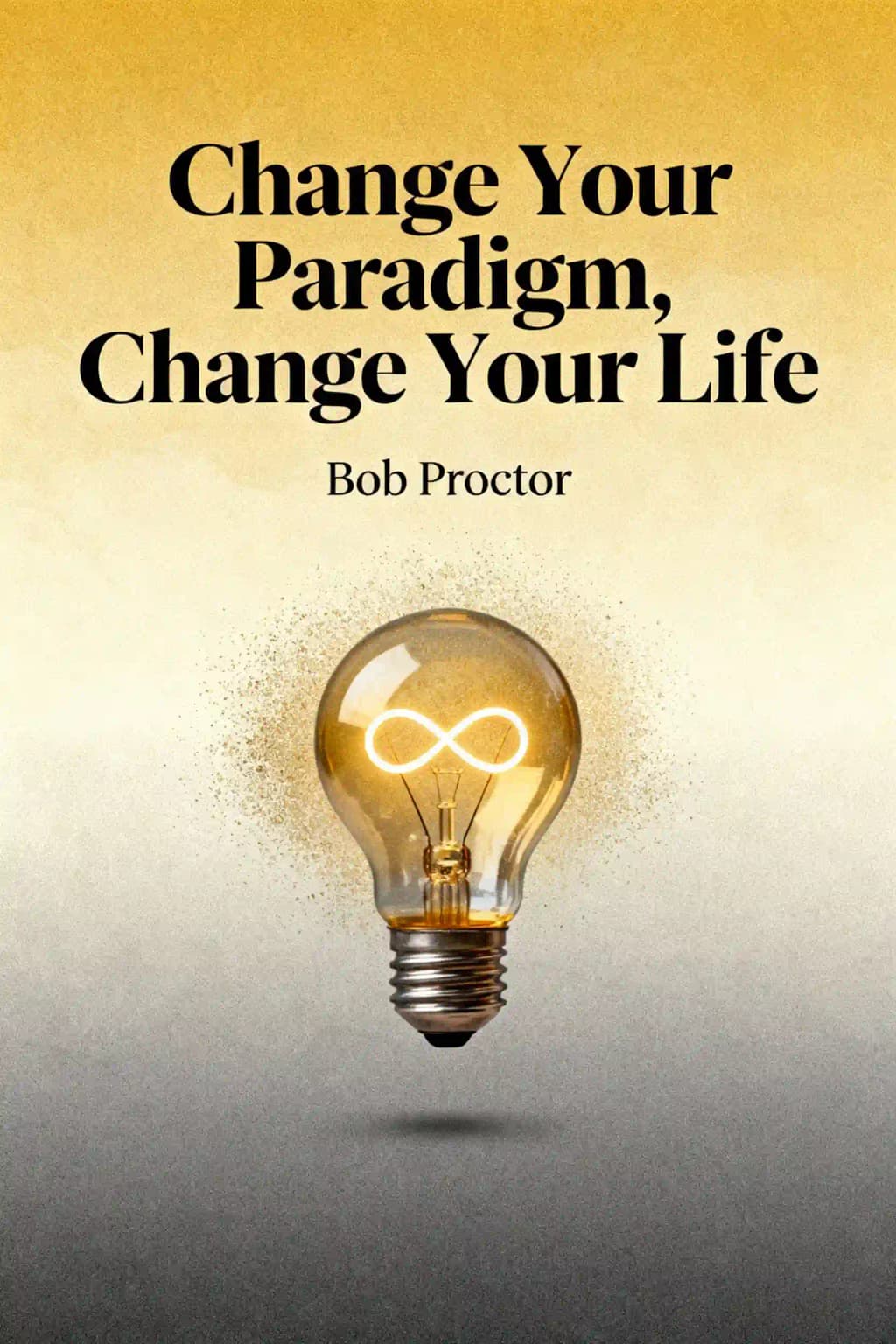
Have you ever wondered why some people achieve extraordinary success while others remain stuck, despite having similar intelligence and opportunities? The answer lies in an invisible force controlling your life that most people never discover. In "Change Your Paradigm, Change Your Life," Bob Proctor-the legendary success coach who transformed his own life from earning $4,000 annually to making millions-reveals this hidden mechanism. The book has become a cornerstone text for entrepreneurs and personal development enthusiasts worldwide, with celebrities like Jim Carrey and Will Smith citing Proctor's teachings as instrumental to their success. Unlike typical self-help books that offer surface-level advice, Proctor's work dives deep into the subconscious programming that determines our results. Drawing from over 60 years of studying success principles pioneered by Napoleon Hill and Earl Nightingale, Proctor offers a masterclass in mental reprogramming that has helped millions break free from limitations they never knew existed.
2장
The Hidden Controller Behind Your Results
Your life is being controlled by a mechanism you likely don't understand. This mechanism-your paradigm-is a collection of habits operating automatically in your subconscious mind. These mental programs determine your behavior patterns and, consequently, your results in life. Most people struggle to change because they focus on changing actions without addressing the underlying programming that controls those actions.
Think about why diets typically fail. Someone might successfully lose ten pounds, but then their paradigm-their mental thermostat-kicks in, compelling them to eat forbidden foods until they return to their previous weight. The same principle applies to finances. You might temporarily increase your income, but if your paradigm is set at a certain financial level, you'll find ways to return there, often without realizing why.
Your paradigm wasn't consciously chosen-it was installed through repetition during childhood by people who knew nothing about the mind. Parents, teachers, and others programmed you with their own limitations, most of which have no basis in truth. These mental patterns become so deeply embedded that they feel like reality rather than programming.
The most remarkable insight about paradigms is that they can be changed at any age. I've witnessed people in their seventies and eighties transform their lives completely after understanding this principle. Even a man who spent seven and a half years in solitary confinement after a shooting completely turned his life around through paradigm change, eventually building substantial wealth and never reoffending.
Understanding paradigms explains why highly educated people often struggle financially while others with minimal education thrive. Success isn't about what you know intellectually-it's about the programming that controls your behavior. This is why we see people flourish during economic depressions while others fail during booms. External circumstances don't determine your results; your paradigm does.
The good news? Once you understand how paradigms work, you gain the power to change them-and with that change comes the ability to transform every aspect of your life.
3장
Breaking Free From Others' Mental Programming
Almost everyone lives with a paradigm built by others-parents, guardians, teachers-that controls their entire life. Only rarely does someone create their own paradigm. This borrowed programming keeps you trapped in patterns that may have nothing to do with your true potential.
Your subconscious mind operates like fertile soil that grows whatever is planted in it-whether corn or poison. It doesn't judge what you feed it; it simply manifests whatever thoughts and beliefs you repeatedly impress upon it. This explains why writing down goals once rarely works. True transformation requires writing your vision repeatedly to plant it deeply in your subconscious.
I practice this discipline religiously, writing and recording nine lines about our business vision three times daily, then sharing them with my business partner. This repetition creates the world I want to live in. Through universal intelligence, ideas repeatedly impressed upon the subconscious must manifest, causing you to act differently and attract what you desire.
Many people hesitate to make decisions because they worry about resources. But nothing is created or destroyed; everything already exists in some form. What you want exists on a higher frequency than your current operation. When you commit to a decision, you tune your mind to that frequency, which must then become part of your new paradigm to control your behavior and what you attract.
The most powerful goals aren't about what you already know how to achieve. I categorize goals into three types: A-type goals involve doing what you already know how to do (like buying another Pontiac when you already know how). B-type goals are what you think you could do if certain conditions align. C-type goals-the truly transformative ones-are what you deeply want but have no idea how to achieve.
In 1973, I wrote down "I'm going to build a company that operates all over the world" with no money, employees, or plan. Today we operate in 89 countries. With C-type goals, you can't see how to get there, but by holding the picture and staying emotionally involved, everything necessary will be attracted when needed.
This isn't wishful thinking. When you hold a vision, you attract what you need. A securities attorney attended my seminar by chance and eventually became my business partner, bringing financial expertise I lacked. I've attracted talented people from around the world who help fulfill the vision I wrote down decades ago.
The key is to start working as if you've already reached your goal. As spiritual teacher Neville Goddard taught, "The future must become the present in the imagination." Don't worry about being "realistic"-the Wright brothers weren't realistic, nor was Edmund Hillary when climbing Everest.
4장
The Confidence to Transform Your Life
Confidence comes from knowledge, not external validation. When people lack confidence for something they want to do, it's because they don't know how. Learning creates confidence. After seeing master speaker Bill Gove perform, I paid thousands to study with him directly. He taught me to be calm and confident before audiences by not worrying about others' opinions.
Most people worry unnecessarily about what others think. As Earl Nightingale noted, "If you knew how little other people were thinking, you wouldn't be concerned with what they're thinking." What matters is what you think of yourself. Many people live constrained by imagined judgments, often stemming from childhood warnings about "what neighbors might think." Instead, focus on your own path and move progressively toward your worthy ideals.
Financial stability is essential since money is necessary in our world. The key difference between the wealthy and others is that wealthy people establish multiple income streams. During a long flight to Kuala Lumpur, I realized successful people don't rely on just one income source. This insight led me to create seminars teaching wealth-building through multiple streams of income.
Anyone can become reasonably wealthy, especially with today's internet opportunities. If you're not interested in earning money, it's because your paradigm is blocking you-you must break through this limitation. My own income jumped from $4,000 yearly to $14,500 monthly after changing my paradigm about wealth.
Earl Nightingale defined success as "the progressive realization of a worthy ideal." Success isn't about reaching a destination but about moving purposefully toward meaningful goals. Whether accumulating millions or improving academic grades, both are equally successful when advancing toward predetermined objectives.
The basic law of life is "create or disintegrate"-we must be creating to fulfill our purpose. Many people fail because they try changing results without changing their paradigm. Understanding paradigms-how they're built and changed-allows you to take control of your life. Your past doesn't matter; what matters is where you're going.
5장
The Cybernetic Nature of Mental Programming
Paradigms function like cybernetic mechanisms-automatic control systems that maintain a set course. Just as a thermostat regulates temperature and an autopilot keeps a plane on course despite turbulence, our mental paradigms automatically control our behaviors, often bringing us back to familiar patterns even when we consciously try to change.
This explains why most attempts at significant personal change fail-we're fighting an unseen enemy without understanding the controlling force. When someone tries to lose weight through dieting, they might initially succeed, losing five, seven, then ten pounds. But soon their paradigm kicks in, compelling them to eat forbidden foods and return to their previous weight. Diets typically fail because people don't understand they're fighting against their subconscious programming.
Discipline-the ability to give yourself a command and follow it-requires understanding what you're working against. Without comprehending how paradigms control us, we're fighting an invisible enemy. As King Solomon said, "With all thy getting, get understanding." When we grasp that our bodies are instruments of the mind that respond to our thoughts, we can begin taking control.
Everything exists in polarities-opposites like left/right, hot/cold. On one side lies ignorance, which creates doubt and worry, generating fear that expresses as anxiety in the body. On the opposite side is understanding, gained only through study, which produces faith and expresses as well-being and exhilaration. Between these poles is the neutral "is"-nothing is inherently good or bad until our thinking makes it so.
Growth requires embracing discomfort. When you're completely comfortable, you're not growing-you're stuck. Most people fail at changing paradigms because they don't understand what they're fighting against. Once you recognize how paradigms control you, you'll never stop refining them, knowing that discomfort signals growth as you venture into new territory.
To shift paradigms effectively, you must engage right-brain functions-affirming goals with emotion and creative visualization. Neville Goddard called this "thinking from the state desired"-seeing yourself already there, which is true creative living. Logical, left-brain thinkers often struggle with this practice initially, but once they grasp it, their determination makes them unstoppable.
6장
Rewiring Your Belief System
Most people treat beliefs as static and inherent to their identity, but our beliefs shape everything in our lives and form our paradigms. Many beliefs we operate with have no foundation in truth, and we didn't originate most of them. Understanding how to change beliefs is crucial to personal transformation.
Our belief system is based on our evaluation of situations, and reevaluating can change those beliefs. This insight explains how personal transformation works-through repeatedly exposing yourself to new ideas about who you are, you begin reevaluating your self-concept. The repetition of positive messages gradually alters your internal programming. Just as negative propaganda can influence people through repetition, positive messages consistently heard will reshape your beliefs.
The disconnect between conscious beliefs and results stems from beliefs existing at two levels. You might intellectually believe you can earn more money, but if this belief hasn't penetrated your subconscious, it won't manifest in results. This integration of belief with behavior-praxis-requires repetition and proper visualization to plant ideas in the subconscious.
As George Leonard explains in "Mastery," progress involves plateaus followed by sudden quantum leaps to new levels. The unseen spiritual world connects to our physical reality, though most people understand little about this connection, causing frustration when results don't immediately appear.
The will-one of our higher faculties-allows us to hold one idea on the screen of our mind while excluding all distractions. Our five senses constantly connect us to the material world, demanding our attention. Great achievers in any field use their will to shut down these sensory distractions and focus completely on their goal.
Advertising works by bypassing our inductive reasoning faculty through fascination, agreement, or shock, allowing messages direct access to our subconscious mind. While the conscious mind can reason both inductively and deductively, the subconscious can only accept what it receives. Advertisers exploit this by running repeated commercials that plant ideas in our minds during states of fascination or emotional engagement.
Viktor Frankl discovered that between any situation and our response lies a space-however brief-where we can choose to respond rather than react. Reacting means surrendering your power to circumstances or others, while responding involves conscious thought and choice. When we merely react, we operate from our subconscious programming rather than our conscious mind.
7장
Creating Your Power Performance System
To develop a paradigm for power performance, we must harness our mind's capabilities through specific practices. Three fundamental elements create the framework for achieving higher goals: decision, visualization, and discipline.
The practice of asking "now that my dream is fulfilled, how do I feel?" before sleep shifts our consciousness from thinking to feeling-critical because we become what we feel, not what we think. Working from the end rather than toward it creates the emotional and intellectual reality that eventually manifests physically.
We operate on frequencies or vibrations, with our current results existing at one frequency level and our desired outcomes at a higher level. To achieve our goals, we must shift our consciousness to that higher frequency by acting as if we've already become the person we aspire to be. Most people merely dream about their goals without making this essential vibrational shift. As Goethe observed, "Before you can do something, you first must be something."
Creating a power life script involves writing out your ideal life in present tense with gratitude ("I am so happy and grateful now that..."), recording it in your own voice, and mentally living in that reality. This practice requires overcoming concerns about others' opinions and fully embodying your desired state through your thoughts, speech, and actions.
Having an accountability partner dramatically increases your chances of following through on commitments. Choose someone you respect and want to respect you-someone you don't want to disappoint. This partnership works best when each person complements the other's weaknesses. Establish daily accountability practices like writing out sentences, recording them, and sending confirmation texts.
Through regular conditioning, what initially feels unnatural eventually becomes natural-like learning to drive a car. When a new idea (Y) conflicts with your existing paradigm (X), it creates discomfort. But by repeatedly engaging with and becoming emotionally involved with that new idea, it gradually becomes comfortable and part of your paradigm.
While I emulate people I admire like Earl Nightingale and Thomas Troward, I never try to copy them. As Emerson wrote, "envy is ignorance; imitation is suicide." Each person is unique-like every blade of grass or snowflake. There's only one of you, with your particular combination of gifts and abilities.
Self-discipline isn't about lacking discipline-it's about prioritizing it. Everyone has discipline; some people are simply disciplined about the wrong things. True discipline means giving yourself a command and following through: "This I will do." The discipline developed in one area of life positively impacts all other areas.
8장
The Transformative Power of Gratitude
Gratitude is the foundation of mental adjustment and alignment. As Wallace Wattles noted in The Science of Getting Rich, the entire process can be summed up in one word: gratitude. It's the attitude that connects you to your source of supply and transforms your vibration.
When disturbed, sit quietly with pen and paper and list what you're grateful for. This isn't merely an intellectual exercise but a transformative practice. I once gave Sandy Gallagher this three-part exercise: write ten things you're grateful for, send love to three people who bother you, and spend five minutes in meditation asking for guidance. This practice transformed Sandy's life, helping her resolve both business and personal challenges.
When you put yourself on a frequency of love, you can only attract what resonates with you. Your body is an electronic instrument vibrating at high speeds. This practice shifts your perception, eliminates negative feelings, and helps you stop reacting. By asking for guidance throughout your day, solutions come quickly and beautifully.
A gratitude journal becomes invaluable-writing ten things you're grateful for each morning sets up an attitude of gratitude. Use this journal whenever you feel troubled or overwhelmed. Since all problems originate in your mind, becoming grateful transforms your attitude and changes your life.
True freedom comes from respecting yourself enough to walk away from anything that no longer serves your growth or happiness. As Bill Gove said, "If I want to be free, I've got to be me. Not the me I think you think I should be." Freedom emerges from deeply understanding ourselves-how our mind functions, how consciousness works, and the relationship between our senses and higher faculties.
Everyone should aim for financial freedom-the liberation that comes when you never need to worry about money. Anyone can create financial freedom in a relatively short time by developing a new paradigm and following the guidance of someone who has already achieved it.
Many people remain trapped by false beliefs and responsibilities they've unnecessarily taken on. We must distinguish between being responsible FOR others versus being responsible TO them. Parents may be responsible for young children, but once they're adults, the relationship changes.
9장
The Extraordinary Benefits of Paradigm Shifts
The first benefit of changing your paradigm is a shift in perception. By changing how you see yourself and your capabilities, your entire world transforms. Perception is a mental faculty that enables you to become aware of previously untapped power and potential. When you shift your perception of what's possible, everything changes.
Everyone receives the same amount of time, but paradigm shifts change how we use it. As Earl Nightingale taught me, "Time can't be managed; I merely manage activities." By planning activities the night before and executing them with a sense of urgency-accomplishing much in a calm, confident manner-productivity soars.
Many tasks we think are essential either don't need doing at all or can be delegated. The key is determining what truly requires your personal attention versus what can be handled by others or eliminated entirely.
Everyone possesses creative capacity, though some utilize it more effectively than others. Our higher faculties of perception, will, reason, imagination, and memory are creative tools waiting to be properly employed. When we understand and utilize these faculties, we discover better ways of doing everything.
We are all expressions of universal creative power that flows through us. When this energy enters our consciousness, we give it form-transforming energy from one state to another through our creative intervention. This power allows us to continually recreate ourselves and find better ways to help others understand their potential.
Productivity and effectiveness are interconnected-improving one enhances the other. By seeking better ways to accomplish tasks with less cost and effort, we become dramatically more productive. When working in harmony with universal laws, effort becomes effortless rather than a struggle.
Our relationship with logic transforms with paradigm shifts. Logic often represents limitation-"how things have always been done." When someone says something isn't logical, that might actually inspire innovative action that transcends conventional boundaries. The key is focusing on what you want rather than what seems logical.
Your paradigm sets boundaries around your earning potential. Money comes not from work but from providing service-the more creative you are, the more service you can render. I earn money 24 hours a day through multiple income streams. Your current highest annual income reveals where your paradigm is set.
10장
Creating a Lifelong Habit of Positive Programming
Life offers two paths: ignorance or knowledge. Ignorance leads to worry, doubt, fear, anxiety, depression, disease, and disintegration. Though knowledge is everywhere, our educational system fails to teach mind control, response over reaction, maintaining positive frequencies, universal laws, or paradigms. Self-education becomes essential.
Understanding replaces doubt and worry on the positive frequency. We must comprehend the laws of our being and recognize the formless power flowing into our consciousness that we shape. Study is the only path to understanding-particularly studying the mind and universal laws. This creates faith (the polar opposite of fear), which manifests physically as well-being instead of anxiety.
Repetition transforms knowledge into habit. Unlike our culture's preference for constant novelty, true transformation requires revisiting the same material repeatedly. I still listen to Earl Nightingale's original recordings that changed my life decades ago. This habit of studying the right material repeatedly will transform your paradigm.
The foundation of paradigm change begins with identifying what you truly want. Many people don't believe they can have what they want-a limiting belief often instilled in childhood. The key insight is that you don't need to know how you'll get what you want; you only need to know that you will get it.
I share the remarkable story of Phil Goldfine, a movie producer who approached me after reading my book "Born Rich." When I asked what he wanted, he said "Millions of dollars" and to win an Oscar, Emmy, and Tony. I told him I could show him how if he followed my instructions exactly. Twenty-three years later, Phil became only the twenty-seventh person to win all three prestigious awards. He earns millions now, sometimes a million in just four hours.
The key was teaching him to visualize his success vividly-even having him Photoshop himself holding two Oscars-and to avoid negative people. Phil demonstrates that when you can see something clearly in your mind, you can achieve it, because everything you require already exists-you just need to get in harmony with it.
I conclude with eight essential principles for living the life you desire: 1) Develop awareness of your infinite potential; 2) Act on your wants, which come from your spiritual DNA seeking expression; 3) Make committed decisions to change your paradigm, despite discomfort; 4) Commit totally-professionals do what's necessary regardless of convenience; 5) Find an accountability partner who keeps you going when you want to quit; 6) Focus your energy like a laser through concentration exercises; 7) Discipline yourself to study this material daily; and 8) Practice "visioneering"-exercising your imagination to visualize achievement, bringing order to your mind.
Start immediately, not tomorrow, and maintain your practice for 90 days to form a lifelong habit that will yield astronomical rewards. Your paradigm-once your greatest limitation-will become your greatest asset in creating the life you truly desire.