1장
America's Hidden Hierarchy: Unveiling the Truth
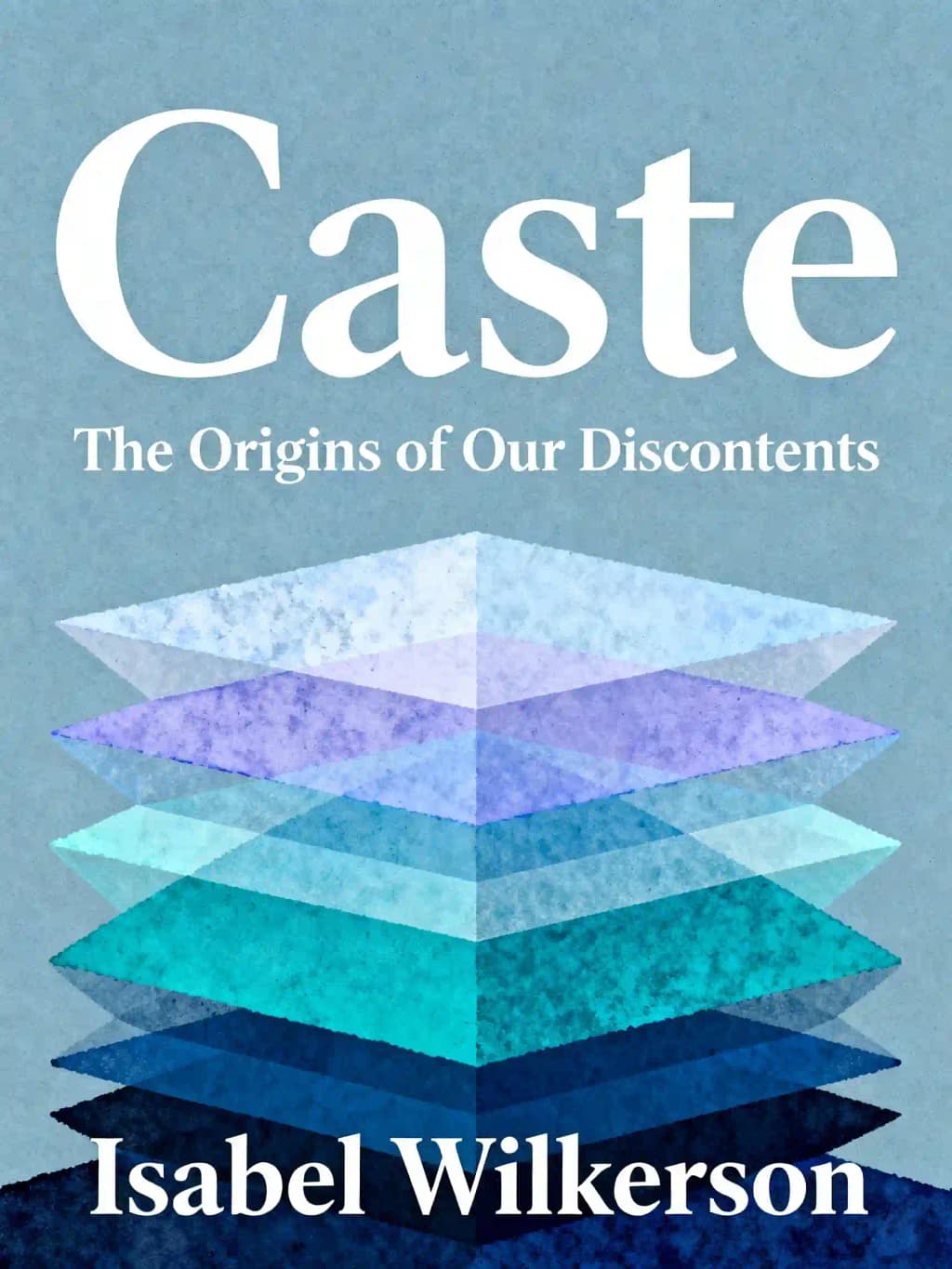
When Oprah Winfrey declared Isabel Wilkerson's "Caste: The Origins of Our Discontents" the most important book she'd ever chosen for her book club, it signaled something profound. This wasn't just another examination of race in America-it was a revolutionary framework that would transform how we understand our society. The New York Times called it "an instant American classic," and for good reason. Wilkerson's masterwork arrived at a pivotal moment in American history, when racial tensions were surging and the country seemed more divided than ever.
What makes this book so compelling is how Wilkerson, a Pulitzer Prize-winning journalist, reframes America's racial hierarchy not simply as racism but as something more insidious and entrenched: a caste system. By drawing parallels between America, India, and Nazi Germany, she offers a lens that makes visible what has long been obscured. The book became a cultural phenomenon, appearing on Barack Obama's reading list and becoming essential reading in the wake of George Floyd's murder and the subsequent racial reckoning.
Have you ever wondered why racial progress in America seems to take two steps forward and one step back? Why certain patterns of inequality persist despite laws against discrimination? Wilkerson's answer is both illuminating and disturbing: we're not just dealing with racism; we're dealing with a caste system that has been carefully constructed and maintained for centuries. And until we recognize it for what it is, we cannot truly dismantle it.
2장
The Virus That Never Died: America's Caste System Awakens
In 2016, something remarkable happened in Siberia. As climate change thawed the permafrost, a 75-year-old strain of anthrax was released, killing a 12-year-old boy and infecting dozens. This dormant pathogen, awakened after decades, serves as a perfect metaphor for what happened in America that same year. The presidential election revealed that America's caste system-a virus many thought dormant or even dead-was very much alive, merely waiting for the right conditions to reemerge.
The election laid bare deep cultural anxieties, particularly among white Americans who sensed their traditional dominance slipping away. A leader emerged who spoke directly to these anxieties, promising to restore an old order where everyone "knew their place." The rhetoric resonated powerfully with those who felt threatened by demographic changes and shifting power dynamics.
What we witnessed wasn't simply political polarization but the reactivation of America's oldest social ordering system. Like that anthrax outbreak, our caste system had never truly disappeared-it had merely gone underground, waiting for conditions that would allow it to resurface. The election provided those conditions, as millions of Americans voted to preserve a hierarchy they had been taught was natural and right.
Think about how quickly society seemed to change. Confederate flags appeared at rallies, hate crimes spiked, and language once considered taboo in public discourse became normalized. These weren't new phenomena-they were manifestations of a system that had been operating beneath the surface all along, like that anthrax lying dormant in the frozen earth.
Why does this matter? Because we cannot treat a disease we refuse to diagnose. By recognizing our social divisions not just as racism but as a caste system-with all the rigidity and resistance to change that implies-we gain a more accurate understanding of what we're up against. And only with that understanding can we begin the hard work of dismantling structures designed to last for centuries.
3장
Confronting Our Past: The Vital Signs of History
When we visit doctors, they ask about our family medical history because certain conditions run in families. Similarly, nations carry inherited conditions-historical traumas and structural inequalities that continue to shape the present. Just as ignoring a family history of heart disease won't protect you from a heart attack, ignoring America's history of racial caste won't protect us from its ongoing effects.
Consider how we approach other historical injustices. We don't hesitate to acknowledge the horrors of the Holocaust or the brutality of Stalin's regime. Yet many Americans resist confronting our own history of slavery, Jim Crow, and systematic oppression of Black Americans. This resistance isn't just about avoiding discomfort-it's about preserving a national self-image that cannot survive honest scrutiny.
The truth is both simple and hard to accept: America was founded on principles of equality while simultaneously building one of history's most rigid caste systems. This contradiction lies at the heart of our national identity, creating a cognitive dissonance we've never fully resolved. Some respond by denying the history altogether, while others acknowledge it but insist it's no longer relevant.
But history isn't just about the past-it's about understanding how we got here and what forces continue to shape our society. When we examine persistent racial disparities in wealth, health, education, and criminal justice, we're not just seeing the effects of individual prejudice but the ongoing impact of systems designed centuries ago to keep certain people permanently subordinated.
What would happen if we approached our national history with the same clarity we bring to a medical diagnosis? We might recognize that addressing surface symptoms without treating root causes is futile. We might understand that healing requires not just acknowledging past wrongs but actively repairing their ongoing damage. And we might finally accept that confronting our history isn't about assigning blame but about taking responsibility for building a healthier future.
4장
The Hidden Architecture: America's Invisible Framework
America is like an old house with a hidden structural flaw. From the outside, it appears solid and well-built, but inside the walls, termites have been eating away at the support beams for generations. Occasionally, a floor gives way or a wall cracks, revealing the damage-but most of the time, we simply patch over these symptoms without addressing the underlying problem.
This hidden architecture is America's caste system-an invisible framework that assigns value and position to people based on their ancestry. Unlike India's caste system, which is explicitly acknowledged, or Nazi Germany's, which was briefly codified into law, America's caste system operates largely without name or formal recognition. It's the unseen force that shapes interactions, opportunities, and outcomes while maintaining plausible deniability.
Race functions as the visible marker of this invisible system. The color of one's skin became the convenient way to identify one's position in the hierarchy-a physical characteristic impossible to hide or escape. But race itself is merely the facade of a much deeper structure. If race is what we can see, caste is the foundation beneath it, determining who stands where in the social order.
Consider how this hidden architecture shapes everyday life. Why do neighborhoods remain largely segregated decades after housing discrimination was outlawed? Why do schools in Black neighborhoods receive less funding than those in white areas? Why are Black Americans with identical resumes less likely to get job interviews than their white counterparts? These patterns aren't random-they follow the blueprint of a caste system designed to maintain separation and inequality.
What makes this system so durable is precisely its invisibility. Because we don't name it, we struggle to address it. We talk about racism as if it were merely a matter of personal prejudice rather than a systemic arrangement of power and resources. We celebrate individual success stories as proof the system no longer exists, while ignoring the statistical reality that such stories remain exceptions.
Imagine trying to renovate a house without acknowledging its structural problems. No matter how beautiful the new paint or fixtures, the foundation will continue to crack. Similarly, no amount of diversity training or individual goodwill can transform America without addressing the caste system that forms its hidden architecture.
5장
The American Untouchable: Finding Parallels Across Continents
When Martin Luther King Jr. traveled to India in 1959, he was repeatedly introduced as an "untouchable" from America. Initially, he was taken aback-until he recognized the profound truth in this comparison. The Dalits (formerly called untouchables) in India and Black Americans occupied strikingly similar positions in their respective societies: both groups were relegated to the bottom of a rigid hierarchy, both faced severe restrictions on their movement and opportunities, and both were considered inherently polluted.
This parallel wasn't coincidental. Caste systems, whether in India, America, or Nazi Germany (which studied American racial laws when crafting their own), share fundamental features. They all assign people to categories at birth. They all restrict marriage and social interaction between castes. They all justify the arrangement through appeals to divine will, natural law, or pseudoscience. And they all enforce these boundaries through violence and terror when necessary.
The similarities run deeper than abstract principles. Both Dalits and Black Americans were traditionally assigned the most degrading labor. Both were denied education and forced to show deference to higher castes. Both faced brutal punishment for violating caste boundaries. Even the language used to dehumanize them shared striking parallels-both were described as dirty, lazy, hypersexual, and intellectually inferior.
What makes this comparison so powerful is that it helps us see American racism not as a unique phenomenon but as a variation on a pattern found across cultures and throughout history. This doesn't diminish its specific horrors but places them in a broader context that illuminates their true nature and function.
Consider how differently we might approach racial issues if we understood them as manifestations of a caste system rather than simply as prejudice. Instead of focusing exclusively on changing hearts and minds, we might pay more attention to dismantling the structures and practices that maintain caste boundaries. Instead of celebrating superficial diversity, we might work toward genuine equity in resources and power.
The recognition that Black Americans have functioned as "untouchables" in our society isn't just an academic observation-it's a call to examine how deeply caste thinking has shaped our institutions, our interactions, and even our sense of who belongs where. Only by seeing the system clearly can we begin to imagine life beyond its confines.
6장
The Matrix of Caste: An Invisible Program Running America
Remember that pivotal scene in "The Matrix" when Neo finally sees the code behind the simulated reality? That's what understanding caste does-it reveals the programming that has been running in the background of American society since its founding. Like the characters in that film, most of us move through our daily lives unaware of the invisible algorithms shaping our perceptions, interactions, and opportunities.
This caste program operates with remarkable efficiency, requiring little conscious input to maintain itself. It automatically assigns value based on physical characteristics, determines who receives the benefit of the doubt in ambiguous situations, influences who gets called back for job interviews, affects how doctors assess pain, and shapes countless other decisions that collectively determine life outcomes.
What makes this system so effective is that it doesn't require active malice or even awareness to function. Good people with good intentions still execute the program because it's embedded in our cultural operating system. A white person who harbors no conscious prejudice may still cross the street when seeing a Black man approaching, may still unconsciously associate criminality with Blackness, may still feel more comfortable with a white doctor than a Black one-all without recognizing these reactions as manifestations of caste thinking.
The program is self-reinforcing. When Black Americans are disproportionately incarcerated, it strengthens the association between Blackness and criminality. When housing discrimination concentrates Black families in underresourced neighborhoods, it creates visible disparities that seem to confirm stereotypes. The outputs of the system become justifications for its continued operation.
Breaking free from this matrix requires first recognizing its existence. Like Neo seeing the code for the first time, we must train ourselves to perceive the caste system operating in everyday interactions, institutional policies, media representations, and even our own unconscious reactions. Only then can we begin to question and disrupt its operations.
This isn't about assigning blame-most of us didn't create this program and don't consciously choose to run it. But we all have a responsibility to become aware of it and to work toward reprogramming our social operating system. The first step is simply to see what has always been there, hiding in plain sight: an elaborate caste system disguised as the natural order of things.
7장
The Birth of a Hierarchy: How America Created Caste
America's caste system wasn't inevitable-it was deliberately constructed. In the early 1600s, the Virginia colony faced a labor shortage. Initially, they relied on indentured servants from Europe, who worked for a set period before gaining their freedom. Africans who arrived during this period sometimes achieved similar status, becoming free after their term of service and occasionally even acquiring property and rights.
But this relative fluidity couldn't last. As more laborers were needed for the expanding plantation economy, colonial elites made a fateful decision. Rather than improving conditions to attract more European workers, they began importing enslaved Africans in greater numbers. And to justify this practice, they needed to create a clear distinction between Europeans (even poor ones) and Africans.
Thus began the systematic creation of America's racial caste system. Laws were passed prohibiting intermarriage between Europeans and Africans. Children of mixed parentage were assigned to the subordinate caste, regardless of their father's status (unlike in most societies, where children followed the father's line). Africans were stripped of rights they had previously held, including the right to bear arms, testify in court, or assemble in groups.
Religion initially provided the justification. Africans were portrayed as heathens whose enslavement might lead to their salvation through exposure to Christianity. But when some enslaved people converted, this rationale was quickly abandoned in favor of new theories about inherent racial differences. The goalposts kept moving, but the game remained the same: to create an immutable boundary between white and Black.
By the early 1700s, the transformation was complete. What had begun as a somewhat fluid society with various forms of unfree labor had hardened into a rigid caste system with race as its primary marker. Europeans of all nationalities and classes were unified as "white," while Africans of all ethnicities and backgrounds were categorized as "Black" and permanently relegated to the bottom rung.
This wasn't just about labor economics-it was about power. By creating a permanent underclass, elites ensured that poor whites would identify with them based on shared whiteness rather than with Black people based on shared economic interests. The invention of whiteness as a category worthy of privilege, regardless of other factors, became a masterful tool for maintaining control.
Understanding this history reveals something crucial: America's racial hierarchy wasn't the natural result of preexisting prejudices but a deliberately engineered social system. It was created by human choices and human laws, which means it can be dismantled by the same.
8장
The Enduring Wounds: Slavery's Legacy in American Life
Americans often speak of slavery as a "sad chapter" in our history, as if it were a brief, regrettable episode rather than the foundational economic and social system that shaped the nation for most of its existence. Slavery wasn't a footnote-it was the main text. For 246 years, from 1619 to 1865, the enslavement of Africans and their descendants was central to American life, economy, and identity.
The brutality of American slavery exceeded even that of other slave societies. Enslaved people were defined legally as property rather than persons. They could be bought, sold, mortgaged, insured, bequeathed, and seized for debt. Families were routinely separated, with children as young as infants taken from their mothers and sold to different owners. Sexual violence against enslaved women was common and legally sanctioned.
Physical torture was institutionalized as a management technique. Whipping was so routine that plantation records meticulously documented the number of lashes administered, much like modern businesses track inventory. More creative torments included forcing enslaved people to eat animal excrement, applying salt to open wounds, and using metal masks to prevent eating.
This wasn't happening in some remote corner of the country-it was the economic engine driving American prosperity. By 1860, the value of enslaved people exceeded the combined worth of all American railroads, factories, and banks. Cotton produced by enslaved labor constituted over 60% of American exports. Northern textile mills, shipping companies, and financial institutions all profited directly from the system.
The psychological impact was equally profound. To justify such cruelty, white Americans developed elaborate theories about Black inferiority that infected every aspect of culture and science. These weren't fringe beliefs but mainstream convictions taught in schools, preached from pulpits, and enshrined in law. The dehumanization necessary to maintain slavery distorted the moral compass of an entire society.
When slavery finally ended, its legacy continued through new mechanisms. Black Codes, sharecropping, convict leasing, lynching, and Jim Crow laws maintained the essential features of the caste system while adapting to changed circumstances. The formal end of slavery didn't dismantle the hierarchy-it merely forced it to evolve.
This history isn't ancient-it's recent. The last person born into legal slavery in America didn't die until 1971. Many living Americans were raised by grandparents who were themselves raised by formerly enslaved people. The economic disparities created by centuries of unpaid labor and systematic exclusion from wealth-building opportunities continue to shape life outcomes today.
Understanding slavery not as a discrete historical event but as the foundation of an enduring caste system helps explain why its effects persist long after its formal abolition. The wounds it inflicted weren't just on individuals but on the very structure of American society-wounds that have never fully healed because they've never been fully acknowledged.
9장
The Container We Are Given: Living Within Caste Boundaries
In the 1970s in East Texas, a Black father made a radical decision: he named his daughter "Miss" so that white people would have to address her with respect. In a society where Black adults were routinely called by their first names while whites received the courtesy titles of "Mr." and "Mrs.," this simple act was a profound challenge to the caste system. It forced everyone who interacted with her to confront the absurdity of caste etiquette.
This story illustrates a fundamental truth about caste: it creates containers that define what each person can and cannot do, how they must behave, and what they can expect from life. These containers aren't physical but social-invisible boundaries that nevertheless shape every aspect of existence. For those in the dominant caste, the container is spacious and often invisible. For those in subordinated castes, the walls are painfully apparent and constantly reinforced.
Consider how these boundaries manifest in everyday life. A Black doctor enters a hospital room, and the patient assumes she's there to collect the food tray. A South Asian professor is mistaken for the IT support person. A Latino executive is asked to fetch coffee during a meeting. These aren't just awkward misunderstandings-they're moments when people are forcibly reminded of the containers they've been assigned.
The container determines not just how others see you but how you see yourself. Children in the subordinate caste learn early that certain aspirations may be off-limits, certain behaviors dangerous. They absorb complex rules about when to make eye contact, how to modulate their voice, when to assert themselves, and when to remain invisible. This psychological burden-the constant calculation required to navigate caste boundaries safely-extracts a toll that those in the dominant caste rarely comprehend.
What's remarkable is how people find ways to resist these containers without breaking them entirely. The father who named his daughter "Miss" didn't directly challenge segregation laws, but he found a creative way to assert dignity within the system's own rules. Similarly, throughout American history, Black Americans have developed ingenious strategies for maintaining self-respect while navigating caste restrictions-using humor, art, religion, and community to create space for humanity within dehumanizing constraints.
Yet the container remains. Even those who achieve exceptional success find that caste follows them. As comedian Dave Chappelle once observed, "The higher up I go, the whiter it gets." The container may expand for individuals who demonstrate extraordinary talent or acquire wealth, but it never disappears entirely. The boundaries may become more subtle, but they continue to shape expectations and interactions.
Understanding life as constrained by these invisible containers helps explain why formal equality under the law hasn't translated into lived equality of experience. The containers were built over centuries and reinforced through countless interactions. Dismantling them requires more than changing laws-it requires recognizing their existence and deliberately creating new patterns of interaction that don't reproduce the old boundaries.
10장
The Arbitrary Nature of Human Division: A Thought Experiment
Imagine a world where height, not skin color, determines your place in society. Those under 5'6" are the dominant caste, while those over 5'10" occupy the lowest rung. Medium-height people fill the middle ranks. In this world, short people control the government, economy, and cultural institutions. Tall people are stereotyped as dangerous, unintelligent, and suited only for physical labor or entertainment.
Sound absurd? Of course it does. Yet this hypothetical scenario differs from our actual racial caste system only in the physical characteristic chosen as the marker of status. Both systems assign worth based on inherited traits that have no intrinsic connection to character, ability, or potential. Both create artificial hierarchies justified through circular reasoning: "They must be inferior because they occupy inferior positions, and they occupy inferior positions because they're inferior."
This thought experiment reveals the arbitrary nature of racial categorization. There's nothing natural about dividing humanity based on skin color-it's a social invention with a specific history and purpose. Other societies have organized hierarchies around different characteristics: religion in medieval Europe, family lineage in feudal Japan, or language in parts of modern Europe. America's choice to elevate skin color as the primary determinant of social position wasn't inevitable but deliberate.
The scientific evidence is clear: race as commonly understood has no biological reality. Human genetic variation doesn't cluster neatly into the categories we call races. Two people from different parts of Africa may be more genetically distinct from each other than either is from a European. The visible differences we associate with race-skin color, hair texture, facial features-represent a tiny fraction of our genetic makeup and tell us nothing about intelligence, character, or ability.
Yet despite this scientific reality, race continues to function as if it were a fundamental biological truth. We've built an entire social system on a foundation of sand, yet it stands firm because we collectively agree to behave as if the categories were real and meaningful. The power of caste lies precisely in this ability to transform arbitrary distinctions into seemingly natural and inevitable hierarchies.
By recognizing the arbitrariness of our racial categories, we can begin to see them as what they truly are: tools created to justify a particular social arrangement rather than reflections of natural order. Just as our hypothetical height-based society would eventually have to confront the absurdity of its organizing principle, we must confront the absurdity of organizing society around skin color.
This doesn't mean race isn't "real" in its social consequences. The categories may be arbitrary, but the disparities in wealth, health, education, and treatment by the justice system are all too concrete. What it means is that these disparities aren't the inevitable result of natural differences but the predictable outcome of a system designed to produce exactly these results.
11장
The Global Connections: India, Nazi Germany, and America
In January 2018, arriving in Delhi under a thick blanket of smog, the parallels between India's ancient caste system and America's racial hierarchy became strikingly apparent. Despite their different origins and manifestations, these systems share fundamental features that reveal caste as a global phenomenon rather than isolated cultural practices.
India's caste system, with its division into Brahmins (priests), Kshatriyas (warriors), Vaishyas (merchants), Shudras (laborers), and Dalits (untouchables), dates back thousands of years. America's racial hierarchy, though younger, operates on similar principles. Both systems assign status at birth, restrict marriage between castes, associate lower castes with pollution, and justify the arrangement through appeals to divine or natural order.
The connections run deeper than structural similarities. Throughout history, those fighting against caste in one society have recognized their kinship with struggles elsewhere. B.R. Ambedkar, the Dalit leader who helped draft India's constitution, studied at Columbia University and drew explicit connections between the treatment of Dalits and Black Americans. Martin Luther King Jr., visiting India in 1959, was moved by the parallels between segregation in America and untouchability in India.
Perhaps most disturbing is the connection between America's racial laws and Nazi Germany's Nuremberg Laws. When Nazi jurists were designing their legal framework for antisemitism, they studied American racial statutes as models. They were particularly impressed by America's anti-miscegenation laws and its one-drop rule for determining racial classification. Some Nazi officials even complained that American racial laws were too harsh for Germany to adopt fully.
These connections reveal something crucial: caste systems, while adapted to local conditions, draw from a common playbook. They all solve the same problem-how to justify and maintain extreme inequality within a society-using similar techniques. By recognizing these commonalities, we can better understand how caste operates and how it might be dismantled.
The global perspective also offers hope. India legally abolished untouchability in its 1950 constitution. While caste discrimination persists in practice, the formal repudiation created space for Dalits to assert their rights and dignity. Similarly, Nazi Germany's racial state collapsed after just 12 years, demonstrating that even the most violently enforced caste systems can be overcome.
America's racial caste system, having survived for four centuries through multiple transformations, has proven remarkably resilient. Yet understanding its connections to other caste systems helps us see it not as an unchangeable feature of our society but as a human creation that humans can dismantle. The same determination that has challenged caste in India and defeated it in Nazi Germany can be brought to bear on America's persistent hierarchy.
By placing America's racial struggles in this global context, we gain both perspective and solidarity. We're not facing a uniquely American problem but participating in humanity's ongoing struggle against artificial hierarchies that diminish us all.
12장
The Pillars of Caste: How the System Sustains Itself
America's caste system is supported by eight fundamental pillars that have maintained racial hierarchy through generations. These interconnected pillars work together to create a self-perpetuating system of social stratification.
The first pillar, divine will and natural law, uses religious and scientific authorities to justify racial hierarchy as God's plan or nature's design. From biblical interpretations to pseudoscientific theories about racial differences, these justifications legitimize oppression.
Heritability, the second pillar, ensures that caste status is fixed at birth, unlike class systems that allow social mobility. This immutability maintains the system's stability across generations.
The third pillar, endogamy, preserves caste boundaries through control of marriage and reproduction. Anti-miscegenation laws, though now abolished, exemplify this control, and interracial relationships still face greater social scrutiny.
The fourth pillar, purity versus pollution, defines the dominant caste as pure while marking subordinate castes as contaminated. This manifested in segregated facilities and persists in subtle forms today.
Occupational hierarchy, the fifth pillar, traditionally restricts certain jobs to particular castes. Despite progress, occupational segregation along racial lines continues in modern America.
The sixth pillar, dehumanization and stigma, justifies mistreatment through stereotyping and cultural depictions that emphasize supposed inferiority of subordinated groups.
Terror as enforcement, the seventh pillar, uses violence and its threat to maintain caste boundaries when other controls fail, from historical lynchings to modern police brutality.
The eighth pillar asserts inherent superiority versus inferiority, attributing positive qualities to the dominant caste while presuming their absence in subordinate castes.
These pillars shape both social structures and individual psychology, making the system appear natural to those within it. Meaningful change requires addressing all pillars simultaneously, as reforms targeting individual pillars cannot dismantle the entire system.
13장
The Psychological Tax of Caste: Health and Well-being Under Hierarchy
The burden of navigating America's caste system doesn't just weigh on the mind-it literally gets under the skin. Emerging research reveals that the stress of caste position, particularly for those in subordinated groups, triggers biological responses that accelerate aging, compromise immune function, and increase vulnerability to disease. This isn't metaphorical but measurable: in shortened telomeres, elevated stress hormones, and increased inflammation markers.
Consider cortisol, the primary stress hormone. Studies show that Black Americans often maintain higher baseline cortisol levels than their white counterparts, reflecting the constant vigilance required to navigate a society where racial missteps can have serious consequences. This chronic stress activation doesn't just feel unpleasant-it damages organs, disrupts sleep, and contributes to conditions like hypertension, diabetes, and heart disease.
These biological effects help explain persistent racial health disparities that cannot be attributed solely to economic factors. Even controlling for income, education, and access to healthcare, Black Americans experience shorter lifespans and higher rates of many chronic diseases. The physiological toll of caste position-what researchers call "weathering"-accelerates biological aging, so that Black Americans in their fifties often show the health profiles of white Americans in their sixties.
Particularly striking is research on telomeres, the protective caps on chromosomes that shorten with age and stress. Studies find that Black men have the shortest telomeres of any demographic group, reflecting the cumulative biological impact of navigating the lowest position in America's caste hierarchy. Each discriminatory encounter, each microaggression, each moment of heightened vigilance exacts a physical toll that accumulates over a lifetime.
The psychological burden is equally profound. Constant awareness of how one is perceived, continuous calculation about how to behave in different contexts, and the cognitive dissonance of reconciling American ideals with American realities all consume mental resources that could otherwise be directed toward creativity, learning, or joy. This "tax" on cognitive bandwidth helps explain achievement gaps that persist even when educational opportunities are formally equalized.
Perhaps most insidious is how caste affects self-perception. Children absorb caste messages from an early age, internalizing notions about their capabilities and worth long before they can critically evaluate these ideas. By the time they reach school age, many have already developed what psychologists call "stereotype threat"-anxiety about confirming negative stereotypes that can actually impair performance on tasks where their group is stereotyped as less capable.
Remarkably, research suggests that caste hierarchies harm even those at the top, though less severely. White Americans in highly unequal states show worse health outcomes than those in more equal regions, suggesting that maintaining caste boundaries exacts a toll even on the privileged. The hypervigilance required to police social boundaries, the cognitive distortions necessary to justify inequality, and the empathy suppression needed to ignore others' suffering all compromise psychological well-being.
Understanding these biological and psychological impacts reveals caste not just as a social arrangement but as a public health crisis. It suggests that dismantling caste hierarchies would yield dividends not just in justice and moral coherence but in tangible improvements to physical and mental health across the population.
14장
Breaking the Spell: Toward a World Without Caste
Imagining America without its caste system requires envisioning a fundamentally different country, as racial hierarchy has shaped every aspect of American life for over 400 years. While none of us has experienced such a society, visualizing this future is crucial for breaking free from current limitations.
In a post-caste America, neighborhoods would naturally integrate as housing becomes accessible based on means rather than race. Schools would receive equitable funding, healthcare disparities would narrow, and the justice system would apply laws equally. Cultural representations would authentically reflect all groups, and social interactions would shed the careful calculations that currently govern cross-racial encounters.
This vision isn't utopian-it's America finally living up to its founding principle that "all men are created equal." Achieving this requires first acknowledging our existing caste system, understanding its construction, and implementing policies that address structural inequalities in wealth, housing, education, and justice.
The transformation demands both institutional and personal change. Those in the dominant caste must recognize and help dismantle their unearned advantages, while those in subordinated castes must heal from internalized messages while resisting external constraints. As Albert Einstein observed upon arriving in America, caste is not inevitable-it only appears natural to those raised within its logic.
As demographics shift and younger generations show less attachment to racial hierarchies, America has an opportunity to break free from caste. This transformation isn't just morally necessary-it's practical. A nation that artificially constrains much of its population's potential cannot thrive. By dismantling caste, we would create not only a more just society but unleash currently suppressed human potential to address our most pressing challenges.







![[PDF] Recent Changes In The Indian Caste System: Towards A More ...](/_next/image?url=https%3A%2F%2Fd1y2du6z1jfm9e.cloudfront.net%2Fassets%2Fpodcast%2Fgreen.png&w=1024&q=50)


