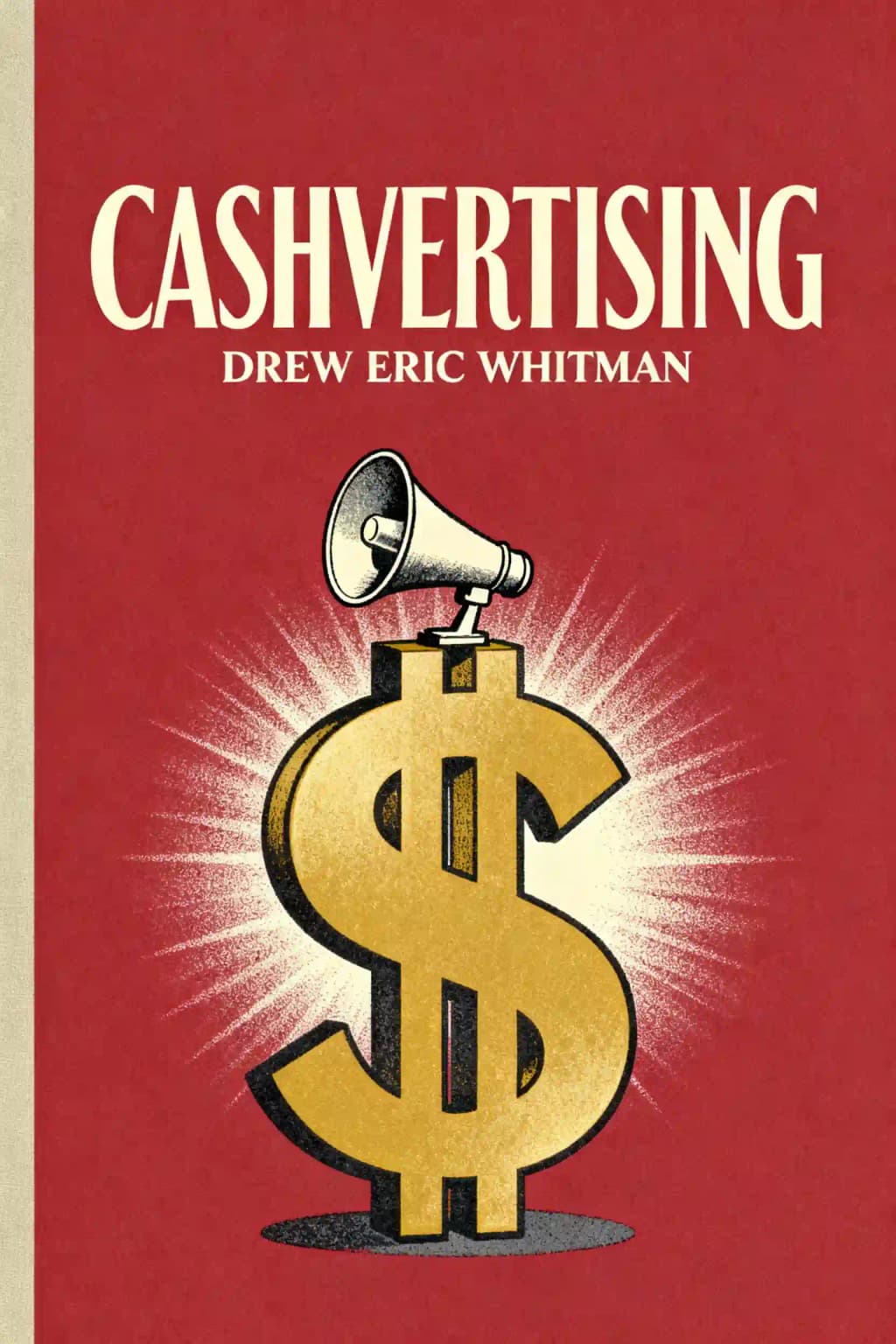
Unlock the psychology of persuasion with "Cashvertising," the 208-page bible that transformed how Fortune 500 companies like Texaco craft irresistible ads. Want to leverage the "Life-Force 8" desires that drive all consumer decisions? This is your ethical roadmap to marketing mastery.
Drew Eric Whitman is an internationally acclaimed marketing expert and the bestselling author of Cashvertising: How to Use More Than 100 Secrets of Ad-Agency Psychology to Make BIG MONEY Selling Anything to Anyone, a seminal work in advertising psychology.
With nearly four decades of experience as a direct-response copywriter and consultant, Whitman founded Whitman Strategic, advising businesses from startups to Fortune 500 companies like Texaco and Day-Timers.
His expertise in consumer behavior stems from hands-on agency work and global speaking engagements where he reveals proven psychological techniques to boost advertising ROI. Whitman further explores sales psychology in Brain Scripts for Sales Success and distills his strategies into the graphic novel Smashvertising.
Cashvertising, translated into 11 languages with over 1,500 five-star reviews, remains the highest-rated book in its category, cementing Whitman’s reputation as a master of persuasive communication.
Cashvertising by Drew Eric Whitman teaches 100+ psychology-driven advertising strategies to sell products effectively without large budgets. It focuses on consumer decision-making, headline crafting, and leveraging eight core human desires. The book blends copywriting techniques, design tips, and real-world examples to help marketers create persuasive ads.
Entrepreneurs, small business owners, and new marketers will benefit most from Cashvertising. It’s ideal for those learning copywriting basics or seeking actionable ad-psychology tactics. Veterans may find some strategies outdated but can still gain insights into timeless persuasion principles.
Yes, Cashvertising remains relevant for its psychology-based frameworks, though some examples (e.g., magazine ads) feel dated. The core principles—like tapping into human desires and writing compelling headlines—apply to modern digital marketing. It holds a 5-star Amazon rating for its actionable advice.
The “Life Force 8” desires driving consumer behavior are:
Whitman advocates a three-step headline formula:
Short headlines (5-6 words) are preferred for higher readership.
Yes. The book specifies:
Longer copy often outperforms short ads because detailed explanations activate the “Length-Implies-Strength” bias—readers assume thoroughness equals credibility. Example: A 2,000-word sales letter with product specs builds trust better than a 200-word summary.
Critics note:
While both teach persuasion, Cashvertising focuses on ad psychology and desire-driven messaging, whereas Copywriting Secrets emphasizes modern frameworks like storytelling and email marketing. Whitman’s book is better for traditional ads; Edwards’ for digital channels.
“Your ad should be a summary of what your product will do for them.” This underscores the book’s emphasis on customer-centric messaging over creative flair.
Yes. Principles like desire-based headlines (“Get 10x Followers in 30 Days”) and urgency tactics (“Limited-Time Offer”) translate well to platforms like Instagram and Facebook. However, adapt Whitman’s print-era advice to shorter formats.
Whitman cites classic campaigns like:
저자의 목소리로 책을 느껴보세요
지식을 흥미롭고 예시가 풍부한 인사이트로 전환
핵심 아이디어를 빠르게 캡처하여 신속하게 학습
재미있고 매력적인 방식으로 책을 즐기세요
They create tension that demands resolution.
Fear might be the most powerful motivator in the advertiser's arsenal.
Too much fear without a clear solution paralyzes rather than motivates.
We don't just buy products; we buy the identities they represent.
Exploiting irrational fears or creating panic for profit damages trust.
CASHVERTISING의 핵심 아이디어를 이해하기 쉬운 포인트로 분해하여 혁신적인 팀이 어떻게 창조하고, 협력하고, 성장하는지 이해합니다.
CASHVERTISING을 빠른 기억 단서로 압축하여 솔직함, 팀워크, 창의적 회복력의 핵심 원칙을 강조합니다.

생생한 스토리텔링을 통해 CASHVERTISING을 경험하고, 혁신 교훈을 기억에 남고 적용할 수 있는 순간으로 바꿉니다.
무엇이든 물어보고, 목소리를 선택하고, 진정으로 공감되는 인사이트를 함께 만들어보세요.

샌프란시스코에서 컬럼비아 대학교 동문들이 만들었습니다
"Instead of endless scrolling, I just hit play on BeFreed. It saves me so much time."
"I never knew where to start with nonfiction—BeFreed’s book lists turned into podcasts gave me a clear path."
"Perfect balance between learning and entertainment. Finished ‘Thinking, Fast and Slow’ on my commute this week."
"Crazy how much I learned while walking the dog. BeFreed = small habits → big gains."
"Reading used to feel like a chore. Now it’s just part of my lifestyle."
"Feels effortless compared to reading. I’ve finished 6 books this month already."
"BeFreed turned my guilty doomscrolling into something that feels productive and inspiring."
"BeFreed turned my commute into learning time. 20-min podcasts are perfect for finishing books I never had time for."
"BeFreed replaced my podcast queue. Imagine Spotify for books — that’s it. 🙌"
"It is great for me to learn something from the book without reading it."
"The themed book list podcasts help me connect ideas across authors—like a guided audio journey."
"Makes me feel smarter every time before going to work"
샌프란시스코에서 컬럼비아 대학교 동문들이 만들었습니다

CASHVERTISING 요약을 무료 PDF 또는 EPUB으로 받으세요. 인쇄하거나 오프라인에서 언제든 읽을 수 있습니다.
Ever notice how certain ads seem to reach directly into your brain and make you desperately want what they're selling? That's no accident. Behind every successful advertisement lies a sophisticated understanding of human psychology-what Drew Eric Whitman calls the "Life-Force 8" in his book Cashvertising. These eight fundamental biological desires drive more purchasing decisions than all other human wants combined. When marketers tap into these hardwired motivations, they create an irresistible pull that bypasses rational thought. Consider how differently two pizza shops might advertise. One claims to have "better ingredients" while another describes "San Marzano tomatoes grown in volcanic soil near Naples, buffalo milk mozzarella in chunks, and dough fermented for 72 hours." The second creates a vivid mental image that triggers deeper desire. This specificity principle works because our brains process detailed information by creating richer mental simulations that engage more sensory regions. What's fascinating is how predictable our responses are to these triggers. We like to believe we make rational purchasing decisions, but research reveals we primarily rely on mental shortcuts-what psychologists call "heuristics." These shortcuts allow marketers to bypass careful thought and drive consumer behavior in ways we rarely notice consciously.