1장
The Science Behind Why We Buy: Unlocking the Consumer Brain
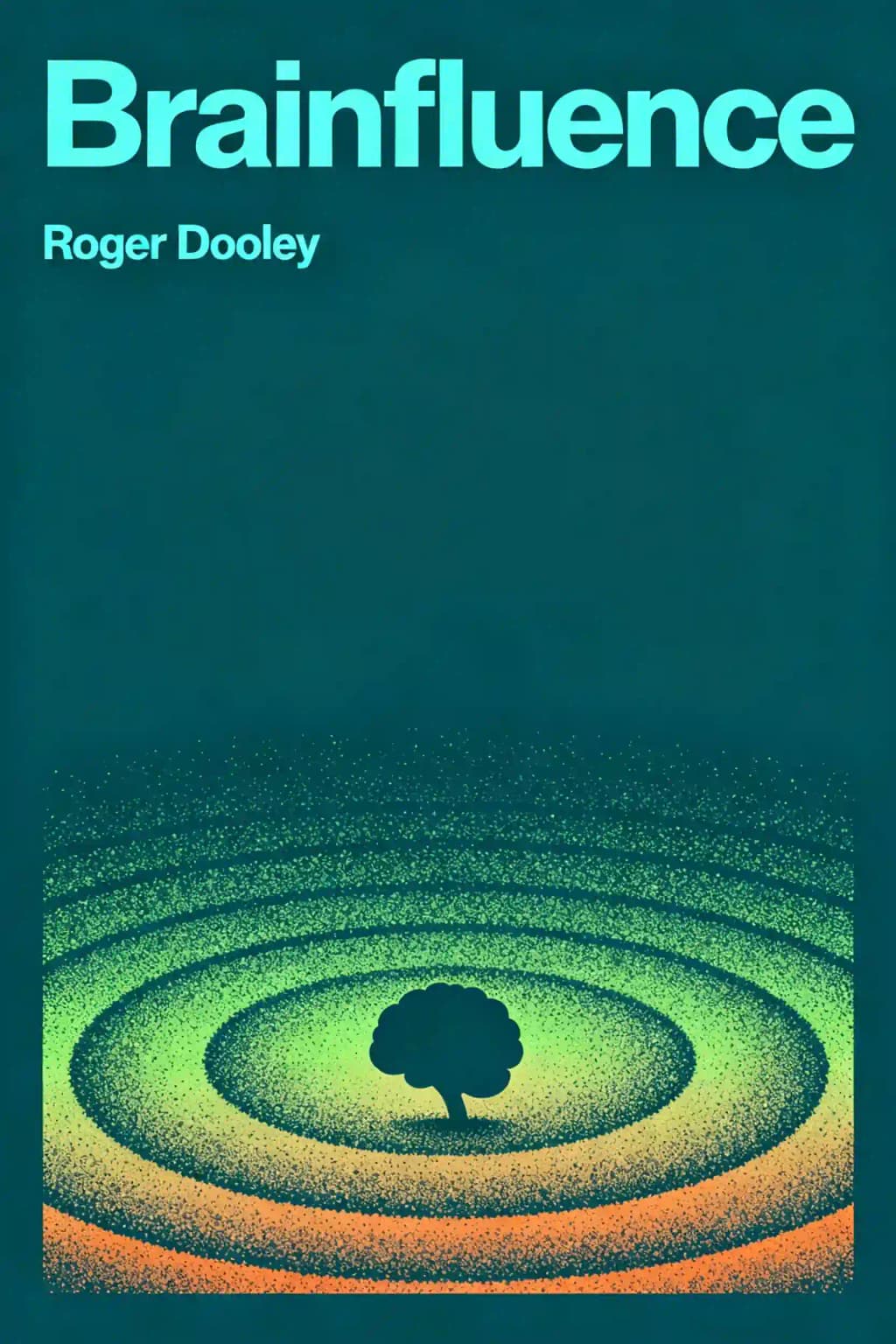
Ever wonder why you can't resist that "Buy Now" button, even when you promised yourself you wouldn't spend more money this month? Or why certain brands command fierce loyalty while others struggle to connect? The answer lies not in your conscious decision-making, but in the hidden workings of your brain. In "Brainfluence," Roger Dooley reveals the surprising truth that 95% of our purchasing decisions happen below the level of conscious awareness. Drawing on cutting-edge neuroscience and behavioral research, this groundbreaking work has transformed how companies like Apple, Starbucks, and Amazon design their customer experiences. Endorsed by marketing legend Seth Godin as "required reading for anyone who wants to understand why customers say yes," Dooley's insights have helped thousands of businesses tap into the subconscious drivers that determine what we buy and why we buy it. Beyond just explaining consumer behavior, "Brainfluence" offers a toolkit for ethically applying these principles to create better products and more satisfied customers.
2장
The 95% Solution: Marketing to Your Customer's Unconscious Mind
The most shocking revelation about consumer behavior is that 95% of our thoughts, emotions, and learning occur without conscious awareness. This isn't just a theoretical concept-it's backed by hard science. Harvard marketing professor Gerald Zaltman cites this figure when explaining why traditional market research so often fails to predict actual consumer behavior. When researchers ask customers why they made certain choices, they're essentially asking people to explain decisions their conscious minds didn't actually make.
This disconnect explains why focus groups and surveys frequently lead businesses astray. When a customer says they bought a car for its fuel efficiency, they might genuinely believe that's true-but brain scans would likely tell a different story about emotional responses to the vehicle's styling or status signaling. One fascinating study revealed that our brains reach decisions a full eight seconds before we become consciously aware of them. By the time you "decide" to purchase something, your brain has already made the choice.
Yet despite this knowledge, most marketers continue directing their messages at the conscious, rational mind-that small 5% sliver that handles logical processing. They bombard customers with feature lists, specifications, and rational arguments while neglecting the emotional, unconscious factors that actually drive decisions.
Think about the last time you purchased a smartphone. You might tell yourself (and others) that you chose it for the camera quality or battery life. But your brain was likely responding to how the device made you feel-perhaps sophisticated, connected, or part of an exclusive community. The specifications merely provided rational justification for an emotional decision you'd already made.
The most effective marketers understand this reality. Apple doesn't just sell computer specifications-they sell how their products make you feel. Luxury car manufacturers don't just highlight engineering features-they create emotional associations with status, achievement, and identity. Successful brands speak directly to the unconscious mind first, then provide rational facts to help the conscious mind justify the decision that's already been made.
This insight transforms how we should approach marketing. Instead of trying to convince customers with logic alone, we must create emotional connections, tap into unconscious associations, and recognize that the rational elements of our marketing primarily serve to help customers justify decisions their unconscious has already reached.
3장
The Pain of Paying: How Price Psychology Shapes Purchasing
Every time we make a purchase, our brains experience a form of pain. Neuroeconomists at Carnegie Mellon and Stanford confirmed this through fMRI studies that showed the brain's pain centers activating when subjects considered prices. This "pain of paying" varies dramatically based on context and presentation, not just the actual amount.
Consider how differently you might react to a $4 coffee at an airport versus a street cart. The price is identical, but your perception of fairness-and thus the pain level-differs substantially. Richard Thaler's famous study demonstrated this perfectly: beachgoers were willing to pay nearly twice as much for a beer from a resort hotel than from a rundown grocery store, despite it being the identical product.
This pain response explains why bundling works so effectively. When luxury car manufacturers include premium audio systems, heated seats, and advanced safety features in a package, customers can't assign specific costs to each component. This inability to evaluate individual elements reduces the pain associated with each upgrade. The customer simply experiences one payment covering multiple benefits, rather than feeling multiple separate pain points.
Credit cards further exploit this psychological principle by separating the pleasure of acquisition from the pain of payment. By pushing the actual payment into the future and breaking it into smaller increments, credit cards significantly reduce the immediate pain response. This explains why people consistently spend more when using plastic versus cash-the neurological pain signal is dampened.
Smart marketers find multiple ways to minimize this pain response. Restaurant menus that display prices as simple numerals without dollar signs (12 instead of $12.00) reduce payment pain. All-inclusive resorts and cruise ships capitalize on this by removing the ongoing pain of multiple transactions. Netflix transformed the video rental industry by replacing per-movie fees with a single subscription that eliminated repeated pain points.
Even subtle pricing adjustments can have outsized effects. Research shows that precise, non-round numbers like $42.63 are perceived as more carefully calculated than round figures like $40, making customers less likely to negotiate. Similarly, anchoring plays a crucial role-the first price a customer sees becomes the reference point against which all other prices are judged. This explains why Apple initially launched the iPhone at $599 before "reducing" it to $199, creating the perception of an incredible bargain.
Perhaps most surprisingly, the mere presence of money imagery can trigger selfish behavior. Studies show that subjects exposed to money-related images take longer to ask for help, spend less time helping others, and physically distance themselves from others. This explains why luxury gift advertising like De Beers' "A Diamond Is Forever" campaign deliberately avoids any mention of price or investment value-such cues would undermine the emotional appeal of an inherently non-rational purchase.
4장
Sensory Marketing: Engaging All Five Senses for Maximum Impact
The most powerful marketing doesn't just appeal to the eyes and ears-it engages all five senses to create deeper emotional connections and stronger memories. While most marketing focuses primarily on visual elements, research shows that multi-sensory approaches create significantly stronger brand impressions.
Scent may be the most potent yet underutilized sensory pathway. Martin Lindstrom estimates that 75% of our emotions are generated by what we smell, and studies confirm this remarkable impact. When Nike placed identical shoes in two rooms-one scented with a floral fragrance, one unscented-84% of consumers preferred the shoes from the scented environment. Even more remarkably, changing a shampoo's fragrance while keeping all other characteristics identical led users to perceive better foaming, rinsing, and hair glossiness-showing how scent affects perception of unrelated product attributes.
Successful brands understand this power. Starbucks' dominance stems partly from creating a consistent sensory experience through music, colors, lighting, and especially coffee aroma. When they introduced breakfast sandwiches whose smell overpowered the coffee scent, they were quickly eliminated until preparation methods could be modified. Similarly, when Nespresso discovered that 60% of the sensory experience of drinking espresso comes from the retail environment, they launched upscale coffee shops to create the expected sensory context while demonstrating their home machines could produce comparable quality.
Sound creates equally powerful effects on consumer behavior. In a UK wine shop experiment, playing French or German music caused matching wines to outsell others by several multiples, even though customers were unaware of the influence. Background music also dramatically affects time perception, with enjoyable tracks making customers more tolerant of delays both on telephone and in person. Beyond ambient sound, distinctive audio signatures like United Airlines' claim on Gershwin's "Rhapsody in Blue" or Nextel's walkie-talkie chirp create powerful brand recognition that works even when visual elements aren't present.
Touch influences perception in surprising ways. Studies show that the physical weight of objects affects how we judge their importance-information presented on heavier clipboards was rated more "serious" than identical information on lighter ones. This explains why important documents are typically printed on heavier stock paper. Even the texture of product packaging can significantly impact perceived quality and value.
The most successful brands create distinctive sensory signatures across multiple senses. Singapore Airlines maintains a consistent scent worn by flight attendants and infused in hot towels. Apple stores feature distinctive lighting, materials, and even a particular smell from the packaging. These multi-sensory approaches create stronger neural connections in customers' brains, making the brand more memorable and distinctive.
Perhaps most surprisingly, research shows that our most significant sensory experiences with products aren't always what we'd expect. When NeuroFocus tested yogurt consumption, they discovered the key moment of brain engagement wasn't the first taste or the creamy texture-it was removing the foil lid from the container. These "neurological iconic signatures" define product experiences in ways that traditional market research often misses.
5장
The Power of Branding: How Strong Brands Rewire Our Brains
Brands exert remarkable power over our perception and behavior-literally rewiring our neural pathways through repeated associations. Brain scans reveal that familiar, trusted brands activate areas associated with positive emotions and rewards, while unfamiliar or disliked brands trigger areas linked to negative emotions and memory searching.
The Pepsi Challenge offers a perfect illustration of this phenomenon. In blind taste tests, subjects preferred Pepsi and their brain reward centers showed five times more activity. However, when subjects could see they were drinking Coke, they overwhelmingly preferred it-and their brain activity changed accordingly, with self-identification areas lighting up regardless of which cola they actually tasted. The brand association literally altered the taste experience.
This happens because "neurons that fire together wire together"-a fundamental principle of neuroplasticity. When we repeatedly experience a brand alongside positive feelings, these neural connections strengthen until they become virtually automatic. Experiments show that subjects develop preferences for fictitious brands paired with positive images, even when they can't consciously recall the associations. Most remarkably, even when presented with factual information proving these products were inferior, subjects still chose them-showing how unconscious brand associations override rational decision-making.
The power of these associations explains why advertising can influence consumers even when they pay little or no attention to it. A massive Ipsos study of 97,000 subjects found that while high-attention viewers showed a 7.3% brand perception shift, even those who couldn't recall seeing the ads still experienced a statistically significant 1.2% lift from a single exposure. Even more surprisingly, fast-forwarded commercials still impact viewers, especially if they've seen the ad at normal speed once before.
The strongest brands go beyond simple positive associations to create tribal identity. Apple exemplifies this approach, turning customers into fanatical evangelists whose brains, when scanned, light up in areas normally triggered by religious devotion. This "us versus them" mentality taps into our brain's hardwired need for group belonging. When brands position customers as part of a special group in opposition to an "enemy" brand, they leverage powerful psychological forces that Henri Tajfel's research showed can be activated with even the most trivial distinctions.
Passionate employees further amplify brand power. Kate Newlin's research on "passion brands" shows that companies with genuinely enthusiastic staff create emotional attachments in customers that transcend rational product evaluation. These employees' authentic belief in the product communicates through subtle body language and vocal cues that customers unconsciously detect, creating trust and emotional connection that marketing alone cannot achieve.
6장
Print and Visual Psychology: How Design Elements Influence Perception
Despite the digital revolution, print media maintains unique neurological advantages in how our brains process information. Brain scans reveal that physical media creates stronger emotional engagement and memory formation than digital alternatives. Paper ads activate spatial memory networks by being more "real" to the brain, creating more vivid, emotion-associated memories than identical digital content.
Even the physical weight of paper influences perception. Research shows that information presented on heavier stock is judged more "serious" than identical information on lighter paper. Our language reflects this connection-we describe important content as "heavy" and unimportant as "lightweight." This suggests print documents may convey more gravitas than weightless digital versions.
Font choice dramatically affects perception in counterintuitive ways. Research by Song and Schwarz showed instructions in simple fonts made tasks seem faster and easier-exercise instructions in a simple font were estimated to take 8.2 minutes versus 15.1 minutes for the same text in a complex font. The simple-font group was significantly more likely to commit to the exercise regimen.
However, complex fonts have their place too. When selling premium products, harder-to-read fonts led consumers to rate the chef's skills significantly higher than identical descriptions in simple fonts. This cognitive disfluency suggests greater effort and expertise went into creating the product, justifying higher prices. Most surprisingly, complex fonts actually improve information retention. A Princeton study found students remembered course material better when presented in difficult-to-read fonts, as the extra processing effort creates deeper engagement and stronger memories.
Visual elements like photographs trigger powerful neurological responses. Baby faces activate the brain's emotion centers within just 150 milliseconds-far faster than adult faces. Eye-tracking research reveals how to maximize this effect: when babies look directly at viewers, attention fixates almost exclusively on the baby's face, but when the baby gazes toward the ad's headline, viewers follow that gaze to the headline and copy, significantly increasing attention to your message.
Gender differences in visual processing are equally significant. A South African bank's loan marketing experiment found that including a female photo instead of a male photo in mailings to male customers increased response rates equivalent to a 4.5% interest rate reduction-an enormous differential in lending. More concerning, research shows that viewing images of women in bikinis actually impairs men's decision-making abilities, making them more impulsive and focused on immediate gratification.
Even subtle visual elements like pupil dilation affect perception. Research shows men find women with dilated pupils more attractive without consciously recognizing this difference. Similarly, photos of actual people significantly increase empathy-radiologists shown patient photos alongside medical files became more meticulous in their work and felt more connected to patients they rarely see in person.
7장
Building Trust and Loyalty: The Neuroscience of Customer Relationships
Creating loyal customers requires understanding the neurological foundations of trust and attachment. While traditional loyalty programs fill our wallets with cards and key rings, research confirms they genuinely work because they tap into fundamental brain mechanisms that influence decision-making.
The goal gradient hypothesis, discovered in the 1930s when researchers observed rats running faster as they approached food in a maze, explains why loyalty programs with "head starts" are particularly effective. Columbia University researchers found that coffee drinkers with punch cards visited more frequently as they approached a free coffee reward. Most interestingly, customers given cards with 12 spots but 2 pre-stamped (requiring 10 more stamps) bought coffee more frequently than those given empty 10-stamp cards, despite needing the same number of purchases. This occurs because we perceive progress as a percentage of completion-starting with 2/12 feels closer to completion than 0/10, even though both require 10 more purchases.
Trust develops through specific neurological pathways involving oxytocin, a hormone that promotes social bonding. Physical touch dramatically increases oxytocin production, which explains why quality handshakes make powerful first impressions. University of Iowa research confirms that job applicants with good handshakes scored higher on employability ratings, and neuroscientist Paul Zak found that subjects who received a 15-minute massage returned 2.5 times more money to strangers than the control group.
Even subtle environmental factors affect trust formation. Yale researcher John Bargh found that beverage temperature influences interpersonal judgments-subjects who held hot coffee rated others higher for "warmth" than those holding iced drinks. Brain imaging shows hot stimuli activate areas related to trust and cooperation, affecting not just perceptions of others but making us more generous and trusting ourselves.
Building loyalty sometimes requires counterintuitive approaches. Research from Northwestern University and UC Berkeley shows that visualizing historical alternatives can significantly boost loyalty feelings. When subjects were asked to imagine what their world would be like if the United States hadn't come into existence (counterfactual reflection), they demonstrated higher patriotism than those who simply reflected on the actual situation. Similarly, employees who contemplated alternative scenarios about their company's origins developed more positive feelings toward the firm.
Time investment proves crucial in building trust. Despite today's emphasis on productivity in sales and customer service, studies of three wildly different groups (convicted felons, venture capitalists, and injured patients) all showed that the time spent in relationships directly correlated with trust levels. Convicted felons rated their legal process as fairer when their lawyers spent more time with them, regardless of sentence length, while injured patients rarely sued doctors who they felt treated them with care and attention, even after suffering from medical errors.
Perhaps most surprisingly, simply telling customers they can trust you actually works. Researchers found that adding "You can trust us to do the job for you" to an auto service firm's ad caused trust scores to jump as much as 33 percent. Despite making no specific claims about quality, speed, or satisfaction, this simple statement produced major increases in very specific areas: fair price (up 7%), caring (up 11%), fair treatment (up 20%), quality (up 30%), and competency (up 33%).
8장
The Psychology of Face-to-Face Influence: Mastering In-Person Persuasion
Despite the digital revolution, in-person interaction remains uniquely powerful in influencing behavior. Research confirms that face-to-face contact significantly impacts trust and cooperation through multiple neurological pathways that digital communication simply cannot replicate.
In the classic "ultimatum game" experiment, where one person decides how to split money with another who can accept or reject the offer, about half of standard splits are fair and one-third are rejected. However, when researcher Al Roth had subjects chat face-to-face before playing (even about unrelated topics), fair offers rose to 83 percent and rejections dropped to just 5 percent. Similarly, an INSEAD experiment showed that when wholesale/retail relationship players established social connections before negotiating, they behaved more cooperatively and achieved higher total profits than pairs without relationships.
Physical touch creates particularly powerful effects on trust formation. Neuroscientist Paul Zak explains that touch primes the brain to release oxytocin, which helps us unconsciously assess trustworthiness and creates positive associations through dopamine release. The best handshakes include "a complete, firm grip, eye contact and a vigorous up-and-down movement." While additional touching might help build bonds, cultural and personal factors matter. Interestingly, research shows that light shoulder touches from women (but not men) make people more willing to choose risky options, potentially useful in sales situations where change involves risk.
Our brains even show side preferences in processing information. Italian scientists Tommasi and Marzoli discovered we have a preference for processing spoken information through our right ear. In noisy nightclub studies, they observed that almost 75% of interactions occurred on the listener's right side. More remarkably, when researchers asked clubbers for cigarettes, they had significantly more success when speaking into the right ear.
Facial expressions profoundly influence consumer behavior. Research by Winkielman and Berridge showed that even subliminal exposure to smiling faces affected consumer behavior-subjects exposed to brief, imperceptible images of smiling faces served themselves more beverage and drank more than those who saw neutral or frowning faces. In the study's second phase, thirsty subjects would pay about twice as much for the same beverage after seeing a happy face versus an angry one.
Confidence levels dramatically affect persuasiveness, often trumping actual expertise. Carnegie Mellon research showed that confident advisors sold more advice even when their past accuracy was questionable. This may relate to mirror neurons-specialized brain cells that fire sympathetically in response to others' emotional states. When we encounter confidence, our mirror neurons respond in kind, creating a contagious effect.
Even physical sensations influence negotiations. Research by academics from MIT, Harvard, and Yale shows that subjects sitting in hard chairs judged negotiating partners as less emotional and increased their offers by nearly 40% less than those in soft chairs. Similarly, researchers from Miami University and the University of Florida discovered that indulging in a chocolate truffle increases desire for further indulgence-not just for more sweets but extending to luxury consumer goods like Apple computers and designer shirts.
9장
The Science of Storytelling: Why Narratives Drive Decision-Making
The most powerful marketing tool isn't statistics or features-it's storytelling. Our brains are hardwired for narrative, an evolutionary advantage that allowed early humans to learn from others' experiences without facing dangers directly. Modern neuroscience confirms this hardwiring through remarkable brain imaging studies.
When people read exciting passages, fMRI scans show their brains activate as if they were experiencing the events themselves. Motor neurons fire when characters grab objects, and visual neurons activate during descriptive scenes. As psychology writer Herbert Wray notes, "reading is much like remembering or imagining a vivid event." This explains why stories create such powerful, lasting impressions compared to factual information alone.
Princeton researchers discovered something even more fascinating: when someone tells a story to a listener, their brain activities become almost synchronous. Just one second after specific neural activity appears in the speaker's brain, the same pattern repeats in the listener's brain-but only when the listener is paying attention and understands the narrative. This neural coupling demonstrates how deeply stories connect humans at a neurological level.
This explains why anecdotes are far more convincing than statistics when selling products. Our brains evolved to learn from personal experience and trusted stories from others-not from data sets and averages. This is why a friend's negative restaurant experience outweighs a 3.7-star average rating, and why infomercials feature detailed personal success stories rather than just statistics. These narratives provide the vivid details our brains need to simulate the experience.
Google's "Parisian Love" Super Bowl ad perfectly demonstrated the power of storytelling. Using nothing but text searches to tell a compelling story-no actors, animals, exotic locations or high production values-this simple ad ranked fourth in neuro-engagement among all 60 Super Bowl ads that year according to Sands Research, and was rated the top commercial by marketing professors at Michigan State University. Despite costing almost nothing to produce compared to typical Super Bowl commercials, the narrative structure created deeper engagement than flashier, more expensive ads.
The most successful advertisements throughout history have leveraged this storytelling power. Legendary ads like John Caples' "They laughed when I sat down at the piano..." and Martin Conroy's Wall Street Journal letter both tell compelling stories that resonated with readers for decades. These narratives work because they tap into universal human experiences-we've all experienced social discomfort and the pride of proving others wrong. The narrative approach activates deeper memories and emotions than simply stating "you'll impress your friends if you learn piano," making the message more profound and memorable.
Negative customer experiences become particularly powerful stories that can damage a business for years. A keynote speaker shared how a supermarket's poor handling of a defective pickle jar cost them dearly. Despite clear evidence (a bitten-off pickle), staff treated him with suspicion before reluctantly replacing the $1.50 jar. This terrible customer service led him to boycott the store and share his story widely with neighbors, guests, and speaking audiences. Years later, the speaker's statistics and customer service advice are forgotten, but his vivid "pickle story" remains memorable-demonstrating how negative customer experiences become persistent narratives that can damage a business far beyond the initial incident.