In a world where emotions are often suppressed, "Big Feelings" offers a lifeline. This bestseller by the creators of @LizandMollie helps navigate uncertainty, burnout, and regret with science-backed strategies. What if embracing discomfort - not avoiding it - is your path to thriving?
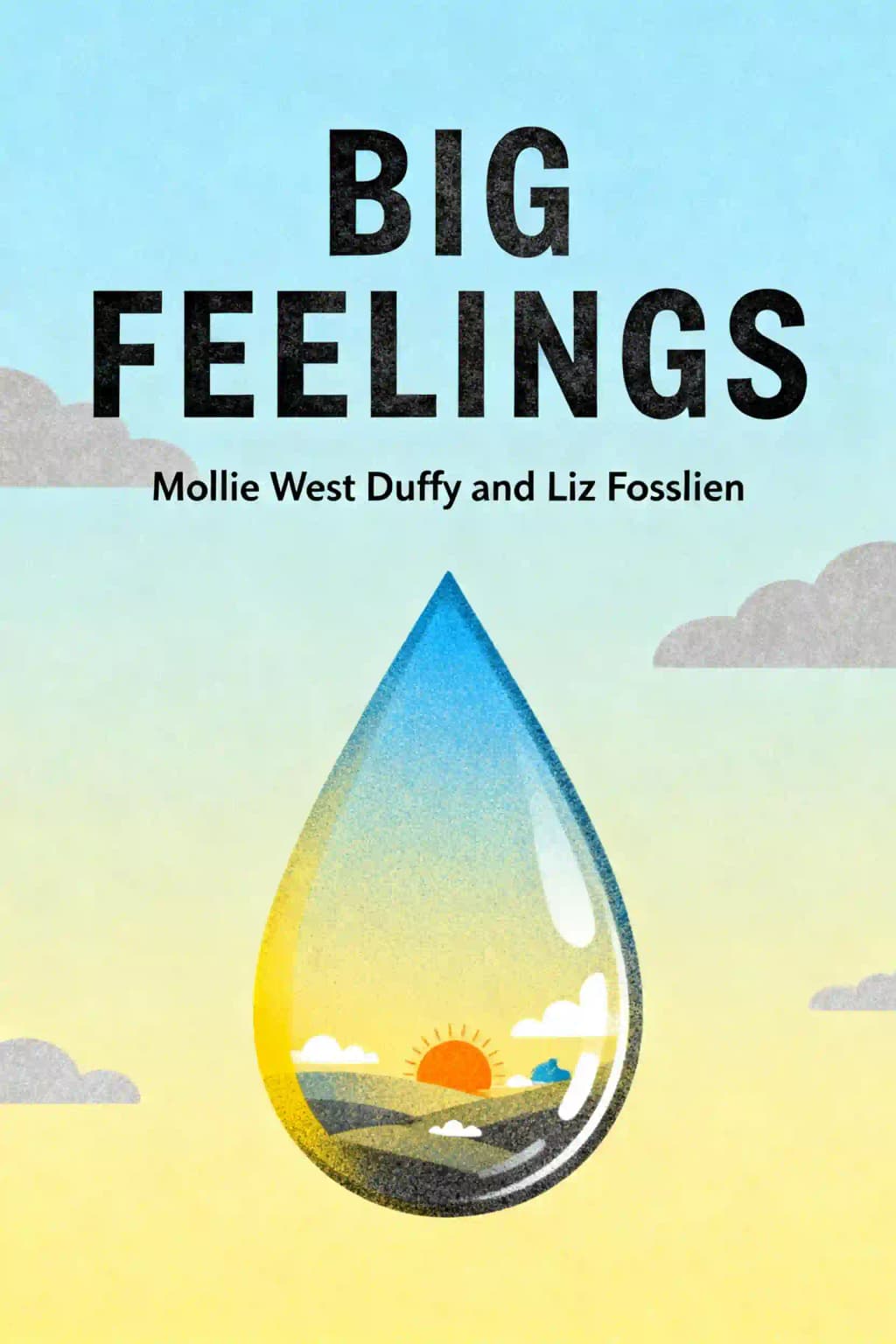
Mollie West Duffy and Liz Fosslien are the bestselling authors of Big Feelings: How to Be Okay When Things Are Not Okay and recognized experts in workplace psychology and emotional fluency. Their book is a guide to navigating complex emotions like uncertainty, burnout, and perfectionism.
The book draws from their professional expertise and personal experiences, including coping with chronic health issues and grief. Fosslien, a data storyteller and illustrator, leads content at Humu and has designed inclusive culture workshops for Google and Nike. Duffy, an organizational development leader formerly at IDEO and Harvard Business School, specializes in building resilient teams.
Their prior collaboration, No Hard Feelings: The Secret Power of Embracing Emotions at Work, became a Wall Street Journal bestseller and reshaped corporate discussions about emotional intelligence. Featured on TED, NPR, and Good Morning America, their work has been translated into 15 languages and adopted by Fortune 500 companies for employee development programs.
Big Feelings is a guide to navigating intense emotions like uncertainty, burnout, and regret. Authors Mollie West Duffy and Liz Fosslien blend personal stories, scientific research, and humorous illustrations to provide strategies for transforming overwhelming emotions into manageable challenges. The book addresses seven core feelings, offering actionable advice to help readers build resilience and find meaning in difficult moments.
This book is ideal for anyone struggling with anxiety, perfectionism, or emotional exhaustion, particularly in high-stress environments. It’s also valuable for leaders, HR professionals, and self-help enthusiasts seeking science-backed tools to improve emotional well-being. Fans of the authors’ previous work, No Hard Feelings, will appreciate its focus on personal rather than workplace-specific challenges.
Yes—readers praise its relatable anecdotes, practical frameworks, and visually engaging format. It’s been highlighted by Good Morning America and The New York Times for its fresh take on modern emotional struggles. The blend of psychology, humor, and actionable steps makes it a standout in the self-help genre.
The book explores seven emotions:
While No Hard Feelings focuses on emotions in workplace settings, Big Feelings tackles broader personal challenges. Both books use research and humor, but the newer title delves deeper into individual resilience, making it more applicable to daily life beyond professional contexts.
Yes—the authors differentiate between systemic burnout (caused by external pressures) and situational burnout (temporary stress). Solutions include setting boundaries, prioritizing rest, and challenging productivity guilt. Real-life examples show how small behavioral changes can mitigate exhaustion.
The book argues perfectionism often masks fear of judgment. Strategies include embracing “good enough” outcomes, separating identity from achievements, and practicing self-compassion. Anecdotes illustrate how perfectionism stifles creativity and how to redefine success.
Some readers note the advice can feel repetitive if familiar with the authors’ prior work. Others wanted more depth on systemic issues contributing to burnout. However, most praise its accessibility and practical exercises for immediate application.
While not exclusively workplace-focused, concepts like managing anger during feedback or overcoming comparison with colleagues are directly applicable. The “productivity guilt” section is particularly relevant for remote workers and leaders aiming to foster healthier team cultures.
Mollie West Duffy (organizational development expert) and Liz Fosslien (workplace culture strategist) combine research from IDEO, Harvard Business School, and Fortune 500 companies. Their work at Humu and contributions to Harvard Business Review lend credibility to their insights on human behavior.
Yes—tools include:
Post-pandemic challenges like remote work fatigue and economic uncertainty make the book’s themes timelier than ever. Updated examples in later editions address AI-driven workplace changes and societal shifts, ensuring strategies remain applicable to modern stressors.
저자의 목소리로 책을 느껴보세요
지식을 흥미롭고 예시가 풍부한 인사이트로 전환
핵심 아이디어를 빠르게 캡처하여 신속하게 학습
재미있고 매력적인 방식으로 책을 즐기세요
Big feelings are not problems to be solved. They are part of being human.
The only people who don't experience painful emotions are "the psychopaths and the dead."
Our anxiety about uncertainty rarely correlates with actual risk.
Comparison is a natural human tendency that can either motivate us or spiral into self-loathing.
Big Feelings의 핵심 아이디어를 이해하기 쉬운 포인트로 분해하여 혁신적인 팀이 어떻게 창조하고, 협력하고, 성장하는지 이해합니다.
생생한 스토리텔링을 통해 Big Feelings을 경험하고, 혁신 교훈을 기억에 남고 적용할 수 있는 순간으로 바꿉니다.
무엇이든 묻고, 학습 스타일을 선택하고, 나에게 맞는 인사이트를 함께 만들어보세요.

샌프란시스코에서 컬럼비아 대학교 동문들이 만들었습니다
"Instead of endless scrolling, I just hit play on BeFreed. It saves me so much time."
"I never knew where to start with nonfiction—BeFreed’s book lists turned into podcasts gave me a clear path."
"Perfect balance between learning and entertainment. Finished ‘Thinking, Fast and Slow’ on my commute this week."
"Crazy how much I learned while walking the dog. BeFreed = small habits → big gains."
"Reading used to feel like a chore. Now it’s just part of my lifestyle."
"Feels effortless compared to reading. I’ve finished 6 books this month already."
"BeFreed turned my guilty doomscrolling into something that feels productive and inspiring."
"BeFreed turned my commute into learning time. 20-min podcasts are perfect for finishing books I never had time for."
"BeFreed replaced my podcast queue. Imagine Spotify for books — that’s it. 🙌"
"It is great for me to learn something from the book without reading it."
"The themed book list podcasts help me connect ideas across authors—like a guided audio journey."
"Makes me feel smarter every time before going to work"
샌프란시스코에서 컬럼비아 대학교 동문들이 만들었습니다

Big Feelings 요약을 무료 PDF 또는 EPUB으로 받으세요. 인쇄하거나 오프라인에서 언제든 읽을 수 있습니다.
Picture a business traveler sitting in first class, exhausted despite the luxury, suddenly realizing: "If I'm here because of how many miles I've flown, my life is completely out of balance." This moment of clarity came to Mollie West Duffy in December 2018, but it could happen to any of us. We live in a world that glorifies busyness, pathologizes discomfort, and insists we should always be okay. Yet most of us spend significant time wrestling with feelings that seem too big to handle-uncertainty that keeps us awake at night, comparisons that make us feel inadequate, anger we're afraid to express, burnout we can't shake, perfectionism that paralyzes us, despair that swallows us whole, and regrets that haunt our quiet moments. Here's the truth no one wants to admit: these "big feelings" aren't abnormal. They're profoundly human. And learning to navigate them isn't about thinking your way out or pushing through-it's about understanding what these emotions are trying to tell you.
Uncertainty tortures us through lack of control. Counterintuitively, our anxiety correlates poorly with actual danger-studies show people pay similar amounts to avoid 99% versus 1% chances of pain. Those with 50% chance of electric shock experience three times more stress than those with 90% certainty. This explains staying in soul-crushing jobs rather than leaping into the unknown. When Liz Fosslien developed debilitating headaches, uncertainty consumed her. Shuttled between specialists with severe side effects, fury finally propelled action. She meticulously tracked everything-schedule, moods, triggers-then made lifestyle changes. Though not "cured," she learned to manage by building "footholds of control" in uncertain terrain. Learning comfort with uncertainty means accepting incomplete answers while adopting a growth mindset: "I am learning to _____." Convert vague anxiety into specific fears, separating controllable from uncontrollable. For controllable fears, create actionable questions. For others, establish worry boundaries-try "noting" (one-word emotion labels) or scheduled worry time. We spend 10% of daily thoughts comparing ourselves to others-even monkeys compare food. Social media intensifies this hardwired tendency. Achieving goals doesn't end comparison either. Law graduates who dreamed of passing the bar soon compare themselves to peers at prestigious firms. This "new level, new devil" phenomenon means targets constantly move. Yet visceral envy reveals what you truly value. When Gretchen Rubin felt overwhelming jealousy toward a law school alum turned writer, this reaction exposed her suppressed desire to write books-changing her career trajectory. When envy strikes, ask: What specifically triggers it? What void would this fill? Do I genuinely want it or just think I should? Psychologists distinguish benign envy-admiration motivating improvement-from malicious envy-resentment breeding hostility. The difference stems from perceived scarcity. Viewing others' success as possibility rather than limited resources transforms envy from corrosive to constructive. Research shows 82% of people make lives appear more glamorous than reality. On bad days, you're vulnerable to "upward comparison"-obsessively comparing yourself to perceived superiors. When this happens, broaden perspective beyond standouts. If a friend's milestone makes you feel behind, consider ten or twenty friends-many share your situation. Don't just envy achievements; consider their full reality. When Liz envied a friend's promotion managing 200 people, she realized she disliked meetings and preferred doing work. Rather than measuring against others, track your own progress. You might not be where you want, but you're not where you were either.
Anger is pain's bodyguard. James Averill's 1977 research found that anger, felt by most people several times weekly, is often constructive-sparking creativity, motivating self-advocacy, and enhancing performance. Yet we're taught to suppress it from childhood, especially girls told rage is unfeminine. This is harmful because anger serves as evolution's alarm system, signaling "Do something about this!" Perception of anger is heavily biased. Studies show male faces appear angrier than female faces, despite women reporting higher anger levels. Racial stereotypes create harsher consequences-Black students receive stricter punishments for identical behaviors. "Destruction therapy"-punching bags or smashing objects-actually escalates anger rather than diminishing it. Research shows doing nothing is more effective. Chronic stress rewires your brain's rage circuits, making you snap at minor provocations. Understanding your anger expression is crucial. Suppressors risk anxiety and depression. Projectors express aggressively-try TIPP technique (temperature, intense exercise, paced breathing, progressive muscle relaxation) to cool down. Transformers productively resolve anger by recognizing deeper needs. To uncover what's driving your anger, write an unsent letter asking: What triggered this? What feelings lie underneath? What do I need? When channeled effectively, anger provides energy for positive change-personally and societally, as movements like Me Too demonstrate.
Burnout isn't just overwork-it's about our narratives and approach to life. Recognized as a diagnosable US condition in 2019, over 70% of employees experienced it in 2020. At its core, burnout stems from capitalist pressure to maximize productivity for financial security. Burnout feels sudden because adrenaline masks running on empty. Warning signs include: overstimulation from simple tasks, cutting self-care, Sunday scaries on Saturday, saying yes at capacity, constant irritation, fantasizing about illness for rest, and "revenge bedtime procrastination"-staying up late to reclaim personal time. Living at 80% capacity prevents burnout. Practice walking away mid-task-one woman discovered "nothing was on fire" upon return. Consider the Four Burners Theory: family, friends, health, work. You may need to temporarily turn off one or two. Set boundaries-no one else will. Before committing, ask what you'll gain, sacrifice, and the consequences of refusing. "Behind every no is a deeper yes." Allow unstructured downtime-over 40% of creative ideas emerge when minds wander outside work.
Perfectionism creates inadequacy, not excellence. Research shows athletes with perfectionist tendencies perform worse than peers due to excessive concern over mistakes. Contrary to belief, perfectionism stems from low self-esteem and fear of failure, not high standards. Many perfectionists don't recognize themselves because impossible standards make them feel like failures. Key signs include never feeling satisfied, needing external validation, inability to disconnect from work, people-pleasing, chronic exhaustion, and devaluing achievements. The "perfection paradox" means getting stuck on minor mistakes and giving up when things aren't perfect. Beneath perfectionism lies fear of unworthiness - the belief you must earn love through achievement, often rooted in childhood where love was conditional on performance. One reader realized through her father's abuse that "perfectionism is a form of self-abuse." Success happens despite perfectionism, not because of it. Research proves self-compassion improves performance - participants who journaled about self-compassion performed better than those who didn't. Perfectionists set "avoidance goals" (preventing negatives) rather than "approach goals" (achieving positives). Instead of "avoid looking incompetent," try "impress people with compelling storytelling." Embracing "good enough" means letting go of all-or-nothing thinking - a one-mile run beats no run at all.
Despair manifests through seven clinical indicators: hopelessness, low self-esteem, feeling unloved, frequent worry, loneliness, helplessness, and self-pity. Their combination creates unique intensity-a condition increasingly common in America. The dangerous misconception that despair can be remedied through distraction or positive thinking is both ineffective and harmful. Recovery begins by taking despair seriously. Comparing your suffering to others who "objectively have it worse" only deepens despair by adding guilt. Despair is absolute to the person experiencing it. Finding comfort in knowing that suicidal feelings are widespread and recoverable provides crucial perspective. When despair makes every moment feel endless, "chunking time" becomes essential-focusing only on getting through what feels doable. The more you're suffering, the smaller the chunks. Self-indulgence in harmless creature comforts-ice cream sundaes, fluffy movies, hot showers-provides necessary escape. Regain agency by throwing "a single climbing pick into the wall" daily. Each morning, choose one small accomplishment: sending a text, taking out trash, putting on deodorant. These mini-milestones put you back in the driver's seat. Progress feels like "ten steps backward, one step forward," then "two steps back, one forward," before slowly inching upward. Connection with others who truly understand provides judgment-free support you can't find elsewhere.
Regret, though painful, serves as a compass for meaningful living. We experience it through different "selves"-our actual self (who we are now), ideal self (our truest version), or ought self (meeting society's expectations). We often avoid short-term regret, leading to worse long-term outcomes, while status quo bias keeps us in unfulfilling situations. Before moving forward, acknowledge regret's pain. As Cheryl Strayed writes, we must "salute" our "ghost ship"-the life we didn't choose-from the shore of the life we did. Regrets fall into six categories: hindsight, alternate-self, rushing-in, dragging-out, ignoring-instincts, and self-sabotage. For the first two, distraction and perspective help; for others, deeper analysis changes future behavior. To use regret constructively, transform "I should have..." statements into "What if..." questions pointing toward future action. List what you're grateful for when overwhelmed by if-only scenarios. Big feelings lead to wisdom. Grief informs future choices, envy clarifies values, and despair deepens self-understanding. These emotions can spark post-traumatic growth-emerging from struggle with greater life appreciation, closer relationships, and expanded possibilities.