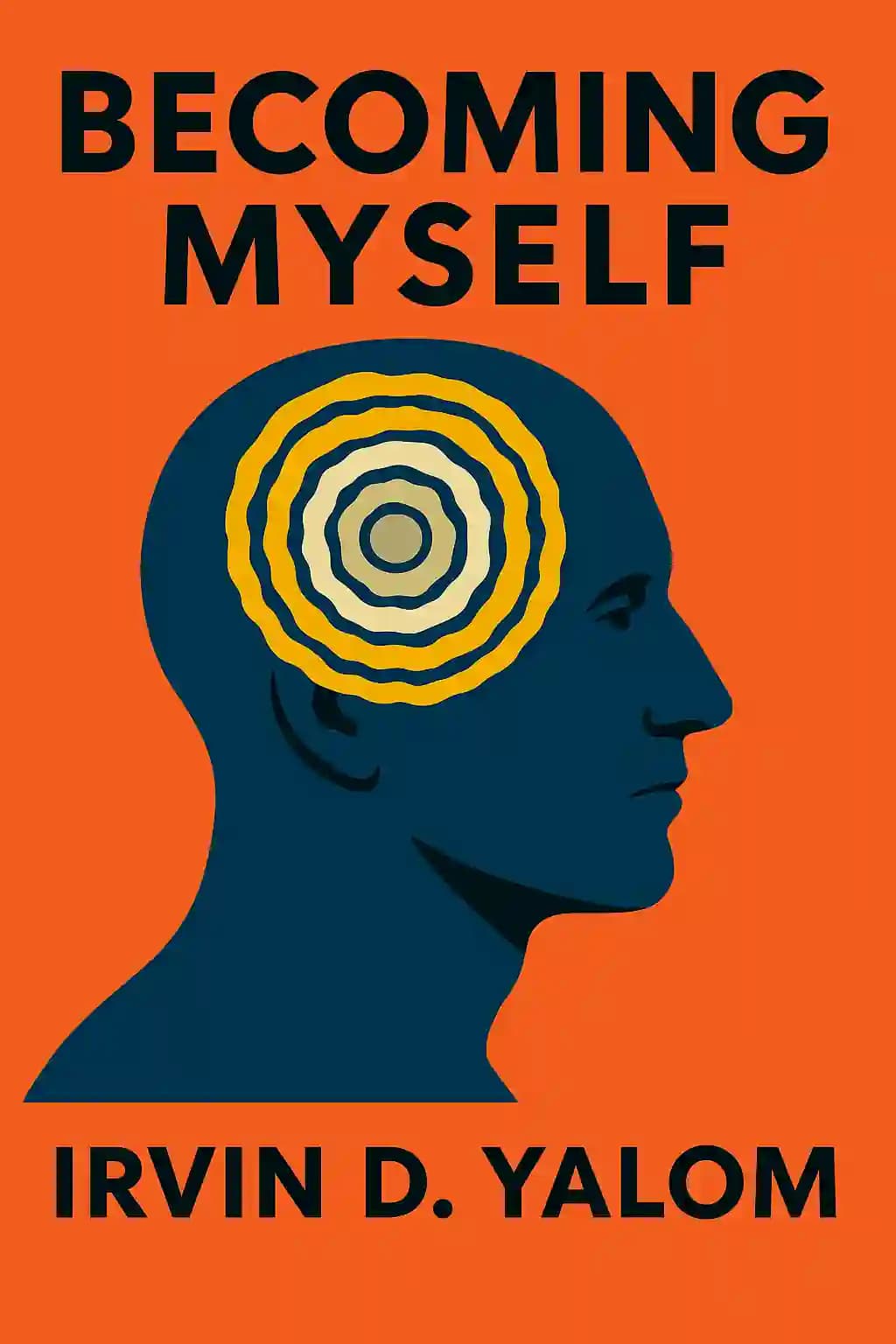
Irvin Yalom's memoir, named one of 2017's best by The Guardian, invites readers into a psychiatrist's soul. What makes this unflinching self-analysis so powerful that Abraham Verghese calls it "a book to read and reread for years to come"?
Irvin D. Yalom, author of Becoming Myself: A Psychiatrist’s Memoir, is a renowned psychiatrist, Stanford University professor emeritus, and pioneer of existential psychotherapy. A bestselling author whose works blend clinical insight with philosophical exploration, Yalom has shaped modern therapeutic practices through foundational texts like The Theory and Practice of Group Psychotherapy, a globally used textbook, and Existential Psychotherapy, which examines life’s core challenges. His acclaimed fiction, including When Nietzsche Wept (Commonwealth Gold Medal winner) and Love’s Executioner, merges narrative storytelling with psychological themes, translated into over 20 languages.
In Becoming Myself, Yalom reflects on his transformative journey from a childhood in 1930s Washington, D.C., to his groundbreaking career, interweaving personal anecdotes with professional breakthroughs.
His other notable works, such as The Schopenhauer Cure and Staring at the Sun, further explore existential themes like mortality and meaning. Recognized with the Oskar Pfister Award for contributions to psychology and religion, Yalom’s legacy endures through his innovative fusion of literature and therapeutic practice. Becoming Myself has been celebrated for its candid portrayal of a life dedicated to understanding the human condition.
Becoming Myself is a memoir by psychiatrist Irvin D. Yalom that intertwines personal anecdotes with insights from his career in existential psychotherapy. It explores themes like aging, mortality, empathy, and the search for meaning through Yalom’s reflections on his life, clinical experiences, and philosophical musings. The book emphasizes authenticity in relationships and confronting existential fears to live more fully.
This book is ideal for mental health professionals seeking therapeutic wisdom, readers interested in existential philosophy, or anyone navigating questions about identity and purpose. Fans of Yalom’s earlier works (e.g., Love’s Executioner) or memoirs blending personal growth with professional insights will find it particularly engaging.
Yes—Yalom’s candid storytelling and profound reflections on life, death, and human connection make it a compelling read. It offers actionable insights for therapists and general readers alike, particularly those seeking to understand existential challenges or improve relationships.
Yalom advocates for addressing existential fears (death, freedom, isolation) directly in therapy. He shares case studies where patients confront these themes, emphasizing the therapist’s role as a compassionate guide rather than an authority. His methods prioritize deep human connection over rigid techniques.
Some readers may find the introspective focus overly self-referential or less structured than traditional self-help guides. Critics note that Yalom’s privileged perspective as a seasoned therapist might limit relatability for those without similar resources.
Unlike his fiction (When Nietzsche Wept) or textbooks (Theory and Practice of Group Psychotherapy), this memoir is more personal. It echoes themes from Love’s Executioner but delves deeper into Yalom’s own struggles, making it a unique blend of autobiography and professional wisdom.
No—Yalom’s accessible narrative style makes complex concepts approachable. The memoir balances clinical insights with relatable stories, appealing to both professionals and general readers.
It merges a psychiatrist’s professional expertise with raw personal revelations, offering both intellectual depth and emotional resonance. Unlike typical memoirs, it frames life stories through existential psychotherapy, creating a guide for navigating universal human struggles.
저자의 목소리로 책을 느껴보세요
지식을 흥미롭고 예시가 풍부한 인사이트로 전환
핵심 아이디어를 빠르게 캡처하여 신속하게 학습
재미있고 매력적인 방식으로 책을 즐기세요
The library became my sanctuary.
Books became his teachers.
I had a recurring daydream about being 'rescued' by an influential mentor.
The library offered not just knowledge but escape.
Becoming Myself의 핵심 아이디어를 이해하기 쉬운 포인트로 분해하여 혁신적인 팀이 어떻게 창조하고, 협력하고, 성장하는지 이해합니다.
Becoming Myself을 빠른 기억 단서로 압축하여 솔직함, 팀워크, 창의적 회복력의 핵심 원칙을 강조합니다.

생생한 스토리텔링을 통해 Becoming Myself을 경험하고, 혁신 교훈을 기억에 남고 적용할 수 있는 순간으로 바꿉니다.
무엇이든 물어보고, 목소리를 선택하고, 진정으로 공감되는 인사이트를 함께 만들어보세요.

샌프란시스코에서 컬럼비아 대학교 동문들이 만들었습니다
"Instead of endless scrolling, I just hit play on BeFreed. It saves me so much time."
"I never knew where to start with nonfiction—BeFreed’s book lists turned into podcasts gave me a clear path."
"Perfect balance between learning and entertainment. Finished ‘Thinking, Fast and Slow’ on my commute this week."
"Crazy how much I learned while walking the dog. BeFreed = small habits → big gains."
"Reading used to feel like a chore. Now it’s just part of my lifestyle."
"Feels effortless compared to reading. I’ve finished 6 books this month already."
"BeFreed turned my guilty doomscrolling into something that feels productive and inspiring."
"BeFreed turned my commute into learning time. 20-min podcasts are perfect for finishing books I never had time for."
"BeFreed replaced my podcast queue. Imagine Spotify for books — that’s it. 🙌"
"It is great for me to learn something from the book without reading it."
"The themed book list podcasts help me connect ideas across authors—like a guided audio journey."
"Makes me feel smarter every time before going to work"
샌프란시스코에서 컬럼비아 대학교 동문들이 만들었습니다

Becoming Myself 요약을 무료 PDF 또는 EPUB으로 받으세요. 인쇄하거나 오프라인에서 언제든 읽을 수 있습니다.
At 85, Irvin Yalom wakes at 3 a.m., weeping from a dream. He's a young boy again, cruelly greeting a girl with measles, only to face her father's quiet confrontation about his thoughtlessness. This wasn't just a dream-it was a memory from 73 years earlier, a moment of callousness he'd never forgotten. Here lies the essence of Yalom's entire life: a brilliant psychiatrist whose career centered on empathy, human connection, and confronting the existential truths that shape us all. This opening to his memoir captures something profound. We carry our cruelties, our regrets, our moments of shame across decades. They resurface when we least expect them, reminding us that becoming ourselves is never finished-it's a lifelong reckoning with who we've been and who we're still becoming. Yalom's work has transformed modern psychotherapy precisely because he never forgot that young boy's thoughtlessness, never stopped examining his own humanity while helping others examine theirs.