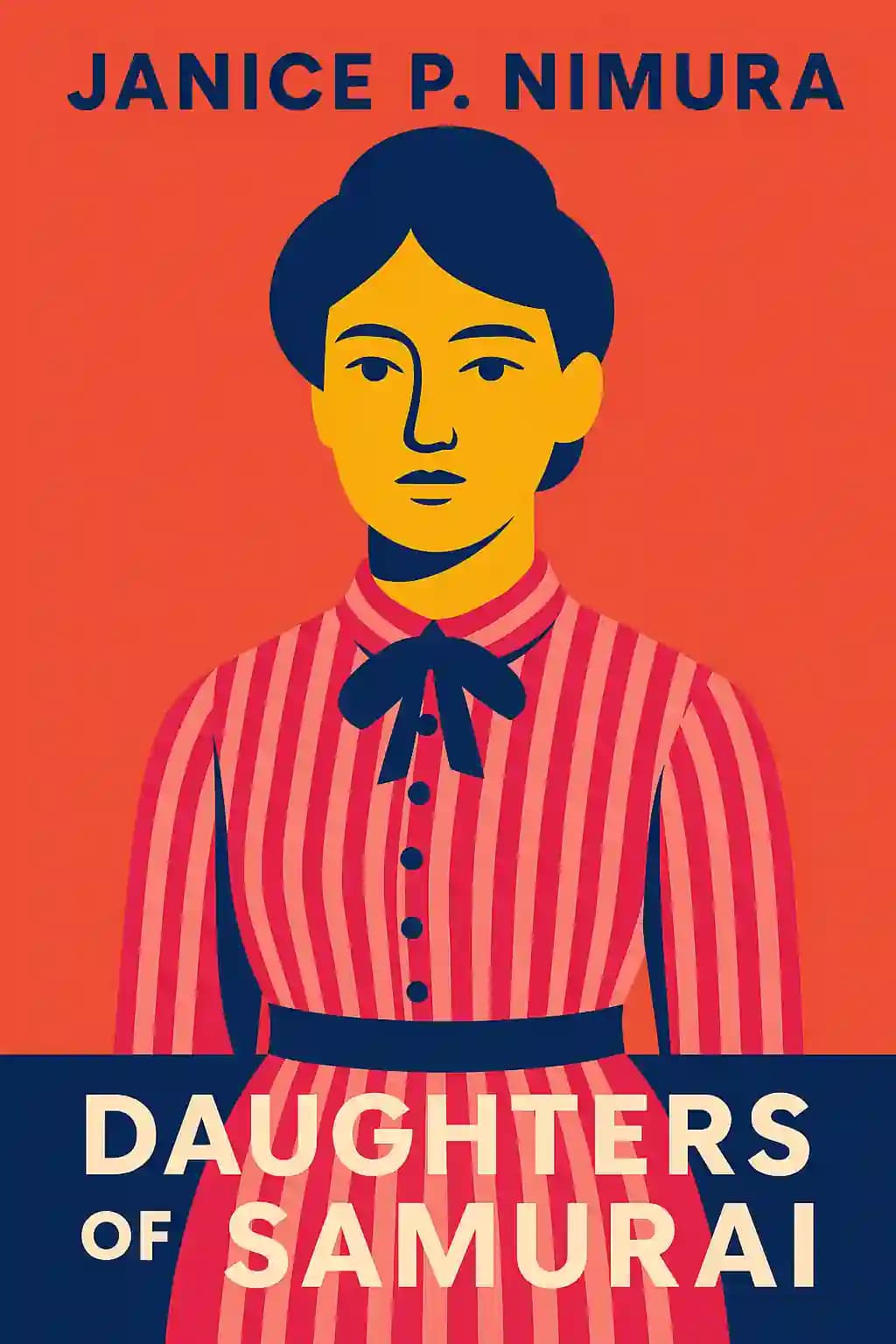
Daughters of the Samurai
Overview of Daughters of the Samurai
In 1871, Japan sent five young girls to America to learn Western ways. "Daughters of the Samurai" chronicles their extraordinary journey and profound impact on women's education in Japan - a tale Arthur Golden calls "vivid, unforgettable life" that shaped modern Japanese society.

Key Themes in Daughters of the Samurai
- meiji restoration
- female education reform
- cultural assimilation
- samurai class transition
- east-west diplomacy
Quotes from Daughters of the Samurai
Educated mothers would raise enlightened sons who would lead Japan.
They'd return unmarriageable and culturally corrupted.
They have sent me a baby!
Characters in Daughters of the Samurai
- Sutematsu YamakawaA samurai's daughter from Aizu sent to America
- Ume TsudaThe youngest exchange student and future educator
- Shige NagaiA ten-year-old girl selected for the mission
- Kiyotaka KurodaMeiji bureaucrat who proposed the exchange program
- Sen TsudaUme's father and a progressive thinker
About the Author
About the Author of Daughters of the Samurai
Janice P. Nimura is an acclaimed historian and author of Daughters of the Samurai: A Journey from East to West and Back, specializing in illuminating forgotten narratives of pioneering women in global history. This New York Times Notable Book is a genre-blending work of historical nonfiction that explores themes of cross-cultural exchange, women’s education, and Meiji-era Japan’s modernization. These subjects are rooted in Nimura’s Columbia University East Asian studies background and her firsthand experience living in Tokyo.
Nimura is also the author of the Pulitzer Prize-finalist biography The Doctors Blackwell (2021), which further establishes her authority in women’s history through its examination of America’s first female physicians.
Her essays and reviews in the New York Times, Washington Post, and Smithsonian demonstrate her skill in making archival research accessible to broad audiences. As Wesleyan University’s 2023-24 Bailey Distinguished Visiting Scholar, she extends her work into environmental studies while maintaining focus on the legacies of trailblazing women. Both Daughters of the Samurai and The Doctors Blackwell have earned starred reviews from Publishers Weekly, Booklist, and Library Journal, with the former praised as “an extraordinary, elegantly told story” by Kirkus Reviews.
Download Summary of Daughters of the Samurai
Get the Daughters of the Samurai summary as a free PDF or EPUB. Print it or read offline anytime.
FAQs About This Book
Daughters of the Samurai follows three girls dispatched by the Japanese government to 19th-century America to learn Western customs, later returning to revolutionize women’s education and modernize Japan. The book delves into their cultural adaptation, educational achievements, and enduring impact on Japan’s societal transformation during the Meiji Restoration.
This book is ideal for readers interested in cross-cultural history, women’s empowerment, and 19th-century Japan. Historians, educators, and fans of biographies will appreciate Nimura’s meticulous research and narrative of resilience, making it a compelling pick for those exploring intersectional identity or Japan’s modernization.
Yes, Daughters of the Samurai is a critically acclaimed work lauded for its vivid storytelling and scholarly rigor. Reviewers highlight its “memorably illuminating” portrayal of trailblazing women and its relevance to modern discussions on gender and cultural exchange, though some note occasional repetitiveness.
Key themes include cultural identity, the tension between tradition and progress, and women’s roles in societal change. The book examines how the protagonists navigated dual identities while advocating for education and women’s rights in a rapidly modernizing Japan.
Nimura depicts Meiji Japan as a society grappling with Western influence, using the girls’ experiences to highlight the era’s contradictions—embracing modernization while clinging to tradition. Their journey reflects Japan’s broader struggle to redefine itself on the global stage.
Nimura holds a master’s in East Asian studies, lived in Japan, and immersed herself in Japanese culture as a daughter-in-law. Her expertise in cross-cultural narratives and access to primary sources, like letters and diaries, lend authenticity to this “exhaustively researched” history.
Their mission symbolized Japan’s urgent bid to modernize by adopting Western knowledge. As cultural ambassadors, they bridged East and West, later founding schools to empower Japanese women—a pivotal step in the country’s educational reform.
The book contrasts American individualism with Japanese collectivism, illustrating the girls’ struggles to reconcile these values. Scenes like their shock at U.S. gender norms and efforts to reintroduce Western ideals in Japan underscore the complexities of cultural exchange.
While praised for its depth, some critics note occasional overdramatization and repetitive passages. However, these are outweighed by its strengths: a “finely crafted” narrative and fresh perspective on understudied historical figures.
Unlike traditional biographies, Nimura’s work blends personal diaries with geopolitical analysis, offering a “cinematic” lens on transnational identity. It stands out for focusing on female protagonists in a male-dominated historical canon.
The book resonates in discussions on globalization and gender equality, showcasing how individuals navigate cultural hybridity. Its themes of adaptability and education remain urgent in today’s interconnected world.