Discover why animals suffer mental illness just like us. Braitman's journey, sparked by her anxious dog Oliver, reveals surprising parallels between human and animal psychology. Can understanding elephants in recovery and compulsive parrots help us heal our own emotional wounds?
Laurel Braitman is the New York Times-bestselling author of Animal Madness: Inside Their Minds and a trailblazer in exploring the intersection of mental health across species.
A historian and anthropologist of science (MIT PhD), her work bridges animal behavior and human psychology, informed by years studying animals in environments from Alaskan wilderness to clinical settings.
As Director of Writing and Storytelling at Stanford Medicine’s Medical Humanities Program, she trains healthcare professionals to combat burnout through narrative medicine—a practice she extends globally via her Writing Medicine initiative.
Braitman’s insights reach millions through three TED Talks, NPR appearances, and her Wall Street Journal essays. Her follow-up memoir, What Looks Like Bravery, expands on themes of resilience and loss.
Animal Madness has been translated into six languages and remains a seminal work in anthrozoology, praised for groundbreaking research into nonhuman emotional suffering.
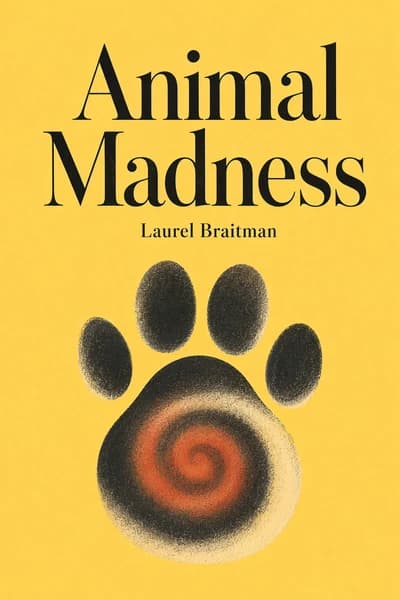
Animal Madness explores mental illness in animals, from anxious dogs to traumatized elephants, revealing striking parallels with human psychological struggles. Laurel Braitman combines personal anecdotes—like her Bernese Mountain Dog Oliver’s severe anxiety—with scientific research to argue that animals experience conditions like PTSD, OCD, and depression. The book highlights treatments like behavioral therapy and medication while underscoring the emotional bonds between humans and animals.
Animal lovers, psychology enthusiasts, and veterinarians will find this book compelling. It appeals to readers interested in animal behavior, mental health connections across species, or narratives blending science and storytelling. Professionals in veterinary medicine or zoology gain insights into treatment approaches, while general audiences appreciate its accessible, emotionally resonant case studies.
Yes, praised as a New York Times bestseller, Animal Madness offers a thought-provoking blend of memoir and science. Critics highlight Braitman’s engaging storytelling and well-researched examples, such as elephants recovering from trauma and parrots with compulsive behaviors. While some note its reliance on anecdotes, the book’s empathy and interdisciplinary approach make it a standout in animal psychology.
Animals in the book exhibit anxiety, OCD, PTSD, and depression. Examples include Oliver (Braitman’s dog) licking himself raw from stress, logging elephants traumatized by calf loss, and parrots plucking their feathers compulsively. Braitman argues these behaviors mirror human mental health struggles, emphasizing that emotional suffering transcends species.
Oliver’s extreme anxiety—jumping from windows and self-mutilation—drives Braitman’s exploration of animal mental health. His struggles frame the narrative, illustrating how nonhuman animals experience distress akin to humans. Oliver’s story personalizes the science, making complex concepts relatable.
The book discusses behavioral therapy, environmental enrichment, and medications like antidepressants. Braitman cites zoo elephants benefiting from social interaction and dogs on Prozac. She emphasizes tailored care, noting recovery often requires combining medical and psychological support.
Yes. Braitman shares success stories, such as elephants healing through herd bonds and dogs overcoming separation anxiety with treatment. Recovery hinges on compassionate intervention, whether through medication, therapy, or lifestyle changes, underscoring resilience across species.
Some reviewers argue the book prioritizes anecdotes over empirical data, though Braitman’s historical and anthropological lens adds depth. Critics also note limited focus on domesticated animals, but most praise its compelling narratives and emotional impact.
Unlike purely academic texts, Braitman blends memoir, history, and science, making it accessible to general readers. It stands out for emphasizing emotional health over purely instinctual behavior, aligning with works like Temple Grandin’s but with a stronger narrative drive.
Zoos both contribute to stress (via captivity) and aid recovery through specialized care. Braitman details cases where zoo animals, like gorillas with depression, improve with environmental adjustments and social interaction, highlighting the ethical complexities of captivity.
Yes, Braitman highlights antidepressants for dogs, anti-anxiety drugs for primates, and sedatives for traumatized elephants. She contextualizes medication within broader treatment plans, addressing debates about overmedication while acknowledging its lifesaving potential.
Her PhD in science history (MIT) and role at Stanford’s Medical Humanities Program inform the book’s interdisciplinary approach. Personal experiences with Oliver and ranch-raised animals lend authenticity, blending academic rigor with emotional resonance.
저자의 목소리로 책을 느껴보세요
지식을 흥미롭고 예시가 풍부한 인사이트로 전환
핵심 아이디어를 빠르게 캡처하여 신속하게 학습
재미있고 매력적인 방식으로 책을 즐기세요
Tip "must reform or die" following violent attacks on his keeper.
Animals are "liable to insanity, though far less often than in the case of man."
Feelings aren't limited to humans just because we describe them with words.
Darwin delivered the most significant blow to human exceptionalism.
Animals can suffer from versions of almost every human psychiatric disorder.
Animal Madness의 핵심 아이디어를 이해하기 쉬운 포인트로 분해하여 혁신적인 팀이 어떻게 창조하고, 협력하고, 성장하는지 이해합니다.
Animal Madness을 빠른 기억 단서로 압축하여 솔직함, 팀워크, 창의적 회복력의 핵심 원칙을 강조합니다.

생생한 스토리텔링을 통해 Animal Madness을 경험하고, 혁신 교훈을 기억에 남고 적용할 수 있는 순간으로 바꿉니다.
무엇이든 물어보고, 목소리를 선택하고, 진정으로 공감되는 인사이트를 함께 만들어보세요.

샌프란시스코에서 컬럼비아 대학교 동문들이 만들었습니다
"Instead of endless scrolling, I just hit play on BeFreed. It saves me so much time."
"I never knew where to start with nonfiction—BeFreed’s book lists turned into podcasts gave me a clear path."
"Perfect balance between learning and entertainment. Finished ‘Thinking, Fast and Slow’ on my commute this week."
"Crazy how much I learned while walking the dog. BeFreed = small habits → big gains."
"Reading used to feel like a chore. Now it’s just part of my lifestyle."
"Feels effortless compared to reading. I’ve finished 6 books this month already."
"BeFreed turned my guilty doomscrolling into something that feels productive and inspiring."
"BeFreed turned my commute into learning time. 20-min podcasts are perfect for finishing books I never had time for."
"BeFreed replaced my podcast queue. Imagine Spotify for books — that’s it. 🙌"
"It is great for me to learn something from the book without reading it."
"The themed book list podcasts help me connect ideas across authors—like a guided audio journey."
"Makes me feel smarter every time before going to work"
샌프란시스코에서 컬럼비아 대학교 동문들이 만들었습니다

Animal Madness 요약을 무료 PDF 또는 EPUB으로 받으세요. 인쇄하거나 오프라인에서 언제든 읽을 수 있습니다.
Oliver plunged from a fourth-floor window and landed on concrete-yet walked away without a single broken bone. This Bernese Mountain Dog seemed perfect when he first arrived: affectionate, gentle, well-behaved. But the moment his owners left, he transformed into a creature possessed by panic. He'd howl, destroy furniture, pace frantically. The separation anxiety became so unbearable that he chose a four-story drop over being alone. His survival sparked a question that would reshape how we understand animal minds: If animals can suffer psychological breaks severe enough to drive them toward self-destruction, what does that reveal about the emotional landscape they inhabit? This incident launched an exploration into a hidden world of animal mental health-a realm where elephants grieve themselves to death, dolphins may choose to stop breathing, and gorillas need Prozac to cope with captivity. The journey challenges a comfortable fiction we've maintained: that psychological suffering is uniquely human, that consciousness and emotion are our exclusive domain.