In "An Anatomy of Pain," Dr. Lalkhen transforms complex pain science into a deeply human exploration. Blending memoir with medical expertise, this biopsychosocial perspective revolutionizes how we understand suffering. What if the key to managing pain lies beyond medication in our psychological and social experiences?
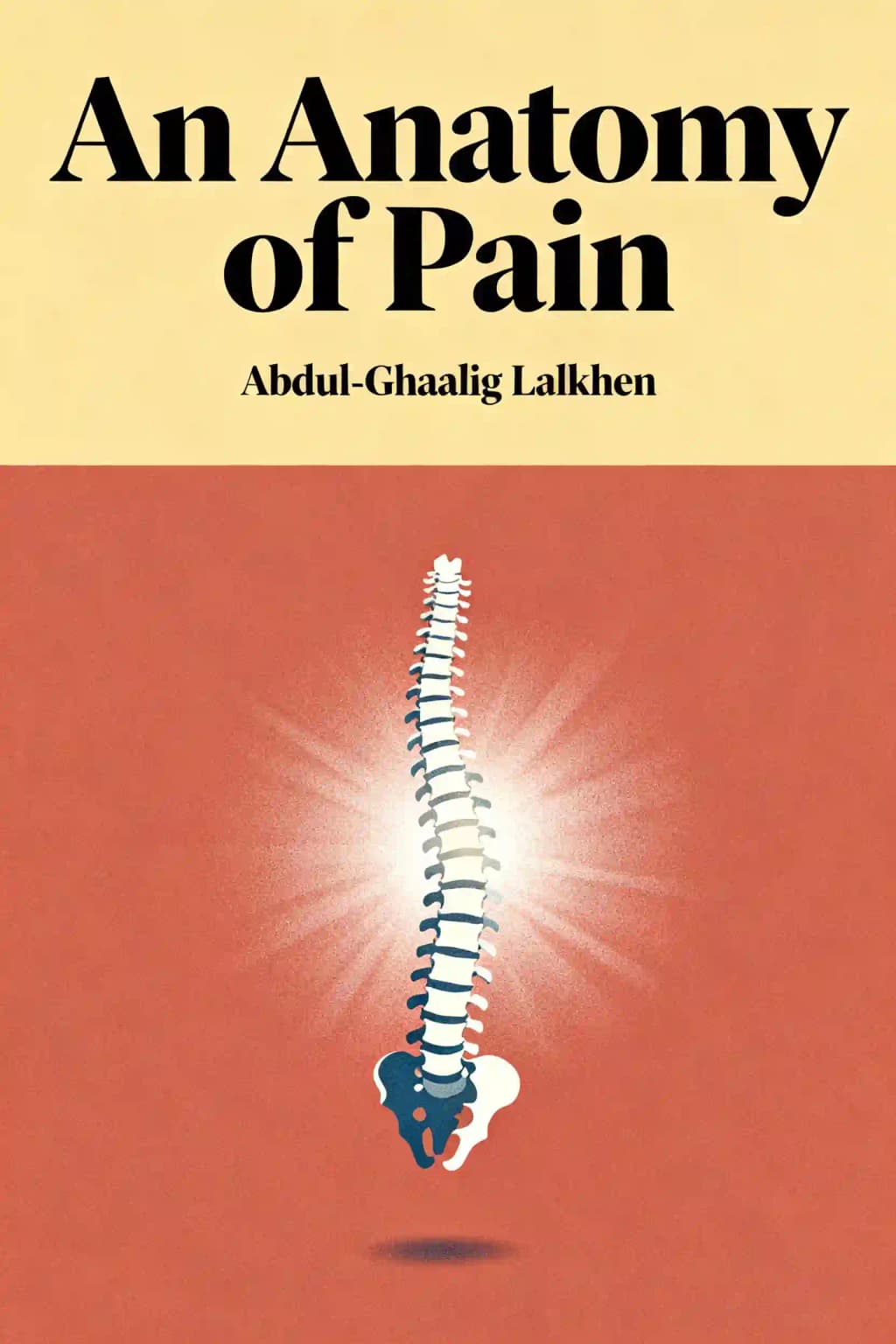
Abdul-Ghaaliq Lalkhen, author of An Anatomy of Pain: How the Body and the Mind Experience and Endure Physical Suffering, is a leading pain management specialist and anesthesiologist with over two decades of clinical experience. A graduate of the University of Cape Town, Dr. Lalkhen practices in Manchester and serves as a member of the Faculty of Pain Medicine, where he advocates for a biopsychosocial approach to understanding pain. His work bridges medical science and patient-centered care, addressing themes like chronic pain’s neurological roots, the limitations of opioid therapies, and the interplay of emotional and physical suffering.
In An Anatomy of Pain, he combines case studies—such as David Beckham’s Achilles injury—with insights into pain’s evolutionary purpose and modern treatment challenges.
Dr. Lalkhen also authored Pain: The Science of the Feeling Brain, further exploring pain’s societal and psychological dimensions. His writing, praised by Goodreads reviewers for its clarity and depth, demystifies complex concepts for both medical professionals and general readers. The book has garnered international attention for its nuanced examination of pain as a “car alarm with a faulty sensor,” blending clinical expertise with accessible storytelling to reshape how readers perceive enduring physical suffering.
An Anatomy of Pain explores the science of pain through neuroscience, psychology, and case studies, arguing that pain originates in the brain rather than solely from physical injury. Dr. Abdul-Ghaaliq Lalkhen examines chronic and acute pain, critiques overreliance on opioids, and discusses alternative treatments like nerve stimulation, emphasizing the mind-body connection.
This book is ideal for healthcare professionals, chronic pain sufferers, and readers interested in pain science. Its blend of medical expertise and accessible explanations appeals to those seeking a deeper understanding of pain management beyond medication.
Yes—praised as “informative, empathic, and wise” (Booklist), it offers valuable insights into pain’s complexity. While some note its technical tone, the book’s holistic approach and real-world examples make it a standout resource for patients and practitioners.
Dr. Lalkhen advocates for a biopsychosocial framework, which views pain as a blend of biological, psychological, and social factors. This model challenges purely physical explanations, highlighting how mental health, cultural beliefs, and environment shape pain perception.
The book disputes the notion that pain correlates directly with tissue damage, showing via case studies—like post-surgical pain differences—that the brain’s interpretation of context and emotion plays a dominant role.
Beyond opioids, the book covers electrical nerve stimulation, physical therapy, and cognitive-behavioral strategies. Lalkhen stresses the need for multimodal approaches to address pain’s psychological and social dimensions.
Mental state significantly impacts pain intensity. For example, soldiers with combat injuries often report less pain than civilians due to adrenaline and survival focus, illustrating how psychology modulates physical sensations.
Notable examples include a cesarean patient experiencing less pain than a kidney stone patient despite similar invasiveness, and a soldier’s resilience post-injury, underscoring the brain’s role in pain perception.
Lalkhen critiques overprescribing opioids, noting their limited long-term efficacy and addiction risks. He advocates for integrating non-pharmacological therapies to reduce reliance on painkillers.
Some readers find the clinical tone dense, and the focus on systemic healthcare challenges may overwhelm general audiences. However, its evidence-based analysis is widely praised.
Its emphasis on holistic pain management aligns with growing interest in integrative medicine. The critique of opioid dependence and exploration of emerging therapies remain timely amid ongoing public health debates.
As an anesthesiologist and pain specialist, Lalkhen combines 20+ years of clinical experience with academic rigor. His NHS work informs critiques of systemic barriers in pain care, lending authority to his recommendations.
저자의 목소리로 책을 느껴보세요
지식을 흥미롭고 예시가 풍부한 인사이트로 전환
핵심 아이디어를 빠르게 캡처하여 신속하게 학습
재미있고 매력적인 방식으로 책을 즐기세요
Pain reduces us all to our basest elements.
Pain is universally 'aversive at threshold.'
Pain becomes communication.
Pain's meaning mattered more than its presence.
Pain involves unpleasant sensations.
Anatomy of Pain의 핵심 아이디어를 이해하기 쉬운 포인트로 분해하여 혁신적인 팀이 어떻게 창조하고, 협력하고, 성장하는지 이해합니다.
Anatomy of Pain을 빠른 기억 단서로 압축하여 솔직함, 팀워크, 창의적 회복력의 핵심 원칙을 강조합니다.

생생한 스토리텔링을 통해 Anatomy of Pain을 경험하고, 혁신 교훈을 기억에 남고 적용할 수 있는 순간으로 바꿉니다.
무엇이든 물어보고, 목소리를 선택하고, 진정으로 공감되는 인사이트를 함께 만들어보세요.

샌프란시스코에서 컬럼비아 대학교 동문들이 만들었습니다
"Instead of endless scrolling, I just hit play on BeFreed. It saves me so much time."
"I never knew where to start with nonfiction—BeFreed’s book lists turned into podcasts gave me a clear path."
"Perfect balance between learning and entertainment. Finished ‘Thinking, Fast and Slow’ on my commute this week."
"Crazy how much I learned while walking the dog. BeFreed = small habits → big gains."
"Reading used to feel like a chore. Now it’s just part of my lifestyle."
"Feels effortless compared to reading. I’ve finished 6 books this month already."
"BeFreed turned my guilty doomscrolling into something that feels productive and inspiring."
"BeFreed turned my commute into learning time. 20-min podcasts are perfect for finishing books I never had time for."
"BeFreed replaced my podcast queue. Imagine Spotify for books — that’s it. 🙌"
"It is great for me to learn something from the book without reading it."
"The themed book list podcasts help me connect ideas across authors—like a guided audio journey."
"Makes me feel smarter every time before going to work"
샌프란시스코에서 컬럼비아 대학교 동문들이 만들었습니다

Anatomy of Pain 요약을 무료 PDF 또는 EPUB으로 받으세요. 인쇄하거나 오프라인에서 언제든 읽을 수 있습니다.
A telephone rings at 2 a.m., and your stomach drops. Walking into that delivery room, you see a scene that strips away all pretense-a woman screaming, her partner frozen in terror, a midwife hovering anxiously. Pain, in these moments, is the great equalizer. It doesn't care about your bank account, your education, or your plans. It simply demands attention. Then comes the epidural, and within minutes, transformation: the screaming woman becomes conversational, almost serene. This isn't magic-it's the peculiar nature of pain itself. Pain sits at the intersection of body and mind in ways that still confound us. We've sent humans to the moon, sequenced the genome, yet we remain humbled by this most fundamental experience. More people suffer from chronic pain than cancer, heart disease, and diabetes combined. Yet we treat it with a curious mix of pharmaceutical hope and medical hubris, often making things worse. Understanding pain means understanding ourselves-our biology, our psychology, our contradictions.