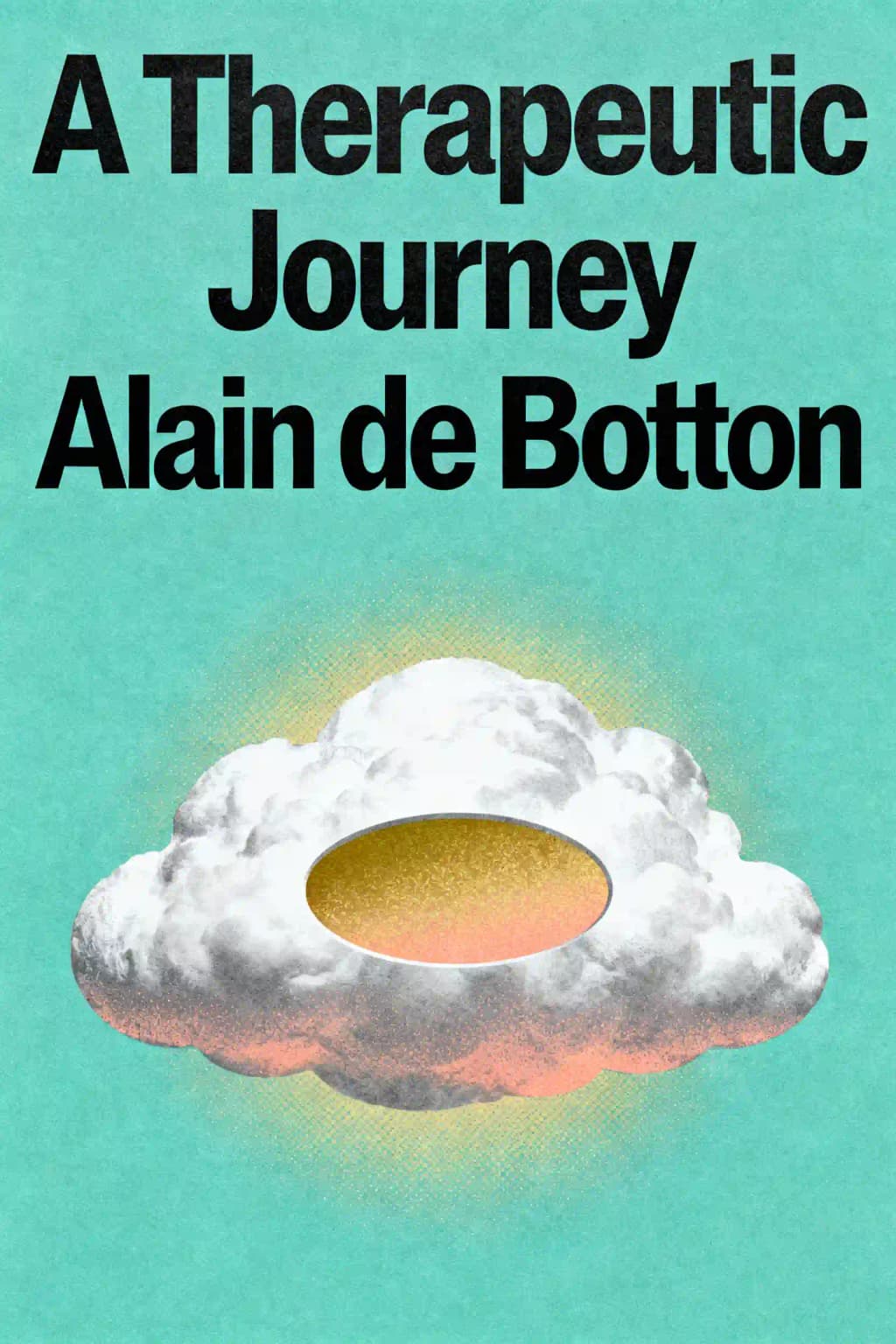
In "A Therapeutic Journey," Alain de Botton transforms mental health conversations with compassion and historical insight. Featured on Steven Bartlett's influential podcast, this Sunday Times bestseller argues mental illness is as unshameful as physical ailments. What masterpiece helps celebrities find resilience through art?
Alain de Botton, the Swiss-born British philosopher and bestselling author of A Therapeutic Journey, is celebrated for merging philosophical wisdom with everyday emotional challenges.
A King’s College London philosophy graduate, de Botton founded The School of Life, a global institution dedicated to self-awareness and emotional resilience.
His acclaimed works, including Essays in Love, Status Anxiety, and The Architecture of Happiness, dissect modern anxieties through accessible, thought-provoking prose. A frequent media commentator and TED speaker, de Botton’s books have been translated into 30 languages, selling millions worldwide.
A Therapeutic Journey continues his mission to reframe mental health struggles through philosophical inquiry, offering practical solace rooted in centuries of human thought.
A Therapeutic Journey explores mental health challenges through a philosophical lens, guiding readers from crisis to recovery. It discusses self-care, therapy’s role, and emotional resilience, blending personal anecdotes with actionable advice. The book emphasizes kindness and self-compassion, framed by Alain de Botton’s signature approach to applying philosophy to modern life.
This book is ideal for individuals navigating mental health struggles, fans of Alain de Botton’s reflective style, and anyone seeking practical strategies for emotional well-being. It resonates with readers interested in self-improvement, psychology, and philosophical insights into anxiety, grief, and personal growth.
Yes, particularly for its compassionate, non-judgmental approach to mental health. Reviewers praise its blend of theoretical depth and actionable advice, such as reframing negative thoughts and embracing vulnerability. However, those seeking clinical guidance should supplement it with professional resources.
Unlike The Architecture of Happiness (focused on design) or Status Anxiety (social perception), this book delves deeply into personal mental health. It retains de Botton’s philosophical tone but offers more practical, therapeutic tools, reflecting his work with The School of Life.
Some readers find its abstract philosophy less actionable for acute mental health needs. Others note repetition of themes from de Botton’s earlier works. However, its empathetic tone and relatable anecdotes are widely praised.
The book suggests strategies like journaling to track emotional patterns, reframing negative thoughts through Stoic principles, and embracing uncertainty. It emphasizes small, daily acts of self-care to build long-term resilience.
While direct quotes aren’t provided in sources, the book underscores ideas like:
As mental health remains a global priority, the book’s focus on emotional resilience and self-compassion aligns with contemporary discussions about workplace stress, social isolation, and post-pandemic recovery. Its timeless themes ensure ongoing relevance.
For similar themes, consider:
It frames therapy as a collaborative, non-shameful process to confront repressed emotions and unhelpful thought patterns. The book demystifies therapy, encouraging readers to view it as a tool for self-discovery rather than a last resort.
While specifics aren’t cited, de Botton often employs metaphors like “emotional archaeology” (excavating past traumas) and “mental weather systems” (understanding moods as temporary storms).
저자의 목소리로 책을 느껴보세요
지식을 흥미롭고 예시가 풍부한 인사이트로 전환
핵심 아이디어를 빠르게 캡처하여 신속하게 학습
재미있고 매력적인 방식으로 책을 즐기세요
There's nothing shameful about reaching your breaking point.
Art serves as a weapon against this despair.
Our culture's ideas about mature adulthood lack realism.
We cause ourselves unnecessary pain by pretending to be competent.
A major impediment to self-understanding is our assumption that we already know ourselves.
Therapeutic Journey의 핵심 아이디어를 이해하기 쉬운 포인트로 분해하여 혁신적인 팀이 어떻게 창조하고, 협력하고, 성장하는지 이해합니다.
Therapeutic Journey을 빠른 기억 단서로 압축하여 솔직함, 팀워크, 창의적 회복력의 핵심 원칙을 강조합니다.

생생한 스토리텔링을 통해 Therapeutic Journey을 경험하고, 혁신 교훈을 기억에 남고 적용할 수 있는 순간으로 바꿉니다.
무엇이든 물어보고, 목소리를 선택하고, 진정으로 공감되는 인사이트를 함께 만들어보세요.

샌프란시스코에서 컬럼비아 대학교 동문들이 만들었습니다
"Instead of endless scrolling, I just hit play on BeFreed. It saves me so much time."
"I never knew where to start with nonfiction—BeFreed’s book lists turned into podcasts gave me a clear path."
"Perfect balance between learning and entertainment. Finished ‘Thinking, Fast and Slow’ on my commute this week."
"Crazy how much I learned while walking the dog. BeFreed = small habits → big gains."
"Reading used to feel like a chore. Now it’s just part of my lifestyle."
"Feels effortless compared to reading. I’ve finished 6 books this month already."
"BeFreed turned my guilty doomscrolling into something that feels productive and inspiring."
"BeFreed turned my commute into learning time. 20-min podcasts are perfect for finishing books I never had time for."
"BeFreed replaced my podcast queue. Imagine Spotify for books — that’s it. 🙌"
"It is great for me to learn something from the book without reading it."
"The themed book list podcasts help me connect ideas across authors—like a guided audio journey."
"Makes me feel smarter every time before going to work"
샌프란시스코에서 컬럼비아 대학교 동문들이 만들었습니다

Therapeutic Journey 요약을 무료 PDF 또는 EPUB으로 받으세요. 인쇄하거나 오프라인에서 언제든 읽을 수 있습니다.
Have you ever felt so overwhelmed by anxiety that you couldn't function? So consumed by self-hatred that you questioned your right to exist? You're not alone. Mental unwellness exists on a spectrum affecting all of us, though we suffer quietly-tears at midnight, dark thoughts at 3 a.m., moments of crushing despair that we hide from others. What's remarkable isn't that we break down, but that we've held ourselves together for so long. Recovery often begins precisely at the moment of surrender-when we finally stop pretending we're fine. Our culture's ideas about mature adulthood lack realism. Though externally adults, we carry within us children who need reassurance, comfort, and permission to cry. Moments of surrendering courage belong to a brave life; without bending occasionally, we risk snapping completely. A major impediment to self-understanding is our assumption that we already know ourselves. We exchange surface descriptions of painful events while missing their emotional essence. These compressed stories allow us to forget rather than remember. True healing requires visceral reconnection with past fears, sadnesses, and losses. We must mourn properly by experiencing what events actually felt like-the pain of a sister being preferred or the terror of unpredictable parental rage. Our deepest thoughts often remain locked inside, inaccessible to ordinary consciousness. The process of accessing them isn't complicated: make time daily to lie still, close your eyes, and direct attention toward a specific concern. Disengaged from ordinary static, ask with guilelessness: "What is coming up for me here?" The answers are already there, like stars that only appear when the sun fades.