Varoufakis' explosive insider account of Greece's financial crisis reveals how European elites crushed democracy behind closed doors. Adapted into a Costa-Gavras film, this political memoir exposes the raw power dynamics that determine nations' fates. What really happens when economists face political machinery?
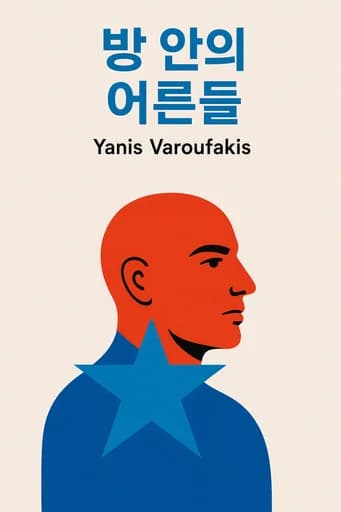
Yanis Varoufakis is an economist, political commentator, and former Greek Finance Minister, known for exposing Europe’s financial power structures in his critically acclaimed memoir Adults in the Room: My Battle with Europe's Deep Establishment.
A professor of economics at the University of Athens and co-founder of the transnational DiEM25 movement, Varoufakis combines academic rigor with frontline political experience gained during Greece’s 2015 debt crisis negotiations. His works, including Technofeudalism: What Killed Capitalism and And The Weak Suffer What They Must?, dissect global economic systems through a lens of democratic reform advocacy.
The Guardian ranked Adults in the Room among its 100 Best Books of the 21st Century, cementing its status as a seminal critique of EU austerity politics. Costa-Gavras adapted the memoir into an award-winning 2019 film, amplifying its impact on contemporary economic discourse. Varoufakis continues shaping economic policy debates through his MeRA25 party leadership and international speaking engagements.
Adults in the Room is Yanis Varoufakis’s memoir of his 2015 tenure as Greece’s finance minister, detailing his clash with EU institutions over austerity policies during Greece’s debt crisis. It exposes closed-door negotiations, political brinkmanship, and the struggle between democratic mandates and technocratic authority. The book critiques the EU’s handling of the crisis, framing it as a battle against an unaccountable “deep establishment.”
This book appeals to readers interested in political memoirs, EU governance, and economic policy. It’s essential for those analyzing democratic accountability, austerity debates, or the interplay between national sovereignty and supranational institutions. Policymakers, economists, and students of modern European history will find its insider perspective invaluable.
Yes, for its unflinching account of high-stakes diplomacy and the human impact of austerity. Varoufakis combines personal narrative with sharp analysis, offering rare insights into EU power dynamics. The book remains relevant for understanding contemporary populist movements and economic inequality.
Key themes include the conflict between democracy and technocracy, the moral costs of austerity, and the “insider vs. outsider” divide in policymaking. Varoufakis argues that EU institutions prioritized financial stability over democratic accountability, exacerbating Greece’s humanitarian crisis.
Varoufakis portrays EU leaders as inflexible and detached, prioritizing fiscal dogma over Greece’s social collapse. Figures like Wolfgang Schäuble and Christine Lagarde are depicted as enforcing austerity despite its human toll, reflecting what he calls a “deep establishment” resistant to reform.
The book contrasts EU “insiders” (policymakers with access to closed-door deals) with “outsiders” (ordinary citizens and dissenting voices). Insiders maintain power through mutual loyalty, while outsiders face marginalization for challenging the status quo—a dynamic Varoufakis argues undermines democratic principles.
Yes, Costa-Gavras adapted the memoir into a 2019 political drama Adults in the Room, dramatizing Varoufakis’s negotiations. The film condenses complex economic debates into a tense narrative, though some critics noted uneven performances.
Critics argue Varoufakis oversimplifies the EU’s position and downplays Greece’s fiscal mismanagement. Others note the memoir’s subjective tone, with detractors calling it a polemic rather than a balanced account.
The book’s themes resonate in debates over EU solidarity, rising populism, and post-pandemic debt. Varoufakis’s warning about austerity fueling authoritarianism mirrors concerns about recent far-right gains in Europe.
Notable lines include: “Democracy had been reduced to a ritual,” critiquing EU technocracy, and “The humanitarian crisis was not collateral damage—it was the policy.” These emphasize Varoufakis’s view of the crisis as a systemic failure.
While EU leaders framed austerity as necessary discipline, Varoufakis labels it a “moral crime” that worsened Greece’s recession. He alleges negotiations were rigged to force surrender, contradicting claims of good-faith compromise.
Though no official guides exist, the book is widely used in political science and economics courses. Discussion topics often include EU reform, sovereign debt, and the ethics of crisis management.
저자의 목소리로 책을 느껴보세요
지식을 흥미롭고 예시가 풍부한 인사이트로 전환
핵심 아이디어를 빠르게 캡처하여 신속하게 학습
재미있고 매력적인 방식으로 책을 즐기세요
Elections cannot be allowed to change economic policy.
Adults in the Room의 핵심 아이디어를 이해하기 쉬운 포인트로 분해하여 혁신적인 팀이 어떻게 창조하고, 협력하고, 성장하는지 이해합니다.
생생한 스토리텔링을 통해 Adults in the Room을 경험하고, 혁신 교훈을 기억에 남고 적용할 수 있는 순간으로 바꿉니다.
무엇이든 묻고, 학습 스타일을 선택하고, 나에게 맞는 인사이트를 함께 만들어보세요.

샌프란시스코에서 컬럼비아 대학교 동문들이 만들었습니다
"Instead of endless scrolling, I just hit play on BeFreed. It saves me so much time."
"I never knew where to start with nonfiction—BeFreed’s book lists turned into podcasts gave me a clear path."
"Perfect balance between learning and entertainment. Finished ‘Thinking, Fast and Slow’ on my commute this week."
"Crazy how much I learned while walking the dog. BeFreed = small habits → big gains."
"Reading used to feel like a chore. Now it’s just part of my lifestyle."
"Feels effortless compared to reading. I’ve finished 6 books this month already."
"BeFreed turned my guilty doomscrolling into something that feels productive and inspiring."
"BeFreed turned my commute into learning time. 20-min podcasts are perfect for finishing books I never had time for."
"BeFreed replaced my podcast queue. Imagine Spotify for books — that’s it. 🙌"
"It is great for me to learn something from the book without reading it."
"The themed book list podcasts help me connect ideas across authors—like a guided audio journey."
"Makes me feel smarter every time before going to work"
샌프란시스코에서 컬럼비아 대학교 동문들이 만들었습니다

Adults in the Room 요약을 무료 PDF 또는 EPUB으로 받으세요. 인쇄하거나 오프라인에서 언제든 읽을 수 있습니다.
In January 2015, Yanis Varoufakis stepped into a Washington DC hotel bar to meet Larry Summers, who delivered a prophetic warning: "There are two kinds of politicians-insiders and outsiders." Insiders never betray the club and gain influence; outsiders speak truth but remain powerless. Varoufakis's answer-that he would work within the system but become a whistleblower if necessary-would define his tumultuous tenure as Greece's finance minister during the country's economic collapse. What followed was an extraordinary confrontation between one small nation and Europe's financial establishment, revealing the human drama behind closed-door negotiations that determined the fate of millions. The story that unfolds isn't merely about debt figures and fiscal targets. It's about what happens when financial power collides with democratic will-when the machinery of modern capitalism decides that elections simply cannot be allowed to change economic policy. As we'll see, Greece became the laboratory for a new form of governance where financial institutions effectively override democratic decisions when they threaten established interests.
By 2015, Greece had endured a devastating economic collapse. Six years of recession had erased 28% of national income. Unemployment jumped from 7% to 27%, with youth unemployment hitting 65%. Among those employed, half a million hadn't received wages in months, and of 2.8 million households, 2.3 million couldn't pay their taxes. Real human tragedies lurked behind these statistics. Yiorgos Chatzis was found hanged after his disability allowance was suspended. When asked what they feared losing most, Athenians predominantly answered "dignity" rather than jobs or pensions. Healthcare spending had been cut by 11.1%, household income had fallen by 30%, and pensions - reduced by 25% - had become the main income for nearly half of all families. This wasn't recovery but systematic societal destruction. The tragedy is particularly outrageous because it resulted not from natural disaster but deliberate policy. The 2008 financial crisis had exposed overextended French and German banks. The Greek "bailout" was actually a scheme to rescue these banks while forcing Greeks to bear the consequences - transferring private losses to European taxpayers.
The bailout transformed Greece into "Bailoutistan" - a debt colony stripped of democratic sovereignty. Three institutions undermined parliamentary control: a bank recapitalization fund using taxpayer money without oversight; a tax department requiring troika approval; and a privatization authority selling national assets with proceeds flowing directly to foreign creditors. This sovereignty surrender occurred under threat of eurozone expulsion. When an MP defended his capitulation vote by asking protesters "Who are you to judge what I should vote for?" he received the simple reply: "Who do I have to be?" While Greece's corruption was real, the crisis's severity stemmed from the eurozone's flawed design. Outside the euro, Greece would have borrowed less from French and German banks and experienced a minor recession like Romania or Bulgaria. Instead, Greece became the scapegoat for Europe's banking crisis. Austerity proved self-defeating - as government spending decreased, national income shrank, tax revenues fell, and debt became more unpayable. Spain's 3.5% spending cut saw its economy decline by 6.4%, while Greece's 15% cut resulted in a 16% drop in national income, comparable to losing a third of your salary while still facing the same mortgage.
Varoufakis's account reveals the Eurogroup - the informal yet all-powerful meeting of eurozone finance ministers that determined Greece's fate - as a body with no legal standing, no minutes, and no written rules. At his first meeting, Varoufakis discovered that unelected troika officials spoke before elected ministers could contribute. When he asked to circulate proposals, he was told it was "not possible." Questioning the legality of excluding Greece from discussions yielded a stunning response: "The Eurogroup does not exist in law." This democratic void transformed technical debt discussions into raw power politics. When Varoufakis presented economic models showing why the troika's demands would deepen Greece's depression, he faced what he calls "the Swedish national anthem routine" - blank stares denying the very existence of the documents before them. The crisis exposed both Greece's weakness and the eurozone's structural flaws. Unlike America, where the Federal Reserve could absorb bad bank assets, European countries had surrendered their central banks to join the euro, and the ECB was prohibited from directly supporting governments - explaining Europe's reliance on austerity through benefit cuts and tax hikes to fund bank bailouts.
As bank runs accelerated in June 2015, Prime Minister Tsipras called for a referendum on the troika's harsh bailout terms. The European Central Bank responded by freezing emergency liquidity, forcing bank closures and limiting ATM withdrawals to 60 daily. Despite media warnings, Greeks voted 61.3% "No" to further austerity. When Varoufakis arrived at the prime minister's residence amid celebrations, he found "an atmosphere as cold as a morgue." Cabinet members who previously dressed casually now appeared in formal dark suits. In a midnight meeting, Tsipras revealed his intention to surrender, accepting terms even harsher than those Greeks had just rejected. Recognizing this betrayal of democratic principles, Varoufakis immediately resigned. Have you ever wondered what happens when a democratic vote directly challenges financial power? Greece provided the answer - democracy is suspended until the "correct" result is achieved.
As negotiations intensified, Varoufakis discovered multiple betrayals undermining Greece's position. His deputy minister had been secretly sharing confidential strategies with troika representatives without remorse when confronted. The most significant betrayal came from Prime Minister Tsipras, who transformed from fierce resistance to gradual surrender. Initially challenging European austerity, Tsipras fell under "Merkel's spell" - developing an almost mystical belief the German Chancellor would help Greece despite evidence to the contrary. By April 2015, European officials launched a character assassination campaign against Varoufakis in the media. Though Tsipras publicly supported his finance minister, behind the scenes he was already negotiating directly with creditors, making contradictory concessions. The Bank of Greece further undermined the government by releasing reports warning of economic collapse if they didn't capitulate to creditor demands. This institutional sabotage, combined with personal betrayals, created an untenable negotiating position.
Varoufakis reveals how modern European power operates through "conspiracies without conspirators" - networks sharing sensitive information through informal channels while evading democratic oversight. The Greek crisis showed how institutions like the European Central Bank can weaponize monetary policy to subdue elected governments when democratic decisions threaten financial interests. Yet despite closed banks and fearmongering, citizens voted decisively against austerity. Though Greece's rebellion was ultimately crushed through financial asphyxiation, Varoufakis sees it as essential democratic resistance. The real danger isn't setting ambitious democratic goals and failing, but accepting democracy's gradual erosion. When asked how he could support remaining in the EU after Greece's treatment, Varoufakis would respond: "We want our country back too, but reclaiming our countries requires restoring common sense across Europe" - reflecting his belief that confronting borderless financial power requires struggle beyond national boundaries. Greece's experience serves as both warning and inspiration - democracy remains vulnerable to concentrated financial power, yet citizens can still find courage to resist under enormous pressure.