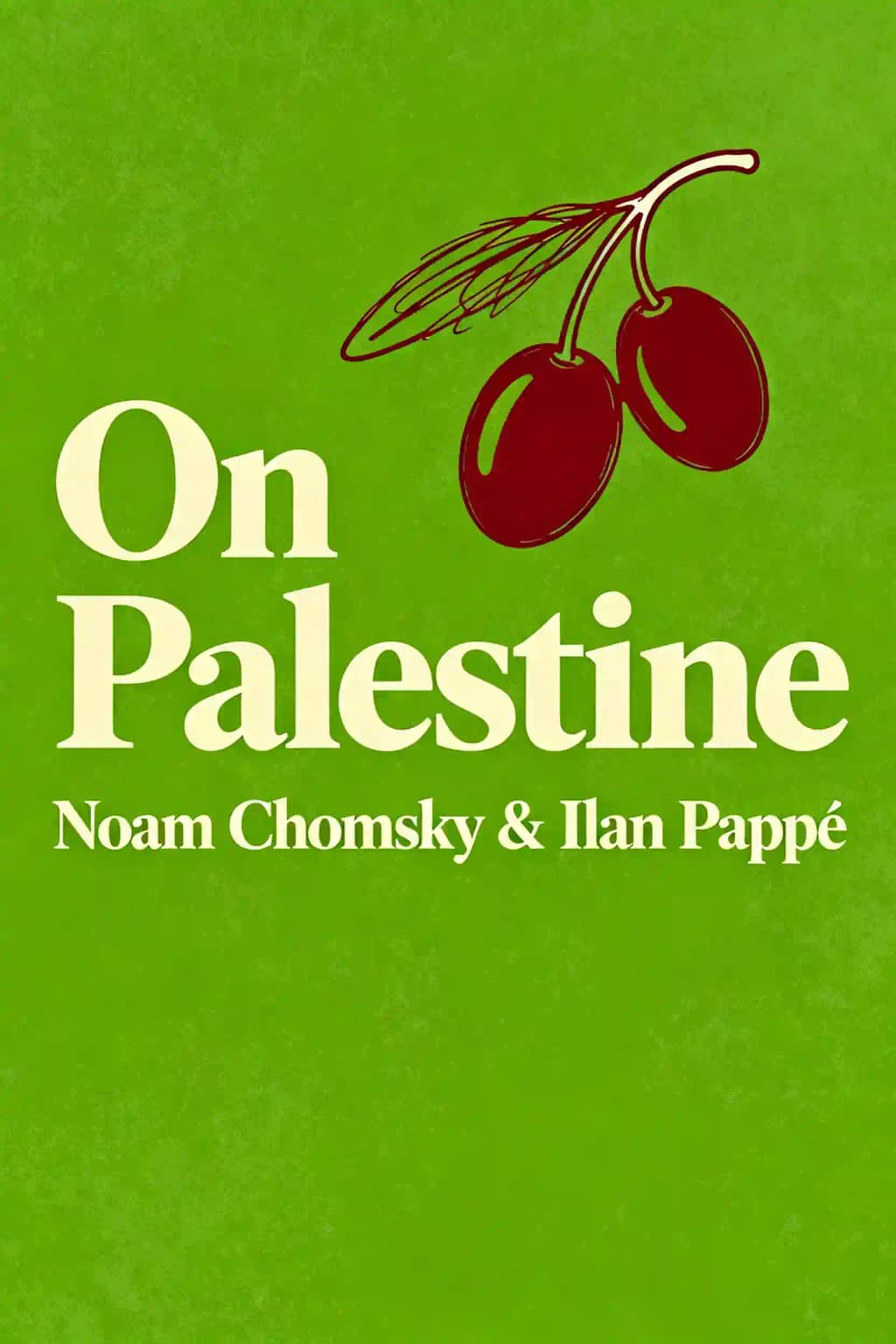
"On Palestine" - Chomsky and Pappe's explosive dialogue dismantles official narratives of the Israeli-Palestinian conflict, drawing controversial apartheid comparisons that forced Pappe to flee Israel. This 204-page manifesto has become required reading in human rights circles, challenging Western assumptions about Middle East politics.
Noam Chomsky and Ilan Pappé, co-authors of On Palestine, bring decades of expertise as leading critics of Israeli policy and advocates for Palestinian liberation. Chomsky, Institute Professor Emeritus at MIT and renowned political dissident, has authored over 150 books on linguistics, media analysis, and U.S. foreign policy, including the bestselling Hegemony or Survival and Gaza in Crisis (co-authored with Pappé).
Pappé, a University of Exeter historian and Israel’s foremost "New Historian," revolutionized Middle Eastern scholarship with works like The Ethnic Cleansing of Palestine, which reframed the 1948 Nakba as systematic expulsion. Their collaboration merges Chomsky’s global policy critiques with Pappé’s granular archival research on occupation.
On Palestine—a direct sequel to their 2010 Gaza in Crisis—analyzes Israel’s blockade strategy and international law violations through dialogue and essays. Chomsky’s monthly New York Times syndicated columns and Pappé’s role as director of the European Centre for Palestine Studies ground their arguments in real-time geopolitical analysis. Translated into 23 languages, their works are staples in Middle Eastern studies programs and human rights discourse, cited by organizations like Amnesty International. The book’s 2015 update following Operation Protective Edge remains a critical resource for understanding Gaza’s humanitarian crises.
On Palestine critically examines the Israel-Palestine conflict through a decolonial lens, exposing Israel’s settler-colonial policies and the role of Zionism in systemic Palestinian displacement. The book challenges the feasibility of a two-state solution, arguing that Israel’s expansionist tactics and U.S.-backed diplomacy perpetuate violence and occupation. It advocates reframing the discourse to prioritize Palestinian liberation and international solidarity.
This book is essential for readers seeking a deep, academic analysis of the Israel-Palestine conflict beyond mainstream narratives. Activists, scholars, and policymakers will benefit from its critique of geopolitical power dynamics, settler-colonialism, and U.S. foreign policy. It’s also accessible to newcomers wanting a comprehensive primer on the conflict’s historical roots and contemporary realities.
Chomsky and Pappé argue Zionism functions as a racialized, exclusionary ideology that legitimizes Palestinian dispossession. They compare Israel’s occupation to apartheid but stress it’s more severe due to intentional Palestinian ghettoization and Western complicity. The critique extends to Israel’s narrative control, which weaponizes antisemitism accusations to silence dissent.
The authors advocate for a single, democratic state with equal rights for Israelis and Palestinians, rejecting partition as unworkable. They emphasize global grassroots solidarity, like the Boycott, Divestment, Sanctions (BDS) movement, to pressure Israel. The book also urges reframing media language to highlight Palestinian agency and Israeli state violence.
Chomsky traces U.S. support for Israel to strategic imperial interests, including military aid and UN vetoes shielding Israel from accountability. The book underscores how American media and lobbying groups (e.g., AIPAC) propagate pro-Israel narratives, obscuring Palestinian suffering.
While Gaza in Crisis (2010) focused on specific wars, On Palestine offers a broader structural critique of Zionism and U.S. imperialism. It expands on themes from Chomsky’s The Fateful Triangle and Pappé’s The Ethnic Cleansing of Palestine, integrating updated analysis of diplomatic failures and grassroots resistance.
Some accuse the authors of overlooking Palestinian political divisions (e.g., Hamas-Fatah tensions) and idealizing one-state viability. Pro-Israel critics dismiss the book as biased, rejecting comparisons to apartheid. However, supporters praise its unflinching exposure of Israeli state violence and Western hypocrisy.
The book condemns Western media for parroting Israeli talking points, such as framing occupation as “self-defense” and censoring Palestinian voices. It urges journalists to adopt terms like “settler-colonialism” over “conflict” to accurately contextualize power imbalances.
With Israel’s far-right government accelerating settlement projects and Gaza’s humanitarian crisis worsening, the book’s analysis remains urgently prescient. Its call for global accountability aligns with growing grassroots movements challenging Western governments’ complicity.
저자의 목소리로 책을 느껴보세요
지식을 흥미롭고 예시가 풍부한 인사이트로 전환
핵심 아이디어를 빠르게 캡처하여 신속하게 학습
재미있고 매력적인 방식으로 책을 즐기세요
The situation is uniquely complex while masking its colonial nature.
Occupation suggests a temporary military presence.
Apartheid accurately describes a permanent system.
This is worse than what we experienced. At least we could move around.
Ethnic cleansing...identifies clear victims, perpetrators, and paths to reconciliation.
On Palestine의 핵심 아이디어를 이해하기 쉬운 포인트로 분해하여 혁신적인 팀이 어떻게 창조하고, 협력하고, 성장하는지 이해합니다.
On Palestine을 빠른 기억 단서로 압축하여 솔직함, 팀워크, 창의적 회복력의 핵심 원칙을 강조합니다.

생생한 스토리텔링을 통해 On Palestine을 경험하고, 혁신 교훈을 기억에 남고 적용할 수 있는 순간으로 바꿉니다.
무엇이든 물어보고, 목소리를 선택하고, 진정으로 공감되는 인사이트를 함께 만들어보세요.

샌프란시스코에서 컬럼비아 대학교 동문들이 만들었습니다
"Instead of endless scrolling, I just hit play on BeFreed. It saves me so much time."
"I never knew where to start with nonfiction—BeFreed’s book lists turned into podcasts gave me a clear path."
"Perfect balance between learning and entertainment. Finished ‘Thinking, Fast and Slow’ on my commute this week."
"Crazy how much I learned while walking the dog. BeFreed = small habits → big gains."
"Reading used to feel like a chore. Now it’s just part of my lifestyle."
"Feels effortless compared to reading. I’ve finished 6 books this month already."
"BeFreed turned my guilty doomscrolling into something that feels productive and inspiring."
"BeFreed turned my commute into learning time. 20-min podcasts are perfect for finishing books I never had time for."
"BeFreed replaced my podcast queue. Imagine Spotify for books — that’s it. 🙌"
"It is great for me to learn something from the book without reading it."
"The themed book list podcasts help me connect ideas across authors—like a guided audio journey."
"Makes me feel smarter every time before going to work"
샌프란시스코에서 컬럼비아 대학교 동문들이 만들었습니다

On Palestine 요약을 무료 PDF 또는 EPUB으로 받으세요. 인쇄하거나 오프라인에서 언제든 읽을 수 있습니다.
What happens when an entire population becomes invisible in plain sight? While global headlines flash with conflicts across continents, one struggle persists with remarkable consistency-yet remains systematically misunderstood. The Israeli-Palestinian conflict has been framed, reframed, and packaged for international consumption in ways that obscure its fundamental nature. This isn't merely another territorial dispute or religious clash. It's a story of settler colonialism, systematic displacement, and the power of language to hide oppression behind diplomatic vocabulary. Understanding Palestine means peeling back layers of carefully constructed narratives to reveal what's been happening since the late nineteenth century-and what continues today.