The emperor's new mind: concerning computers, minds, and the laws of physics by Roger Penrose Summary

Overview of The emperor's new mind
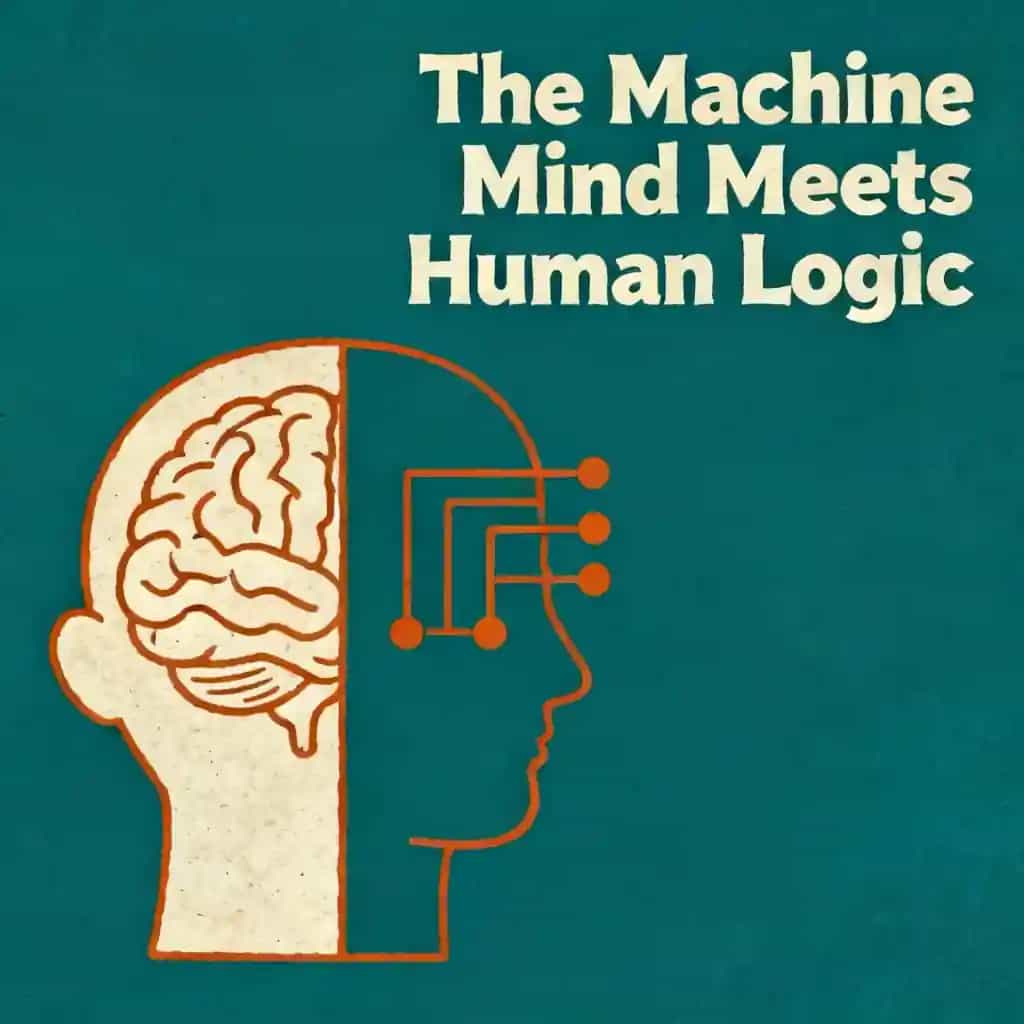
In "The Emperor's New Mind," Oxford mathematician Penrose challenges AI's limits, arguing human consciousness transcends algorithms. Praised by the New York Times as "bold, brilliant, groundbreaking," this mind-bending classic asks: Can quantum physics explain why machines will never truly think?
- Human consciousness defies replication by classical algorithms or Turing machines
- Quantum indeterminism in microtubules may explain non-computable aspects of awareness
- Gödel’s incompleteness theorem proves human reasoning transcends computational logic
- True AI requires understanding quantum gravity’s role in cognition
- Subjective experience emerges from orchestrated objective reduction in neural structures
- Mathematical Platonism suggests abstract truths exist beyond physical computation
- Brains leverage quantum coherence where computers rely on deterministic bits
- Roger Penrose argues consciousness requires revolutionary physics beyond neuroscience
- The Emperor’s New Mind rejects strong AI through quantum biology
- Non-algorithmic perception of time challenges computer-based consciousness models
- Orchestrated OR theory links self-awareness to spacetime geometry fluctuations
- Quantum vibrations in neurons enable creative insight machines cannot replicate
About the Author of The emperor's new mind
Roger Penrose, Nobel Laureate in Physics and Emeritus Rouse Ball Professor of Mathematics at the University of Oxford, is the acclaimed author of The Emperor’s New Mind, a groundbreaking exploration of consciousness, quantum mechanics, and the limits of artificial intelligence.
A pioneer in mathematical physics, Penrose’s work on black hole singularities with Stephen Hawking revolutionized cosmology and earned him the 2020 Nobel Prize in Physics. His expertise spans general relativity, twistor theory, and non-periodic “Penrose tiling,” later observed in quasicrystals.
The Emperor’s New Mind synthesizes his interdisciplinary prowess, arguing that human cognition transcends classical computation—a theme expanded in his follow-up Shadows of the Mind and the comprehensive physics treatise The Road to Reality.
Knighted in 1994 and awarded the Royal Society’s Copley Medal, Penrose’s works have shaped debates in science and philosophy. The Emperor’s New Mind received the Royal Society Science Books Prize and has been a cornerstone of consciousness studies since its 1989 publication.
FAQs About The emperor's new mind
What is The Emperor's New Mind about?
The Emperor's New Mind by Roger Penrose explores the limitations of artificial intelligence and argues that human consciousness cannot be replicated by computers. Combining physics, mathematics, and philosophy, Penrose proposes that quantum mechanics and non-computable processes in the brain underlie the unique nature of human thought, challenging mainstream views on AI and mechanistic models of the mind.
Who should read The Emperor's New Mind?
This book is ideal for readers interested in the intersection of science and philosophy, including enthusiasts of physics, mathematics, and AI. It appeals to those curious about consciousness studies, quantum theory, and debates about whether machines can truly think. Academics and researchers in cognitive science will also find its interdisciplinary approach compelling.
Is The Emperor's New Mind worth reading?
Yes, Penrose’s work remains a seminal text for its bold critique of strong AI and its integration of quantum physics with neuroscience. While some ideas are speculative, the book offers profound insights into consciousness, Gödel’s theorem, and the limits of computation, making it essential for anyone exploring the mind’s relationship to physical laws.
What is Roger Penrose’s main argument in The Emperor's New Mind?
Penrose argues that human consciousness transcends computational algorithms. He asserts that quantum mechanical processes in the brain, particularly microtubules, enable non-computable thinking—capabilities that Turing machines cannot replicate. This challenges the notion that AI could achieve true human-like understanding or creativity.
How does quantum mechanics relate to human consciousness in the book?
Penrose hypothesizes that quantum indeterminacy and wave-function collapses in brain microtubules play a role in conscious experience. He links these phenomena to the brain’s ability to process information in ways that defy classical computation, suggesting consciousness arises from quantum-level events inaccessible to deterministic algorithms.
What role does Gödel’s theorem play in Penrose’s argument?
Gödel’s incompleteness theorems demonstrate that formal systems cannot prove all truths, revealing inherent limitations in logic. Penrose uses this to argue that human reasoning transcends algorithmic computation, as minds can intuitively grasp truths unprovable within rigid formal frameworks—a capability he claims AI lacks.
How does Penrose critique strong AI in The Emperor's New Mind?
Penrose rejects strong AI’s claim that consciousness emerges from computational complexity. He highlights the inability of algorithms to replicate human intuition, creativity, or understanding of abstract concepts, emphasizing that consciousness requires non-computable processes rooted in quantum physics.
What is non-computable thinking according to Penrose?
Non-computable thinking refers to cognitive processes that cannot be modeled by algorithms or Turing machines. Penrose ties this to quantum mechanics, proposing that the brain’s ability to resolve ambiguities (e.g., in perception or problem-solving) relies on physics beyond classical computation.
How does the book connect physics to the philosophy of mind?
Penrose bridges relativity, quantum theory, and neuroscience to argue that understanding consciousness demands a unified physics framework. He critiques reductionist approaches, advocating for a “theory of everything” that explains how physical laws give rise to subjective experience.
What criticisms exist against Penrose’s arguments?
Critics argue Penrose’s quantum consciousness hypothesis lacks empirical evidence and conflates mathematical logic with biological processes. Some neuroscientists contest the relevance of quantum effects in macroscopic brain structures, while AI researchers maintain that computational advances could eventually mimic human cognition.
How does The Emperor's New Mind compare to other works on AI and consciousness?
Unlike purely philosophical or computational approaches (e.g., Hofstadter’s Gödel, Escher, Bach), Penrose grounds his arguments in physics and mathematics. His focus on quantum biology contrasts with works emphasizing neural networks or algorithmic complexity, offering a unique perspective on the mind’s incomputability.
Why is The Emperor's New Mind still relevant in 2025?
As AI advances, Penrose’s warnings about its limitations remain provocative. The book’s interdisciplinary framework resonates with ongoing debates about machine consciousness, quantum computing, and neuroscience, making it a critical reference for re-evaluating what truly distinguishes human intelligence in the age of generative AI.
Feel the book through the author's voice
Turn knowledge into engaging, example-rich insights
Capture key ideas in a flash for fast learning
Enjoy the book in a fun and engaging way
Key Themes in The emperor's new mind
Quotes from The emperor's new mind
Understanding cannot be reduced to symbol manipulation.
Our minds must be doing something algorithms cannot replicate.
Turing's result isn't merely negative-it's constructive.
Consciousness involves processes that transcend conventional computation.
They're exploring something that seems to have an objective existence.
Characters in The emperor's new mind
Quick Summary Mode - Read or listen to The emperor's new mind Summary in 10 Minutes

Break down key ideas from The emperor's new mind into bite-sized takeaways to understand how innovative teams create, collaborate, and grow.

Flash Card Mode - Top 10 Insights from The emperor's new mind in a Nutshell

Distill The emperor's new mind into rapid-fire memory cues that highlight key principles of candor, teamwork, and creative resilience.

Fun Mode - The emperor's new mind Lessons Told Through 23-Min Stories

Experience The emperor's new mind through vivid storytelling that turns innovation lessons into moments you'll remember and apply.
Personalize Mode - Read or listen to The emperor's new mind Summary in 0 Minutes

Ask anything, pick the voice, and co-create insights that truly resonate with you.

From Columbia University alumni built in San Francisco
"Instead of endless scrolling, I just hit play on BeFreed. It saves me so much time."


"I never knew where to start with nonfiction—BeFreed’s book lists turned into podcasts gave me a clear path."


"Perfect balance between learning and entertainment. Finished ‘Thinking, Fast and Slow’ on my commute this week."
"Crazy how much I learned while walking the dog. BeFreed = small habits → big gains."
"Reading used to feel like a chore. Now it’s just part of my lifestyle."

"Feels effortless compared to reading. I’ve finished 6 books this month already."
"BeFreed turned my guilty doomscrolling into something that feels productive and inspiring."

"BeFreed turned my commute into learning time. 20-min podcasts are perfect for finishing books I never had time for."
"BeFreed replaced my podcast queue. Imagine Spotify for books — that’s it. 🙌"

"It is great for me to learn something from the book without reading it."
"The themed book list podcasts help me connect ideas across authors—like a guided audio journey."
"Makes me feel smarter every time before going to work"
From Columbia University alumni built in San Francisco
"Instead of endless scrolling, I just hit play on BeFreed. It saves me so much time."
"I never knew where to start with nonfiction—BeFreed’s book lists turned into podcasts gave me a clear path."
"Perfect balance between learning and entertainment. Finished ‘Thinking, Fast and Slow’ on my commute this week."
"Crazy how much I learned while walking the dog. BeFreed = small habits → big gains."
"Reading used to feel like a chore. Now it’s just part of my lifestyle."
"Feels effortless compared to reading. I’ve finished 6 books this month already."
"BeFreed turned my guilty doomscrolling into something that feels productive and inspiring."
"BeFreed turned my commute into learning time. 20-min podcasts are perfect for finishing books I never had time for."
"BeFreed replaced my podcast queue. Imagine Spotify for books — that’s it. 🙌"
"It is great for me to learn something from the book without reading it."
"The themed book list podcasts help me connect ideas across authors—like a guided audio journey."
"Makes me feel smarter every time before going to work"
"Instead of endless scrolling, I just hit play on BeFreed. It saves me so much time."
"I never knew where to start with nonfiction—BeFreed’s book lists turned into podcasts gave me a clear path."
"Perfect balance between learning and entertainment. Finished ‘Thinking, Fast and Slow’ on my commute this week."
"Crazy how much I learned while walking the dog. BeFreed = small habits → big gains."
"Reading used to feel like a chore. Now it’s just part of my lifestyle."
"Feels effortless compared to reading. I’ve finished 6 books this month already."
"BeFreed turned my guilty doomscrolling into something that feels productive and inspiring."
"BeFreed turned my commute into learning time. 20-min podcasts are perfect for finishing books I never had time for."
"BeFreed replaced my podcast queue. Imagine Spotify for books — that’s it. 🙌"
"It is great for me to learn something from the book without reading it."
"The themed book list podcasts help me connect ideas across authors—like a guided audio journey."
"Makes me feel smarter every time before going to work"
"Instead of endless scrolling, I just hit play on BeFreed. It saves me so much time."
"I never knew where to start with nonfiction—BeFreed’s book lists turned into podcasts gave me a clear path."
"Perfect balance between learning and entertainment. Finished ‘Thinking, Fast and Slow’ on my commute this week."
"Crazy how much I learned while walking the dog. BeFreed = small habits → big gains."
"Reading used to feel like a chore. Now it’s just part of my lifestyle."
"Feels effortless compared to reading. I’ve finished 6 books this month already."
"BeFreed turned my guilty doomscrolling into something that feels productive and inspiring."
"BeFreed turned my commute into learning time. 20-min podcasts are perfect for finishing books I never had time for."
"BeFreed replaced my podcast queue. Imagine Spotify for books — that’s it. 🙌"
"It is great for me to learn something from the book without reading it."
"The themed book list podcasts help me connect ideas across authors—like a guided audio journey."
"Makes me feel smarter every time before going to work"

Get the The emperor's new mind summary as a free PDF or EPUB. Print it or read offline anytime.