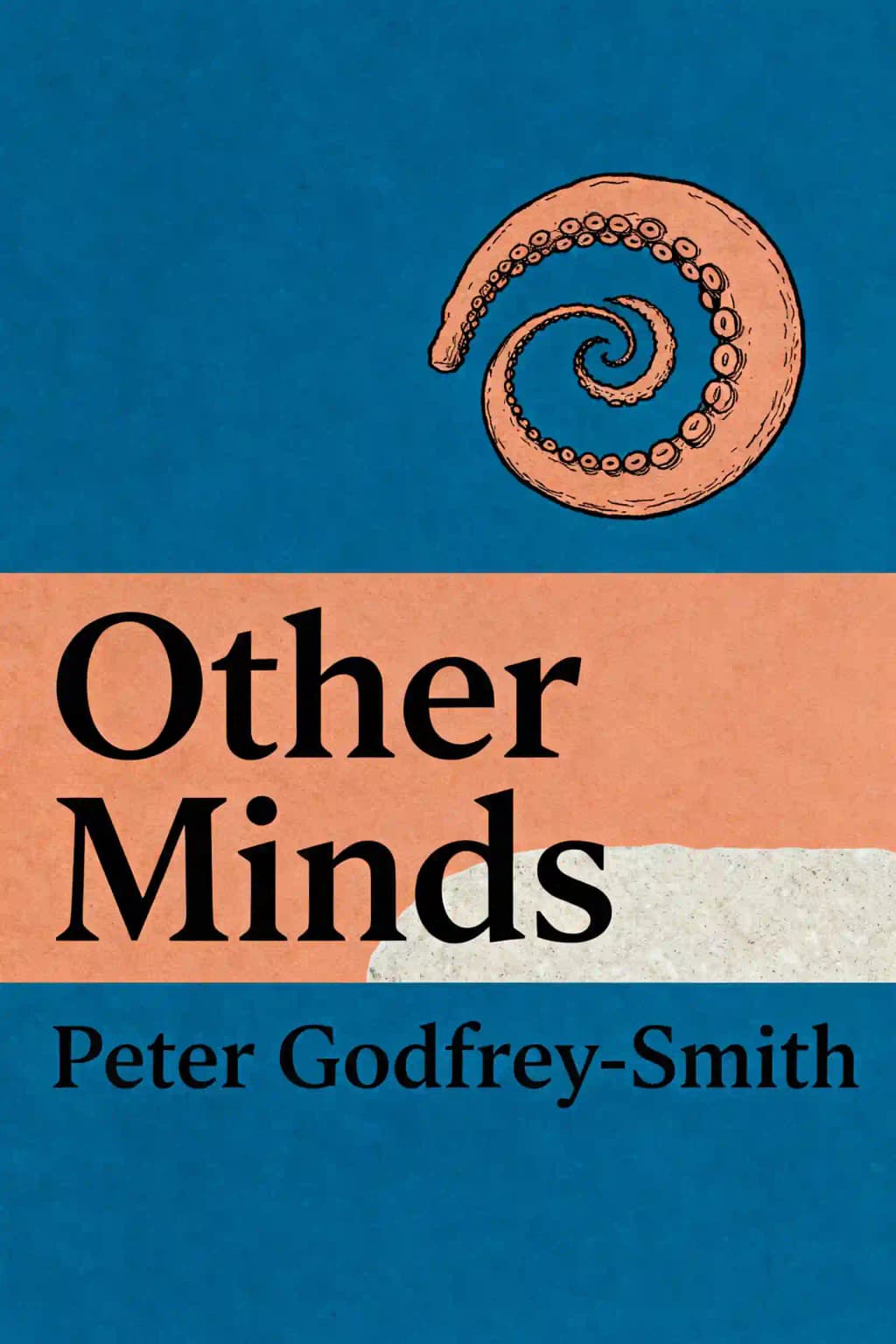
Other Minds
Overview of Other Minds
Dive into consciousness's greatest mystery as philosopher Peter Godfrey-Smith explores octopus intelligence - creatures with alien minds yet remarkable awareness. Praised as "the Oliver Sacks of cephalopods," this bestseller challenges what we know about sentience while revealing the unexpected philosophers of the deep.

Key Themes in Other Minds
- cephalopod intelligence
- convergent evolution
- distributed nervous systems
- embodied cognition
- origins of consciousness
Quotes from Other Minds
It's not every day you're invited to imagine yourself into the mind of an octopus.
This might be our closest approximation to meeting an alien intelligence.
Intelligence can evolve under very different selective pressures.
Behavior became directed at other animals through watching, pursuing, seizing, and evading.
This ancient garden hosted bizarre creatures.
Characters in Other Minds
- Peter Godfrey-SmithAuthor and philosopher exploring animal minds
- Jacques CousteauExplorer who first described octopus intelligence
- Sy MontgomeryAuthor who provides perspective on octopus minds
About the Author
About the Author of Other Minds
Peter Godfrey-Smith is an award-winning philosopher of science and bestselling author of Other Minds: The Octopus, the Sea, and the Deep Origins of Consciousness. A professor of history and philosophy of science at the University of Sydney, he holds a PhD from UC San Diego and has taught at Harvard, Stanford, and the Australian National University.
His work explores the evolution of consciousness, blending marine biology, comparative neuroscience, and philosophy. Other Minds, a seminal work in popular science, examines cephalopod intelligence and the origins of subjective experience, informed by Godfrey-Smith’s firsthand diving research.
He is also the author of Metazoa: Animal Life and the Birth of the Mind, which expands on themes of animal cognition. His writing has been featured in The New York Times, National Geographic, and The Guardian, and his 2009 book Darwinian Populations and Natural Selection won the prestigious Lakatos Award. Translated into over 10 languages, Other Minds was hailed by The New York Times Book Review for its groundbreaking insights into the animal mind.
Download Summary of Other Minds
Get the Other Minds summary as a free PDF or EPUB. Print it or read offline anytime.
FAQs About This Book
Other Minds explores the evolution of consciousness through the study of cephalopods like octopuses and cuttlefish. Philosopher Peter Godfrey-Smith combines marine biology, evolutionary science, and philosophy to trace how subjective experience emerged in animals, arguing that octopuses—with their decentralized nervous systems and complex behaviors—offer a unique window into non-human intelligence.
This book is ideal for readers interested in animal intelligence, marine biology, or the philosophy of consciousness. Science enthusiasts, students of evolutionary biology, and general audiences seeking a thought-provoking blend of narrative storytelling and academic rigor will find it accessible and engaging.
Yes—Other Minds is a critically acclaimed bestseller praised for its accessible synthesis of science and philosophy. It was nominated for a Goodreads Choice Award and hailed by The New York Times for its “astute look at our mind’s link to the animal world.” Readers appreciate its vivid descriptions of octopus behavior and its exploration of consciousness.
Godfrey-Smith proposes that consciousness arose as a tool for survival in complex environments. By examining cephalopods, which diverged from vertebrates 600 million years ago, he highlights alternative evolutionary paths to intelligence. Their decentralized nervous systems and problem-solving abilities challenge traditional views of cognition.
Octopuses possess a distributed nervous system, with two-thirds of their neurons in their arms, enabling autonomous problem-solving. Unlike social mammals, their intelligence evolved independently, offering insights into solitary, short-lived species’ cognitive capacities. This “alien” mindset reshapes understanding of non-human consciousness.
- Consciousness likely evolved multiple times across species.
- Octopuses demonstrate problem-solving skills and curiosity despite short lifespans.
- Studying cephalopods illuminates the deep origins of subjective experience.
- Intelligence is not a linear hierarchy but a branching tree of adaptations.
Godfrey-Smith bridges empirical research—such as octopus camouflage mechanics and play behavior—with philosophical questions about sentience. He argues that subjective experience (“what it’s like to be an octopus”) is a biological trait shaped by evolution, not exclusive to humans.
Some readers note the book leans more into scientific observation than deep philosophical analysis of consciousness. While praised for its accessible style, critics suggest it leaves questions about the nature of subjective experience partially unresolved.
Metazoa expands on themes from Other Minds, examining consciousness across all animals rather than focusing on cephalopods. Both books emphasize evolutionary continuity but Metazoa offers a broader framework for understanding the birth of the mind.
As AI and animal cognition research advance, the book’s insights into non-human intelligence remain timely. It challenges anthropocentric views of consciousness, fostering discussions in ethics, AI development, and cross-species communication.
- “The octopus is the closest we’ll come to meeting an intelligent alien.”
- “Consciousness is a living process, not a metaphysical abstraction.”
These lines underscore the book’s core thesis: understanding cephalopod minds reshapes our place in nature’s cognitive tapestry.
Godfrey-Smith’s underwater footage of octopuses has appeared in National Geographic and The New York Times. While no direct adaptation exists, the book complements documentaries like My Octopus Teacher, enhancing public fascination with cephalopod intelligence.





