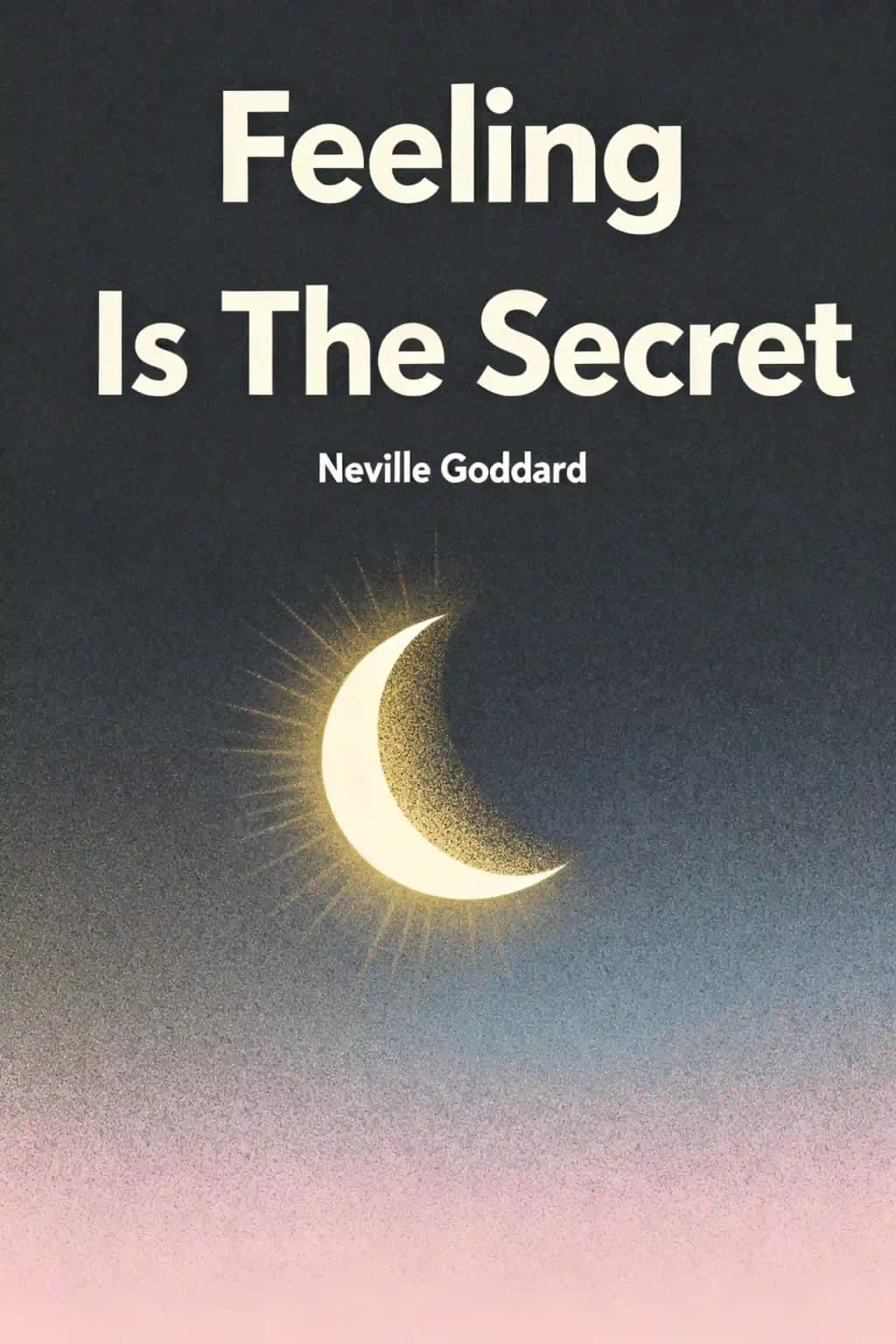
Feeling is the Secret
Overview of Feeling is the Secret
Discover how your feelings literally create your reality in Neville Goddard's metaphysical masterpiece. Praised by Joseph Murphy as "one of the world's great mystics," this radical guide influenced Rhonda Byrne's "The Secret" and countless manifestation methods. What if changing your feelings tonight changes tomorrow's reality?

Key Themes in Feeling is the Secret
- law of assumption
- subconscious mind programming
- wish fulfilled state
- creative imagination
- manifestation through feeling
Quotes from Feeling is the Secret
Change your conception of yourself and you will automatically change the world in which you live.
Imagining creates reality.
Dare to believe in the reality of your assumption and watch the world play its part relative to its fulfillment.
Assume the feeling of your wish fulfilled and continue feeling that it is fulfilled until that which you feel objectifies itself.
Characters in Feeling is the Secret
- Neville GoddardAuthor and teacher of manifestation principles
About the Author
About the Author of Feeling is the Secret
Neville Goddard (1905–1972), author of Feeling Is the Secret, was a pioneering metaphysical writer and mystic renowned for his teachings on the Law of Assumption and conscious reality creation.
Born in Barbados, he moved to New York at 17 to pursue theater before shifting his focus to mysticism under the mentorship of Ethiopian rabbi Abdullah.
His works, including The Power of Awareness, Awakened Imagination, and The Law and The Promise, blend biblical interpretation with practical psychology, emphasizing imagination as the key to manifesting desires.
A charismatic lecturer, Goddard spoke widely at venues like Los Angeles’ Wilshire Ebell Theatre, influencing thinkers such as Joseph Murphy. His books, originally published by DeVorss & Company, remain cornerstones of New Thought literature, with Feeling Is the Secret distilled into modern manifestation practices.
Over 15 authored works and decades of lectures cement his legacy as a foundational voice in personal transformation.
Download Summary of Feeling is the Secret
Get the Feeling is the Secret summary as a free PDF or EPUB. Print it or read offline anytime.
FAQs About This Book
Feeling Is The Secret explores the power of emotions and imagination in manifesting desires. Neville Goddard teaches that subconscious impressions shaped by genuine feelings—not just thoughts—drive reality creation. Key concepts include the Law of Assumption (embodying the feeling of already having your desire) and the interplay between conscious thought and subconscious receptivity. The book emphasizes disciplined emotional control to align internal states with external goals.
This book is ideal for readers interested in manifestation, spiritual psychology, or self-improvement. It suits those seeking practical techniques to harness emotions for personal transformation. Fans of Goddard’s other works (The Law of Assumption, The Power of Awareness) or similar authors (Joseph Murphy, Wayne Dyer) will find its focus on subconscious reprogramming valuable.
Yes, for its concise, actionable insights into manifestation. At under 50 pages, it distills Goddard’s core philosophy: “Feeling is the secret” to reshaping reality. Critics praise its focus on emotional immersion over passive visualization, though some note its abstract metaphors require re-reading. It’s a foundational text for Neville Goddard enthusiasts.
- Conscious vs. Subconscious: The conscious mind generates ideas; the subconscious manifests them through felt emotions.
- Law of Assumption: Assume the emotional state of your fulfilled desire to imprint the subconscious.
- Sleep’s Role: 睡前 meditation amplifies subconscious receptivity to desired feelings.
- Faith as Certainty: Belief in the unseen as already real is non-negotiable.
While both focus on manifestation, Goddard’s Law of Assumption prioritizes embodying the end result (“I am rich”) over the Law of Attraction’s focus on attracting (“I want wealth”). Feeling Is The Secret argues that subconscious emotional conviction—not just conscious intent—drives results, making it more akin to identity-shifting than goal-setting.
- “To assume a new concept of yourself is to ‘put on the new man.’”
Goddard links self-reinvention to biblical renewal, urging readers to embody their desired identity. - “The sensation of feeling fulfilled attracts manifestation.”
Highlights emotion as the bridge between imagination and reality.
Goddard advises entering a drowsy, meditative state before sleep to implant desires into the subconscious. Visualization paired with intense feeling during this liminal state bypasses conscious skepticism, making the subconscious more receptive to new assumptions.
Critics argue the book oversimplifies manifestation mechanics, lacks empirical backing, and risks promoting dissociation if readers neglect actionable steps. Some find its emphasis on “living in the end” impractical for complex goals like career changes.
The Power of Awareness expands on consciousness as the sole reality, while Feeling Is The Secret drills into the emotional mechanism behind it. Both stress subconscious imprinting, but the latter offers more tactical guidance (e.g., sleep techniques) for beginners.
- Assume the Role: Feel the confidence of already having your dream job.
- Nightly Visualization: Pre-sleep, immerse in the emotions of success.
- Reframe Setbacks: Interpret challenges as temporary misalignments with your assumed state.
Amid AI-driven uncertainty and mental health crises, the book’s focus on emotional sovereignty resonates. Modern neuroscience validates neuroplasticity and emotion’s role in habit formation, lending credibility to Goddard’s 1940s-era ideas about mindset shaping reality.
- The Power of Your Subconscious Mind (Joseph Murphy): Expands on subconscious techniques.
- Atomic Habits (James Clear): Aligns with Goddard’s identity-based change theory.
- The Untethered Soul (Michael Singer): Complements emotional mastery themes.