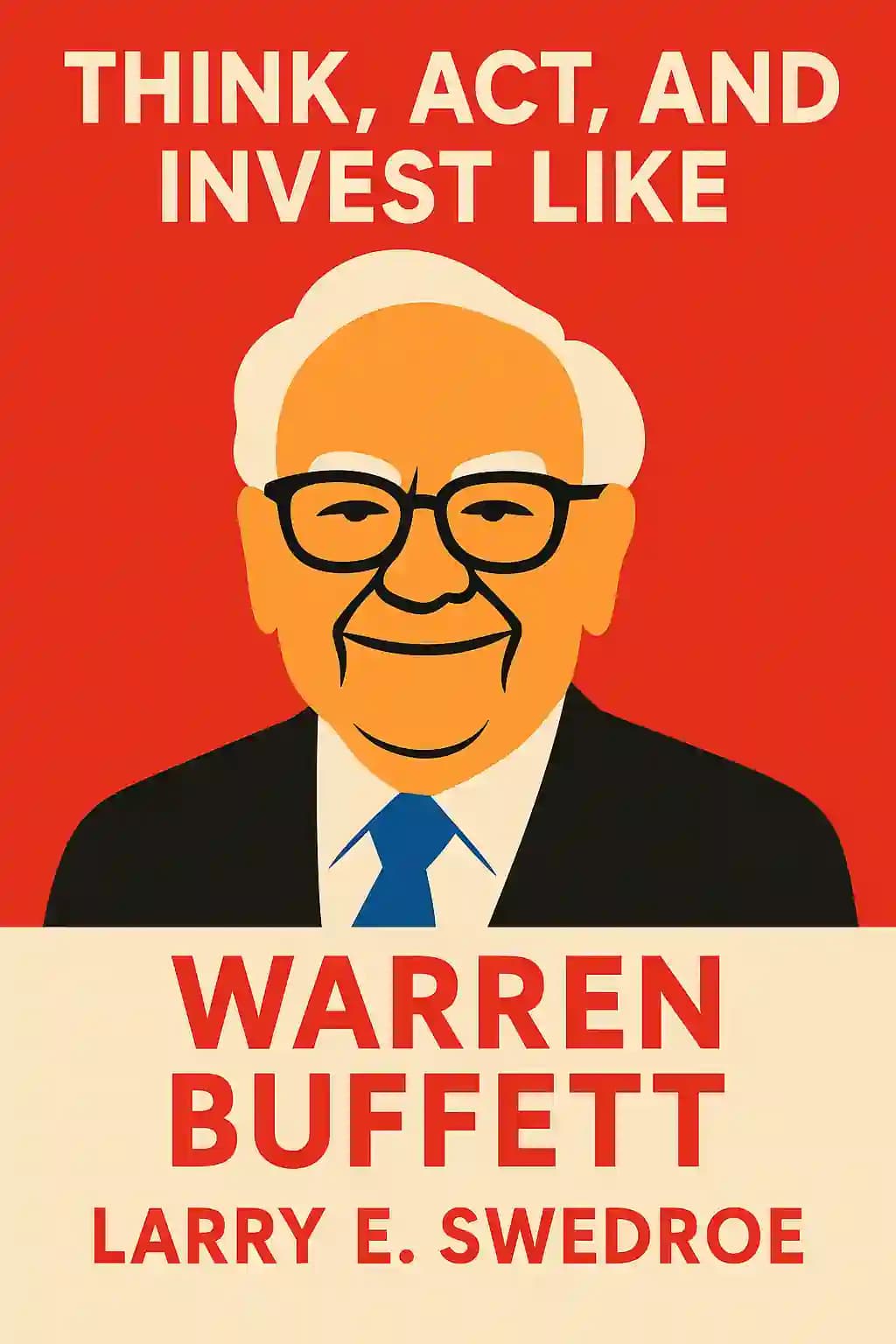
Think, Act, and Invest Like Warren Buffett
Overview of Think, Act, and Invest Like Warren Buffett
Unlock Warren Buffett's investing genius without his billions. This bestseller, endorsed by Vanguard founder John Bogle, distills Buffett's wisdom into actionable strategies that transformed countless portfolios. Why do financial advisors consider this their secret weapon against market hysteria?

Key Themes in Think, Act, and Invest Like Warren Buffett
- passive investing strategy
- index fund advocacy
- market timing psychology
- emotional discipline
- evidence based finance
Quotes from Think, Act, and Invest Like Warren Buffett
Short-term market forecasts are poison.
Inactivity strikes us as intelligent behavior.
The know-nothing investor can actually outperform most investment professionals.
Markets faced numerous problems...yet never displayed a green flag.
Characters in Think, Act, and Invest Like Warren Buffett
- Larry E. SwedroeAuthor and financial expert
- Warren BuffettInvestment icon and subject of the book
About the Author
About the Author of Think, Act, and Invest Like Warren Buffett
Larry E. Swedroe is a bestselling finance writer and a respected authority on evidence-based investing strategies. He is the author of Think, Act, and Invest Like Warren Buffett, among other notable works.
As Chief Research Officer at Buckingham Strategic Wealth, Swedroe expertly bridges academic insights with practical investing approaches. He holds an MBA from NYU and a bachelor’s degree in finance from Baruch College.
A prolific author, Swedroe has penned 18 books, including The Only Guide to a Winning Investment Strategy You’ll Ever Need and Your Complete Guide to Factor-Based Investing. His work consistently emphasizes disciplined, long-term portfolio construction.
Swedroe's articles regularly appear on EvidenceInvestor.com and AdvisorPerspectives.com, solidifying his reputation as a thought leader in the investment community. His books have been translated into seven languages and have become essential reading for investors seeking data-driven frameworks to navigate the complexities of the market.
His latest release, Enrich Your Future (2024), continues his mission to democratize sophisticated financial strategies for everyday investors.
Download Summary of Think, Act, and Invest Like Warren Buffett
Get the Think, Act, and Invest Like Warren Buffett summary as a free PDF or EPUB. Print it or read offline anytime.
FAQs About This Book
Think, Act, and Invest Like Warren Buffett by Larry E. Swedroe distills Warren Buffett’s principles into a passive, evidence-based investing strategy. It emphasizes broad diversification, low-cost index funds, and disciplined long-term planning over stock picking. The book guides readers in creating an investment policy statement and debunks common myths about active investing.
This book suits individual investors seeking a structured, low-maintenance approach to wealth-building. It’s ideal for those overwhelmed by complex strategies or prone to emotional decision-making. While beginners gain clear fundamentals, experienced investors learn to communicate portfolio concepts effectively.
Yes, for its practical advice on passive investing and behavioral finance. Critics note the title oversells Buffett-specific content, but the core lessons on diversification, cost minimization, and disciplined rebalancing remain valuable. It’s praised for making academic investing principles accessible to non-experts.
Unlike stock-picking-focused Buffett guides, Swedroe’s book advocates index funds and global diversification. It prioritizes creating an investment policy statement over analyzing individual companies, aligning with Buffett’s advice for most investors to avoid active trading.
An investment policy statement (IPS) is a written plan outlining financial goals, risk tolerance, and asset allocation. Swedroe stresses it as the foundation for disciplined investing, preventing emotional decisions during market swings. The book provides templates to help readers create their own IPS.
Swedroe argues active investing often underperforms due to higher fees, tax inefficiency, and the difficulty of consistently beating markets. He cites Buffett’s endorsement of index funds for most investors and demonstrates how frequent trading erodes returns.
Opportunistic rebalancing involves adjusting portfolios when assets deviate significantly from target allocations. Swedroe recommends frequent monitoring but only trading when thresholds are breached, balancing cost efficiency with discipline. This contrasts with calendar-based rebalancing.
It teaches Buffett-inspired metrics for evaluating companies: strong balance sheets, consistent earnings, and durable competitive advantages (“moats”). However, Swedroe clarifies most investors should apply these principles through index funds rather than stock picking.
Some readers find the title misleading, as only 20% directly addresses Buffett’s methods. Others note repetitive content from Swedroe’s prior works. Active investors may disagree with its dismissal of stock selection.
While both advocate value investing, Swedroe’s focus is implementing principles through passive vehicles like index funds. The Intelligent Investor delves deeper into security analysis, making Swedroe’s approach more accessible for hands-off investors.
The book shows how fees compound over time, citing Buffett’s bet that a low-cost S&P 500 fund would outperform hedge funds. Swedroe calculates that a 1% annual fee can consume 30% of returns over 30 years.
It extends Buffett’s long-term mindset to retirement, advocating globally diversified portfolios and systematic withdrawal strategies. Swedroe incorporates insights on reducing sequence-of-returns risk and avoiding emotional decisions during market downturns.