Free Speech
A Global History from Socrates to Social Media
Overview of Free Speech
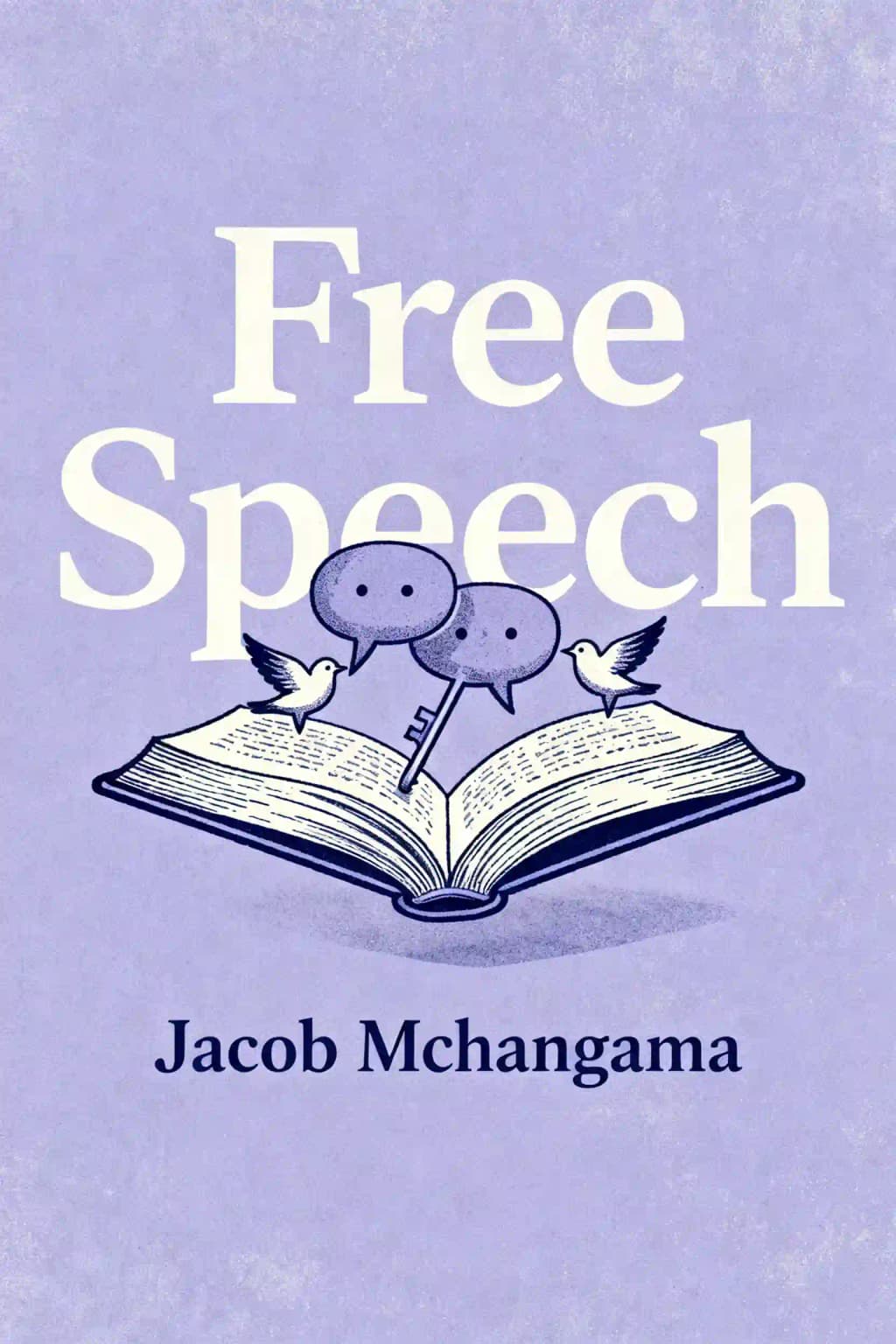
From Socrates to social media, "Free Speech" charts democracy's most contested right. Hailed as "the best history of free speech ever written" by P.J. O'Rourke, Mchangama's work reveals why protecting unpopular voices ultimately shields us all from tyranny.

Key Themes in Free Speech
- free speech entropy
- marketplace of ideas
- censorship history
- digital content moderation
- democratic dissent
Quotes from Free Speech
Free speech has been a beacon of hope and a source of contention.
Free speech is resilient.
Free speech is not just a legal principle – it's a cultural value.
Without freedom of thought, there can be no such thing as wisdom.
Free speech is the foundation of human progress.
Characters in Free Speech
- Jacob MchangamaAuthor and historian of free speech
- al-Rāzī9th-century freethinker and skeptic
- John MiltonAuthor of the defense of free press, Areopagitica
- Ida B. WellsJournalist who used the press to fight lynching
About the Author
About the Author of Free Speech
Jacob Jomo Danstrøm Mchangama is a Danish lawyer and globally recognized free speech expert. He is the author of the critically acclaimed Free Speech: A History From Socrates to Social Media, a definitive exploration of free expression’s evolution and modern challenges.
As founder of the Copenhagen-based think tank Justitia and a research professor at Vanderbilt University, Mchangama combines legal scholarship with historical analysis to dissect censorship, digital governance, and human rights. His work has shaped international discourse through frequent contributions to The Economist, Washington Post, and Foreign Affairs. He also hosts the influential podcast Clear and Present Danger: A History of Free Speech.
Mchangama was honored with the Jyllands-Posten Free Speech Award and the Blixen Award for his advocacy. His research informs policymakers, academics, and tech leaders. Praised as “essential reading” by leading publications, his book bridges ancient philosophy and contemporary debates, cementing his reputation as a preeminent voice in defending intellectual freedom.
Download Summary of Free Speech
Get the Free Speech summary as a free PDF or EPUB. Print it or read offline anytime.
FAQs About This Book
Free Speech by Jacob Mchangama offers a comprehensive global history of free expression, tracing its evolution from ancient civilizations to modern digital platforms. The book explores how free speech has driven intellectual progress and equality while facing persistent suppression. Mchangama highlights key defenders like Demosthenes, John Milton, and Ida B. Wells, and examines contemporary challenges like social media disinformation and censorship.
This book is ideal for readers interested in political history, legal studies, or civil liberties. Activists, policymakers, and educators will gain insights into free speech’s role in advancing democracy and human rights. It also appeals to those concerned about modern issues like online content moderation and the erosion of open discourse in democracies.
Yes. Praised as “the best history of free speech ever written” (P.J. O’Rourke), the book combines rigorous research with engaging storytelling. It provides critical context for current debates on censorship, hate speech, and digital platform regulation, making it essential for understanding the historical and modern stakes of free expression.
Jacob Mchangama is a Danish lawyer, founder of the think tank Justitia, and a Vanderbilt University research professor. A global free speech expert, he hosts the podcast Clear and Present Danger and contributes to media like The Economist and The Washington Post. His work focuses on defending civil liberties in democratic and authoritarian regimes.
Mchangama argues that free speech underpins intellectual and societal progress but remains perpetually threatened by power structures. He demonstrates how restrictions often escalate during crises, cites historical victories (e.g., the abolition of blasphemy laws), and warns against modern overregulation of online speech, which risks repeating past mistakes.
It critiques social media platforms for enabling disinformation while emphasizing that censorship is ineffective and dangerous. Mchangama advocates for transparency and accountability without stifling dissent, noting that authoritarian regimes exploit content moderation tools to suppress criticism.
The book profiles thinkers like Socrates, ninth-century freethinker al-Rāzī, and Enlightenment philosopher Voltaire. Modern champions include anti-lynching journalist Ida B. Wells, First Amendment advocate Oliver Wendell Holmes Jr., and Nelson Mandela, who linked free speech to anti-apartheid efforts.
Yes. The book details censorship methods across eras: ancient ruler-worship laws, medieval heresy prosecutions, colonial-era sedition acts, and modern “fake news” crackdowns. Mchangama shows how elites weaponize censorship to maintain power, often exacerbating societal tensions.
He warns that democracies are backsliding through laws targeting hate speech, misinformation, and online extremism. While acknowledging real harms, he argues such measures often empower authoritarianism. The book urges vigilance to protect free expression as a cornerstone of equality and innovation.
The book underscores that free speech fosters progress but requires constant defense. Key takeaways:
- censorship fuels repression
- marginalized groups benefit most from open discourse
- combating harmful speech requires counter-speech—not suppression
Unlike narrower legal analyses, Mchangama’s work spans millennia and continents, blending historical narrative with modern relevance. It complements works like Timothy Garton Ash’s Free Speech by emphasizing global perspectives and digital-age challenges.
As debates over AI moderation, deepfakes, and global authoritarianism intensify, the book provides a framework to evaluate policies. Its historical parallels help readers discern between legitimate regulation and threats to civil liberties, ensuring informed advocacy for open societies.