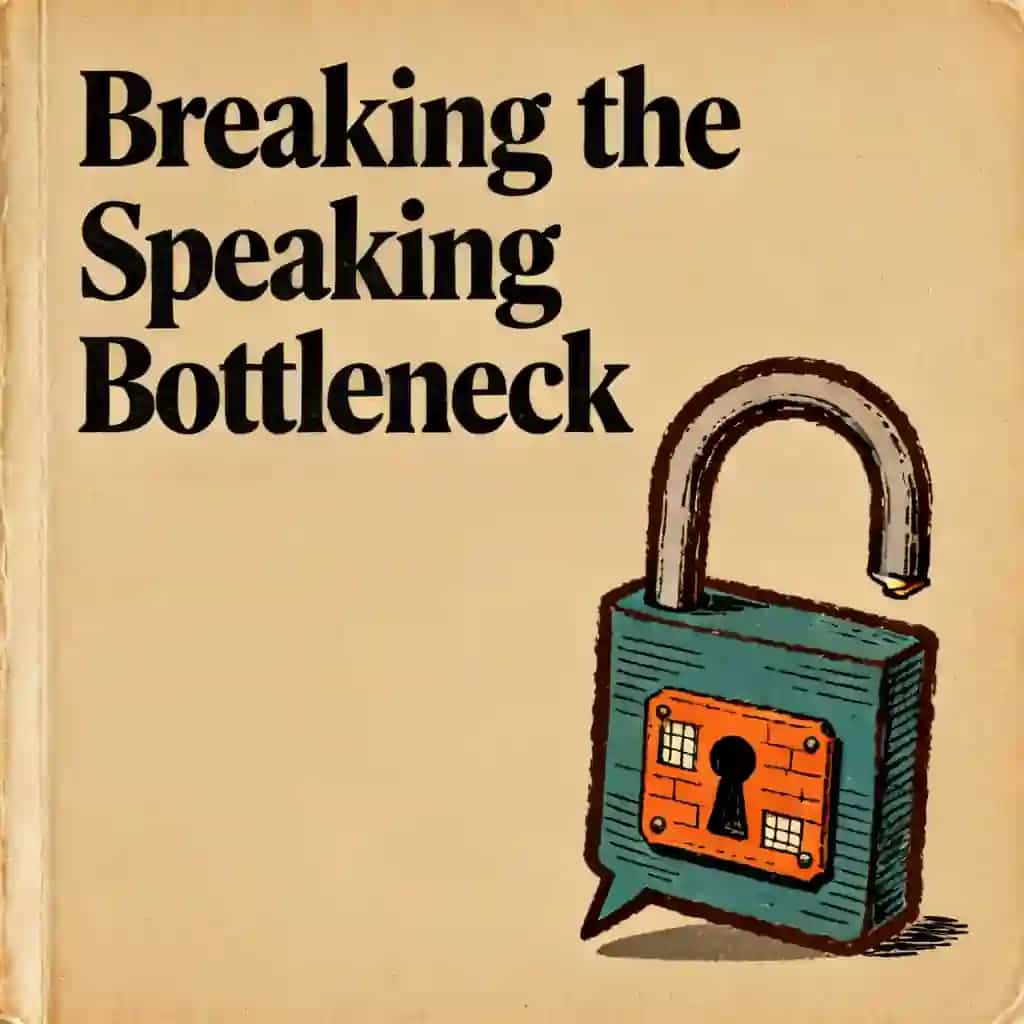
Stuttering: Navigating the Internal Landscape
Explore the profound psychological impact of stuttering and discover practical tools like mindfulness and cognitive restructuring to build resilience and reclaim your voice.

Stuttering: Navigating the Internal Landscapeのベスト引用
Your worth is not determined by the fluency of your syllables, but by the character and the intellect behind them. You have a voice that deserves to be heard, regardless of the rhythm.
Generated by Freedee_19CFD00A
Dealing with the psychological impact of stuttering



よくある質問
Research indicates that up to 60% of adults seeking treatment for stuttering meet the diagnostic criteria for social anxiety disorder. This connection stems from a "vicious cycle" where negative social experiences, such as being teased or ignored, create an intense fear of being negatively evaluated. This fear triggers the body's "fight or flight" response, causing muscle tension that makes stuttering more likely, which then reinforces the individual's belief that they are an incompetent communicator.
Cognitive restructuring is a core component of Cognitive Behavioral Therapy (CBT) that involves identifying and challenging unhelpful, distorted thoughts. Instead of relying on "fluffy" positive thinking, a person puts their fears "on trial" by looking for objective evidence. For example, changing a catastrophic thought like "Everyone thinks I'm stupid" to a more realistic management mindset like "I sometimes have trouble with words, but I have successful conversations" helps reduce the emotional burden of the disorder.
While traditional exercises might focus on "fixing" speech, mindfulness is about "responding" rather than "reacting" to a stutter. It encourages radical acceptance by teaching individuals to observe physical sensations—like throat tightness—without judging them as "bad." By staying present and "letting the stutter be" rather than fighting against a block with more tension, the speaker can desensitize themselves to the discomfort, which eventually lessens the stutter's psychological grip.
Voluntary stuttering is a behavioral experiment where a person intentionally stutters in a low-stakes situation, such as ordering coffee. This technique is designed to put the speaker back in the "driver's seat" by making the stutter a conscious choice rather than an involuntary slip. These experiments often prove to the speaker that their worst fears—such as being laughed at—rarely happen in reality, thereby building social confidence and reducing the urge to use avoidance behaviors.
Support groups provide a "safe space" that reduces the isolation many people who stutter feel. They offer a sense of community where members can practice new skills, such as "self-disclosure" (telling others they stutter), without fear of judgment. Data shows that attending these groups is linked to improved quality of life and higher self-esteem, as it helps individuals normalize their experience and realize that stuttering is a speech rhythm disorder rather than a moral or intellectual failure.
コロンビア大学卒業生が開発 サンフランシスコ発
BeFreedは好奇心旺盛な仲間が集うグローバルコミュニティ


"Instead of endless scrolling, I just hit play on BeFreed. It saves me so much time."


"I never knew where to start with nonfiction—BeFreed’s book lists turned into podcasts gave me a clear path."


"Perfect balance between learning and entertainment. Finished ‘Thinking, Fast and Slow’ on my commute this week."
"Crazy how much I learned while walking the dog. BeFreed = small habits → big gains."
"Reading used to feel like a chore. Now it’s just part of my lifestyle."

"Feels effortless compared to reading. I’ve finished 6 books this month already."
"BeFreed turned my guilty doomscrolling into something that feels productive and inspiring."

"BeFreed turned my commute into learning time. 20-min podcasts are perfect for finishing books I never had time for."
"BeFreed replaced my podcast queue. Imagine Spotify for books — that’s it. 🙌"

"It is great for me to learn something from the book without reading it."
"The themed book list podcasts help me connect ideas across authors—like a guided audio journey."
"Makes me feel smarter every time before going to work"
コロンビア大学卒業生が開発 サンフランシスコ発
BeFreedは好奇心旺盛な仲間が集うグローバルコミュニティ
"Instead of endless scrolling, I just hit play on BeFreed. It saves me so much time."
"I never knew where to start with nonfiction—BeFreed’s book lists turned into podcasts gave me a clear path."
"Perfect balance between learning and entertainment. Finished ‘Thinking, Fast and Slow’ on my commute this week."
"Crazy how much I learned while walking the dog. BeFreed = small habits → big gains."
"Reading used to feel like a chore. Now it’s just part of my lifestyle."
"Feels effortless compared to reading. I’ve finished 6 books this month already."
"BeFreed turned my guilty doomscrolling into something that feels productive and inspiring."
"BeFreed turned my commute into learning time. 20-min podcasts are perfect for finishing books I never had time for."
"BeFreed replaced my podcast queue. Imagine Spotify for books — that’s it. 🙌"
"It is great for me to learn something from the book without reading it."
"The themed book list podcasts help me connect ideas across authors—like a guided audio journey."
"Makes me feel smarter every time before going to work"
"Instead of endless scrolling, I just hit play on BeFreed. It saves me so much time."
"I never knew where to start with nonfiction—BeFreed’s book lists turned into podcasts gave me a clear path."
"Perfect balance between learning and entertainment. Finished ‘Thinking, Fast and Slow’ on my commute this week."
"Crazy how much I learned while walking the dog. BeFreed = small habits → big gains."
"Reading used to feel like a chore. Now it’s just part of my lifestyle."
"Feels effortless compared to reading. I’ve finished 6 books this month already."
"BeFreed turned my guilty doomscrolling into something that feels productive and inspiring."
"BeFreed turned my commute into learning time. 20-min podcasts are perfect for finishing books I never had time for."
"BeFreed replaced my podcast queue. Imagine Spotify for books — that’s it. 🙌"
"It is great for me to learn something from the book without reading it."
"The themed book list podcasts help me connect ideas across authors—like a guided audio journey."
"Makes me feel smarter every time before going to work"
"Instead of endless scrolling, I just hit play on BeFreed. It saves me so much time."
"I never knew where to start with nonfiction—BeFreed’s book lists turned into podcasts gave me a clear path."
"Perfect balance between learning and entertainment. Finished ‘Thinking, Fast and Slow’ on my commute this week."
"Crazy how much I learned while walking the dog. BeFreed = small habits → big gains."
"Reading used to feel like a chore. Now it’s just part of my lifestyle."
"Feels effortless compared to reading. I’ve finished 6 books this month already."
"BeFreed turned my guilty doomscrolling into something that feels productive and inspiring."
"BeFreed turned my commute into learning time. 20-min podcasts are perfect for finishing books I never had time for."
"BeFreed replaced my podcast queue. Imagine Spotify for books — that’s it. 🙌"
"It is great for me to learn something from the book without reading it."
"The themed book list podcasts help me connect ideas across authors—like a guided audio journey."
"Makes me feel smarter every time before going to work"