第1章
The Timeless Wisdom of Beginner's Mind
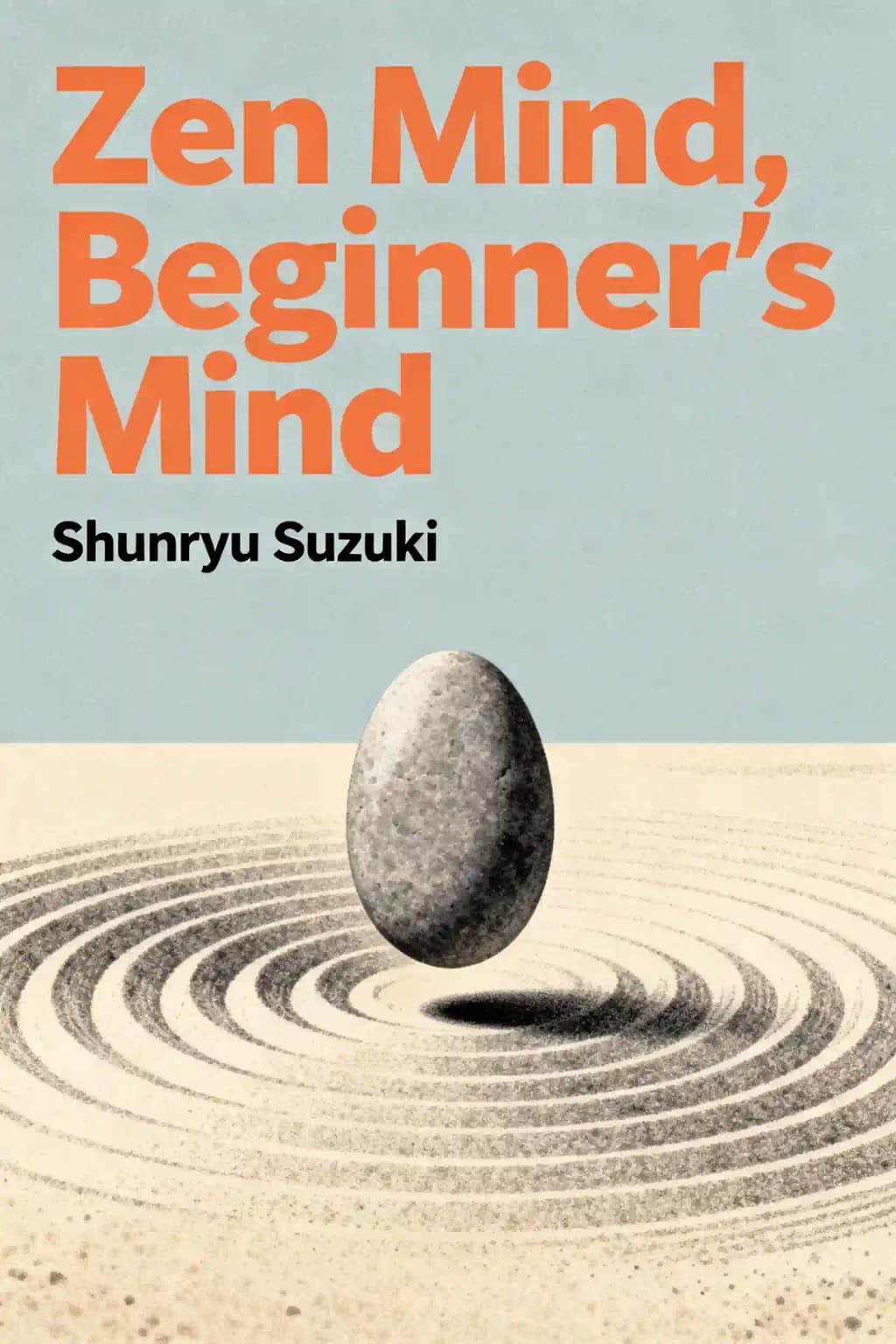
Zen Mind, Beginner's Mind by Shunryu Suzuki has quietly transformed the spiritual landscape of the Western world since its publication in 1970. Unlike the dramatic, satori-focused teachings of his contemporary Daisetz Suzuki, Shunryu emphasized the profound ordinariness of Zen practice - a revolutionary approach that resonated deeply with Americans seeking authentic spiritual guidance during the cultural upheaval of the 1960s and 70s.
The book's influence extends far beyond Buddhist circles. Steve Jobs famously kept it on his nightstand and cited its philosophy as influential to Apple's design principles. Celebrities from Jennifer Aniston to Leonard Cohen have praised its wisdom, and academic institutions from Harvard to Stanford regularly include it in courses on mindfulness, psychology, and Eastern philosophy. What makes this slim volume so enduring? Perhaps it's the paradoxical simplicity of its central message: the beginner's mind contains infinite possibilities, while the expert's mind contains only a few.
As we navigate our hyperconnected, achievement-obsessed modern world, Suzuki's gentle reminder to approach life with the fresh curiosity of a beginner feels more relevant than ever. His teachings on emptiness, naturalness, and the unity of practice and enlightenment offer a radical alternative to our culture's emphasis on accumulation and expertise. Let's explore the quiet revolution contained in this unassuming masterpiece of spiritual literature.
第2章
The Power of Posture: Body as the Gateway to Mind
The foundation of Zen practice begins with something deceptively simple: how we sit. The lotus position isn't merely a physical arrangement but a profound statement about the nature of existence itself. When we cross our legs and straighten our spine, we're embodying the unity of duality - mind and body becoming both one and two simultaneously. This posture speaks to life's fundamental paradox: we are both eternal beings and finite creatures bound by time.
Imagine sitting on your cushion, spine straight as an arrow. This isn't about achieving some special mental state or transcendent experience. Rather, it's about returning to what Suzuki calls our "Buddha nature" - our original, uncomplicated awareness that exists before thinking creates divisions. When we align our physical body correctly, something remarkable happens: everything else naturally falls into order.
Think about how your posture affects your daily life. When you stand tall and centered while waiting for the bus, or sit upright during a difficult conversation, doesn't your entire experience shift? This is the essence of Buddha's teaching manifesting in ordinary moments. The integrity of your posture brings integrity to your life, ensuring that each action unfolds rightly at precisely the right moment.
What if we approached every activity with this same careful attention? Washing dishes, typing emails, having conversations - each moment becomes an opportunity to express our Buddha nature through the simple dignity of correct posture. This isn't about rigidity or perfection. It's about discovering the inherent wholeness that emerges when body and mind harmonize in the present moment.
第3章
Breathing: The Swinging Door Between Universes
With each breath, we participate in a cosmic dance that dissolves the boundaries between inner and outer worlds. Breathing in Zazen isn't a technique to master but a gateway to experiencing the seamless whole of existence. As you focus on your breath, notice how the distinction between "me" and "not-me" begins to blur. Where exactly does the outside world end and your inner world begin?
The breath reveals a profound truth: we are like swinging doors, constantly moving between universes without ever being stuck in either. Think about it - you're neither completely dependent nor completely independent. You're interdependently independent, just like everything else in existence. The cloud and the mountain exist separately yet in continuous relationship, neither entangled nor truly apart.
When was the last time you simply followed your breath without trying to control it? In those moments of pure attention, did you notice how time and space seemed to fall away? This is the experience of absolute freedom that Zazen offers - not through escaping reality but through fully inhabiting it.
The beauty of breath practice lies in its universality. You don't need special equipment or esoteric knowledge. Your breath has been with you since birth and will remain until death. It's the most consistent reminder of your participation in the universal activity of life. By returning to this simple awareness again and again, you discover that the boundaries you've constructed between yourself and the world are more permeable than you thought.
What would change if you approached each day with this awareness? How might your interactions transform if you recognized yourself and others as swinging doors, constantly exchanging and participating in the same cosmic breath?
第4章
The Art of Control: Letting Things Be
We often think of control as exerting force - making things bend to our will. But Zen offers a radical alternative: true control comes through letting things be exactly as they are. This isn't passive resignation but active spaciousness. It's the difference between clutching water in your fist (where it all escapes) and holding it in an open palm (where it remains).
Living within Buddha nature means embracing a perfect balance that includes imbalance. It's like riding a bicycle - the balance isn't static but dynamic, constantly adjusting. When thoughts arise during zazen, we don't suppress them or chase after them. We acknowledge them and return to our breath, to our posture. This is control without controlling.
Have you noticed how the harder you try to control your mind, the more rebellious it becomes? The more you fight against distractions, the stronger they grow? This is because control through force creates its opposite. But when you allow thoughts to come and go without grasping - like watching clouds pass across the sky - a natural spaciousness emerges.
This principle extends beyond meditation into everyday life. When facing a challenge, can you find the balance between effort and acceptance? Can you act decisively without being attached to outcomes? Can you navigate relationships with both boundaries and openness? This is the art of control that Zen cultivates - a poised readiness that neither grasps nor rejects.
The next time you feel overwhelmed or scattered, experiment with this approach. Instead of tightening your grip on the situation, create space around it. Return to your breath, straighten your posture, and observe what happens when you control by letting be.
第5章
Embracing Mind Waves: The Ocean of Awareness
The untrained mind often treats thoughts like invaders to be expelled. We believe that a "good" meditation means having no thoughts at all. But Suzuki offers a liberating perspective: those waves of thought aren't disturbances - they're natural expressions of mind's activity, arising from the same source as stillness.
Everything, including every thought and feeling, emerges from within the mind itself. Nothing comes from outside. When you truly understand this, external events lose their power to disturb you. The traffic jam, the critical comment, the unexpected bill - none of these can create waves unless you allow them to. The waves are always your own mind's activity.
As you continue practicing, something remarkable happens: the waves don't necessarily disappear, but they reveal the vast, unperturbed ocean beneath them. This is what Suzuki calls "big mind" - the spacious awareness that contains all activity without being defined by it. Like the ocean that remains essentially unchanged despite surface storms, your fundamental nature remains clear and composed regardless of mental activity.
Think about how this perspective might transform your daily experience. What if you could see every emotion, every challenging thought, as a wave on your ocean? What if nothing needed to be pushed away or held onto? This doesn't mean becoming emotionally flat or disengaged. Rather, it means experiencing everything more fully because you're no longer fighting against any part of your experience.
With consistent practice, this awareness grows naturally. Each sitting becomes fresh yet continuous with all previous sittings. The mind expands not through accumulation of knowledge but through intimate familiarity with its own nature. This is the imperturbable freedom that Zen practice cultivates - not by escaping the waves, but by recognizing them as inseparable from the ocean itself.
第6章
Finding Nourishment in Difficulty: The Gift of Mind Weeds
Most spiritual traditions treat difficulties as obstacles to overcome. But Zen offers a revolutionary perspective: even mental disturbances are beneficial, like weeds that nourish a garden. This isn't mere positive thinking; it's a fundamental reorientation to the challenges of practice and life.
When discomfort arises during zazen - restlessness, boredom, physical pain - our instinct is to eliminate it. But what if these difficulties are actually essential nutrients for growth? Just as a plant needs not only sunlight but also the decomposing matter of weeds, perhaps our practice needs both ease and struggle to fully develop.
The key is engaging with practice without expectation of particular results. When you sit simply to sit, without trying to achieve a special state, difficulties become part of the path rather than obstacles to it. Each moment of struggle refines and purifies your awareness, like gold being tested in fire.
Have you ever noticed how your most significant growth often comes from periods of greatest challenge? The job loss that forced you to discover new capabilities, the relationship breakdown that taught you about your own patterns, the illness that revealed what truly matters - these "weeds" nourished your development in ways that comfort never could.
Suzuki encourages us to concentrate on breath and posture regardless of what arises. Through continuous effort despite imperfections, Zen manifests not as an escape from difficulty but as a transformation of difficulty into the very foundation for growth. The weeds become indistinguishable from the garden itself.
What if you approached your next challenge with this mindset? Not as something to overcome as quickly as possible, but as nourishment uniquely suited to your development? This doesn't mean seeking out suffering, but it does mean recognizing that the path to freedom runs directly through difficulty, not around it.
第7章
The Worst Horse: Finding Strength in Imperfection
In Zen tradition, there's a beautiful story about four kinds of horses: the excellent horse runs before the whip touches its skin, the good horse runs at the touch of the whip, the poor horse runs when the pain penetrates to the marrow, and the worst horse doesn't move until the whip penetrates to the marrow. Most of us would assume the excellent horse represents the ideal. But Suzuki offers a surprising perspective: the worst horse may actually have the most to teach us.
True Zen isn't about being the best or achieving perfection. It's about faithful effort regardless of natural ability or immediate results. The worst horse, precisely because of its struggles, develops the greatest determination and ultimately the deepest understanding. Its very flaws become the gateway to profound insight.
Think about areas in your life where you feel like the "worst horse" - where progress seems slow and effort painful. What if these very struggles are your greatest teachers? What if your imperfections aren't obstacles to overcome but opportunities to develop qualities that naturally gifted people might never discover?
When we embrace the difficulties of zazen - the wandering mind, the aching knees, the restless energy - we forge a strength that goes beyond technique. We develop patience, resilience, and compassion for ourselves and others. We learn to continue despite discomfort, to find peace within imperfection rather than beyond it.
This perspective liberates us from the endless pursuit of improvement that characterizes so much of modern life. Instead of constantly striving to become the excellent horse, we can embrace being exactly the horse we are, giving our full effort in each moment without judgment or comparison. This acceptance doesn't diminish our practice; it deepens our engagement with life exactly as it is.
The next time you feel discouraged by your limitations, remember the worst horse. Your struggles aren't signs of failure but opportunities for the most profound learning. By enduring hardship without expectation, you open yourself to discoveries that might forever elude those for whom everything comes easily.
第8章
Beyond Dualism: The Unity of Form and Emptiness
Our minds naturally create divisions: self and other, body and mind, practice and enlightenment. But Zen practice transcends these dualistic concepts, revealing a depth where form and emptiness are not opposite but unified aspects of reality. This isn't abstract philosophy but lived experience that emerges through consistent practice.
When you fully embody your practice - when body, breath, and mind align in zazen - something shifts. The separation between the practitioner and the practice dissolves. You're not "doing" zazen; you are zazen. This wholeness dismisses duality not through intellectual understanding but through direct experience.
The Heart Sutra famously states: "Form is emptiness, emptiness is form." This paradoxical teaching points to the inseparability of the concrete and the absolute. The chair you're sitting on is both a solid object and a temporary configuration of elements in constant flux. Your body is both undeniably present and continuously changing. Your thoughts are both real experiences and insubstantial phenomena.
Practicing without expectation or "gaining ideas" aligns with this understanding. When you sit not to achieve enlightenment but simply to express your inherent Buddha nature, you enter the realm of non-duality. There's no separation between means and end, journey and destination. Each moment of practice is complete in itself.
This perspective transforms everyday life. Walking becomes not just a way to get somewhere but an expression of wholeness. Washing dishes becomes not a chore to finish but an opportunity to experience the unity of action and actor. Conversations become not exchanges of information but shared manifestations of Buddha nature.
What would change if you approached your activities without the usual divisions? If work wasn't separate from rest, if learning wasn't distinct from teaching, if giving wasn't different from receiving? This is the effortless presence that zazen cultivates - a natural harmony where each movement and stillness reveals the intrinsic unity of existence.
第9章
The Ritual of Bowing: Relinquishing the Self
In many Western approaches to spirituality, rituals like bowing might seem like empty formalities or outdated traditions. But in Zen, bowing is a profound practice aligned with zazen itself - a physical expression of relinquishing the self and recognizing the fundamental unity of existence.
When you bow, something remarkable happens: the distinction between you and what you're bowing to dissolves. There's no separate self performing an action toward an external object. There's just bowing - a complete activity that encompasses everything. This is why Suzuki emphasizes that bowing is not about showing respect to something outside yourself, but about diminishing the sense of a separate self.
Each bow becomes a dialogue with existence, integrating humbleness and interconnection. The physical act of lowering your head - the seat of intellect and ego - symbolizes the setting aside of discriminating mind. Your body expresses what words cannot: the recognition that you are not separate from the universe but intimately part of it.
In traditional practice, each bow encompasses the four bodhisattva vows: to save all sentient beings, to eliminate delusions, to master all dharma teachings, and to attain the Buddha way. These seemingly impossible aspirations aren't goals to achieve but attitudes to embody in each moment. They cement a cycle of endless learning and self-improvement that continues beyond any single lifetime.
True attainment in bowing, as in all practice, lies not in what you gain but in the sincerity of your engagement. It requires a dedication that transcends self-centered desire - a willingness to continue the practice not for personal benefit but as an expression of your deepest nature.
What if you approached your daily activities with this same spirit? What would it mean to "bow" to your work, your relationships, even your challenges? Not in resignation or submission, but in recognition of their place in the wholeness of existence? This practice of relinquishing the self doesn't diminish your life but expands it beyond the narrow confines of ego, opening to a vastness that includes everything.
第10章
The Extraordinary Ordinariness of Practice
There's a seeming paradox at the heart of Zen practice: while it leads to extraordinary awareness, the experience itself becomes "nothing special." This is not a contradiction but a profound insight into the nature of true attainment. The power of daily zazen practice lies not in dramatic experiences but in the subtle transformation of ordinary consciousness.
Many begin spiritual practice seeking peak experiences - moments of insight, bliss, or transcendence that stand apart from everyday life. But Suzuki points in a different direction: toward finding the extraordinary within the ordinary itself. As practice deepens, zazen becomes not a special activity but simply an expression of your true nature, free from the desire to achieve anything beyond itself.
This practice resonates with Buddha nature - the inherent capacity for awakening that exists within all beings. Through consistent zazen, you begin to see everything through its essence rather than through the filters of delusion or preference. The tree outside your window isn't just a concept or a background object but a living manifestation of the same reality that you are.
The initial excitement of spiritual discovery eventually gives way to something more profound: the recognition that enlightenment isn't a spectacular state separate from ordinary life but the clear seeing of ordinary life itself. As the Zen saying goes, "Before enlightenment, chop wood, carry water. After enlightenment, chop wood, carry water." The activities don't change, but your relationship to them transforms completely.
This unified simplicity demands continual practice. It's not something you achieve once and possess forever, but a way of being that you express moment by moment. The extraordinary becomes ordinary not through diminishment but through integration - the sacred and the mundane revealing themselves as never having been separate.
What might change if you stopped seeking special experiences and instead discovered the depth available in your everyday activities? What if cooking dinner, having a conversation, or walking down the street contained all the mystery and meaning you've been seeking elsewhere? This is the invitation of Zen practice - not to escape the ordinary but to discover its inexhaustible richness.
第11章
The Dance of Repetition: Building Character Through Consistency
In our culture of constant novelty and innovation, repetition often gets a bad reputation. We're told that variety is the spice of life, that routines lead to stagnation. But Zen offers a counterintuitive wisdom: true vitality and strength emerge not from constant change but from mindful repetition. The key lies not in what you do but in how you do it.
Unlike the ascetic practices Buddha encountered in India, which sought to weaken the body to free the spirit, Zen practice requires a balanced approach. The body isn't an obstacle to spiritual development but the very vehicle through which awakening manifests. Through constant, careful observation and repetition of simple practices like zazen, understanding emerges organically without the need for rigid idealism.
Think about learning any skill - playing an instrument, mastering a sport, developing a craft. Initial progress might be rapid and exciting, but true mastery comes through countless repetitions, each one approached with fresh attention. A concert pianist doesn't tire of playing scales, nor does a master chef grow bored with basic techniques. Instead, they discover infinite subtlety within apparent sameness.
The same principle applies to spiritual practice. Each time you sit in zazen, it's both a continuation of all previous sittings and an entirely new experience. Each breath is both familiar and unprecedented. This paradox - that repetition can lead to freshness rather than staleness - lies at the heart of Zen training.
Character develops gradually through this process, like water slowly shaping stone. The changes may not be dramatic or immediately visible, but over time they transform the entire landscape of your being. Patience, resilience, equanimity, compassion - these qualities can't be intellectually understood or instantly acquired. They must be cultivated through consistent practice.
What would change if you approached your daily routines not as boring necessities but as opportunities for this kind of character development? What if washing dishes, commuting to work, or having familiar conversations became occasions for the same careful attention you bring to zazen? This is how ordinary life becomes extraordinary practice - not by changing what you do, but by transforming how you do it.
第12章
The Art of Giving: Discovering Freedom in Non-Attachment
At the heart of Zen practice lies a profound understanding of giving that transcends conventional notions of charity or generosity. True giving, Suzuki teaches, is the act of non-attachment - recognizing the oneness of the "big I" with everything that exists. This isn't about sacrificing yourself for others but about realizing there was never a separation to begin with.
Life's essence is giving. Consider how nature operates: trees release oxygen without expectation, clouds give rain without discrimination, the sun shines on all beings equally. This natural generosity flows not from moral obligation but from the inherent nature of existence itself. When you align with this principle, each act - whether creating art, teaching others, or simply being present - becomes an expression of dana prajna paramita, the perfection of giving.
This perspective mirrors what some traditions call "God's creation," where nothing stands separate, everything holds absolute value, and the acts of creation and giving are one continuous movement. Without this understanding, we risk cultural and spiritual detachment, forgetting the fundamental source from which all activity springs.
Think about how this might transform your approach to relationships, work, and creativity. What if giving wasn't something you did occasionally out of obligation or even kindness, but the natural expression of your being? What if you could offer your presence, your skills, your attention without calculating what you might receive in return?
This doesn't mean becoming a doormat or neglecting your needs. Rather, it means recognizing that your deepest fulfillment comes not from accumulation but from participation in the universal flow of giving and receiving. The boundary between self and other softens, revealing that what benefits the whole ultimately benefits you as well.
The next time you find yourself holding back - whether it's withholding affection, guarding knowledge, or protecting resources - experiment with opening your hands. Notice what happens when you give without expectation, create without attachment to outcomes, love without conditions. This is the freedom that non-attachment offers - not detachment from life, but full participation in its boundless generosity.
第13章
Study Yourself: The Path of Inner Independence
The true study of Buddhism isn't found in books or lectures but in the direct examination of your own nature. Like a scientist who initially needs guidance but eventually must conduct independent research, the Zen practitioner ultimately discovers that the most profound teachings emerge from within. This "teaching without teaching" supports you until self-understanding blossoms, at which point external instruction becomes secondary to inner knowing.
Dogen, the founder of Soto Zen in Japan, expressed this beautifully: "To study Buddhism is to study the self. To study the self is to forget the self." This paradoxical statement points to the heart of Zen practice. By turning attention inward with sustained awareness, you eventually transcend the limited concept of self that creates separation from the universe. When this happens, everything - mountains, rivers, other beings - reveals itself as an expression of the same reality that you are.
This approach stands in stark contrast to purely intellectual or academic study. It's not enough to understand Buddhist concepts or memorize sutras. These are valuable only insofar as they support direct experience. True realization requires that teachings be integrated into daily existence so seamlessly that they no longer feel like external knowledge but simply the natural expression of your being.
Consider how this might apply to your own spiritual journey. Are you collecting concepts and techniques, or are you using them to illuminate your direct experience? Do you rely on external validation of your understanding, or are you developing the confidence to trust your own insights? The path of inner independence doesn't reject teachers or traditions but recognizes them as fingers pointing to the moon rather than the moon itself.
This self-study reveals that you are not separate from the universal activity that animates all existence. Your being is neither wholly independent nor completely determined, but a unique expression of the cosmic dance. By recognizing this, you discover the inherent purpose of life not as something imposed from outside but as the natural unfolding of your true nature, free from illusion or attachment.
第14章
Embracing Emptiness: The Path to Clarity and Balance
To genuinely grasp Buddhism, one begins by abandoning all preconceived ideas, especially fixed notions about existence. This emptiness (sunyata) isn't nihilism or negation but a liberating openness that allows for fresh perception. Like clearing a cluttered room to reveal its spaciousness, emptying the mind of rigid concepts creates room for direct experience.
True existence emerges from emptiness and returns to it, like waves rising from and dissolving back into the ocean. To understand life solely through the lens of solid, permanent existence is considered heretical in Buddhism because it neglects the transient, flowing nature of reality. Nothing exists in isolation or remains unchanged; everything is in constant relationship and transformation.
Emptiness liberates the mind from the suffering caused by attachment to fixed views. When you cling to the idea that things should be permanent, you inevitably experience disappointment and grief when they change. But when you recognize impermanence as the nature of reality, you can appreciate each moment's uniqueness without demanding that it last forever.
A firm belief in permanence blinds you to the present moment and hampers true progress. It's like trying to hold onto water by clenching your fist - the tighter you grip, the more it slips away. True understanding arises when you open your hands and allow experience to flow naturally, neither grasping nor rejecting.
This understanding begins with comprehending yourself fully. Through emptiness and letting go of preconceived ideas about who you are or should be, you achieve a balance that allows for genuine self-knowledge. This isn't about becoming nobody but about discovering who you really are beneath the layers of conditioning and assumption.
Think of emptiness as a thorough cleansing of the mind, preparing it for fresh, unbiased observations. Like wiping a dusty mirror, this practice doesn't create anything new but reveals what was always present yet obscured. The clarity that emerges isn't something gained but something uncovered - your natural state of awareness when not clouded by fixed ideas.
What might change if you approached each day with this "empty" mind? How might your relationships transform if you could see others freshly, without the accumulation of past judgments? What possibilities might open up if you could approach familiar situations as if encountering them for the first time? This is the gift of emptiness - not absence but infinite potential.